PARTNER COUNTRIES







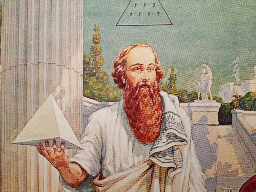
PYTHAGORAS
FATHER OF NUMBERS
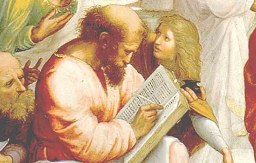
Pythagoras, known as the Father of Numbers, was an Ionian philosopher who lived between 570 BC and 495 BC.
He worked on mathematics, music, astronomy, physics and philosophy.
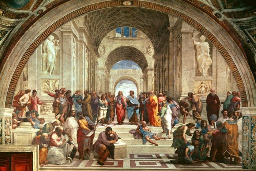
He is the founder of the Pythagoras School, known by his name.
İREM ÜZMEZ - ALTUNKAYA SECONDARY SCHOOL
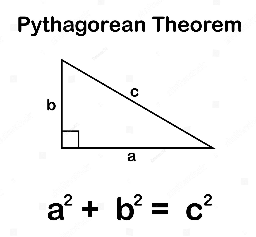
One of his most important theorems is the Pythagorean theorem, known by his name. According to this theorem, in a right triangle, the product of the squares of the perpendicular sides is equal to the square of the hypotenuse.
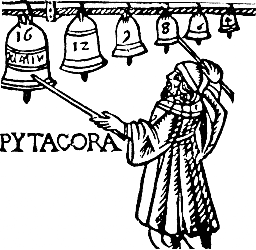
Pythagoras noticed that a string produces different sounds as its length changes. Thus, he laid the foundation of today's notation system. Pythagoras is the first person to reveal the relationship between mathematics and music.
Pythagoras argued that all magnitudes in nature could be expressed with rational numbers. That's why he forbade talking about irrational numbers. When his student Hippasus from the Pythagorean School proved the existence of irrational numbers, Pythagoras killed him by throwing him into the sea.

AVİSENNA (İBN-İ SİNA)


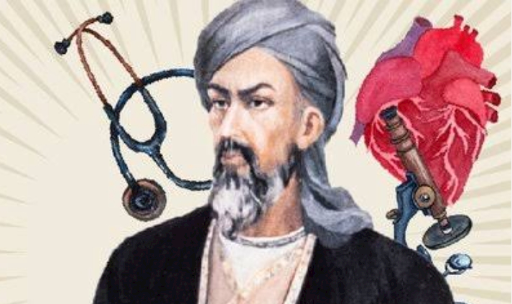
AVİCENNA
He was born around 980 in the village of Efshene near Bukhara (Uzbekistan) and died in 1037 in the city of Hamadan (Iran). There are nearly 200 books in various fields focusing on healing in medicine. As the founder of modern Western science and the leader of physicians, Ibn Sina is also known as the "Grand Master". He became famous with his book Al Qanun fit tip (The Law of Medicine), which remained the main reference work in the field of medicine for seven centuries, and this book was taught as a basic work in medical science in various universities in Europe until the 19th century. -17. middle of the century.
DOKTOR
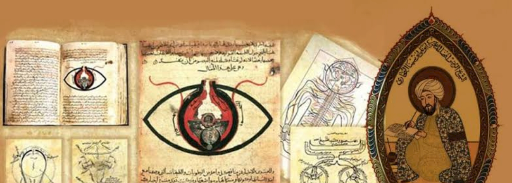
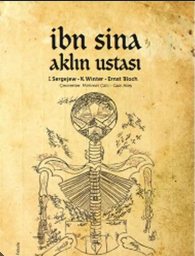
The scientist who laid the foundation stones of modern medicine:Avicenna

METE ATATÜRE
Turkish physicist and academic

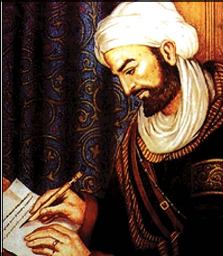
AL BURINI
MERVE TACAR' TEAM
ECRIN TUGCU
MINE A. TUGCU
ENVER E. TUGCU
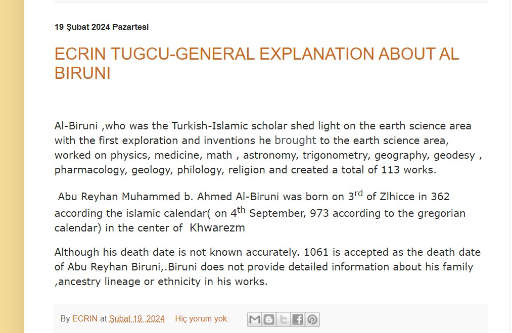
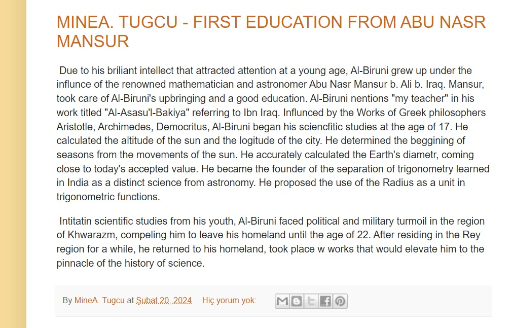
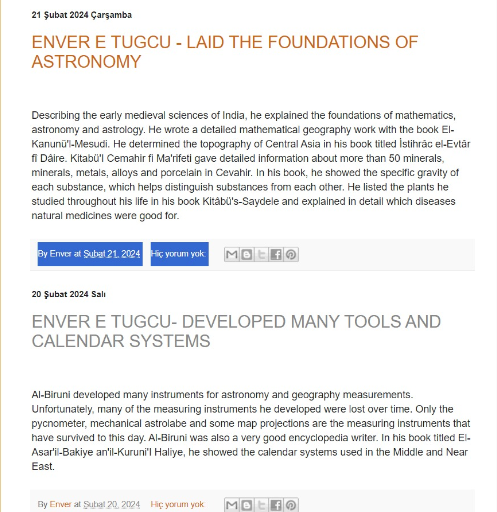
!!! VISIT OUR BLOG TO LEARN MORE ABOUT AL BURINI !!! https://whoisalbiruni.blogspot.com/

Gregor Mendel-The geneticist
Deema Ababneh Team-Alkhayriah Primary mixed school-Jordan
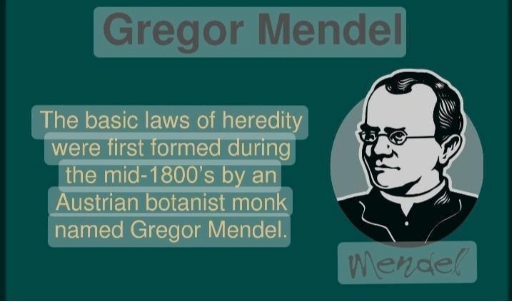
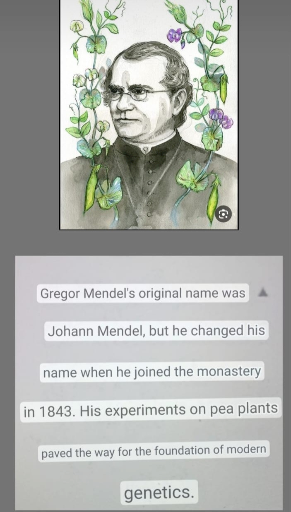
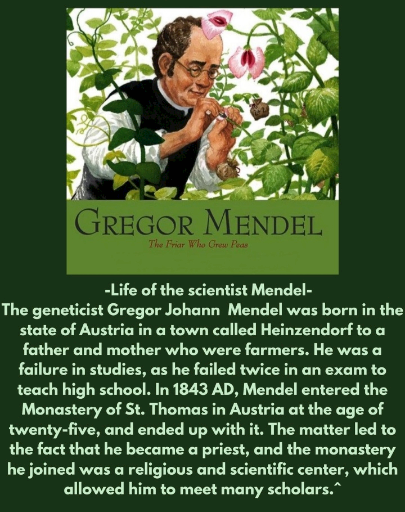
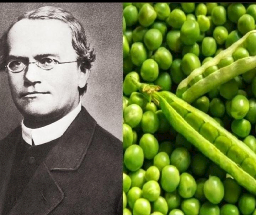
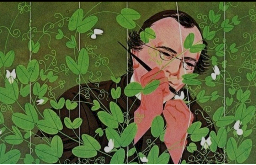
Mendel experimented on a pea plant and considered 7 main contrasting traits in the plants. Then, he conducted both experiments to determine the inheritance laws.
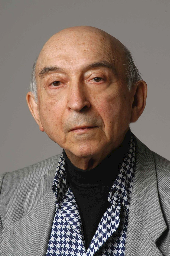
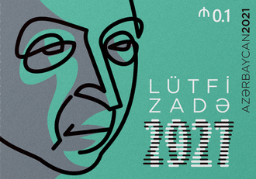
Lotfi Aliasker Zadeh ( February 1921 – 6 September 2017) was a mathematician, computer scientist, electrical engineer, artificial intelligence researcher, and professor of computer science at the University of California, Berkeley. Zadeh is best known for
proposing fuzzy mathematics, consisting of several fuzzy-related concepts:
fuzzy sets, fuzzy logic, fuzzy algorithms, fuzzy semantics, fuzzy languages,
fuzzy control, fuzzy systems, fuzzy probabilities, fuzzy events, and fuzzy
information. Zadeh was a founding member of the Eurasian Academy.
Barda full secondary school №4, Azerbaijan-Nigar Teachers` team
Zadeh became the Chair of Department of Electrical Engineering at the University of California, Berkeley, in 1963. One of the lasting impacts of his leadership in this role is the expansion and the integration of computer science. He initiated and completed (in 1968) the transformation of the Electrical Engineering department at UC Berkeley to the Department of Electrical Engineering and Computer Science (EECS). This strategic move not only led UC Berkeley's advancement into the top ranks of computer science education and research, but also led other research universities globally to add computer science to their electrical engineering departments. In 1973, Lotfi Zadeh received the prestigious (Institute of Electronic and Electrical Engineers) IEEE Education Award, largely in recognition of his performance as chair of EE and then EECS.
Other important services to UC Berkeley include his Academic Senate committee memberships: Academic Planning & Resource Allocation (1992–95); Committees (1969–70; 1980–81); Courses of Instruction (1975–80); and Faculty Awards (1990–92). Professor Zadeh graduated more than 50 PhD students, many of whom went on to become leaders in various areas of engineering, management and information sciences.
Zadeh was also an active contributor to the AI community, including at the Dartmouth Workshop that coined the term "artificial intelligence". He was
subsequently a frequent contributor to leading AI conferences
such as AAAI and IJCAI, as well as other top venues such as
AI Magazine.
Alkhwarizmi
Muhammad ibn Musa al-khwarizmi
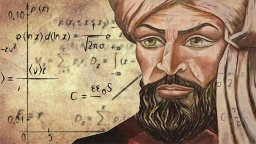
The scholar Muhammad ibn Musa al-Khwarizmi was born in 780 AD in Iraq in the capital, Baghdad.
Reema Teacher
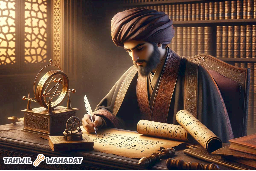
Al-Khwarizmi is considered one of the most prominent scholars who represented the Arabs and Muslims in the Middle Ages. He worked at Dar Al-Hikmah in his youth by translating books and theses in different languages.
The thesis on algebra arithmetic and the interview in which he presented to the world at the time a new science called algebra are among the most important theses of Al-Khwarizmi. Al-Khwarizmi was called the father of algebra.
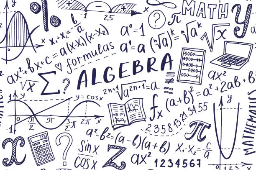
Al-Khwarizmi’s most important works:
- algebra and comparison.
- Earth image book.
-Book of astronomical tables in Sindh and India.
Muhammad bin Musa Al-Khwarizmi died in the year 850 AD in the city of Baghdad.
Tch.Reema bataineh
Alkhayriah Primary Mixed School / JORDAN
Raneem & Zainah & Fatemah
Dareen & Reemas
Ismail al-Jazari
Tuba Akça'nın Ekibi
Nisa
Baran
Yağmur


Ismail al-Jazari, known as Al-Jazari, was a prominent Muslim scholar and engineer in the 12th century. While his exact birth date is uncertain, he is believed to have been born around 1136 in the region of Horasan.
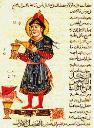
One of Al-Jazari's most significant works is the "Book of Ingenious Devices" or "Kitab al-Hiyal." This comprehensive engineering collection focuses on various mechanical devices, including water clocks, automata, and automatic weaving machines. Al-Jazari is considered a pioneer in machine design and automation due to these groundbreaking contributions.


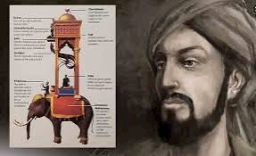
His works extend beyond mechanics to include substantial contributions to hydraulic engineering. Al-Jazari designed hydraulic systems to utilize water power for the functioning of different machines. This showcases his engineering brilliance and forward-thinking scientific approach.
During the Islamic Golden Age, marked by advancements in science, technology, and culture, Al-Jazari's contributions represented the pinnacle of Islamic civilization. His works influenced the European Renaissance and contributed foundational principles to modern engineering.

YAHYA ASLAN - ALTUNKAYA SECONDARY SCHOOL
AZİZ SANCAR
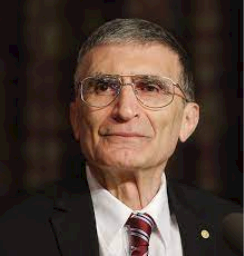
He was born on September 8, 1946 in Savur, Mardin. He is a Turkish academician, molecular biologist, biochemist and scientist. He completes his basic education in Mardin. He wanted to be a football player during his high school years, but later gave up this wish and came to Istanbul to continue his higher education. He graduated from medical school with top honors in 1969.
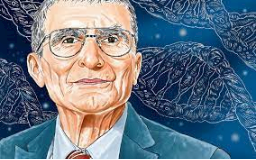
When his scholarship ends, he returns to Turkey and works as a doctor for 2 more years. He goes to America again in 1974. He worked there as a technician in his early years. He is considered a "young scientist" because of his achievements at a very early age.
He becomes one of the most successful scientists in the world working on the biological clock.
He won a scholarship to John Hapkins University and was introduced to the science of biochemistry there.
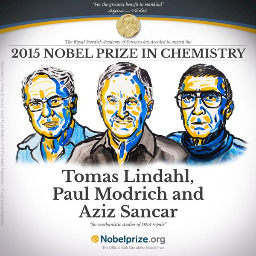
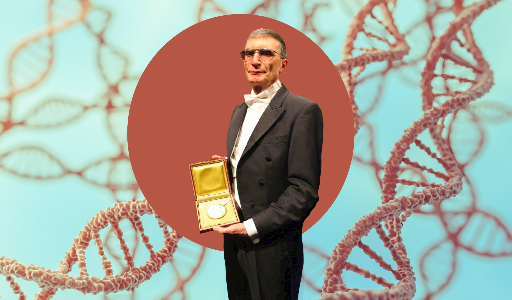
In 2015, Thomas Lindahl, Paul Modrich and Aziz Sancar received the Nobel Prize in Chemistry for their work on DNA repair.
Ibn Battuta... Prince of the Seas and Tuhfat Al-Nadhar Ibn Battuta (February 24, 1304 - 1377 AD in Tangier) (703 - 779 AH). He is without a doubt the most famous Arab and Muslim traveler of all time. He traveled many countries and trains and recorded his observations in his famous book “Tuhfat Al-Nadhar” In the curiosities of the lands and the wonders of travels.”
His name is Muhammad bin Abdullah bin Muhammad al-Tanji, known as Ibn Battuta. He was born in Tangier to a Muslim family that was interested in the Sharia sciences. Ibn Battuta received the Sharia and Arabic sciences and literature, and this is what helped him write his famous book. After studying the Sharia, he decided to travel. Hajja

Sevda Öztuna's Team
Umut Sevdateacher
Albert Einstein (Germa'n pronunciation: [ˈalbɛɐ̯t ˈanttan]; 14 March 1879, Ulm - 18 April 1955, Princeton) was a German-born theoretical physicist and scientist. Considered one of the best physicists of all time, Albert Einstein is best known for developing the theory of relativity. He also made significant contributions to the development of quantum mechanics. The mass-energy equation formula E = mc2, discovered by him and breaking new ground in the world of science, has been called the most famous equation in the world. He was awarded the Nobel Prize in Physics in 1921 for his contributions to the fields of physics and mathematics and for the discovery of the photoelectric effect law. In 1999, he was chosen as the most important person of the century by Time magazine.


CANAN DAĞDEVİREN

Kuzucubelen Secondary School-Mersin-Türkiye
Didem Coşkunışık's team searched for information about her life, education, studies and awards and prepared these pages.
Born: May 4, 1985, İstanbul - Türkiye
Education: Hacettepe University, Sabancı University, University of Illinois, Harvard University
Known for: Electromechanical systems, microfabrication, conformable electronics, piezoelectric biomedical systems
Awards: -MIT Technology Review Innovators Under 35 (TR35), Inventor Category
Fields: Materials science, physics, bioengineering
Institutions: Massachusetts Technology Institution , Harvard University

CANAN DAĞDEVİREN
didem coşkunışık
HER SUCCESSES
-In August 2014, PhD degree.
-In 2015, MIT Technology Review -"Top 35 Innovators Under 35" and Forbes magazine-one of the "Top 30 Under 30" in Science.
For more information:
https://youtu.be/h1cGpsY5o3I

Nikola Tesla
Gregory Pourliakas-2o Experimental Primary School of Ioannina, Greece
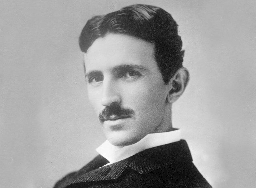
(10 July [O.S. 28 June] 1856 – 7 January 1943) was a Serbian-American inventor, electrical engineer, mechanical engineer, and futurist. He is best known for his contributions to the design of the modern alternating current (AC) electricity supply system.

grigoris teacher
Born and raised in the Austrian Empire, Tesla first studied engineering and physics in the 1870s without receiving a degree. He then gained practical experience in the early 1880s working in telephony and at Continental Edison in the new electric power industry. In 1884 he emigrated to the United States, where he became a naturalized citizen. He worked for a short time at the Edison Machine Works in New York City before he struck out on his own. With the help of partners to finance and market his ideas, Tesla set up laboratories and companies in New York to develop a range of electrical and mechanical devices. His AC induction motor and related polyphase AC patents, licensed by Westinghouse Electric in 1888, earned him a considerable amount of money and became the cornerstone of the polyphase system which that company eventually marketed.

grigoris teacher
Attempting to develop inventions he could patent and market, Tesla conducted a range of experiments with mechanical oscillators/generators, electrical discharge tubes, and early X-ray imaging. He also built a wirelessly controlled boat, one of the first ever exhibited. Tesla became well known as an inventor and demonstrated his achievements to celebrities and wealthy patrons at his lab, and was noted for his showmanship at public lectures. Throughout the 1890s, Tesla pursued his ideas for wireless lighting and worldwide wireless electric power distribution in his high-voltage, high-frequency power experiments in New York and Colorado Springs. In 1893, he made pronouncements on the possibility of wireless communication with his devices. Tesla tried to put these ideas to practical use in his unfinished Wardenclyffe Tower project, an intercontinental wireless communication and power transmitter, but ran out of funding before he could complete it.
Nihels BOHR
(1885-1962)
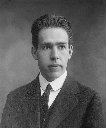
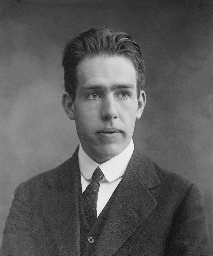
Niels Henrik David Bohr was born in Copenhagen, Denmark, on 7 October 1885. He died on 18 November 1962. He was a Danish physicist. He studied the structure of the atom with J.J. Thomson and Ernest Rutherford at the universities of Cambridge and Manchester. He was among the first to see the importance of an element’s atomic number and postulated that any atom could exist only in a discrete set of states characterized by definite values of energy. He became the first to apply the quantum theory to atomic and molecular structure, and his concept of the atomic nucleus was a key step in understanding such processes as nuclear fission.
From 1920 to 1962 he directed the newly created Institute for Theoretical Physics in Copenhagen. His work on atomic theory won him a Nobel Prize for Physics in 1922. He was president of the Royal Danish Academy from 1939 until his death. Though he contributed to atomic bomb research in the U.S. during World War II, he later dedicated himself to the cause of arms control.He received the first U.S. Atoms for Peace Award in 1957. Element 107, bohrium, is named in his honour. His son Aage Niels Bohr shared the 1975 Nobel Prize for Physics with Ben Mottelson and James Rainwater for their work on atomic nuclei.
NIELS BOHR

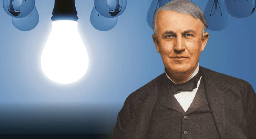
Thomas Alva Edison
(1847 – 1931)
was an American inventor
He developed many devices in fields such as electric power generation, mass communication, sound recording, and motion pictures. These inventions, have had a widespread impact on the modern industrialized world. Throughout his life he had 1093 patents.


"Nicolae Iorga" Pedagogical High School Botosani, Romania
Adriana Vatavu teacher
Here are some inventions of Thomas Edison:
*The electrographic vote recorder
This was Edison's first patent. The machine allowed voters to vote by pressing the YES or NO button instead of writing on paper. Unfortunately, the request for this device was not accepted, the parliament rejected the invention in favor of the written vote
*The coal phone
Edison perfected the microphone of Aleksandra Bella's phone. The original version had a carbon rod, but Edison replaced it with the carbon battery, which significantly increased the stability and distance of the signal
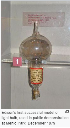
*The phonograph
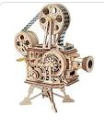
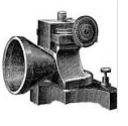
The phonograph recorded and reproduced sounds, at first with the help of paraffin paper and later with metal foil on the cylinder. Edison created several versions, and each model he perfected more and more. he recorded and reproduced sounds, at first with the help of paraffin paper and later with metal foil on the cylinder. Edison created several versions, and each model he perfected more and more.


Oktay Sinanoğlu
(February 25, 1935 – April 19, 2015)
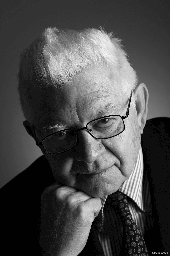

Oktay Sinanoğlu was born in Bari, Italy on Feb. 25, 1935. He graduated from TED Koleji, a private high school in the capital Ankara, in 1951. Two years later, he went to the U.S. There he studied at the University of California, Berkeley. Sinanoğlu began teaching at Yale University in 1960. He was appointed full professor of chemistry three years later at age 28, which made him the third-youngest full professor in the history of the school.Sinanoğlu founded the theoretical chemistry division at Yale in 1964. During his tenure at Yale, he developed such impressive works like
--"Many Electron Theory of Atoms and Molecules" (1961),
-- "Solvophobic Theory" (1964),
-- "Network Theory of Coupled Chemical Reactions" (1974),
-- "Microthermodynamic surface tension" (1981),
-- "Valency Interaction Formula Theory" (1983).
Sinanoğlu developed a revolutionary method carrying his name, the "Sinanoğlu Made Simple," published in 1988, depending on his own mathematical theories. With the help of this research system, and using simple pictures, chemists could predict the ways in which complex chemical reactions would proceed and solve complex problems in quantum chemistry.Sinanoğlu retired in 1997 after working for nearly 40 years at the same university.After being retired from Yale, Sinanoğlu returned to Turkey and served as a chemistry professor at Yıldız Technical University in Istanbul until 2002. Sinanoğlu was awarded for his scientific work both in Turkey and abroad. He received the 1973 TÜBİTAK Science Prize, the 1973 Alexandre von Humboldt Research Award for Chemistry and the 1975 International Outstanding Scientist Award of Japan. Sinanoğlu was also a two-time nominee for the Nobel Prize for Chemistry.He authored many books including his scientific works together with his political and linguistic approach, best expressed in such popular books as "Hedef Türkiye" ("Turkey on Target") and "Bye Bye Türkçe" ("Bye Bye Turkish"). Sinanoğlu died on April 19, 2015, in Florida.
- < BEGINNING
- END >
-
DOWNLOAD
-
LIKE(3)
-
COMMENT()
-
SHARE
-
BUY THIS BOOK
(from $9.59+) -
BUY THIS BOOK
(from $9.59+) - DOWNLOAD
- LIKE (3)
- COMMENT ()
- SHARE
- Report
-
BUY
-
LIKE(3)
-
COMMENT()
-
SHARE
- Excessive Violence
- Harassment
- Offensive Pictures
- Spelling & Grammar Errors
- Unfinished
- Other Problem





COMMENTS
Click 'X' to report any negative comments. Thanks!