
This book was created and published on StoryJumper™
©2014 StoryJumper, Inc. All rights reserved.
Publish your own children's book:
www.storyjumper.com

2
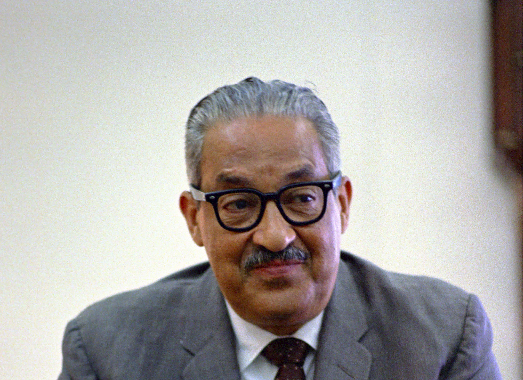
On July 2, 1908 Thoroughgood Marshall better known as Thurgood Marshall was born in Baltimore, Maryland. He
shortened his name in the second grade because he got tired
of writing it out. His father, William Marshall drilled into him
at a young age an appreciation for the U.S. Constitution and
the rule of law.
3
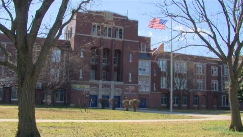
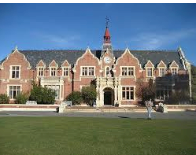 Fredrick Douglas HighLincoln UniversityMarshall graduated from Fredrick High school in 1925 and later to
graduate from Lincoln University in 1930. He then wanted to move on
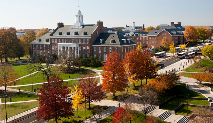
to attend law school in his own hometown, what's not a better place
to attend school than other his hometown where your always welcomed.
At least that's what Marshall thought but he was sadly mistaken, the
University of Maryland didn't let him attend because of there segregation
policy, which would later come back to bite them.
4
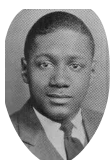
 In 1935 an African American named
Donald Murray was rejected by the
University of Maryland due to his race.
This was Marshall's time to shine. The
University argued that if he wanted to
attend law school then build another one
but the judge saw no need to do this that
he ruled in favor of the plaintiff, this was
Thurgood's first and small taste of victory
but it sure wasn't his last
5
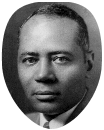 A heavy work load and health problems caused
Charles Hamilton Houston to step down from head legal
counsel of the NAACP, so he handed his job to the only
man he knew who could on the fight for justice. At the
age of thirty he became the head legal counsel and the
first case he took on was Sweatt V. Texas
6
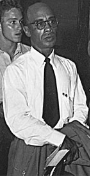 Herman Marion Sweatt applied to the University of Texas but
 was denied because the state of Texas was in the process of
building a law school for Negroes. Sweatt filed a lawsuit against
the school with Marshal leading the way, the court case reached
the supreme court and introduced what Thurgood and the
NAACP wanted all along: To end segregation in all levels of
education. The court granted Sweatt admission in the
University of Texas and abolished segregation on the
graduate level.
7
8
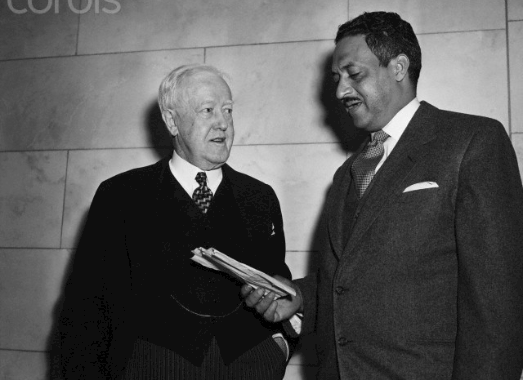
On 1952 Thurgood made his argument for school desegregation which reached the supreme court in 1954. Marshall quest for
simple justice involved a heated debate with John W. Davis who
had argued over a hundred cases before the supreme court and had
never lost. Thurgood's passionate speeches and brillance in using
the law convinced the court to one decision, In 1954 the court
struck down laws and ended fifty years of school segregation.
9
10
You've previewed 10 of 16 pages.
To read more:
Click Sign Up (Free)Benefits:
- Full access to our public library
- Save favorite books
- Interact with authors
11

READ

- < BEGINNING
- END >
-
DOWNLOAD
-
LIKE(1)
-
COMMENT()
-
SHARE
-
SAVE
BUY THIS BOOK (from $3.19+)
-
BUY THIS BOOK
(from $3.19+) -
BUY THIS BOOK
(from $3.19+) - DOWNLOAD
- LIKE (1)
- COMMENT ()
- SHARE
- SAVE
- Report
Liked By
X
Encourage this author
-
BUY
-
LIKE(1)
-
COMMENT()
-
SHARE
Problem with this book
X
- Excessive Violence
- Harassment
- Offensive Pictures
- Spelling & Grammar Errors
- Unfinished
- Other Problem
Which pages have problems?
Please describe the problem:
left text
right text
"Thurgood Marshall"
The story of Thurgood Marshall, the first African American Supreme Court Justice, and his fight against segregation and for civil rights.
(17 pages)
Privacy level:
PUBLIC
19 reads
1 fan
Report





COMMENTS
Click 'X' to report any negative comments. Thanks!