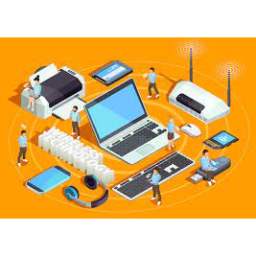
A computer network is a collection of interconnected computers and other devices that can communicate with each other, share resources, and exchange data. These networks can range from small local networks within a single building or home to large global networks like the internet.

Packet:
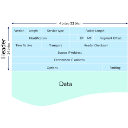
A packet is a basic unit of data transmitted over a digital network. It consists of two main parts: the header and the payload.
Header: The header contains control information necessary for routing and managing the packet as it travels through the network. This information typically includes source and destination addresses, sequence numbers, error checking codes, and other metadata needed for proper delivery.
Payload: The payload contains the actual data being transmitted, such as a part of a file, an email message, or any other type of information. The size of the payload can vary depending on the specific network protocol being used.
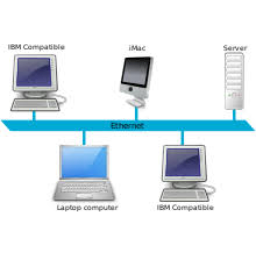
Local Area Network (LAN): A Local Area Network (LAN) is a computer network that spans a relatively small geographical area, typically within a single building or campus. LANs are commonly used to connect computers, servers, printers, and other devices to facilitate communication and resource sharing within an organization or a specific location.
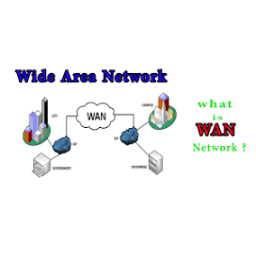
. Wide Area Network (WAN): A Wide Area Network (WAN) is a type of computer network that spans a large geographical area, connecting multiple LANs or other smaller networks across cities, countries, or even continents. Unlike LANs, which cover a limited physical area like a single building or campus, WANs can cover vast distances and are often used to facilitate communication between geographically dispersed locations.
Node:
a node refers to any device or point within a network that can send, receive, or process data. Nodes can range from computers, servers, and routers to printers, switches, and any other network-enabled devices. Each node typically has a unique identifier within the network, allowing it to be addressed and recognized by other nodes.
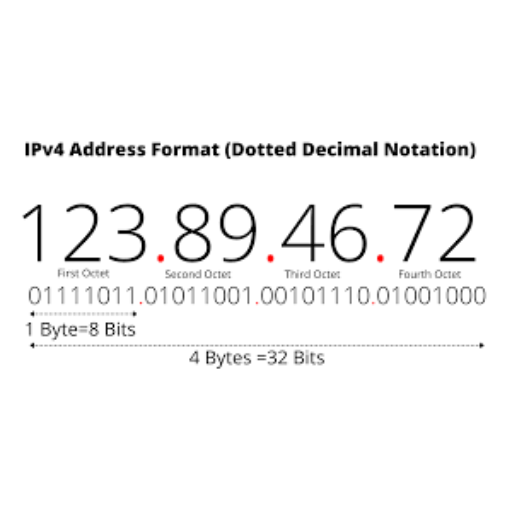
IP Address: An IP address, short for Internet Protocol address, is a numerical label assigned to each device connected to a computer network that uses the Internet Protocol for communication
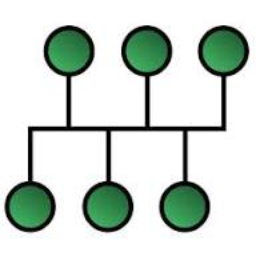
Bus Topology: Bus Topology is a type of network topology in which all devices are connected to a single cable, known as a backbone or bus. In this arrangement, each device communicates directly with the bus, and messages are broadcast to all devices on the network.
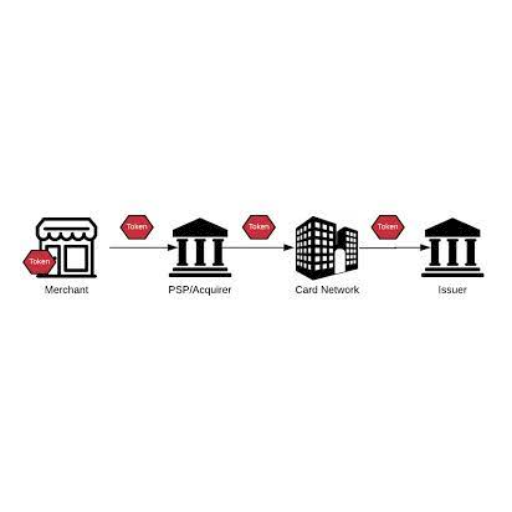
Network Token: In networking, a "network token" typically refers to a concept associated with Token Ring networks, which is a type of local area network (LAN) technology. In Token Ring networks, a token is a special control message or frame that circulates among the connected devices in a predefined order, allowing them to access the network medium (such as the cable) for data transmission.
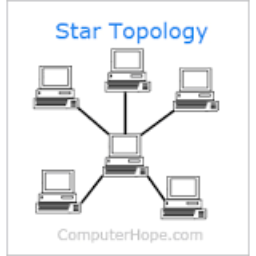
. Star Topology: Star Topology is a type of network topology in which all devices (such as computers, printers, and servers) are connected to a central hub or switch. In this arrangement, each device communicates with the hub or switch, and data transmissions between devices are routed through the central point.
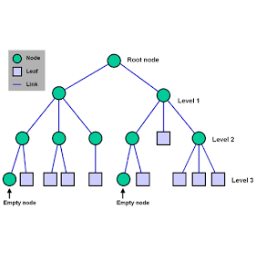
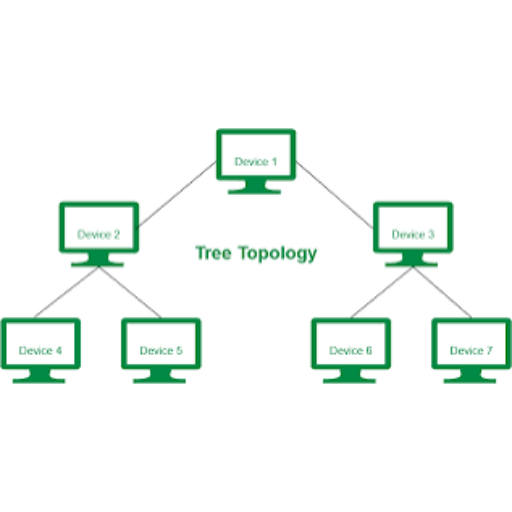
Tree Topology: Tree Topology, also known as Hierarchical Topology, is a type of network topology that combines characteristics of both bus and star topologies. In a tree topology, devices are arranged in a hierarchical structure resembling a tree, with multiple levels of interconnected nodes branching out from a central root node.
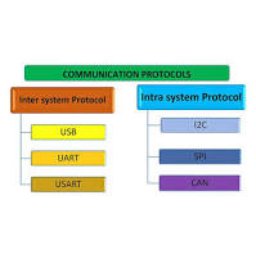
Protocol: A protocol, in the context of computer science and networking, refers to a set of rules and conventions governing how data is transmitted, received, and processed between devices or systems in a network. Protocols define the format, sequence, and timing of data exchange, as well as the procedures for error detection, correction, and security.
- Full access to our public library
- Save favorite books
- Interact with authors
Works Cited
Beal, Vangie. “What is Packet?” Webopedia, 24 May 2021, https://www.webopedia.com/definitions/packet/. Accessed 18 March 2024.
Beal, Vangie. “What is Protocol?” Webopedia, 24 May 2021, https://www.webopedia.com/definitions/protocol/. Accessed 18 March 2024.
Pidgeon, Nick. “Local Area vs. Wide Area - How Ethernet Works | HowStuffWorks.” Computer | HowStuffWorks, https://computer.howstuffworks.com/ethernet2.htm. Accessed 18 March 2024.
Tyson, Jeff. “Networking Basics - How LAN Switches Work | HowStuffWorks.” Computer | HowStuffWorks, https://computer.howstuffworks.com/lan-switch1.htm. Accessed 18 March 2024.
- < BEGINNING
- END >
-
DOWNLOAD
-
LIKE
-
COMMENT()
-
SHARE
-
SAVE
-
BUY THIS BOOK
(from $3.59+) -
BUY THIS BOOK
(from $3.59+) - DOWNLOAD
- LIKE
- COMMENT ()
- SHARE
- SAVE
- Report
-
BUY
-
LIKE
-
COMMENT()
-
SHARE
- Excessive Violence
- Harassment
- Offensive Pictures
- Spelling & Grammar Errors
- Unfinished
- Other Problem





COMMENTS
Click 'X' to report any negative comments. Thanks!