A story to learn Agendy2030

INDEX
Chapters 1-A happy life (A. Anselmi Primary school of Arcevia-Italy- Teacher Ombretta Bucci)
Chapter 2 : The assault (A. Anselmi Primary school of Arcevia-Italy- Teacher Ombretta Bucci)
Chapter 3: The great flood: Teacher Thomie Siskou-Maria Sioula-Kleoniki Papantoni (18th Primary School of Larissa)
Chapter 4: The long drought:( Primary School of Damasi,2nd grade,Teacher, Erasmia Magoulioti-Stella Kolovou)
Chapter 5: The thick blanket of snow (24th Primary School of Larissa, 5th grade, Teacher Sophia Nassiou)
Chapter 6: Finally Spring! (24th Primary School of Larissa, 6th grade, Teacher Velissaria Bonia)
Chapter 7: Poisonous pesticides (14th Primary School of Larissa, 5th grade, Teacher Bakola Christina, Athanasia Bletsa)
Chapter 8:
Chapter 9: Greedy wild boars (Unified Special Vocational High School of Kozani , Teachers: Chatzigiannaki Evangelia, Kaleli Zoi, Karathanasi Styliani, Arseni Areti)
Chapter 10: A polluted river (Istituto Comprensivo "Pietro Aldi", Secondaria di Marsiliana, Teachers Ilaria Calvano, Elisa Celata, Francesca Curtotti)
Chapter 11: Crazy Frogs (Argyropouli Elementary School, 1st grade, teachers:Niki Daoula, Kalliopi Doudouka
Chapter 11: Crazy Frogs (Argyropouli Elementary School, 1st grade, teachers:: Tania Basdeki
Chapter 13: A Beautiful Wheat Field (Tyrnavos Elementary School 2nd Grade, 4th Grade, Teacher: Vlachava Garoufalia)
Chapter 14: Summer is Coming (Nea Plagia Elementary School-Aglaia Stathorou, Argyri Vaiou, Maria Akasi)
Chapter 15:Chicchetto, A Splendid Year of Wheat (8th Primary School of Eleftherio Kordelio Thessaloniki, Alexiadou Nikoletta, Naki Smaragdi)
Chapter 16: The precious harvest (electric tractor)
4th Primary School of Tyrnavos, Greece
Teachers: Georgia Katsouperi, Christina Koutalou, Theodora Blakou, Vivian Gogou
Chapter 17: Bread for everyone
31st Primary School of Larissa
Margarita Kontaxi- Maria Papadimitriou
Chapter 18: Pace per tutti! (5th Primary School of Marsiliana; Teachers: Cristina Guidi, Marisa Sodano)
Chapter 19: Çiftlik Primary School,Dalaman,Türkiye (Seval KIZIL)
Chapter 20: Chicchetto and the dough of equality
(7th Primary School of Acharnes, Greece, 4th grade, Teachers: Vasilis Anagnostou, Fotis Molydris, Papadaki Anastasia)
Chapter 21:
Chapter 22: - Chicchcetto's big family (1st primary school of Plagiari, Thessaloniki, Greece, 2nd grade, teacher: Domna Petmeza, drawings are made with ideogram AI)
Chapter 23: A New Beginning
(Theologia Giotsa. 16th Primary School of Larissa)
A. Anselmi primary school of Arcevia-Italy
Teacher Ombretta Bucci
Drawing made by IA of Canva
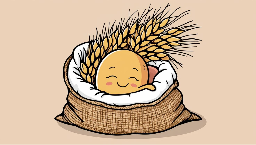
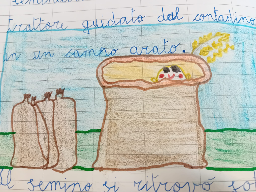
Once upon a time there was a small grain of wheat that slept peacefully in a jute sack. He stayed warm and quiet with his little brothers. His name was Chicchetto.





Chapter 2
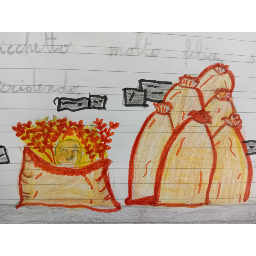
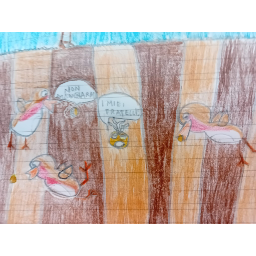
THE ASSAULT

Chapter 3: The great flood: Teachers Thomie Siskou-Maria Sioula-Kleoniki Papantoni (18th Primary School of Larissa)

But then the rain came. Not a normal rain,
but a storm the likes of which the field
had never seen before. The drops fell with
fury, the soil turned to mud and the water
began to flood everything. Chiccetto felt
himself being swept away by the current.
"No!" he thought in terror. "This is not my
moment! I haven't had time to put down
roots!"


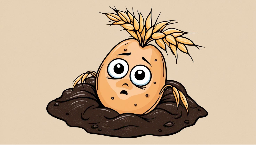
As the current dragged him along, he fell into a small groove and became trapped there. It was dark, and Chiccetto wondered if this would be the end. But as the hours passed, the water began to recede. The little speck found himself buried deeper in the soil, but he felt safe. The soil around him was softer and full of nutrients.
After the storm, the sun shone again. The warmth made him feel strong. It was as if it was giving him a message: "It's your time, Chiccetto." With great effort, the little speck began to send its first root deep into the ground. The root searched for drops of water and nutrients, while a small green top began to peek up into the sky.
Chiccetto was now determined to survive. Despite the storm, the birds and his fear, he had taken his first step. It was a step towards the light, towards life.
Chapter 4: The long drought: ( Primary School of Damasi,2nd Grade,Teachers Erasmia Magoulioti-Stella Kolovou )


The sun began to burn too much, and the Chicchettos wanted to reach the surface of the earth.
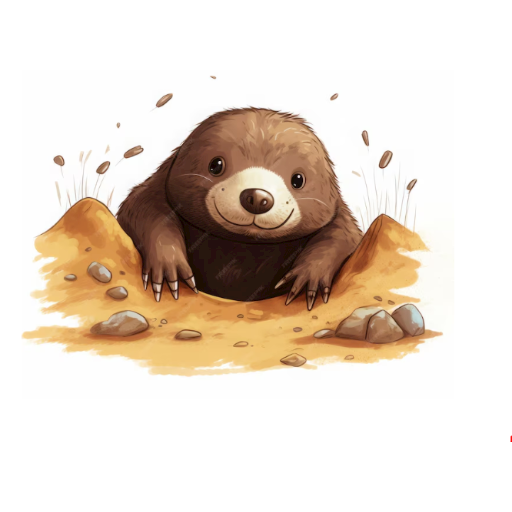
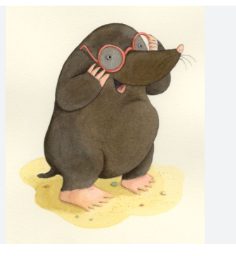
But then, something made him freeze. He heard soft digging noises. A tiny blind mouse was near, scratching at the earth with its paws. It was looking for food. Chiccetto felt scared. What if the mouse dug him up?
.
The mouse sniffed the air and paused, unaware of the tiny sprout below. Chiccetto's root trembled in fear, but then he took a deep breath and pushed his root deeper into the soil. *I have to survive,* he thought
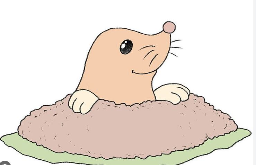
The mouse sniffed once more and, as quickly as it had come, it moved away, still blind and searching for something else. Chiccetto was safe—for now.
Chapter 5 "The thick blanket of snow", 24th Primary School of Larissa, 5th grade, Sophia Nassiou

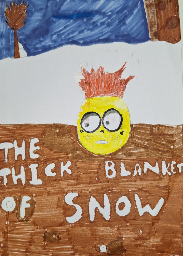
Soon winter came with its heavy white veil. Chicchetto lay under a thick blanket of snow, feeling cold and alone. But the snow didn’t care if the seed was big or small, rich or poor—it covered everything the same way. Whether the seed was in a rich field or a humble patch of soil, the snow made no difference.


As the snow kept falling, Chicchetto knew that when spring came, the sun would shine for everyone, giving all the seeds a chance to grow. The snow reminded Chichetto that in nature, everyone is treated equally, no matter where they come from, and all seeds can bloom in their own time.

Chapter 6 "Finally Spring" 24th Primary School of Larissa, 6th grade, Velissaria Bonia
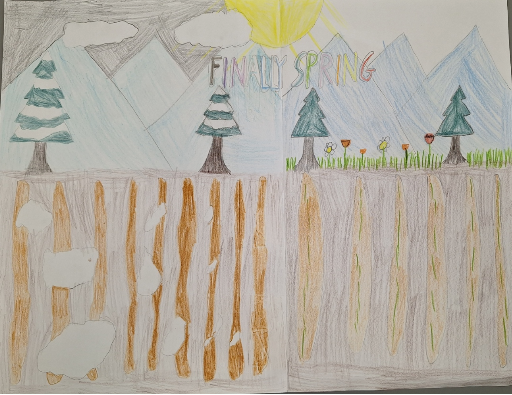
After a long cold winter Chichetto was excited for spring to come. The snow was melting. But this time, Chicchetto noticed something strange—the weather had changed. The cold was colder, and the sun wasn’t as bright. It was afraid that it might not have enough time to grow.


Then, Chichetto heard the wind spread stories that people were working together to take care of the planet, planting trees and helping nature. It felt happy again.
It knew that if everyone worked together, the earth could get better, and spring would come back strong, giving all seeds a chance to grow.
Deep in the moist soil, Chiccetto was growing. He absorbed the nutrients from the earth and drew strength from the sun. He grew, became strong, and turned into a beautiful and sturdy stalk of wheat. During the day, he danced with the wind, and at night, he played hide-and-seek with the stars and the moon.

Chapter 7: Poisonous pesticides
14th Primary School of Larissa, 5th grade,
Christina Bakola, Athanasia Mpletsa

But one day, suddenly, heavy rain began to pour. It rained and rained and rained… And after a few days, tiny worms started roaming the field, nibbling on the young stalks.
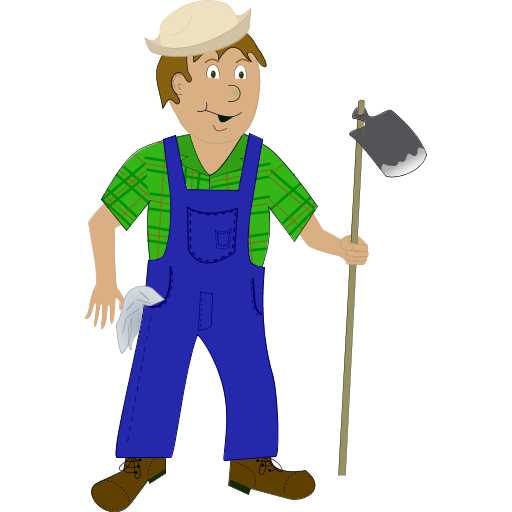
When the farmer saw this, he immediately brought a machine and began spraying pesticides to save his crop. The pesticide droplets fell onto the stalks and seeped into the soil. The water carried them away, polluting the streams and rivers. Birds and insects were poisoned, fish were dying, and people began experienci
Poor Chiccetto—how heartbroken he was!
Chapter 8: Dangerous herbicides
33rd Primary School of Thessaloniki-Child's Asylum (Lampros Skoutidas, Maria Kaleli, Ritsa Mamouri, Aggeliki Chalkopoulou, Stefania Arzoglou)
As luck would have it, the farmer not only sprayed pesticides but also he sprayed herbicides that were very dangerous for Chicetto and for the crop too, as the soil was now full of poison.
Chichetto was desperate worrying for himself and for the earth too. Water from watering was flowing poisonous into the field and would end up to the river...
Chichetto believed that there must have been some way to change the course of history and as he was thinking of that, all of a sudden,it started raining again!Fortunately, he and the crop were clean again and safe from danger at that moment...
Chapter 9: Greedy wild boars
Unified Special Vocational High School of Kozani ,
Teachers: Chatzigiannaki Evangelia, Kaleli Zoi, Karathanasi Styliani, Arseni Areti
The rain stopped. Chichetto felt happy, calm and relieved. He believed that all danger had gone. Suddenly, footsteps and some strange roars were heard. He looked around and saw three large wild boars rushing into the field and eating roots and fruits.
They were grabbing with their teeth whatever they found in front of them with fury and rage. Chichetto closed his eyes in fear and began to cry. He felt helpless. He thought that his end had come for sure this time.
A wild boar came very close to Chichetto and was ready to grab its stalk with its teeth, which had grown quite a bit. At that moment, however, the engine of the farmer's tractor was heard moving forward.
The wild boars were frightened and started running away from the farmer's field. Chichetto felt great relief. Luck was on his side.
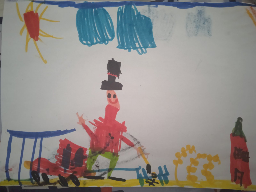
Chicchetto doesn’t realise that there is a wild boar that it’s left particularly hungry, digging in the ground looking for roots and plants to eat.
During his research, the animal accidentally bites him and carries him but after that he traverses a short way, he was scared of the farmer that was armed with a fork. So the boar left Chicchetto on the side of the river. The river and the land around were dirty and creepy.
Chapter 10: A polluted river
Istituto Comprensivo "Pietro Aldi", Secondaria di Marsiliana
Teachers: Ilaria Calvano, Elisa Celata, Francesca Curtotti

While he is trying to adapt to the new hostile environment, he notices the presence of an old talking tree that has lived there for many years and tells him the story of the river: "A long time ago it was clear and crystalline, with calm waters where families of many species of fish lived here; but then humans began to dump waste, chemicals from factories, fertilizers and pesticides into the river; so the animals and plants that lived here died or moved elsewhere".
Chicchetto became sad because he is very afraid for his future and he fears that, near that polluted stream, he cannot grow healthy and strong; so he asks the wise tree if he thinks that there is hope that the river can return to being as clean up as it was once. The tree replies that if men do not intervene to change their habits and if they do not begin to have respect for our planet, things will hardly change. Nature has an extraordinary ability to adapt and resist, but there is a need for man's help and commitment to clean up the river and bring it back to its ancient beauty.
“How can humans save the river?”, asked Chicchetto, curious by the wisdom of the tree. “In many ways,” replies the tree. “Eliminating not only the presence of pollutants, but also by actively participating in the defense of the planet’s water resources and using water consciously.”
Chicchetto listened carefully, feeling a lot of determination growing inside him; so he continues to grow strong, hoping that one day the river can return to being clear and full of life thanks to everyone’s help.
Chapter 11: Crazy frogs
Primary School of Argyropouli, Greece,
Teachers: Niki Daoula, Kalliopi Doudouka
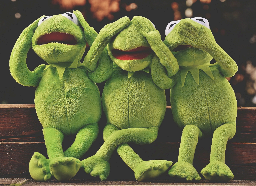
Troubled by what he heard Chicchetto went further where he met some frogs. They looked scared and worried and Chicchetto wanted to know what had happened.
They explained to him how that once they lived in a lush green lake, full of water lilies and fish. They were all happy and playful, and spent their days swimming, chasing insects, and playing hide-and-seek.
One day, however, the frogs noticed that the water in the lake had begun to cloud over and smell bad. The water lilies had withered and the fish had disappeared. The frogs were very scared, because they knew that if the water was not clean, they could not live.
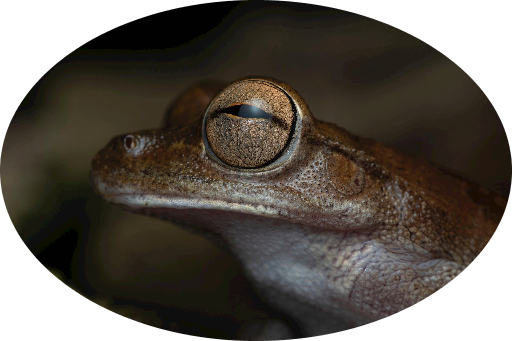
Then, the frogs decided to go and find the old frog, the wisest of all the frogs, to ask him what had happened and how they could save their lake. The old frog listened carefully to them and said:
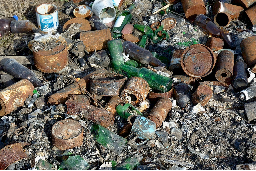
"My children, the water in the lake has been polluted by humans. Humans throw various harmful substances into the water, such as chemicals from factories, fertilizers from fields, and garbage from their homes. These substances poison the water and kill the animals and plants."
The frogs were very sad to hear the words of the old frog. But he said to them:
"Do not despair, my children. Humans can help to clean the water. They must stop throwing harmful substances into the water and clean up the garbage they have already thrown in. They must also use fewer chemicals in their fields and build special facilities to clean the water from the factories."
The frogs understood that the old frog was right. They decided to go and talk to the humans and explain the problem to them. The humans listened carefully to them and realized that they had made a mistake. They began to take measures to clean the water in the lake.
In a short time, the water in the lake became clean again and the frogs could live happily. So they learned that humans and animals must live in harmony and respect the environment.
Chapter 12: A cloud of dense smoke (industrial pollution)
5th Primary School of Tyrnavos
1st grade
Teacher: Tania Basdeki
In the following days a strong wind blew and took Chicchetto a little further. It landed in a field nearby.
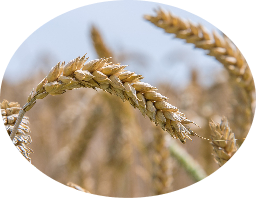
For several days the little seed, Chicchetto and all his friends in the field, began to feel dizzy and to cough very hard. They felt like boys! They felt like they were not growing as they should... Their leaves and roots hurt a lot... they were starting to change color... to wilt... They didn't know why! They hadn't done anything different lately...
Suddenly one morning, they woke up and couldn't see anything in front of them in the field... A big veil of thick smoke had covered them! But what happened???? everything began to wonder. Where was all that smoke coming from?


They searched and learned that it came from the factories and large industries of the people. The field was slowly being destroyed..
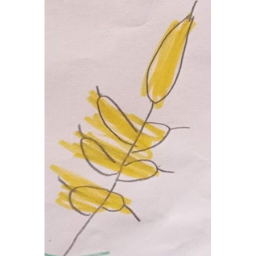
We have to do something to save ourselves, thought Chicchetto.
Then all the sparrows began to cough very very loudly so that the people could hear them and understand the male that was happening.

And indeed some people saw them and heard them and decided to drive away the cloud of smoke from the field and all the crops.
Nearby factories and industries changed their chimney filters and the way they worked. They have upgraded their infrastructures to make them sustainable, increasing the efficient use of resources and encouraging the adoption of cleaner and more environmentally sound technologies and industrial methods.

Now the cloud of smoke has disappeared! The seeds were breathing fresh air as before and were ready to give all their fruit to the people!
Chapter 13: Α Splendid wheat field
2nd Primary School of Tyrnavos
4th Grade, Teacher: Vlachava Garoufalia

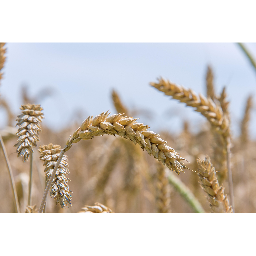
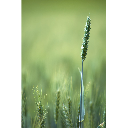
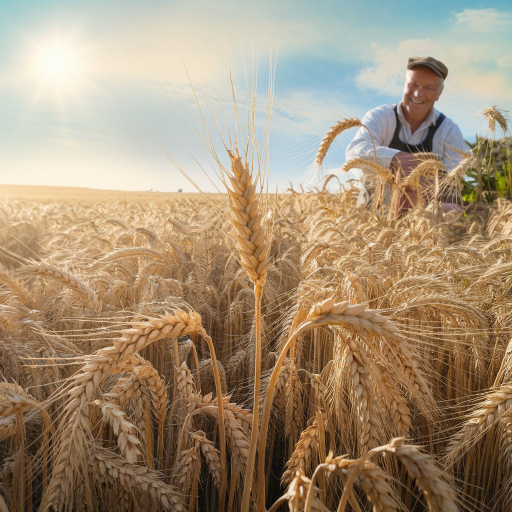
Time passed and Chicchetto grew taller and taller… One day he stretched and looked around excitedly. His friends had also grown much taller. Some were still green, some were starting to turn yellow and some were completely golden.
The wind was blowing and cooling them, it was late spring now. He stretched even more and exclaimed with joy:
A wonderful field of wheat! We did a good job! The people and the various stakeholders have finally collaborated for sustainable production! We are beautiful!”
A lot had passed and until this moment arrived he was not sure if it would have a positive result. For all the seeds to grow together and become this wonderful field of wheat.
“The agony we went through all this time was finally worth it,”
he thought and started to cheer. The other ears of wheat asked him what had happened and he shouted like this.
Then he turned to his neighbor and began to whisper something in his ear, laughing. The other seed whispered to the next, then to the next. A whisper was heard throughout the field and laughter, lots of laughter. In a short time the whole field had heard the words of Chiccheto "We are almost ready! Summer is near..."
Chapter 14 : Summer is coming
Primary School of Nea Plagia 4th-6th Grade
Aglaia Stathorou,Argyri Vaiou,Maria Akasi
The sun began to shine warmer and the days grew longer. Little Bean, now a golden ear of corn, felt the energy of summer fill him. The field around him was teeming with life. The other ears of corn, the wild flowers, the insects, all were preparing for the great harvest festival.
Despite the joy of growth and abundance, Chicchetto could not forget the promise he had made to himself and his friends: to help the river be reborn. The images of the polluted water, the dying fish, and the withered plants were etched in his memory.
"Summer is a time of joy and celebration," Chicchetto said to the other ears of wheat, "but we cannot forget those who suffer. The river is waiting for our help."The other ears of wheat agreed with him. They knew that Chichetto was right. So, they decided to organize a festival to raise awareness among the people about the state of the river.
"We will invite all the inhabitants of the area," said an ear of wheat with green leaves. "We will show them the beauty of the river as it once was and we will explain to them how pollution destroyed everything."
"We will make a large banner with drawings that will show the fish swimming in clean waters and the children playing on the banks," suggested another ear of wheat.
And we will sing songs about the water and life," said Chicchetto. "Songs that will awaken the hearts of the people and make them think about their responsibility."
And so it happened. On the day of the festival, all the inhabitants of the area gathered on the banks of the river. The ears of wheat had decorated the place with flowers and colorful cloths. The large banner with the drawings hung from a tall tree.
The festival began with the songs of the ears of wheat. The melodies were sweet and sad, but full of hope. The people listened with attention and emotion.
After the songs, Chicchetto and the other ears of corn spoke about the importance of water and the need to protect the environment. They explained how pollution affects all living organisms, from the smallest fish to humans.
The people listened carefully and understood their mistake. They were moved by the words of the ears of corn and decided to act. They promised to stop polluting the river and help in its rebirth.
Summer continued to pass. Chicchetto and his friends had achieved their goal. The people had understood the importance of environmental protection and had begun to work for a better future. The river, with the help of everyone, began to be reborn. Its waters cleared, the fish returned, and the plants bloomed again. Life returned to the river, thanks to the love and commitment of Chichetto and his friends.
Chapter 15
Chicchetto, A Splendid Year of Wheat
(8th Primary School of Eleftherio Kordelio, Thessaloniki, Greece, Alexiadou Nikoletta, Naki Smaragdi)
Time passed and the river blossomed again, thanks to the efforts of Chicchetto and his friends. The fields around the river were greener than ever, and the ears of wheat danced in the air, full of life. Chicchetto, happy and proud, observed the beauty that had been created.
One morning, as the sun rose, Chicchetto heard a voice. It was the voice of an old sparrow, sitting on a branch nearby. "Chicchetto," said the sparrow, "you have done a miracle. You have brought life back to the river and taught people the importance of protecting the environment." Chicchetto smiled. "I didn't do it alone," he said. "I had the help of my friends and the support of the people." "That's true," said the sparrow, "but you were the leader, the inspirer. And for that, you deserve a reward."
The sparrow spread its wings and flew towards the field. After a while, it returned, holding a small, shiny seed in its claws. "This is a magic seed," said the sparrow. "Plant it, and it will bring you a splendid year of wheat." Chicchetto took the seed and planted it in the ground. And indeed, the seed sprouted and became a beautiful ear of wheat, taller and stronger than all the others. Its grains were large and golden, and when the wind caressed them, they made a sweet sound, like music.
Throughout the year, Chicchetto's field was filled with healthy and abundant wheat. The people of the village were grateful for the abundance, and they celebrated the harvest with a grand festival. Chicchetto, happy and satisfied, looked at his field. He knew that he had done something important, not only for the river and his village, but also for himself. He had learned that with love, dedication, and cooperation, anything is possible.
And so, Chicchetto lived a splendid year of wheat, and many more, filled with joy, peace, and love for nature.
Chapter 16: The Precious Harvest (Electric Tractor)
4th Primary School of Tyrnavos, Greece
Teachers: Georgia, Christina, Theodora, Vivian



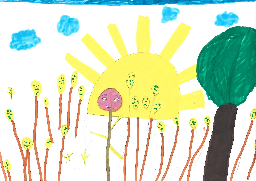
The harvest had arrived. The sun bathed the golden field, and Chicchetto felt proud to have made it this far.
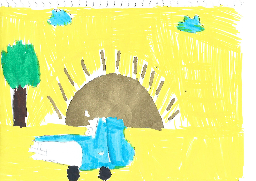
Chicchetto asked, curious and the wise old oak tree, who had once told him about the polluted river, answered:
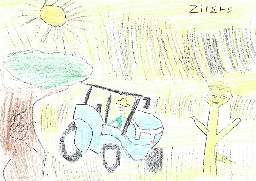
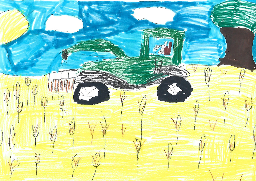

What is that?
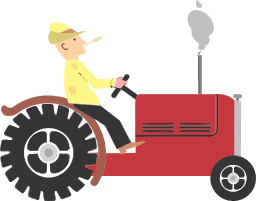
This is the future, my little friend! A tractor that doesn’t pollute, doesn’t burn fuel, and helps farmers work sustainably.
As the machine carefully harvested the ripe wheat, Chicchetto felt a deep sense of joy. This was more than just a harvest—it was a new beginning for agriculture.
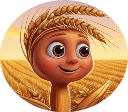
People had started to understand. It wasn’t just about growing and reaping. They had to care for the earth, protect nature, and embrace technologies that would create a better future.
As Chicchetto was lifted from the soil, he realized that his journey was complete. From a tiny seed, he had grown into a strong stalk of wheat, ready to nourish people.
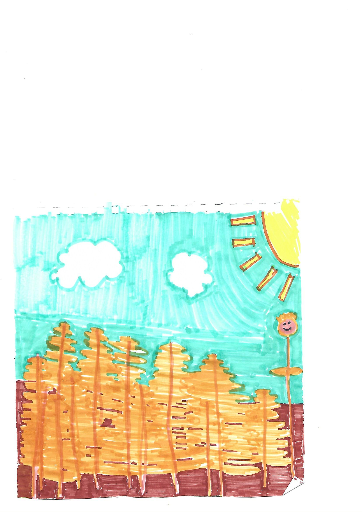
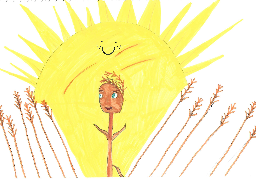
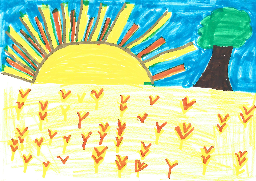
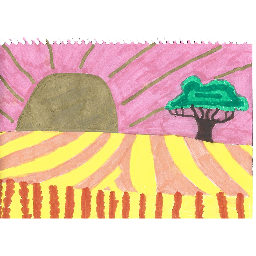
But more importantly, he had learned a valuable lesson: nature and humans can thrive together—if only they listen to each other and work as one.
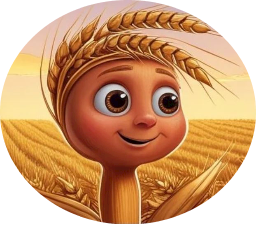
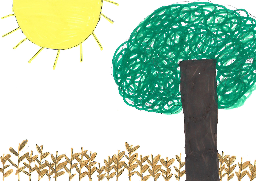
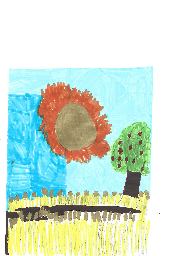
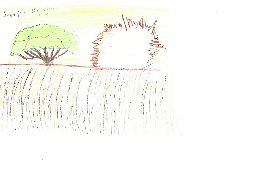
The images illustrating our story were generated with artificial intelligence, but our students also hand-drew the key scenes themselves.
Chapter 17 : Bread for everyone
31 Primary School of Larissa /Margarita Kontaxi- Maria Papadimitriou
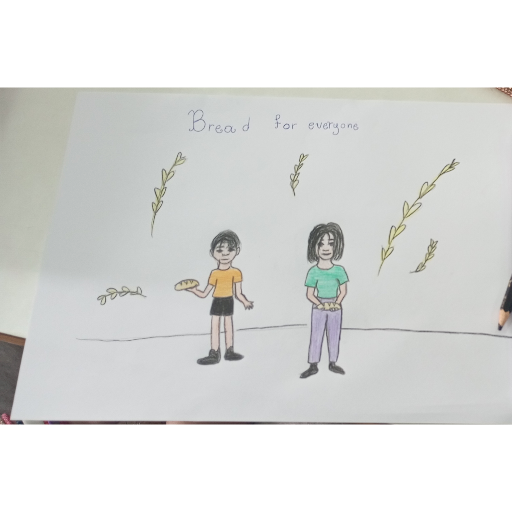
Chicchetto's vision was now beginning to take shape. Everything he had ever dreamed of, was finally becoming a reality. Ηe was now a beautiful harvested ear of wheat ready to be turned into flour. And most importantly: Ηe was not a product of harmful farming methods but a product of sustainable practices.
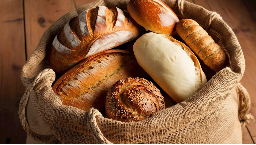
And finally the magic moment had arrived! The moment when Chicchetto and his friends were finally transformed into beautiful loaves of bread! Bread made through thousands of adventures and destined for a holy cause! To feed every hungry person and to end hunger on the planet.
Chicchetto was so happy!
He was thrilled to be a beautiful bun in the hands of a child who held him tight and his eyes were shining with satisfaction!
Chapter 18: Peace for All!
5th Primary School of Marsiliana - ITALY
(teachers Cristina Guidi, Marisa Sodano)
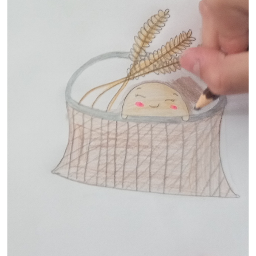
On a beautiful starry night, Cicchetto fell asleep sweetly and happily in the meadow near the river and had a wonderful dream: that of solving all the problems that men had caused to the Earth.
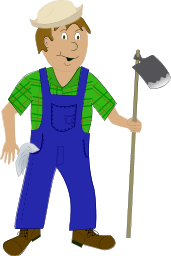
He saw that the farmer managed to find an ecological product to keep away the worms and insects.
Some men noticed the river polluted by factories and gathered to find a solution: transform the toxic waste into carbon dioxide and filter the waste water to make it clean.. I
In addition, smaller factories reduced their use of polluting machinery and most of the smog dispersed.
Chicchetto woke up serene and hoped that the union between humans had transformed the world peaceful and harmonious! Looking around, Cicchetto discovered that nothing of what he had dreamed had happened. But the men were working to make it happen. After a few days everything began to change until Cicchetto dream came true.h
The sky turned a beautiful light blue, the rivers became clear again and the smog dissolved in the air making it clean and breathable.
The smoke from the factories disappeared and the union between humans became stronger.
The sky turned a beautiful light blue, the rivers became clear again and the smog dissolved in the air making it clean and breathable. The smoke from the factories disappeared and the union between humans became stronger.
Chapter 19: Chicchetto's children return to hibernation
(Çiftlik Primary School Dalaman,Türkiye-Seval KIZIL)
Chicchetto has a dream that he wants to grow with his children again and again due to the all negative affects of the climate change.For that reason he thinks that the farmer should help him and his children.
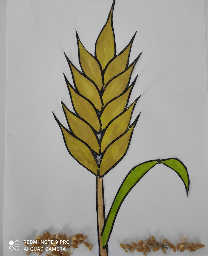

He decides to talk with the farmer and they are all together agree to wait the planting time.The farmer says that he is very happy to help them with his farmer friends.Chicchetto and his children wait until the spring.
The sun is getting warmer and warmer and Chicchetto understands that the spring is coming.
The farmer starts to plant the Chicchetto and his children.They are all excited and happy.
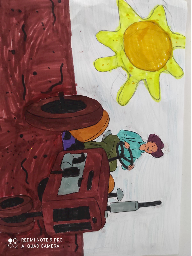
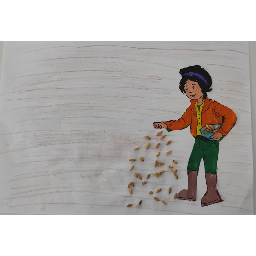
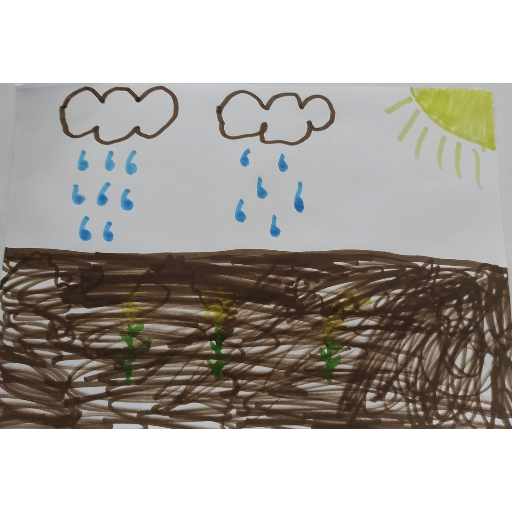
The farmers plant the wheat grains and The Chicchetto and his children are ready for hibernation.They will grow again and again.
With the spring sunlight and spring rain;Hibernation occurs for Chicchetto and his children.They start to plant from the soil and It is possible to see them on the farm.Everywhere is green with Chicchetto and his children.
Chapter 20: Chicchetto and the dough of equality
(7th Primary School of Acharnes, 4th grade,
Teachers: Vasilis Anagnostou, Fotis Molydris, Papadaki Anastasia)

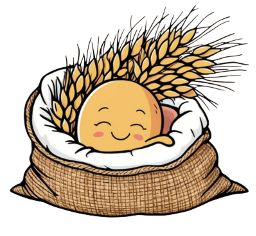
Once upon a time, in an old mill filled with the smell of freshly ground flour, there lived a tiny grain of flour named Chicchetto. He was the smallest and lightest grain of all, but he had a big heart and a dream: to make the world a fairer place.
Canva AI drawings
Student's drawings
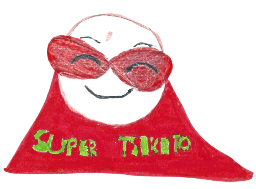
Chicchetto lived inside a large sack of flour. The bigger and heavier grains always dominated the sack. Whenever the baker reached in to scoop out some flour, those large grains were the first to join the dough, while the smaller ones, like Chicchetto, were left behind at the bottom.
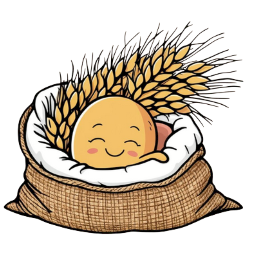
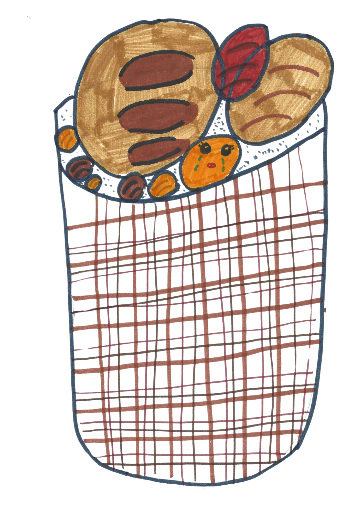
“It’s not fair,” Chicchetto often said. “We’re all flour, and we all have the power to create something wonderful!”
One day, a strong gust of wind blew through the mill. Being so light, Chicchetto was carried out of the sack and landed on the baker’s workbench. Right next to him were all the ingredients for bread: water, salt, and yeast.
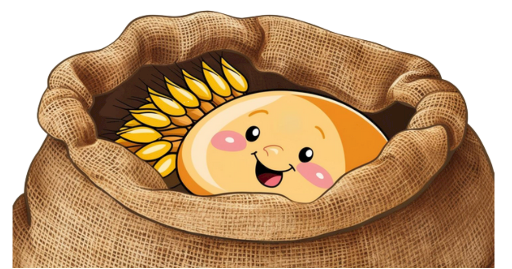
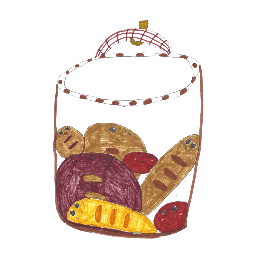
“It’s time to do something for everyone!” Chicchetto said with determination. He carefully took a small scoop of flour from every sack in the mill—big grains, small grains, light ones, and dark ones. Together, they created a unique dough where every grain had an equal part.
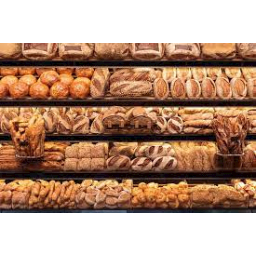
When the dough rose, the baker was amazed. “This bread is the fluffiest and tastiest I’ve ever made!” he said, placing it on the shop’s display shelf.
Everyone who tasted it felt there was something special about this bread - a sense of unity and equality baked into every bite.


From that day on, Chicchetto became a hero to all the grains in the mill. He taught the bigger grains to make room for the smaller ones and the smaller ones to believe in their strength. The mill was soon filled with loaves of bread that told a story: just like the grains of flour, all people are equal, and together they can create something extraordinary.
And so, Chicchetto proved that even the smallest grain can make a big difference, as long as it finds a way to unite rather than divide.

From that day on, the smell of freshly baked bread spread throughout the bakery every day.
The grain of wheat, which had gone through so many different stages, finally became a delicious and fragrant bread. People bought it and enjoyed its taste.



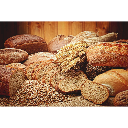
The grain of wheat was happy to have become part of such an important and nutritious product. He knew that his effort and transformation would bring joy and satisfaction to many people around the world. And most importantly, everything he did was worth doing. Chicchetto fulfilled his lifetime goal and he was extremely happy.



22. Chicceto's big family
1st primary school of Plagiari, Thessaloniki, Greece
Domna Petmeza
Once upon a time, in a golden field, there was a small grain of wheat named Chicceto. Though tiny, Chicceto was part of a huge family of grains, each with an important job to do.
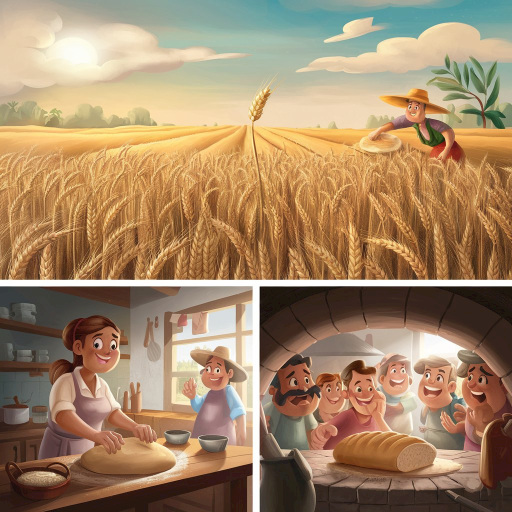
One day, the farmer harvested Chicceto and sent him to a mill where he was ground into flour. “This flour will help people,” the miller said.

Chicceto travelled far to a village where the people didn’t have enough food. The kind baker, Lila, used Chicceto’s flour to bake bread. The smell of the warm, fresh bread made everyone smile, and soon, everyone in the village had enough to eat.
Chicceto was proud. His family of grains was helping to end hunger, one loaf of bread at a time. Though he was small, he knew that together, his family could make the world a better place.
Chapter 23: A New Beginning
Theologia Giotsa
16th Primary school of Larissa
The warmth of the oven had gifted Chicceto a feeling of fullness, quite different from his physical existence as a grain. Now, as part of a golden loaf, he felt connected to every smile, every relieved expression on the faces of the village people. Lila, the baker with the kind hands and an even kinder heart, distributed the bread carefully, ensuring each family received the amount they needed.
Chicceto observed the way people took the bread. There was no rush, no excess. There was gratitude in their eyes, a silent acknowledgment of the value of this simple gift. He saw children whose eyes had previously been saddened by hunger laugh as they bit into a tender slice. He saw parents who looked calmer, knowing that at least for today, their children would not go hungry.
Within the heart of the loaf, Chicceto began to understand something important. He wasn't just an ingredient that provided food. He was a part of a solution, an effort to alleviate the harsh reality of poverty that plagued this part of the world.
Poverty, as he heard the people say, wasn't just the lack of food. It was the lack of opportunities, the lack of hope, the feeling that no one cared.
However, with every loaf that came out of Lila's oven, a small spark of hope was rekindled. Her act was not merely an act of charity. It was an investment in the future of these people. By giving them food, she gave them the strength to work, to think clearly, to care for one another.
One day, as a piece of bread containing a small part of Chicceto was given to a father trying to repair a broken roof, Chicceto felt a new sense of purpose. It wasn't just the end of hunger that was the goal. It was the creation of a world where no one would have to worry about their next meal. A world where the dignity of every person would be respected.
Chicceto knew that a single loaf of bread could not solve the problem of poverty. However, it was a beginning. It was a reminder that every small act of kindness, every seed of hope, could make a difference. And as the sun set over the village, illuminating the smiling faces of the people, Chicceto felt a deep sense of optimism.
The journey towards a world without poverty was long, but every loaf of bread was a small, yet significant step in that direction. And the little grain of wheat, now part of that bread, was proud to play his own small role.
Chapter 24 : Chicchetto wants peace and justice for all
Dimitrios Spyropoulos 7th Primary School of Karditsa, Greece
- < BEGINNING
- END >
-
DOWNLOAD
-
LIKE(1)
-
COMMENT()
-
SHARE
-
BUY THIS BOOK
(from $23.39+) -
BUY THIS BOOK
(from $23.39+) - DOWNLOAD
- LIKE (1)
- COMMENT ()
- SHARE
- Report
-
BUY
-
LIKE(1)
-
COMMENT()
-
SHARE
- Excessive Violence
- Harassment
- Offensive Pictures
- Spelling & Grammar Errors
- Unfinished
- Other Problem





COMMENTS
Click 'X' to report any negative comments. Thanks!