Material created within the eTwinning project “Seasons”
Turkey & Romania



Preface
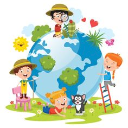
We, teachers from schools in Turkey and Romania, came together for the eTwinning project “Seasons” and guided our students on a wonderful journey of discovery, where nature became their teacher and the seasons turned into living stories.
This story also reflects some of our students’ experiences and the changes in the seasons influenced by global warming. We encouraged them to observe, ask questions, and find solutions to protect the environment, understanding that every action matters.
This initiative was made possible through collaboration, commitment, and the desire to provide children with a responsible education focused on protecting nature.
Thank you, dear partners and friends of the Earth!
On a beautiful autumn day, the students of the eTwinning project “Seasons” set off on a special journey. This was not an ordinary trip; it was a journey through time and nature, in which each season spoke to them.
Rust-colored leaves whispered old stories to them, while the gentle wind guided their steps toward new discoveries. As they moved forward, every corner of nature revealed the secrets of the seasons and taught them to see them with new eyes.
Nicoleta Barbu - „Mihai Viteazul” Secondary School Craiova, Romania
Nelida Beju -,„Mihai Eminescu” Secondary School Craiova, Romania
The first to arrive was Autumn, wearing a dress made of rustling leaves and smiling gently at them. She showed them how animals gather their provisions and how birds prepare to fly to warmer countries. The students realized that nature carefully prepares for change and that every living thing has a purpose. They gathered the fallen leaves, planted a sapling, and promised to protect the environment to help the planet.
Autumn thanked them for their interest and enthusiasm and encouraged them to carry the message of responsibility forward.
Lupu Iulia Mirela- ”Mihai Viteazul” Secondary School in Craiova, Romania
After autumn, the children are enjoying the increasingly mild winter days. As soon as they get home from school, they rush out to go sledding. They play with fluffy snowballs, and the fun reaches its peak. We’re all eagerly awaiting Santa’s gifts.
FATMA COŞKUN GÜLBAHAR HATUN ANAOKULU/SAMSUN
Winter wasn't ready to say goodbye yet. The days were sometimes mild, sometimes harsh. One morning, the sun would call the children outside, the next day the wind would howl, painting everything white again. The children, adapting to this variability, carefully wrapped themselves in thick scarves and walked along the icy paths, leaving food for the little birds on the windowsills.
In the evenings, they listened to old winter stories from their elders. The stories emphasized patience, sharing, and togetherness. The children realized how much they had learned in the silence of the seasons.
SAİDE YILDIZ ORHAN ŞAİK GÖKYAY İLKOKULU ANASINIFI F ŞUBESİ
But this winter wasn't like the old ones. Sometimes the adults spoke with concern: “The snow used to stay longer, the cold was more persistent. Now the seasons are all mixed up.” The children were saddened to hear that the world was slowly warming, the glaciers were melting, and some animals were losing their homes. One evening, sitting by the stove with their grandfather, they asked:
“So what can we do to prevent winter from leaving so early?”
REYHAN MAŞALACI ORHAN ŞAİK GÖKYAY İLKOKULU ANASINIFI E ŞUBESİ
Son, come here and listen to me... for this, we must save energy. we must change our transportation habits, especıally cycling, public transportation, walking, and protect forests. we must plant more trees. we must waste less. we must ensure importance to recycling..Also, it would be very good if everyone acted together, for example, by paying attention to water conservation. We can't change the result without solving the cause. Share the information I've shared with your friends so they can become more aware. And I'm very happy you asked this question.
SÜMEYRA TÜRK TEBERÜK İLKOKULU ANASINIFI ŞUBESİ
Now she knew what to do. As her grandfather had said, knowing this information wasn't enough for her. The next day, when she went to school, she shared what she had learned with her teacher and classmates. Her teacher congratulated her on her thoughtful behavior and satisfied the students' curiosity about global warming by showing them visual materials and reading books on the subject. The children thus understood the importance of recycling, conservation, and climate change. The teacher said, "Let's do an experiment, children, about the difficulties of life in polar regions due to melting glaciers," and encouraged them to empathize by providing concrete examples. The children now realized how much climate change affects not only humans but also animals.
NEVİN YILMAZ- ALİ FUAT DARENDE İLKOKULU ANASINIFI A ŞUBESİ
The teacher's explanations and the experiment left a deep impression on the children's hearts. As the cold days of winter slowly faded, a great change had begun in nature. One morning, when they arrived at school, they noticed tiny buds awakening on the branches of the tree in the garden. Spring had arrived. Nature was coming back to life, just like in the stories. The children remembered the climate change and global warming they had learned about throughout the winter. Now they would not only watch the flowers bloom, but also take action to protect them. Their teacher took the children out into the garden and said: "Look, children, spring shows us how powerful, yet how fragile, nature is. We must take good care of our world so that these flowers bloom with the same joy every year."
FATMA KORKMAZ Ali FUAT DARENDE İLKOKULU 5C
The children were fascinated by the unique beauty of nature's self-repair and renewal process, its awakening. They examined the insects and types of flowers in the garden with their teacher. When they returned to the classroom, they conducted research on wild insects and flowers. To better observe the plant growth process, their teacher decided to conduct a bean sprouting activity with the children, placing each child's bean seed by the window so they could observe its growth. The teacher gave the children seed balls as they went home. When the children asked what they were, the teacher simply said, "I just want you to put these balls in the soil. Then, water them, and the rest is a surprise," and said goodbye.
Hüsne İMAL Orhan Şaik Gökyay İlkokulu Anasınıfı C Şubesi
The children’s excitement grew day by day. What could it be that they had entrusted to the earth with such confidence? Elif couldn’t wait any longer; she was going to ask her family that evening what it was. She brought up the subject when the family was about to watch a movie. Her mom and dad decided to explain it to Elif through a documentary. It was a documentary about a squirrel. Her family told Elif to watch quietly. The squirrel was burying the food in its hands in the ground; spring clouds were bringing life-giving rain, and the sun was warming the entire nature.
Hüsne İMAL Orhan Şaik Gökyay İlkokulu Anasınıfı C Şubesi
The seeds the squirrel had entrusted to the ground soon helped bring about spring’s rebirth. Elif understood. She, too, had entrusted a seed to the ground. That night felt like it would never end. She wanted morning to come as soon as possible. When morning came, she couldn’t believe her eyes. Seeing her seed poking its head out of the ground, she couldn’t help but shout, “Welcome, spring!”
Nurten YILDIZ Orhan Şaik Gökyay İlkokulu Anasınıfı B Şubesi
As Elif’s voice echoed through the garden, the other children ran over to her; they all gazed in awe at that tiny sprout emerging from the soil. As the days passed, they took turns watering it, cleared the stones around it so it could catch more sunlight, and watched it grow with patience. That delicate sprout, growing a little taller each morning, seemed to draw strength from their love. Elif now knew that what had been entrusted to the soil was not just a seed, but also hope; as it grew, it was not merely a plant, but the curiosity, patience, and connection to nature within them that were also taking root.
Elif and her friends realized that the seed sprouting from the soil wasn’t alone—that many plants in nature also needed sunlight, water, fresh air, and clean soil. Could it be difficult to provide the conditions necessary for all plants in nature? What should they do, and how—or what should they avoid doing? With these questions in mind, they went to see their teacher. Their teacher was amazed by how eager the children were. First, she explained that plants aren’t alone in nature and that we mustn’t forget about animals either. The teacher, who said that if we protect the habitats of both plants and animals, we’re already ensuring their natural living spaces, could almost see the children asking, “But how?”in their eyes.
The teacher prepared a simple list that the children could understand. The ways to protect the homes of both plants and animals were very easy.
Instead of picking plants from their stems, observe them and take pictures. A living flower is happier than one in a vase.
By throwing our trash in the right bins, we can prevent the soil and water from being poisoned. Clean soil means healthy seeds.
Not wasting water keeps rivers and lakes from drying up; this way, neither the plants nor the animals living along the water’s edge go thirsty.
The teacher took a deep breath as she looked into the children’s curious eyes and decided to address the real big question: why our world was “on fire.” For Elif and her friends, the story was getting even more exciting. The teacher began by pointing out the window: “Children, there’s a protective layer of air around our world, just like a blanket that keeps us warm. But when we humans produce too much plastic, drive everywhere in cars, and leave our trash in nature, this blanket starts to thicken. As the blanket thickens, the world gets too hot. Glaciers are melting, sea levels are rising, and the seasons are getting out of sync. This is what we call Climate Change. How Do Plants and Animals Feel? While polar bears arelosing their homes, some plants can’t sprout because it’s too hot. Just like the seed in Elif’s pot, all the seeds in nature are afraid of this unstable weather.”
The teacher picked up a plastic bottle and a piece of paper from her desk. "So, how can we stop this blanket from getting any thicker? That’s where recycling comes in! Recycling is actually giving things a new life. When we recycle a piece of paper, we prevent a tree from being cut down to make new paper. More trees mean cleaner air. Plastic, glass, metal, and paper... These belong in the recycling bin, not the trash can. If they stay in nature, they prevent the soil and water from breathing.”
Elif turned to her friends and spoke excitedly: “Then we shouldn’t just stop at watering the flowers! We must sort our trash, turn off unnecessary lights, and help cool down our planet."Elif and her friends decided they were no longer just “seed friends,” but “Guardians of the Earth.” Because they knew that clean soil, every piece of recycled paper, and every protected tree meant that all future seeds would sprout with joy.
- < BEGINNING
- END >
-
DOWNLOAD
-
LIKE
-
COMMENT()
-
SHARE
-
BUY THIS BOOK
(from $3.59+) -
BUY THIS BOOK
(from $3.59+) - DOWNLOAD
- LIKE
- COMMENT ()
- SHARE
- Report
-
BUY
-
LIKE
-
COMMENT()
-
SHARE
- Excessive Violence
- Harassment
- Offensive Pictures
- Spelling & Grammar Errors
- Unfinished
- Other Problem





COMMENTS
Click 'X' to report any negative comments. Thanks!