This book is about a very tragic moment.

Chapter 1: A luxurious trip Chapter 8: ROBERT HICHENS
Chapter 2: The lucky ones Chapter 9: Captain Smith
Chapter 3: So Cold Chapter 10: Robert Ballard
Chapter 4: The Unsinkable Chapter 11: The Band...
Chapter 5: The Famous
Chapter 6: Sadly Taken
Chapter 7: The Tragedy
The Tragedy Of 1912
The Tragedy Of 1912
Chapter 1: A Luxurious Trip
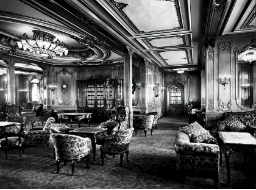
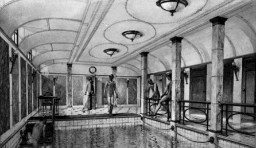
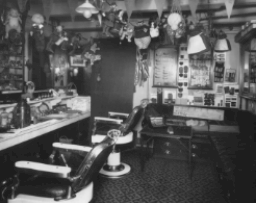
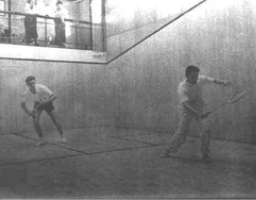
In 1912, thousands of people were boarding the Titanic because some businessmen needed to make important deals, some were there for the holidays, some just wanted to experience the biggest and most luxurious ship, and others wanted to start a better life in America. The Titanic was the life of luxury... while it lasted. It had a barber shop, a pool, squash courts, a Turkish bath, and even the cheap third class cabins are better than the other standard liners.
(pictures)
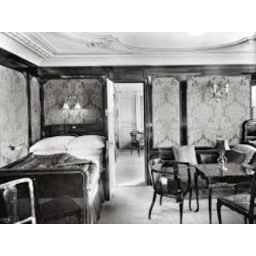
Bedroom
Seating
Pool
Barber Shop
Squash court
Having luxury still costs money, the ones who bought the first class suites paid over 105 ,000 pounds, or $130,000. The second class tickets cost $60. The people who bought first class were served oysters, salmon with hollandaise sauce, beef, squab, lamb with mint sauce, roast chicken and many other upscale dishes. Then, third class was served food like oatmeal porridge and milk, vegetable stew, fried tripe and onions, bread and butter, marmalade, Swedish bread, tea, and coffee. If you didn't have either, you were served things like Curried chicken, baked fish, spring lamb, mutton, and roast turkey.
Chapter 2:The Lucky ones
There were many who sadly died on the Titanic but there were some survivors. The ones who lived might have used the life boats, or they had to plunge to get to surface or to the RMS Carpathia (the rescuers.) There were some animals on the ship who survived. There was 3 dogs, two Pomeranians and a Pekingese. Some had the tickets but luckily didn't go.
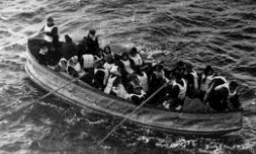
Those who held tickets for a passage, but did not actually sail, include Theodore Dreiser, Henry Clay Frick, Milton S. Hershey, Guglielmo Marconi, John Pierpont Morgan, John Mott, George Washington Vanderbilt II, Edgar Selwyn. But there were only two people who couldn't board it, those people were J. Pierpont Morgan and Milton Hershey. Some speculated that the reasons they didn't board the ship was probably bad health. Some survived by plunging through the water to safety, about 60 initially though this number came down once hypothermia set in. A handful (about seven) managed to swim as far as the launched lifeboats and were helped on board. At least two succumbed to hypothermia before the Carpathia arrived to carry out a rescue.
Only 705 people survived the horrific event.
Mary Davies Wilburn holds the record, having died in 1987, at the age of 104, being the longest living Titanic survivor.
There was also a baby that survived it. The baby was tossed into a lifeboat, but Leah did not know this, fainted, and was thrown into another lifeboat. It is believed that a pregnant Italian woman named Argene del Carlo caught him and wrapped him in a blanket. Leah was picked up by the RMS Carpathia, one of the ships involved in searching for survivors.
Chapter 3: So Cold
The waters that some had to plunge through was very cold, the temperature was around 28°F which is below freezing. it was a nice temperature when it happened about 58° but still terrible if you were on the ship when it hit the iceberg. Everyone plunged through the ice-cold water away from the ship, many lives were lost and many were injured.
Chapter 4 : The
Unsinkable
Violet Constance Jessop (2 October 1887 – 5 May 1971) was an Irish-Argentine ocean liner stewardess and Voluntary Aid Detachment nurse in the early 20th century. Jessop is best known for having survived the sinking of both RMS Titanic in 1912 and-
her sister ship HMHS Britannic in 1916, as well as having been aboard the eldest of the three sister ships, RMS Olympic, when it collided with the British warship HMS Hawke in 1911.
Born on 2 October 1887, near Bahía Blanca, Argentina, Violet Constance Jessop was the eldest daughter of Irish immigrants William and Katherine Jessop. She was the first of nine children, six of whom survived. Jessop spent much
of her childhood caring for her younger siblings. She became very ill as a child with what is presumed to have
been tuberculosis, which she survived contrary to doctors'-
predictions that her illness would be fatal. When Jessop was 16 years old, her father died of complications from surgery and her family moved to England, where she attended a convent school and cared for her youngest sister while her mother was at sea working as a stewardess. When her mother became ill, Jessop left school and, following in her mother's footsteps, applied to be a stewardess. Jessop had to dress down to make herself less attractive to be hired. At age 21, her first stewardess position was with Royal Mail Line aboard Orinoco in 1908.
RMS Olympic
In 1911, Jessop began working as a stewardess for the White Star liner RMS Olympic. Olympic was a luxury ship that was the largest civilian liner at that time. Jessop was aboard on 20 September 1911, when Olympic left from Southampton and collided with the British warship HMS Hawke. There were no fatalities and, despite damage, the ship returned to port unaided. Jessop did not discuss this collision in her memoirs. She continued to work on Olympic until April 1912, when she was transferred to its sister ship Titanic.
Chapter 5: The
Famous
Sailing from the docks of Southampton, England, the British passenger ocean liner the RMS Titanic set out on her maiden voyage on April 10, 1912, headed for New York City. Operated by the shipping company White Star Line and commandeered by Captain Edward John Smith, the ship, which was carrying 2,224 souls on board, made its way effortlessly across the cold North Atlantic waters until-
it hit a massive iceberg at 11:40 pm on April 14, causing irreparable damage. A few hours later, what was known as the "Unsinkable Ship," foundered and broke apart into the ocean, taking over 1,500 victims down with her.
Here are some of the most famous passengers who either survived or fell victim to the tragedy: An American socialite whose husband struck it rich in the mining business, Molly Brown was known for her flashy hats and charming personality. While she enjoyed her wealth, she spent her life giving back, advocating for the rights of women and children and the importance of education.
Although she was known as Maggie by those closest to her, after her death, the world would know her as "The Unsinkable Molly Brown" for her reported bravery amid the Titanic disaster. According to various stories, Brown helped board survivors into lifeboats during the evacuation and later helped steer her own (Lifeboat No. 6). Brown, portrayed by Kathy Bates in the 1997 movie, was said to have argued with the Quartermaster to return to the debris to find more survivors and even threatened to throw him and his crew overboard if they didn't go back. (It's unclear if her boat ever returned to retrieve survivors.) Even in death, Captain Edward John Smith couldn't avoid being a source of controversy. Many blamed him for Titanic's-
demise. Critics faulted him him for allowing the ship to travel close to its maximum speed despite reports of ice in the area, but it was later noted that Smith was abiding by standard maritime practice. At the time, ice was viewed as fairly harmless and even when previous ocean liners had experienced head-on collisions, the damage had been recoverable. Reports vary widely on how Smith, played by Bernard Hill in Titanic, reacted to the sinking ship. Some eyewitness claim he actively helped women and children onto the lifeboats and did his best to prevent panic, while others say he had become paralyzed with fear and turned ineffective during the evacuation.
In the end, he was believed to have made a final sweep of the ship's deck and offered this simple advice to his crew: "Well boys, do your best for the women and children, and look out for yourselves."
His body was never found.
Chapter 6: Sadly
Taken
In the early 1900s the transatlantic passenger trade was highly profitable and competitive, with ship lines vying to transport wealthy travelers and immigrants. Two of the chief lines were White Star and Cunard. By the summer of 1907, Cunard seemed poised to increase its share of the market with the debut of two new ships, the Lusitania and the Mauretania, which were scheduled to enter service later that year. The two passenger liners were garnering much attention for their expected speed; both would later set speed records crossing the Atlantic Ocean. Looking to answer his rival,White Star chairman J. Bruce Ismay reportedly met with William Pirrie, who controlled the Belfast shipbuilding firm Harland and Wolff,
which constructed most of White Star’s vessels. The two men devised a plan to build a class of large liners that would be known for their comfort instead of their speed. It was eventually decided that three vessels would be constructed: the Olympic, the Titanic, and the Britannic.
- Full access to our public library
- Save favorite books
- Interact with authors
- < BEGINNING
- END >
-
DOWNLOAD
-
LIKE(1)
-
COMMENT()
-
SHARE
-
SAVE
-
BUY THIS BOOK
(from $8.39+) -
BUY THIS BOOK
(from $8.39+) - DOWNLOAD
- LIKE (1)
- COMMENT ()
- SHARE
- SAVE
- Report
-
BUY
-
LIKE(1)
-
COMMENT()
-
SHARE
- Excessive Violence
- Harassment
- Offensive Pictures
- Spelling & Grammar Errors
- Unfinished
- Other Problem





COMMENTS
Click 'X' to report any negative comments. Thanks!