
This is a collective book about legends of each country.
Every partner (teacher with her/his students) has to write the summary of one legend - history, the year or century he lived, story.
Students can illustrate it as well.
The summary must be in English.

Forefather Czech (644-661)
Praotec Čech
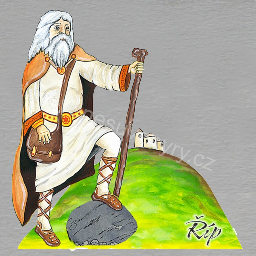

Forefather Čech was first mentioned in written in Latin Cosmas Chronicle, which was created in the first half of the twelfth century.
Říp is an important place in Czech mythology and history. Legend has it that in ancient times Forefather Czech (praotec Čech) climbed the mountain, looked out over the surrounding countryside and decided to settle there with his tribe of Slavs.

FZS PF UK Mezi Skolami, Prague , Czech Republic, teacher Ivana Bilá
Here you can see a short movie about Forefather Czech
https://edu.ceskatelevize.cz/video/9182-povest-o-praotci-cechovi
The new land was named after Forefather Czech, according to a legend first recorded at the beginning of the 12th century by the chronicler Kosmas and most famously rendered in 1894 by Alois Jirásek in his Old Czech Legends.
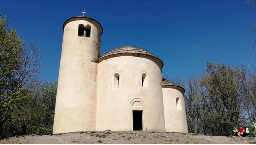
Romanesque rotunda
At the top of Říp stands the Romanesque rotunda of St. Jiří (George) and St. Vojtěch (Adalbert). The first mention of it dates from 1126, when Prince Soběslav I had the rotunda repaired and extended by a western circular tower to commemorate victory over King Lothar III of Germany in the battle of Chlumec. The spot became a pilgrimage destination in the 17th and 18th centuries. The current appearance of the rotunda is the result of renovation in the 1970s. Inside is a sandstone slab with a relief depicting St. Jiří slaying the dragon by Bernard Otto Seeling from 1870 and a statue of St. Jiří, created in 1881 by sculptor Eduard Veselý. One of the cornerstones of the National Theatre in Prague was transported to Prague from Říp in 1868.
The St. Jiří's Pilgrimage is held annually on the Sunday before St. Jiří’s Day. Říp is also popular with hikers at other times and the Boum Cottage (now Říp Cottage) was built in 1907. It bears the inscription “What Mecca is to Mohammad, Říp is to a Czech!”
Once upon a time, near the Vistula River, lived the families of two brothers. One was named Čech and was a voivode, a chieftain. The other brother was also a voivode and was called Lech. But life was not good there. Foreign men would attack and kill people. Life was unbearable—always defending their huts and fields, hiding crying women and children in the forest. “This can’t go on,” the brothers said to themselves one day. “It seems there will never be peace here. We should leave and find a new land.” The journey was endless. Everywhere they went, someone was already living there! The children cried, the women complained they could no longer go on and that their food supplies were running out. Even the men’s feet were aching... They wandered until one afternoon, they saw a hill in the distance. “We’ll rest under that hill,” the brothers decided. “It’s getting dark anyway...” Exhausted from their endless journey, everyone lay down to sleep. Čech was the first to wake up in the morning. “We’ll have to move on again,” he sighed unhappily. “But which way? Maybe I should climb to the top of the hill to take a look around.”
The hill wasn’t particularly tall. When Čech reached the top, he was amazed. “What a beautiful sight!” he thought to himself. The sun was shining, and everything around was in bloom. But most importantly: as far as the eye could see, there were no signs of human settlement! Čech hurried back down as fast as he could, waking his relatives with an excited voice: “Get up! We’ve arrived! This is the promised land.”It was wonderful news. Finally, their arduous journey was over! The people immediately got to work, building homes. They were happy. They began calling this wonderful land Čechy (Bohemia).
Only Lech was upset that he had slept in that morning and that all the glory had gone to his brother. It bothered him so much that he couldn’t sleep at night. After some time, he persuaded his family to set out on a new journey. Away from the hill they had named Říp, farther into foreign lands. Where they went and what became of them? It’s hard to say. All we know is this: no land bears the name Lechy.
Jan Hus (1369 - 6. July 1415)
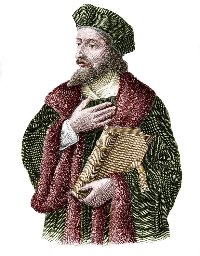
Jan Hus was a Czech priest and reformer born around 1372. He believed in speaking out against corruption in the Catholic Church and wanted services and the Bible to be in a language people could understand. Hus's ideas inspired future reformers, but they made powerful leaders angry. In 1415, he was burned at the stake for his beliefs, becoming a symbol of standing up for what is right. Today, he is remembered as a hero in Czech history and an early voice for church reform.
FZS PF UK Mezi Skolami, Prague , Czech Republic, teacher Erika Sivák Blahutová
If you want to know more information there is a video about Jan Hus: https://www.youtube.com/watch?v=ZKLn1Z0NlDg
Questions about understanding the text
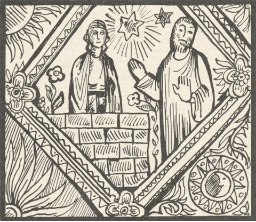
The Legend of Master Manole is a story from Romanian folklore that illustrates the ultimate sacrifice of a dedicated craftsman. According to the legend, Manole, the most skilled of the masons and his team were tasked with building a monastery. However, every time they raised a wall, it would collapse overnight.
After a divine vision, Manole learns that the monastery will not be rised without a human sacrifice. He talked with the others and their decision was that the first wife who will come to the monastery the next day should be build within the walls of the monastery.
The Legend of Master Manole
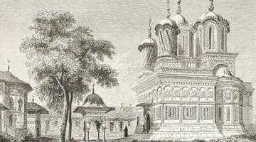
In the morning, Manole saw with despair that his wife was coming to bring them food. No matter how fervently he prayed, Ana kept on coming. Thus, he decides to sacrifice her to ensure the stability of the construction. Ana, though horrified, consents to the sacrifice. After the monastery is completed, Manole climbs to the roof to admire the work, but overwhelmed by guilt and remorse, he throws himself and dies near the walls of his own creation.
The monastery became a symbol of love, sacrifice and dedication, and the legend remains an example of the great price one sometimes must pay for great ideals.
„Iuliu Hațieganu” Secondary School / Cluj-Napoca/ România
Daniela Tira's Team
Every flower that exists has something to make us happy with.
“Me, asked the snowdrop, as small and weak as I am, what joy can I bring to man?” But behold, Winter is in her power. Everywhere there is only snow. One day, small, white and feeble, the snowdrop rings its bell cheerfully.
“Who dares to oppose me?” asks Winter, shaking off the snow and icicles from her coat.”
She looked around and saw the snowdrop.
“It was you…? I’ll freeze you tonight!” exclaimed Winter.
“Don't be angry, Grandma Winter and Old Man Snow. The sun sent me news to show myself”, the snowdrop replied.
But overnight, Grandma Winter and Father Snow called Jack Frost for help. Old Icy Wind also blew.
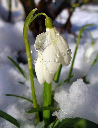
The Legend of the Snowdrop
“Where are you, snowdrop? Didn’t you freeze? Do you still dare to oppose me?”
“To tell you the truth, I was very cold. The wind almost blew me away. I hid behind a lump of snow. If it’s going to be just as cold tonight, I’ll die of frost”, said the snowdrop sadly.
The sun, hearing the snowdrop’s tender words, sent warm rays to his aid. Early in the morning, a lot of snowdrops appeared from under the blanket of snow.
“Grandma Winter, Father Snow, let’s play catch-up!” the snowdrops shouted merrily.
This is how the snowdrop turned out to be stronger than Winter, showing that it is the herald of spring. Therefore the brave snowdrop has become a symbol of hope and victory of spring over the cold winter.
"Iuliu Hațieganu" Secondary School / Cluj-Napoca / România, Elena Gabor's Team

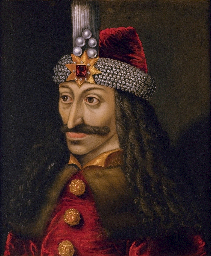
VLAD TEPES (1431-1476)
Vlad the Impaler was born in Sighisoara, Transylvania in 1431, later being ruler of Wallachia. His father, Vlad Dracul, was a knight in the Order of the Dragon, a chivalric order from Eastern Europe that aimed to stop the expansion of the Ottoman Empire.
The Dragon Order blazon represented a dragon (ottoman) and a cross (sign of Christianity), and Vlad Dracul wore this symbol everywhere, on flags, coins and seal.Known for his intolerance and cruelty, Vlad was at the same time respected by his subjects for his campaigns against the Turks.
Being a character not only historical, but also literary and folkloric, the voivode was chosen by the writer Bram Stoker as the main hero of his novel appeared in 1897.Since then, Dracula and Transylvania, the land that houses the mysterious castle filled with ghosts and vampires somewhere in the dark forests, has become the subject of over 750 films, documentary or novella inspired by the novel by the Irish writer.
There are many legends: one says that the transformation of Vlad the Impaler into the bloodthirsty Count Dracula is due to the fact that, according to the custom at the time, the, the winner of a battle quenched his thirst by drinking the blood of the vanquished. Team Codruta teacher,SGLB,Bistrita,Romania
"Miorița" (The Little Ewe) is one of Romania’s most famous folk ballads, reflecting themes of fate, nature, and spirituality. It tells the story of three shepherds—one from Transylvania, one from Moldavia, and one from Wallachia—who graze their flocks together. Out of jealousy, two of them plot to kill the Moldavian shepherd for his wealth.
A loyal ewe, Miorița, warns her master of the danger. Instead of running or seeking revenge, he accepts his fate calmly, asking the ewe to tell his mother of his death in a poetic way, describing it as a union with nature.
He wishes to be buried in the meadow, surrounded by mountains, the sun, and the stars. This ballad symbolizes harmony with nature, loyalty, and acceptance of life’s challenges. "Miorița" remains a cornerstone of Romanian culture, celebrated for its profound philosophical and poetic beauty.
The exact year "The Legend of Miorița" appeared is unknown because it originates from oral tradition, passed down through generations long before it was written down. However, the first recorded version of the ballad was collected and published in 1850 by Romanian writer and folklorist Vasile Alecsandri in his book of Romanian folk poems.
This makes "Miorița" not only one of the oldest but also one of the most significant pieces of Romanian folklore, preserving the cultural essence of centuries-old traditions.
Teacher-Roxana Moldovan - SGLB-Bistrita-Romania
King Tomislav
One of the most famous Croatian legends is the Legend of King Tomislav, the first king of Croatia. King Tomislav lived in the 10th century, and according to historical sources, he was the first king of the independent Kingdom of Croatia. His reign lasted from 910 to 928, and under his leadership, Croatia became a strong and unified state. According to the legend, King Tomislav was an exceptionally brave and wise ruler. He is known for uniting the tribes in what was then Croatia and creating a strong army capable of defending the country from invaders. The most famous moment of his reign was the battle against the Hungarians and other nomadic peoples, in which Tomislav emerged victorious and secured peace for his land. The legend also speaks of Tomislav as a great lover of justice and the well-being of his people. He believed in the importance of preserving peace and stability within his borders.
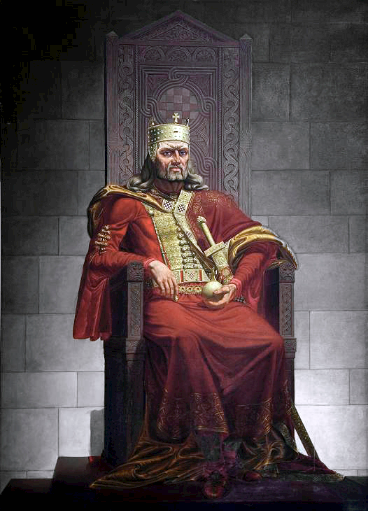
King Tomislav was not only a ruler but also a symbol of Croatian freedom and independence, and he was loved by his people for his fairness and bravery. Although many historians cannot confirm all the details of his reign, the legend of King Tomislav lives on through folk tradition and historical monuments. Tomislav is considered one of the greatest Croatian rulers, and his name remains a symbol of unity and the fight for a free Croatia.
Primary school Popovac, Croatia, teacher Silvija Švelinger.
Drawing created by 6th-grade student Kiara Stopić.
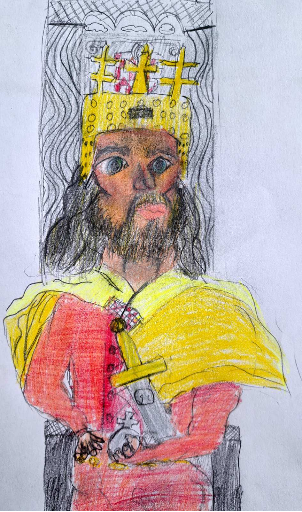
KING TOMISLAV
JANOSIK - Slovak Robin Hood
Juraj Janosik was a famous hero from Slovakia. He lived in the beginning of the 18th century and became well-known for helping poor people. He and his group of highwaymen robbed rich people passing through the forests and gave the money to the poor ones.
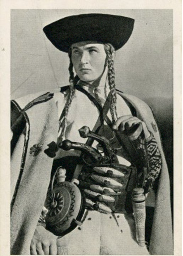



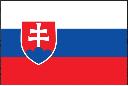
The rich people were nobles who lived from exploitation of poor village people. The legend says Janosik was brave, smart and honest. All the aristocrats were angry with Janosik and wanted to catch him.
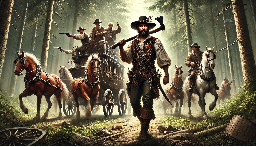

This happened in a village pub where a woman spilled peas under his feet when they were chasing him. He was executed immediately.
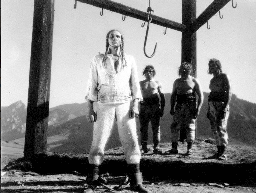
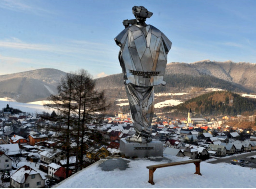
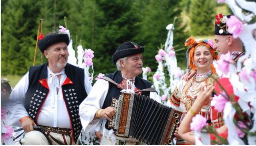
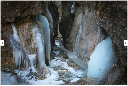
His story inspired many filmmakers and the town where he was born features his statue, named a natural hiking park after him and they organize Days of Janosik where Slovak folklore, art and craft is presented.
NIKOLA TESLA
In the village of Smiljan, in present-day Croatia, Nikola Tesla was born on July 10, 1856. Since he was born during a storm, his mother, Đuka, predicted that her son would be a child of light. His father was an Orthodox priest and wanted his son to follow in his footsteps, but Nikola preferred to invent household devices with Đuka. He studied mechanical engineering but dropped out and began working as an electrician. Nikola gained insight into alternating current (AC), which changes direction at regular intervals. He realized that alternating current could transmit energy over greater distances, making it more efficient than the then-established system of direct current (DC), where electricity flows continuously in one direction.
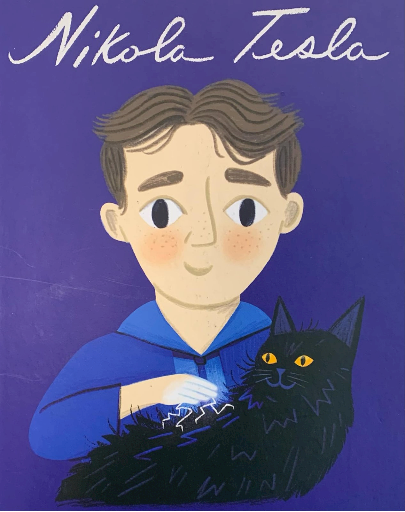
In 1883, he built the first induction motor powered by alternating current. The following year, Nikola went to America to work with Thomas Edison, who was developing a new electrical technology. However, after six months of collaboration, Nikola resigned due to disagreements with Edison; this marked the beginning of a lifelong rivalry, as Edison insisted on using his direct current system.
Nikola sold the patent for his invention to an electric power company, and alternating current won the “war of currents” as the world recognized its advantages.
Today, alternating current powers many things, including our homes. Nikola was a prolific inventor, holding around 300 patents, including the Tesla coil, which is used in electronic devices such as televisions. He never became wealthy from his inventions, but his imagination and creativity shaped the world as we know it today.
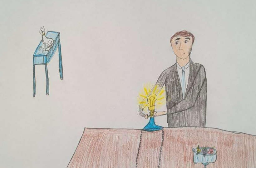
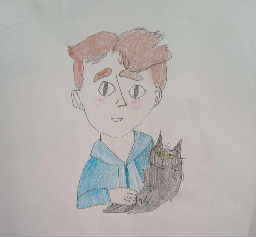
Primary school Drenje, Croatia, teachers: Vlatka Štrk and Goran Podunavac
Drawings by students participating in the project
Primary school Popovac, Croatia
Teacher: Goran Podunavac
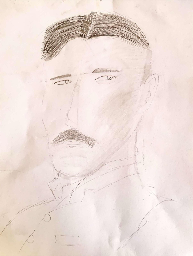
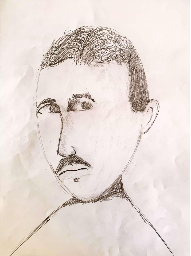
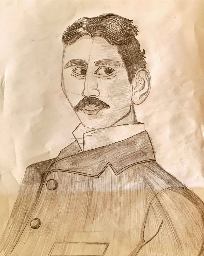
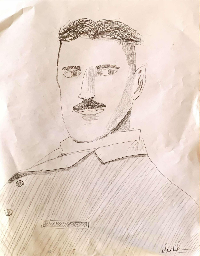
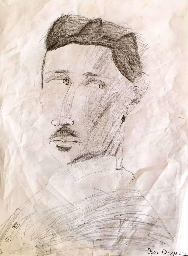
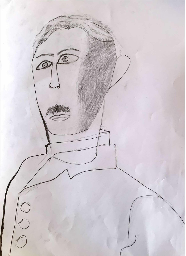
Nikola Šubić Zrinski: The Hero of Siget
In 1566, Nikola Šubić Zrinski was a brave Croatian leader who defended the Siget Fortress against a huge Ottoman army led by Sultan Suleiman. Zrinski had only 2,500 soldiers, while the Ottomans had over 100,000.
For nearly a month, Zrinski and his men fought hard. Even when they ran out of food and their walls were destroyed, they refused to give up. "It is better to die with honor than to live in shame!" Zrinski told his soldiers and led a final attack. Although he knew he would fall, he bravely rode out of the fortress with his soldiers into Ottoman hands! They fought bravely, but they were outnumbered. Zrinski died in battle, but his sacrifice stopped the Ottomans from reaching Vienna. Nikola Šubić Zrinski is remembered as a hero who showed great courage and love for his homeland.

Osnovna škola Popovac,
Croatia
Teacher Željko Predojević and his students of Elementary school Popovac
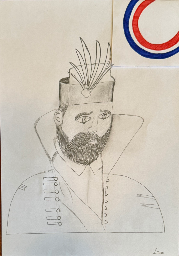
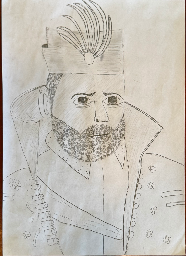
The drawings of Nikola Šubić Zrinski by students Ariana Bartolić and Lana Kobijak



PLACES OF INTEREST
- < BEGINNING
- END >
-
DOWNLOAD
-
LIKE
-
COMMENT()
-
SHARE
-
BUY THIS BOOK
(from $8.59+) -
BUY THIS BOOK
(from $8.59+) - DOWNLOAD
- LIKE
- COMMENT ()
- SHARE
- Report
-
BUY
-
LIKE
-
COMMENT()
-
SHARE
- Excessive Violence
- Harassment
- Offensive Pictures
- Spelling & Grammar Errors
- Unfinished
- Other Problem





COMMENTS
Click 'X' to report any negative comments. Thanks!