Dedicated to all art lovers!!!

Vincent Van Cogh - Short Biography
Vincent van Gogh (1853–1890) was a Dutch Post-Impressionist painter known for his expressive brushstrokes and vibrant use of color. Though he struggled with mental illness and financial hardship, he created over 2,000 artworks, including famous paintings like Starry Night, Sunflowers, and The Bedroom. Initially unsuccessful, his work gained recognition after his death, profoundly influencing modern art. Van Gogh's life was marked by passion, turmoil, and an unwavering dedication to his craft.
Vincent van Gogh’s The Sower (1888) is a symbolic portrayal of growth and renewal. The glowing yellow sun dominates the scene, contrasting with the deep blues and greens, while the tilted tree adds movement and depth. The sower, a recurring figure in Van Gogh’s work, represents both labor and artistic creation. Inspired by Japanese prints, the painting features bold outlines and flattened colors. The expressive brushstrokes and vivid hues create an emotional intensity, reflecting Van Gogh’s deep connection to nature and his personal struggles.
Van Gogh’s The Bedroom (1888) uses skewed perspective and bold colors to create an intimate yet dreamlike space. The yellow furniture contrasts with the blue walls, while the large bed balances with the table and chairs. Expressive brushstrokes add energy, and the composition reflects both comfort and isolation, making it deeply personal and emotional.
This drawing, created by Vincent van Gogh, showcases a rural scene with cottages, trees, and a pergola, executed in his expressive and dynamic linework. The artwork, primarily rendered in blue ink with watercolor washes, exemplifies Van Gogh’s signature swirling strokes and rhythmic contours, bringing movement and energy to the composition. The detailed foliage and architectural elements reflect his deep appreciation for nature and rustic life. This piece highlights Van Gogh’s skill in capturing atmosphere and emotion through minimal color while maintaining a strong sense of depth and structure.
Vincent van Gogh from 1886.
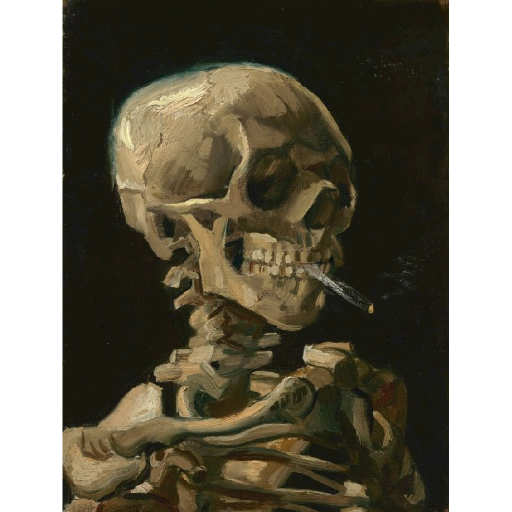
Skull of a Skeleton with Burning Cigarette

This is Skull of a Skeleton with Burning Cigarette, a painting by Vincent van Gogh from 1886. It features a realistically rendered human skull with a cigarette between its teeth, set against a dark background. The artwork is often interpreted as a satirical or macabre commentary on life and death, possibly critiquing smoking or mortality itself. The bold brushstrokes and earthy tones reflect van Gogh’s early style before he embraced brighter colors.
Orchard in Blossom (1888) by Vincent van Gogh captures the beauty of spring in Arles, France, with bold brushstrokes and vibrant colors. The blossoming trees symbolize renewal and hope, a theme Van Gogh cherished. The twisting branches, bright greens, and soft blue sky create a dynamic yet peaceful scene, reflecting his love for nature and expressive style.
This is Undergrowth with Two Figures (1890) by Vincent van Gogh, a stunning example of his Post-Impressionist style. The painting is filled with rich greens, blues, and yellows, capturing the lush, tangled growth of a forest floor bathed in dappled sunlight. Van Gogh’s bold, swirling brushstrokes give the scene a sense of movement and texture, making the vegetation feel alive. The ivy-covered trees twist and lean, adding to the dynamic composition. Painted during the final months of his life, this work reflects both his fascination with nature and the emotional intensity he brought to his art.
This is Self-Portrait with Grey Felt Hat (1887) by Vincent van Gogh. It’s a Post-Impressionist painting with bold brushstrokes and expressive colors. The blue swirling background contrasts with the warm tones of his face, making it stand out. His intense gaze and rough brushwork add emotion, reflecting his introspective mood. The grey hat and dark coat give a serious, subdued look, different from his later, more colorful portraits. This was painted in Paris, where he was influenced by Impressionism and Pointillism.
The Potato Eaters (1885) by Vincent van Gogh is a powerful depiction of peasant life, showing a family gathered around a dimly lit table, sharing a simple meal of potatoes. Painted in dark, earthy tones, it emphasizes the hardship and humility of rural workers. Van Gogh used rough brushstrokes and expressive features to highlight their connection to the land. The single oil lamp casts a warm yet somber glow, creating an intimate yet melancholic atmosphere. Though not well received at the time, this early masterpiece is now seen as a significant step in Van Gogh’s artistic journey.
- < BEGINNING
- END >
-
DOWNLOAD
-
LIKE(1)
-
COMMENT()
-
SHARE
-
BUY THIS BOOK
(from $3.99+) -
BUY THIS BOOK
(from $3.99+) - DOWNLOAD
- LIKE (1)
- COMMENT ()
- SHARE
- Report
-
BUY
-
LIKE(1)
-
COMMENT()
-
SHARE
- Excessive Violence
- Harassment
- Offensive Pictures
- Spelling & Grammar Errors
- Unfinished
- Other Problem





COMMENTS
Click 'X' to report any negative comments. Thanks!