
Barış ÜNAL-Kaymakam Mehmet Tahir Secondary School
Tasssopoulou Christina/EEEEK Ptolemaidas Secondary School/ Greece
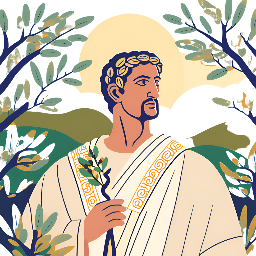



The olive tree is a powerful symbol in Greek culture, recognized for its historical significance and deep connection to the earth and life.
It represents peace, wisdom, prosperity, and longevity. In ancient times, the olive tree was dedicated to the goddess Athena, the protector of wisdom and strategy, and the crown made of olive branches was awarded to the winners of the Olympic Games as a sign of honor and excellence. In addition to its religious and mythological background, the olive tree embodies resilience and adaptability, as it can thrive in harsh conditions and live for hundreds of years.
This resilience makes it a symbol of Greek spirituality and
perseverance, while its oil is considered the "gold" of the Mediterranean,
shaping the diet and daily life of Greeks for millennia.
With its simplicity and beauty, the olive tree remains a profound
and timeless symbol of Greek identity and heritage.
Olive
Orizont Secondary School-Bucharest,Romania
Count Dracula and Bran Castle
Romania is also known as ' Dracula's home" and there are plenty of stories which say that Count Dracula was inspired by Vlad Tepes/Vlad the Impaler, who was the ruler of Walachia during mid-1400s. People called him “Dracula” but just few people know that his father’s name was Vlad Dracul because he was a knight of the Order of the Dragon and, the word 'dragon' had not yet entered the Romanian language. The legend of Dracula comes from the way he used to torture citizens that lied and betrayed him & the country. It is said that he lived in Bran Castle but in fact it is only a legend! However, millions of tourists visit this castle to see the place where the “vampire” lived.
THE ROMANIAN TRADITIONAL CLOTHING
Romanian traditional clothing offers a beautiful window into Romania’s rich culture, history, and regional diversity. Often handmade and adorned with intricate embroidery, each garment tells a story about the community it originates from. With strong influences from ancient folk customs, pastoral life, and historical interactions with other cultures, Romanian attire consists of various garments. Here’s an overview of the main elements:
- Ie (Blouse): The ie is a Romanian blouse with long, flowing sleeves adorned with intricate embroidery. Each region has distinct patterns and color schemes, with motifs often inspired by nature, such as flowers, leaves, and animals.
- Fotă or Catrință (Skirt): Worn over a petticoat, the fotă or catrință is a wrap-around skirt, often woven with specific patterns that align with the blouse.
- Brâu (Belt): A wide, usually woven belt that accentuates the waist, often with patterns or colors that contrast with the blouse and skirt.
- Maramă (Headscarf)
Avgoustidou Theofano- Eeeek Ptolemaidas/ Secondary school- Greece
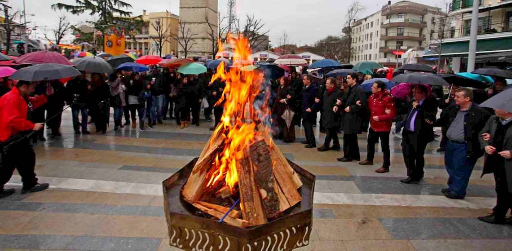
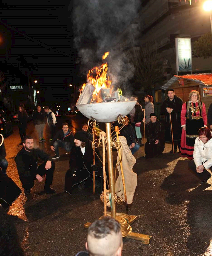
Fanos (The bonfire)
The bonfires of the City of Kozani, in Western Macedonia, are an old tradition known throughout Greece by both young and old. The community or group participating in such a ritual event aims to achieve a goal, which is typically the hope for a good year, in its broader sense, meaning a rich harvest and good health.
In the past, the farmer residents of the city used to dance around the fire, exorcising misfortune and calling on the forces of good to help them in their difficult tasks. The movements and steps of their dance were passed down unchanged from generation to generation, often accompanied by song.
The uniqueness of the Bonfire lies in its form: it burns on a kind of altar, remains steady all night with little effort and fuel, and allows for a large crowd to gather around it, ensuring the ceremony lasts. Throughout the city, there are many bonfires, which allows people to move from one to another and dance, in a city that experiences this Dionysian celebration.
It is a celebration with both a worshipful and subversive character. It takes place on the night of the last Sunday of Carnival, when the festivities are at their peak, encouraging people to relax and enjoy the uniqueness of the moment. Around the fire, a circle is formed with the lead singer at the head, who sings the traditional songs of the Bonfire, verse by verse, followed by the dancers who repeat them in the same manner.
- Full access to our public library
- Save favorite books
- Interact with authors
- < BEGINNING
- END >
-
DOWNLOAD
-
LIKE
-
COMMENT()
-
SHARE
-
SAVE
-
BUY THIS BOOK
(from $3.99+) -
BUY THIS BOOK
(from $3.99+) - DOWNLOAD
- LIKE
- COMMENT ()
- SHARE
- SAVE
- REMIX
- Report
-
BUY
-
LIKE
-
COMMENT()
-
SHARE
- Excessive Violence
- Harassment
- Offensive Pictures
- Spelling & Grammar Errors
- Unfinished
- Other Problem






COMMENTS
Click 'X' to report any negative comments. Thanks!