ABSTRACT
This book is designed as the collaborative traditional children games activity of the eTwinning project called Rooted In Values
We thank all our precious partners
contributed this book

INDEX
TRADITIONAL TURKISH GAMES
Nilay Dokur, Five Stones................................................................................4
Rabia Uçar, Merchant's Gate.........................................................................12
Nevzat Dokur, Hopscotch..............................................................................17
Fatmagül Aksoy, Seven Towers....................................................................25
Dilek Eroğlu, Camel and Dwarf....................................................................35
Nagihan Soysal, Dodgeball...........................................................................41
Birgül Temir, Istop.........................................................................................45
Ece Sarıca, Hankerchief Grob.......................................................................51
İpek Karagücük, I sell oil I sell honey.........................................................56
TRADITIONAL ROMANIAN GAMES
Claudia Ioana Mada, Stay On The Wall...........................................................63
The Little Donkey............................................................64
We Want Soldiers...........................................................65
TRADITIONAL MOLDOVAN GAMES
Panainte Doinita, Shot Ducks..........................................................................67
Blind Man's Buff..................................................................68
Broken Telephone..............................................................69
TRDITIONAL TUNISIAN GAMES
Houda Bougdima, El Bis....................................................................................71
Chokba................................................................................72 Kharebga,Zarbout,Bannibanni..................................................................73-75
ÇAY MAHALLESI İMAM HATIP SECONDARY SCHOOL
Five Stones
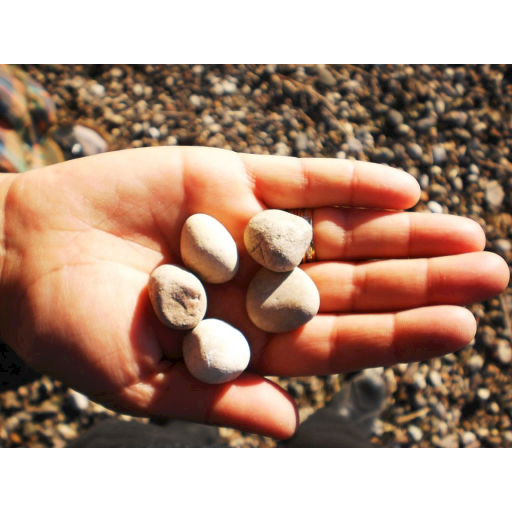
Overview
Five Stones, known as Beş Taş in Turkish, is a traditional hand game played primarily by children in Turkey. It is a dexterity and coordination game that involves tossing and catching small stones in a particular sequence. This game has been passed down for generations and is still played today, especially in rural areas where children often improvise games using natural materials.
Beş Taş is similar to the game of "Jacks" played in Western countries, but instead of metal jacks and a rubber ball, it uses five small stones. The game requires skill, precision, and concentration, making it both a fun and challenging pastime.
Historical Background
The origins of Beş Taş can be traced back to ancient civilizations. Variants of this game have been played in different cultures, including Ancient Greece and Rome. The game has remained popular in Turkey for centuries, often played in village settings, schoolyards, and among friends. Traditionally, it was a game enjoyed by both boys and girls and required no special equipment, making it easily accessible to all children.
Materials Needed
A flat surface – usually a table, a paved ground, or any smooth surface where the stones can be easily tossed and caught.
How to Play Beş Taş
The game consists of multiple levels, each increasing in difficulty. The main objective is to complete each level without dropping the stones.
Basic Gameplay:
Starting the Game:
Players sit in a circle or opposite each other.
First Level - Toss and Pick:
The player places all five stones on the ground.
They pick up one stone and toss it in the air.
While the stone is in the air, they must pick up one stone from the ground and catch the falling stone with the same hand.
This is repeated until all stones are picked up one by one.
Second Level - Two at a Time:
The same process is repeated, but now the player picks up two stones at a time while catching the tossed stone.
Third Level - Three and One:
The player must pick up three stones at once and then the remaining one.
Fourth level - All at Once:
The player picks up all four stones in one move while catching the tossed stone.
Fifth Level - The Bridge:
The player places all five stones in their palm.
They toss all stones into the air and try to catch them on the back of their hand.
The caught stones are tossed again and caught in the palm
Advanced Levels & Variations:
Some variations involve creating small formations with the stones before tossing them.
Some players add extra challenges, such as picking up the stones in a specific order or performing different hand movements.
Skills and Benefits of the Game
Beş Taş is not only an entertaining game but also helps children develop various skills, such as:
Hand-eye coordination – Catching and picking up the stones improves reflexes and precision.
Concentration and focus – Players need to pay close attention to their movements.
Fine motor skills – The ability to manipulate small objects improves dexterity.
Strategic thinking – Players must plan their moves to succeed in higher levels.
Patience and perseverance – Mastering the game requires repeated practice and effort.
Cultural Significance
Beş Taş is more than just a game; it reflects the simplicity and creativity of traditional Turkish childhood games. It embodies the values of resourcefulness, patience, and skill development, which were emphasized in past generations. Despite the popularity of modern digital games, Beş Taş continues to be played and taught in some schools and by grandparents passing on their childhood traditions.
Conclusion
Five Stones (Beş Taş) is a timeless Turkish game that has entertained generations of children with its simple yet engaging gameplay. It is a game of skill, concentration, and fun, fostering social interaction and creativity. Even in today’s digital age, Beş Taş remains a cherished cultural heritage that continues to connect children with their traditional past.
RABİA UÇAR
How to Play
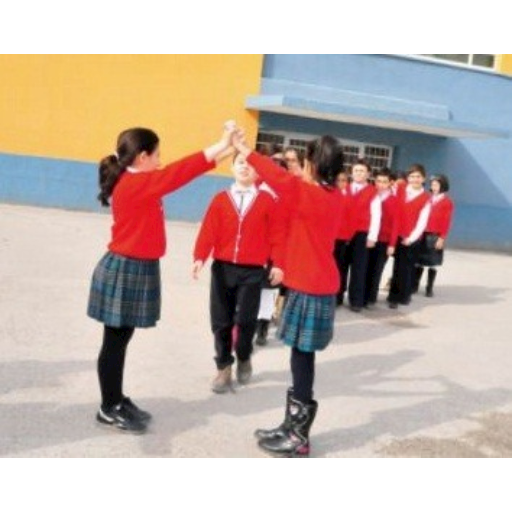
*Objective:* "Merchant's Gate'' is a traditional Turkish game played by children in groups. It involves teamwork, strategy, and fun. The game is similar to "Red Rover" but with unique Turkish elements.
- At least *6-8 players* are needed, but more can join.
- Two players act as the "leaders" or "traders" .
- The rest of the players form a line.
1. *Choosing the Leaders:*
- Two players secretly pick a *symbol* or *code* (e.g., an object, color, or fruit).
- These symbols represent two different teams.
2. *The Tunnel Formation:*
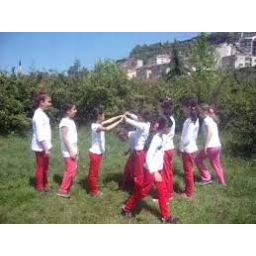
- The leaders stand facing each other, holding hands up high to form an "arch" or "tunnel."
- The rest of the players form a single line and pass through the tunnel one by one while singing a traditional song:
"Open the door, gatekeeper, gatekeeper, 1 rat, 2 rats , 3 rd one escape to the closet"
- The song is repeated as long as players pass under the arch.
3. *Catching Players:*
-At the end of the song, the leaders *secretly* catch the player currently under the arch.
-They whisper their chosen symbols and ask the player to *silently* pick one.
-The player then goes behind the corresponding leader, forming a new line.
4. *Repeating the Process:*
-This continues until all players have been "caught" and placed into their respective teams.
5. *Final Tug-of-War:*
- Once all players have chosen a side, a final tug-of-war or a strength-based game is played between the two teams.
- The winning team is the one that pulls the other team across a designated line.
*Winning the Game:*
-The team that wins the final strength challenge is declared the winner.
- Alternatively, the game can be played without a final challenge, simply ending with the division of teams.
*Variations:*
- Instead of a tug-of-war, teams can play another challenge like a relay race.
-Some versions include a chase where the "losing" team tries to reclaim players.
This game encourages *teamwork, decision-making, and social interaction* while being an enjoyable outdoor activity for children.
NEVZAT DOKUR
ERDEMLİ SCIENCE AND ART CENTER
HOPSCOTCH: A TRADITIONAL CHILDREN'S GAME
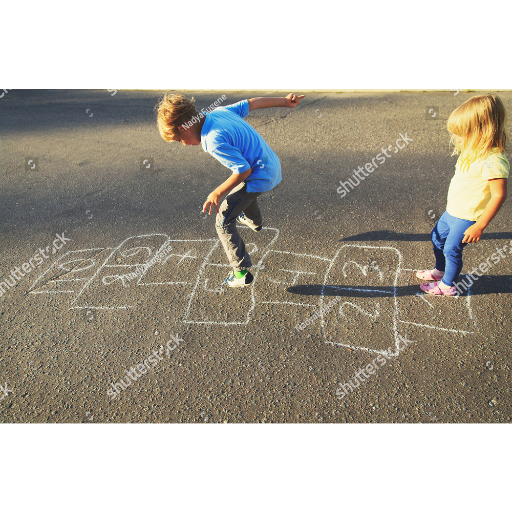
Hopscotch, known as "Seksek" in Turkish, is a popular traditional children's game that has been played across various cultures for centuries. It is a simple yet engaging game that requires physical activity, balance, and coordination, making it a fun way for children to socialize and stay active. Below is a detailed description of how the game is played and its basic rules.
Materials Needed:
Chalk: To draw the hopscotch grid on the ground. Alternatively, small boards or carpets with printed grids can also be used.
A Small Object: Typically, a coin, button, or a small stone. This object is used by players to mark their position on the grid.
Setup:
The hopscotch grid is typically drawn on the ground using chalk. It consists of a series of numbered squares, usually from 1 to 9 or 1 to 10, arranged in a specific pattern. The most common grid layout includes:
A single square (representing "1").
Two squares side by side (representing "2" and "3").
A single square (representing "4").
Two more squares side by side (representing "5" and "6").
A final single square (representing "7").
In some variations of the game, the numbers may go up to 10 or 12. Once the grid is drawn, players are ready to start.
How to Play:
Starting the Game:
Players take turns tossing the small object (called a "marker") onto the first square ("1"). The goal is to get the marker to land inside the square without bouncing out or touching the lines.
The player then hops through the numbered squares in a specific sequence, skipping the square where the marker is placed.
Hopping Sequence:
The player hops on one foot on the single squares and two feet on the side-by-side squares. For example, the player would hop on one foot on squares 1, 4, and 7 and on two feet on squares 2-3 and 5-6.
The player must avoid stepping on the lines or missing squares. If the player makes a mistake, their turn ends, and the next player gets a chance.
Picking up the Marker:
Upon reaching the end of the grid, the player turns and hops back toward the starting point.
When they reach square 1, they must balance on one foot and lean down to pick up the marker, all without losing balance or touching the lines.
The player continues hopping back to the start and completes the round. If successful, the player progresses to the next number (square 2, then square 3, etc.).
Winning the Game:
The first player to successfully complete the entire grid (reaching the last square and retrieving the marker from each square without making mistakes) wins the game. The game can be played in multiple rounds, with players attempting to get through all the squares while following the rules.
Variations of the Game:
Team Play: In some versions, children form teams, and each team member takes turns in the same way as an individual. The team that completes all the rounds first wins.
Changing the Layout: In different regions or cultures, the grid layout and rules may slightly vary. Some grids have additional or fewer squares, and the order of the numbers may differ.
Cultural Significance:
Hopscotch is often more than just a game; it serves as an important social activity. It brings children together in a cooperative way, teaching them fairness, patience, and the ability to handle small challenges. It has also been a popular street game, where children gather in open spaces like sidewalks or playgrounds to play together.
Moreover, the game has historical significance, as variations of hopscotch have been found in cultures all around the world. In fact, the game is believed to have originated in ancient Rome, where it was originally used as a form of physical training for soldiers.
Conclusion:
Hopscotch is a timeless children's game that is simple to play but offers great fun and physical benefits. It encourages physical activity, balance, and social interaction, all while being an inexpensive and easy-to-set-up game that can be enjoyed virtually anywhere. Whether in a park, on the sidewalk, or in the backyard, hopscotch is a classic game that brings joy and memories to generations of children.
FATMAGÜL AKSOY
Ahi Evran İmam Hatip Ortaokulu
Yedikule Game (Yedikule Oyunu) – Detailed Explanation
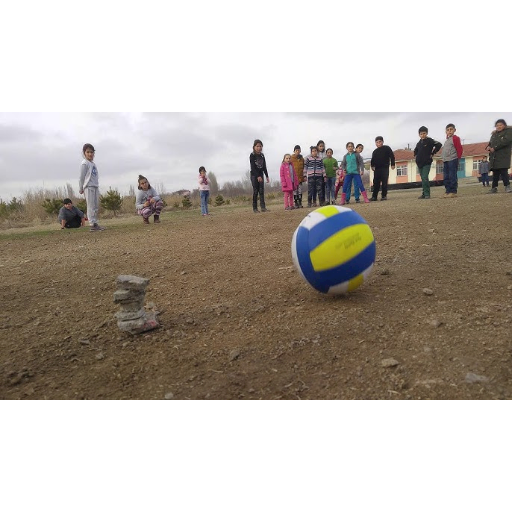
Yedikule is a traditional Turkish outdoor game played by children, often in schoolyards or open spaces. The game requires speed, agility, and teamwork. It is somewhat similar to "Capture the Flag" or "Prisoner's Base" and involves a group of players divided into two teams.
Number of Players
Typically played with at least 6 players, but more can join.
The players are split into two teams: attackers and defenders.
Game Setup
The playing area is marked with seven zones (or “castles”), either drawn on the ground or designated using objects like stones or cones.
One team starts as the defenders, who occupy the seven zones.
The other team starts as the attackers, whose goal is to capture all zones.
Rules & How to Play
1. Starting the Game
The defenders position themselves in each of the seven zones to guard them.
Attackers must try to invade and take over these zones without being tagged.
2. Attacking & Defending
Attackers attempt to run into the zones while avoiding the defenders.
If an attacker successfully enters a zone without being caught, they claim it for their team.
If an attacker is tagged by a defender, they are temporarily out of the game or sent to a designated “prison” area.
3. Winning the Game
The attackers win if they successfully capture all seven zones.
The defenders win if they prevent the attackers from taking over all the zones before a time limit (if applied) or if all attackers are tagged and eliminated.
Strategies & Skills
Attackers need: Speed, dodging skills, and teamwork to distract defenders.
Defenders need: Good positioning, quick reflexes, and strategic movements to protect zones.
Why is Yedikule Popular?
Encourages physical activity and team spirit.
Teaches strategy, coordination, and fair play.
Simple setup, requiring no special equipment.
This game is a fun and energetic way for kids to enjoy outdoor play while improving their agility and teamwork! Would you like a visual representation or any modifications to the explanation?
CEMİLE ŞAHİN
Çay Mahallesi İmam Hatip Ortaokulu
MARBLE GAME (MİSKET)
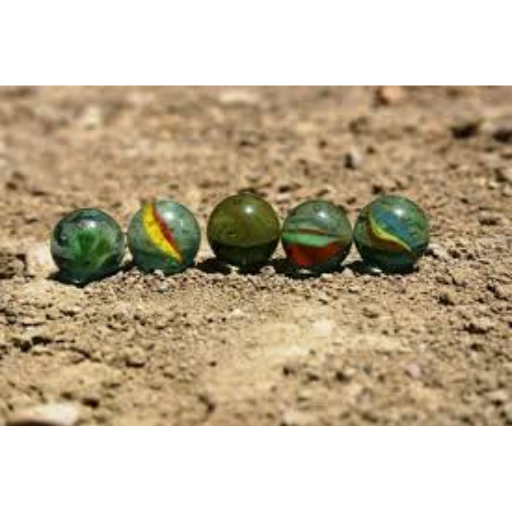
How to Play Misket:
Players: Misket can be played by two or more players, and the players take turns throwing the misket pieces.
Equipment:
A set of misket pieces (small, colorful objects).
A target area (usually a circle drawn on the ground or a designated spot).
Setup:
Players agree on the number of misket pieces each will throw (usually 3-5 pieces).
A target area is drawn on the ground, often a circle or a square, where players aim to land their misket pieces.
Gameplay:
Each player takes turns throwing their misket pieces towards the target.
Players can either aim to land the misket inside the target area or try to land it as close as possible to the designated spot.
After all players have thrown their misket pieces, the player who has their misket closest to the target wins that round.
Scoring:
The player with the most misket pieces landing inside or closest to the target area wins.
Points can be given for each misket inside the target or for each misket that lands closest.
Winning:
The game can be played for a certain number of rounds or until one player reaches a set number of points.
The player with the most points after the final round is declared the winner.
This basic version of Misket can vary depending on local rules, but this is a common way to play the game.
DİLEK EROĞLU
ÇAY İMAM HATİP ORTAOKULU
"Deve Cüce" (Camel and Dwarf)
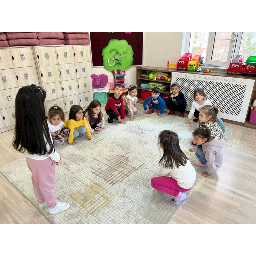
"Deve Cüce" (translated as "Camel and Dwarf") is a traditional Turkish children's game that is typically played outdoors and requires minimal equipment. The game is fun, energetic, and popular among kids, especially in Turkey. It promotes physical activity, teamwork, and social interaction.
How to Play "Deve Cüce" (Camel and Dwarf)
Number of Players:
The game can be played with a small or large group, usually between 5 and 15 children.
Objective:
The goal of the game is for the players to react quickly to specific commands and form different shapes as instructed. The team that follows the instructions correctly and quickly wins the round.
Setup:
The children stand in a line, typically facing the leader, who will give the instructions.
The leader is responsible for shouting the commands and ensuring that the players respond appropriately.
Rules and Commands:
Deve (Camel):
When the leader says "Deve" (camel), the players must bend their knees and lower their bodies to simulate a camel's hump. This position is usually lower to the ground, resembling the way camels walk with their backs curved.
Players must hold this position until the next command is given.
Cüce (Dwarf):
When the leader says "Cüce" (dwarf), players must crouch down low to the ground, trying to make themselves as small as possible. The idea is to mimic the posture of a dwarf, who would likely be short and squat.
The players should remain in this crouched position until the next command is issued.
Other Commands (Optional):
In some variations of the game, there are additional commands such as "Yüksek" (high) or "Alçak" (low), where players have to either stand tall or kneel down based on the instructions given.
The leader can also call out random commands, and the players must react as quickly as possible.
The Game Process:
The game begins when the leader shouts out either "Deve" or "Cüce."
Players must quickly and accurately take the corresponding positions (camel or dwarf).
If a player makes a mistake by moving too slowly or not following the command properly, they are out of the game.
The last player remaining who has successfully followed all the commands becomes the winner.
In larger groups, the game can be played in rounds, with a new leader chosen each time.
Benefits of the Game:
Physical Exercise: Players engage in bending, crouching, and stretching, which promotes physical fitness.
Quick Thinking: Children must respond rapidly to the leader's commands, which improves their reflexes and decision-making skills.
Teamwork: Though it is often an individual game, kids can practice cooperation when playing in a larger group and following the commands together.
Fun and Laughter: The fun part of the game is that it often leads to unexpected results, such as players tumbling or laughing at each other’s attempts to mimic the animal poses.
Conclusion:
"Deve Cüce" is an entertaining and culturally significant children's game in Turkey. It's simple, engaging, and requires no special equipment, making it easy for children to play in parks, playgrounds, or even at home. The game promotes physical activity, quick thinking, and teamwork while providing fun for everyone involved.
NAGİHAN SOYSAL
AHİ EVRAN İMAM HATİP SECONDARY SCHOOL
Dodgeball Game Rules and Details
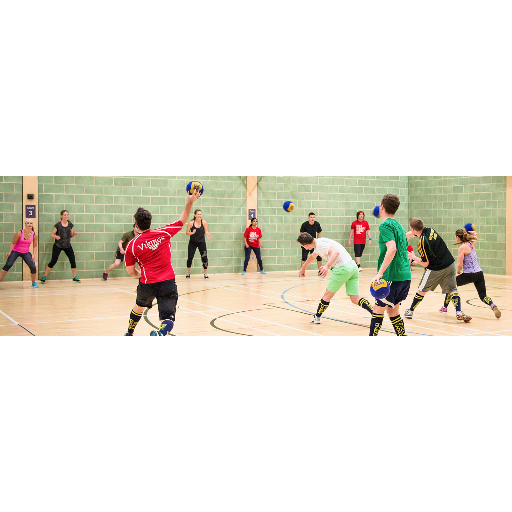
Yakantop is a popular playground game, especially among children, and is similar to dodgeball. It is typically played with a soft ball and requires agility, teamwork, and strategy.
Game Setup
Players: The game is usually played with two teams, each consisting of at least 3–5 players.
Field: The game is played on a rectangular field or a designated area with clear boundaries.
Ball: A soft, lightweight ball is used to avoid injuries.
Objective of the Game
The main goal of Yakantop is to eliminate players from the opposing team by hitting them with the ball while avoiding being hit yourself.
Game Rules
Starting the Game
A neutral throw determines which team starts with the ball.
The game begins when one team throws the ball toward the opposing team.
Throwing and Dodging
Players try to hit opponents with the ball by throwing it below the shoulders.
If a player is hit by the ball and fails to catch it, they are eliminated.
If a player catches the ball before it touches the ground, the thrower is eliminated instead.
Re-Entry to the Game
In some variations, eliminated players can return to the game if their teammates catch a thrown ball.
Boundaries and Fair Play
Players must stay within the designated playing area.
If a player steps out of bounds to avoid being hit, they may be eliminated.
Deliberately hitting an opponent in the face is usually not allowed.
Winning the Game
The game continues until all players on one team are eliminated.
The team with remaining players wins the round.
Multiple rounds can be played to determine an overall winner.
Game Variations
Time-Limited Yakantop: Instead of eliminating all players, the team with the most players remaining at the end of a set time wins.
Multiple Balls: To increase difficulty, more than one ball can be used.
Resurrection Rule: Eliminated players can return if their team catches a certain number of balls.
Yakantop is a fun, energetic game that improves reflexes, teamwork, and coordination. Would you like any additional details or strategy tips?
BİRGÜL TEMİR
DİKİLİTAŞ SECONDARY SCHOOL
Traditional Istop Game

Introduction:
Istop is a traditional game played mainly by children in open spaces such as parks, schoolyards, or streets. It is a fun and energetic game that requires quick reflexes, agility, and strategic thinking. The game is usually played with a ball and can include multiple players.
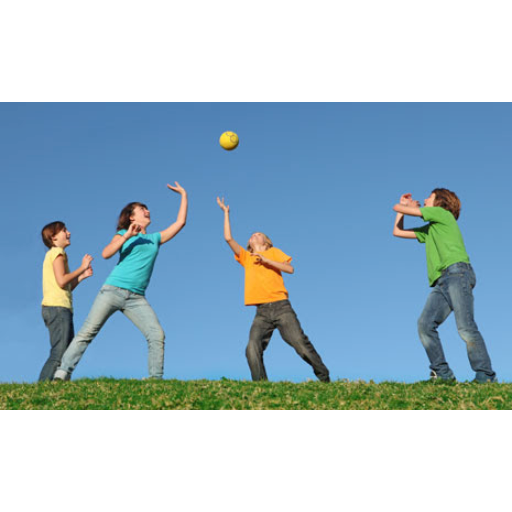
Number of Players:
There is no strict limit to the number of players, but at least three or more participants are needed for an enjoyable game.
Materials Needed:
A small rubber ball or any lightweight ball.
An open playing area.
Rules and How to Play:
Choosing the First Player:
The players stand in a circle. One player is selected to start the game.
Throwing the Ball & Calling a Name:
The starting player throws the ball high into the air and simultaneously calls out the name of another player.
Reaction of the Called Player:
The player whose name is called must quickly catch or retrieve the ball. Meanwhile, all other players must run away from the ball’s landing spot as fast as possible.
Stopping the Players (Istop!):
As soon as the called player catches or picks up the ball, they must shout "Istop!" loudly. When this is said, all other players must immediately stop moving and remain in their positions.
Targeting Other Players:
The player holding the ball then attempts to hit one of the stationary players with it. They can take a few steps (usually three) in any direction before throwing the ball.
Hit or Miss:
If the ball hits a player, that player gets a penalty point, and they take the next turn to throw the ball.
If the ball misses, the game continues with the same rules, and the player who threw the ball gets the next turn again.
The game continues for a predetermined time or until a player reaches a certain number of penalty points. The player with the fewest penalty points at the end is the winner.
Game Variations:
Safe Zones: Players may decide on a "safe zone" where they cannot be hit.
Extra Moves: Instead of three steps, the thrower might be allowed to take more or fewer steps based on the group's agreement.
Different Objects: Instead of a ball, some variations use bean bags or other soft objects.
Conclusion:
Traditional Istop is an exciting and social game that encourages physical activity, coordination, and strategy. It has been played for generations and continues to be a favorite among children in various cultures.
ECE SARICA
DİKİLİTAŞ SECONDARY SCHOOL
HANKERCHİEF GROB
.

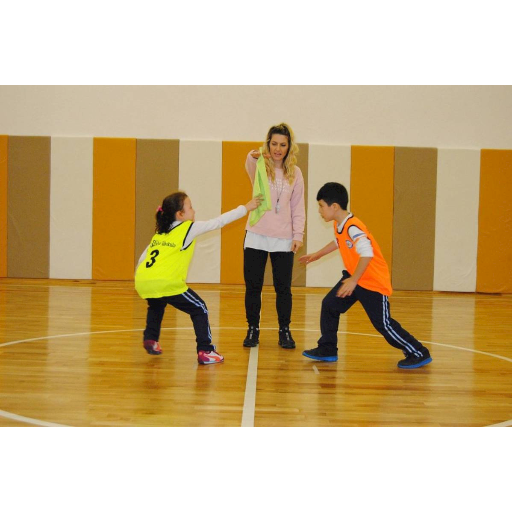
Traditional Handkerchief Snatch Game
The Handkerchief Snatch Game (known as "Mendil Kapmaca" in Turkish) is a traditional children's game played in Turkey and many other countries. It is a fun, fast-paced outdoor game that requires agility, speed, and teamwork.
Number of PLayers:
Materials Needed:
A handkerchief or a small piece of cloth.
Setup:
Players are divided into two equal teams.
The teams stand in two parallel lines facing each other.
A referee or a neutral person stands in the middle, holding the handkerchief.
How to Play:
Each player on a team is assigned a number (e.g., 1 to 5 if there are five players per team).
The referee calls out a number loudly.
The players from each team who have that number run toward the center to grab the handkerchief.
The first player to snatch the handkerchief must quickly run back to their team’s side without being tagged by the opponent.
If the player returns safely, their team earns a point.
If the player is tagged before reaching safety, the opposing team gets the point instead.
The game continues until a predetermined score is reached or until all numbers have been called multiple times.
Winning the Game:
The team with the most points at the end wins the game.
Benefits of the Game:
Encourages physical activity and improves speed, reflexes, and coordination.
Develops strategic thinking, as players must decide when to run and how to avoid being tagged.
Enhances teamwork and communication.
Promotes fair play and quick decision-making.
This game is still popular among children in Turkey and is often played in schoolyards, parks, and during traditional festivals. It is a great way to bring fun and excitement to group activities!
İPEK KARAGÜCÜK
DİKİLİTAŞ SECONDARY SCHOOL
I Sell Oil, I Sell Honey
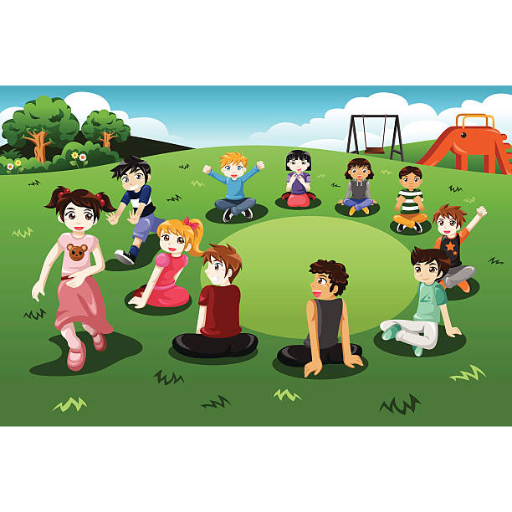
Yağ Satarım Bal Satarım" is a traditional Turkish children's game that has been passed down through generations. The name translates to "I Sell Oil, I Sell Honey" in English, which is reflective of the playful and rhythmic nature of the game. It is often played in outdoor settings like playgrounds, parks, or during school breaks, and is especially popular among young children. The game involves both singing and physical movement, making it an interactive and fun way for kids to engage with each other. Below is a detailed description of how the game is played:
Overview of the Game:
"Yağ Satarım Bal Satarım" is typically played in a circle by a group of children. It is both a singing and a chasing game that involves one child (the "seller") walking around the others while they sing a specific song. The objective is for the "seller" to select another child to be their partner in the game by a process of elimination, and then both perform certain movements that accompany the song.
How to Play:
"Yağ satarım, bal satarım,
Uykum var, dinlenmem lazım.
Ellerim titriyor,
Gözlerim kayıyor."
This translates to:
"I sell oil, I sell honey,
I am sleepy, I need to rest.
My hands are shaking,
My eyes are blurry."
As the "seller" sings, they tap the backs of the children in the circle. While walking and singing, the seller must make sure to keep the pace consistent and playful.
Choosing a Partner: As the seller continues to walk around, they eventually tap one of the children in the circle on the back. The tapped child is then "selected" and must follow the seller's movements and actions.
The Chase: The key part of the game happens when the "seller" reaches a point in the song where the child they tapped must jump up and chase the "seller." The seller must quickly try to make it back to the spot the tapped child was standing in, and the chaser attempts to tag them before they do. If the seller is tagged, they must return to the starting point, and the chaser becomes the seller in the next round.
Repeat: The game continues with children taking turns being the seller and chaser. The rhythm of the song and the fun of the chase make the game both exciting and engaging for children.
Skills Developed:
Cultural Significance:
"Yağ Satarım Bal Satarım" is a fun and educational game that has played a role in Turkish cultural traditions for many years. Like many traditional children’s games, it brings children together, helps build friendships, and creates shared memories. Additionally, it reflects the lively and playful aspects of Turkish culture, emphasizing the importance of community and teamwork.
Conclusion:
"Yağ Satarım Bal Satarım" is a delightful and energetic game that combines song, play, and physical activity, making it an ideal way for children to have fun while staying active. It remains a cherished part of Turkish childhood and continues to bring joy to generations of children.
TRADITIONAL ROMANIAN GAMES
CLAUDIA IOANA MADA
DACIA SECONDARY SCHOOL
STAY ON THE WALL
HOW TO PLAY THEM!
1,2, 3 STAY ON THE WALL
1. One child is chosen as the leader and stands facing a wall (or a tree).
2. The other players stand in a line some distance away from the leader.
3. The leader says "1, 2, 3, stay on the wall!" while facing the wall.
4. While the leader is speaking, the other players move forward as fast as they can.
5. As soon as the leader finishes the phrase, they turn around quickly.
6. Anyone caught moving must go back to the starting line.
7. The first player to reach and touch the wall wins and becomes the next leader.
THE LITTLE DONKEY
1. The players form a circle or a loose group, passing the ball among themselves.
2. One player starts by throwing the ball to another, who must catch it.
3. If a player fails to catch the ball, they receive a letter from the word "MĂGĂRUȘ" (meaning "little donkey").
4. The game continues, with each missed catch adding another letter.
5. When a player completes the full word "MĂGĂRUȘ," they are out of the game.
6. The game restarts until one player remains the winner.
Variations: In some versions, eliminated players must do a fun challenge (like jumping on one foot or singing a song).The last remaining player is declared the champion of the round. This game is great for improving hand-eye coordination and quick reactions!
COUNTRY, COUNTRY, WE WANT SOLDIERS!
1. Form Two Teams. Players split into two equal teams.
Each team stands in a line, holding hands tightly to form a "human chain."
2. The Call and Response:
One team starts by chanting: "Country, country, we want soldiers!"
The other team responds: “Whom?"
The first team picks a player from the opposing team and calls their name.
3. The Break Attempt: The chosen player runs as fast as they can toward the opposite team, aiming to break through their chain (by breaking the link between two players).
If they succeed, they take a player from the broken link back to their team.
If they fail, they must stay with the opposing team.
4. Winning the Game:
The game continues until one team runs out of players or concedes.
The team with the most players at the end wins!
TRADITIONAL ROMANIAN GAMES
PANAİNTE DOİNİTA
CENTRUL DE EXCELENTA İN TRANSPORTURİ
Shot Ducks
1. Choosing Roles:
One child is chosen to be the "hunter."
The rest of the children are "ducks" and will stand in front of the hunter at a set distance.
2. Game Rules:
The "hunter" is given a ball (representing the gun).
At the signal, the ducks start moving in all directions, trying not to get hit.
The hunter must throw the ball and try to hit the ducks to "shoot" them.
3. Eliminating Ducks:
Children who are hit by the ball are eliminated from the game and must sit on the side.
The game continues until only one duck remains unshot.
4. Winner:
The last duck standing becomes the new hunter for the next round.
If the game is played in teams, the number of ducks "shot" is counted, and the team with ti most survivors wins.
Blind Man's Buff
1. Choosing the "Blind Man"
One child is chosen to play the role of the "Blind Man" (the person who will be blindfolded)
The rest of the children are players and will spread out around the playing area.
2. Blindfolding
The child chosen as the "Blind Man" has their eyes covered with a piece of cloth (such as a or a band). They should not be able to see.
3. Starting the Game
At the signal "Blind Man's Buff," the child must try to catch someone from the other players
The players move around the "Blind Man," and the Blind Man must rely on their hearing anc intuition to find and touch someone.
4. Catching a Player
When the "Blind Man" catches a player, they must guess who it is. If they guess correctly, 1 caught player becomes the new "Blind Man" for the next round.
If they fail to guess, the game continues until they catch another child.
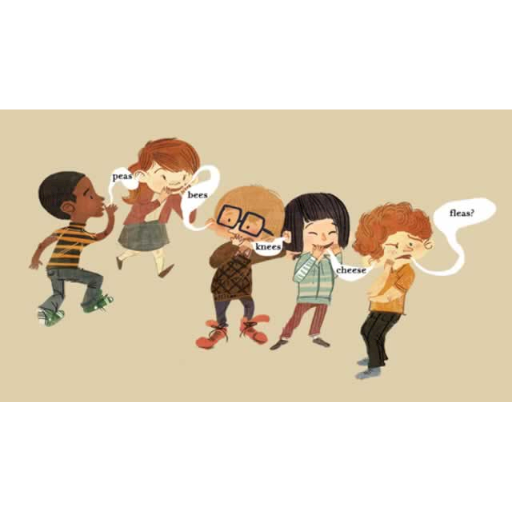
Broken Telephone
1. Forming the Circle:
All the children sit in a circle, and one child will start the game.
It's important for the circle to be tight enough so all players can hear clearly.
2. Passing the Message:
The first child chooses a message (usually a short sentence or a funny word) and whispers the ear of the second child.
The second child must repeat the message exactly as they heard it and whisper it to the th child, and so on, until the message reaches the last child.
3. Revealing the Message:
The last child says aloud the message they heard.
The original message is compared with the one that reached the end to see how much it ch during the transmission,
4. Ending the Game:
The game can continue with a different message or a different child starting the round.
HOUDA BOUGDİMA
IBN MANDHOUR SCHOOL
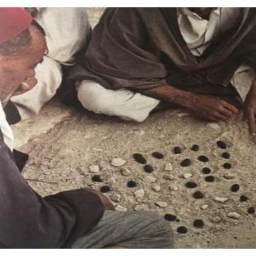
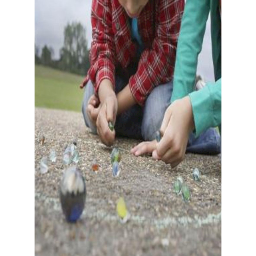
El Bis (Gazgaz)
1. Setup: Dig a small hole in the ground. Players stand behind a line called "lash," a few meters away from the hole. Each player has two small marbles called "bisa" (colored glass balls).
2. Objective: The goal is to get your "bisa" as close to the hole as possible.
3. Gameplay: Players take turns throwing their "bisa" toward the hole. The player whose "bisa" lands closest to the hole starts first.
4. Turns: The first player uses their second "bisa" to try to hit their first "bisa" and move it closer to the hole. If successful, they continue their turn. If not, the next player takes their turn.
5. Winning: The player who gets their "bisa" into the hole or closest to it wins the round. Note: The term "rigat" might refer to a specific move or strategy during the game.
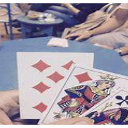
Chkobba
1. Setup:
Use a standard deck of 52 cards. The game is usually played by 2 to 4 players.
2. Objective: The goal is to collect as many cards as possible by winning tricks.
3. Dealing: Each player is dealt 4 cards, and 4 cards are placed face-up in the center.
4. Gameplay: Players take turns playing a card from their hand. If a player's card matches the rank of a card in the center, they capture both cards and any other cards of the same rank.
5. Scoring: The player with the most captured cards at the end of the game wins. Note: The game requires quick thinking and strategy to anticipate opponents' moves.
Kharebga
1. Setup: Players form two teams. A ball is used, and a playing area is designated.
2. Objective: The goal is to pass the ball among teammates and score by getting it to a designated area or goal.
3. Gameplay: Players pass the ball to each other while avoiding interception by the opposing team. If a player is caught with the ball by the opposing team, possession changes.
4. Scoring: Points are scored by successfully passing the ball to the goal area. The team with the most points at the end of the game wins.
Note: This game emphasizes teamwork, coordination, and agility
Zarbout
1. Setup: Players use sticks and a small object (like a stone or a piece of wood). A target area is marked on the ground.
2. Objective: The goal is to hit the small object with the stick and land it in the target area.
3. Gameplay: Players take turns hitting the object with their stick, aiming to get it as close to the target as possible.
4. Scoring: The player who lands the object closest to or in the target area wins the round.
Note: This game requires precision, control, and strategic planning.
Bannibanni
1. Setup: One player is chosen as the "it" or chaser. The other players scatter around the playing area.
2. Objective: The goal for the other players is to avoid being tagged by the "it" player.
3. Gameplay: The "it" player chases the others, trying to tag them. Once a player is tagged, they become the new "it."
4. Winning: The game continues until players decide to stop, or a specific time limit is reached.
Note: This game is similar to tag and is great for physical activity and fun.
THE END
Thanks for reading!
- < BEGINNING
- END >
-
DOWNLOAD
-
LIKE
-
COMMENT()
-
SHARE
-
BUY THIS BOOK
(from $14.79+) -
BUY THIS BOOK
(from $14.79+) - DOWNLOAD
- LIKE
- COMMENT ()
- SHARE
- Report
-
BUY
-
LIKE
-
COMMENT()
-
SHARE
- Excessive Violence
- Harassment
- Offensive Pictures
- Spelling & Grammar Errors
- Unfinished
- Other Problem





COMMENTS
Click 'X' to report any negative comments. Thanks!