

Page 2 Kincsem
Page 3 Kántor
Page 4 Mancs
Page 5 Xummiemu The Hedgehog
Page 6 Horse of San Dimitr
Page 7 The Spider of the Legend of Speranza Valley
Page 8 The legend of the Bear Lake from Romania
Page 9 The legend of the Bison from Romania
Page 10 Speedy- the brave Romanian resque dog
Page 11 Dolphin- The national animal of Greece
Page 12 Donkey- the touristic symbol of Greece
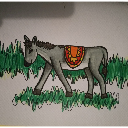
Page 13 Other animals of Greece
Page 14 The Legend of the Sheep from Slovakia
Page 17 The Legend of the Sivas Kangal (dog)
Page 18 The Legend of the Van Cat from TÜRKİYE
Page 19 The Grey Wolf
Page 20 The Animals of the Turkish Independence War
Page 21 Baba Sa'd and Baba Kuruş
Table of Content

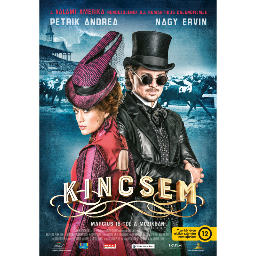
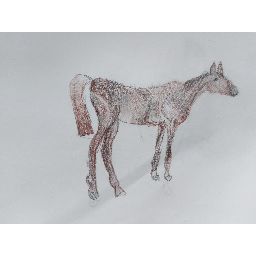
Kincsem- Racehorse
It was awarded multiple times, bred in Hungary, originated from Hugarian full-blood ancestors. She was born 17 March 1874 in Kisbér. In Hungary she was an undefeted, amazing mare. All over Europe she was called Hungarian Miracle or Hungarian Wonder. She became world famous. She ran on 13 race track for 54 times and won for 54 times. She finished racing at the age of 6. There is a race-track in Budapest called Kincsem Park named after her. Sáreczky Krisztián discovered an asteroid and named after her. There is a film about her achievments.
(Source: wikipedia, photo: wikipedia)
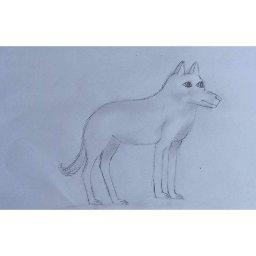
Kántor- the detective dog
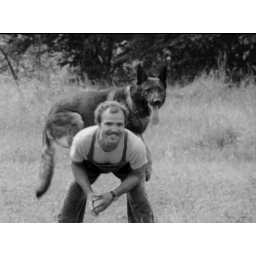
It is a male German Shephard dog. He was born in 1953 and died in 1964. He was one of the most successful detective dog in combating crime. He took part in 536 cases. He took part in 279 actions successfully. He regained products with the equal values of 4.2 million Forint.
There is a book about him: Kántor in the big city
There is a series about him: Kántor investigates
(source: wikipedia, photo: https://kutyabarat.hu/)
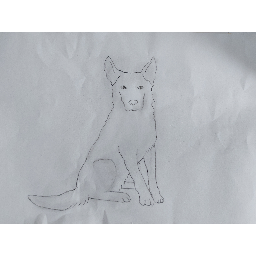
Mancs- Rescue dog
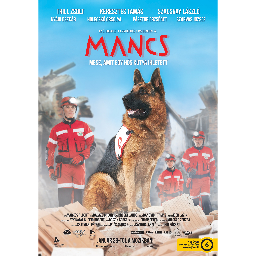
Full name: Miskolci Sátán Mancs
He was born in 1994 and died in 2006. Its name means "paw" in English.
It was a male German Shephard dog. He worked for Miskolci Spider Rescue Team. His owner was Lehoczki László. In Miskolc city there is a square named after him and he has got a statue too. He took part in several rescue all over the world. There is a film about his greatness.
He was one of the best rescue dog in the world.
(Source: wikipedia, photo: imdb)
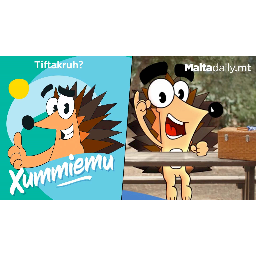
Xummiemu The Hedgehog
Xummiemu is a beloved Maltese environmental mascot who gained popularity in the 1990s. Portrayed as a spiky cartoon hedgehog, he was a central figure in campaigns promoting cleanliness and environmental awareness among children. Xummiemu's efforts included school visits, the creation of the "Klabb Xummiemu" club, and the distribution of educational materials like magazines and birthday cards .
After a period of inactivity, Xummiemu made a triumphant return in 2023 as part of a €5.2 million national campaign titled "Inżommu Nadif Flimkien" ("Keeping It Clean Together"). This initiative, supported by the Malta Tourism Authority and the Cleansing and Maintenance Division, aims to enhance public cleanliness through community engagement and education .
Xummiemu's resurgence has been met with enthusiasm, especially among those who grew up with his teachings. His character continues to inspire new generations to take pride in maintaining a clean and sustainable environment in Malta.
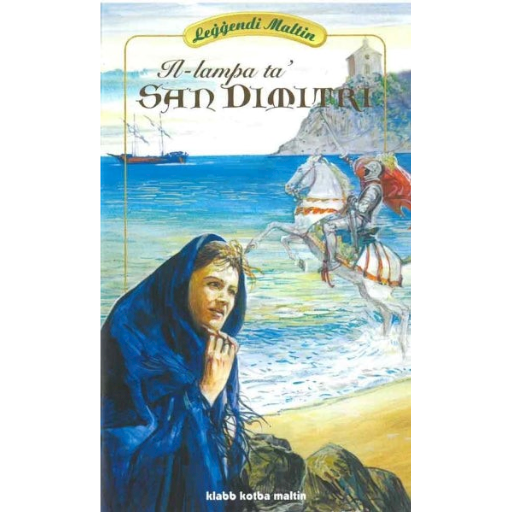
The Horse of San Dimitri
The legend of San Dimitri is a cherished tale in Maltese folklore, particularly rooted in the small, picturesque village of Għarb on the island of Gozo. It tells the story of a humble old woman named Żgugina who lived in a cottage near the cliffs of San Dimitri. Her only son was taken away by Turkish corsairs during a raid, and in her sorrow, she prayed fervently to Saint Demetrius (San Dimitri), whose small chapel stood nearby.
Moved by her devotion, San Dimitri is said to have miraculously ridden out of the chapel on his horse, galloped across the sea, and returned with Żgugina’s son safely in his arms. The cliff where this miracle supposedly occurred is now known as Il-Qaws, and to this day, some claim that the marks of the horse’s hooves are still imprinted in the rock. The chapel of San Dimitri, rebuilt after being destroyed several times, remains a symbol of faith and miraculous intervention, with the legend celebrated by locals through annual feasts and storytelling. Some even claim that under the sea at night, they can see a candle light flickering in the area where the destroyed chapel is believed to lay.
The Spider of the Legend of Speranza Valley
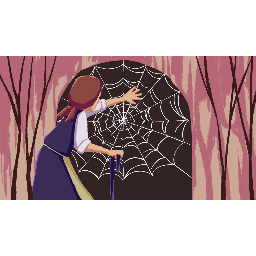
The legend of Speranza Valley in Malta tells the touching tale of a young girl who found refuge from invading Ottoman soldiers in the 18th century. As she fled for her life, she hid in a cave within the valley and prayed to Our Lady of Hope ("Il-Madonna tal-Isperanza") for protection. Miraculously, a spider quickly spun a thick web across the entrance of the cave. When the soldiers arrived, they assumed no one could be hiding behind an undisturbed web and moved on. The girl’s life was spared, and the valley was later named Wied il-Isperanza in her honor. Today, the story remains a symbol of hope, faith, and divine protection.
The legend of the Bear Lake from Romania

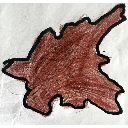
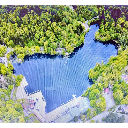
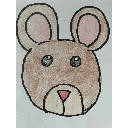
One of Romania's famous animals is the bear. Our country has the largest East-European bear population. We consider them our national animals. We have a very interesting lake, shaped in form of a bearskin. Its salt content is extremely high, so bathers can easily float on the surface of the water.
According to the folk tradition it was created as an effect of a tragic love between a fairy and a shepherd boy in the Salt Region in Szekler land.
The fairy found out that the boy betrayed her, became very angry and in revenge turned her love in stone, sank her own palace under the ground forming a huge pit, which was filled with the tears of the unceasingly crying fairy.
The legend of the Bison from Romania
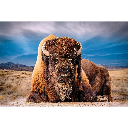
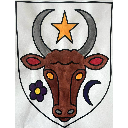
According to legends, the medieval state of Moldova was founded during a bison hunt close to Neamt Nature Park – at that time known as the “Bison Land”. Since then the bison serves as the symbol of Moldova and is also represented on the Romanian flag. You can find this legend in the book of Dimitrie Cantemir "Description of Moldova", which was written in the early XVIII century."... Dragos, the son of Prince Bogdan decided to cross the Carpathian mountains to east. During this journey, he hunted a wild bull that Moldovans called "Zimbru". He named the new land Moldova.
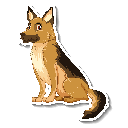
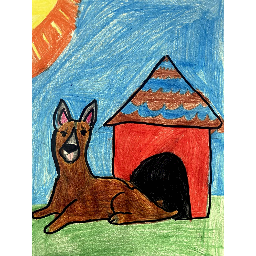
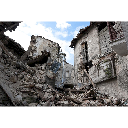
Speedy- the brave Romanian resque dog
Dolphin- The national animal of Greece
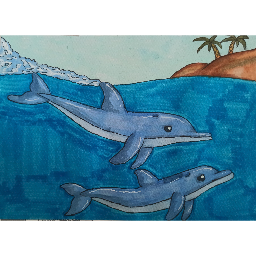
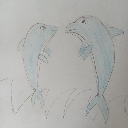
Dolphin, dolphin, dolphin
Oh, sweet dolphin
You live inside the sea
And you have a smooth skin.
You are fast and smart together
The most beautiful in the sea.
You have your language
With all your other friends
The national animal of Greece
And I have you always in my heart
The national animal of Greece is the Dolphin. It symbolises the sea that Greece has. It is also the symbol of power, beauty, loyality and struggling. It's helpful, strong, beautiful and highly intelligent. For the Greek people, it symbolizes hope, harmony,compassion, and giving help when needed.
In greek mythology, Delphinus was one of Poseidon's helpers.
Donkey- the touristic symbol of Greece
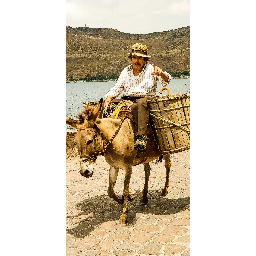
This is one of the most important animals for the Greek people.For many years, Donkeys were the only way to transport goods and people. In ancient times, donkeys were represented in a negative way by the Greeks, they symbolized the fool people. Perceptions later changed, because donkeys were symbolically connected to Christianity, so they became symbols of humility and peace, suffering and service.
The Island of Santorini has a long tradition in donkey riding. The local people were using these animals in order to transfer goods or as a mean of transportation around the island. Although this practice is not approved by everyone, donkeys still exist in Santorini as a nostalgic sign of the previous centuries.
These animals have a unique capacity to bond with each other and with humans, their heart rates even synchronise with those with whom they come into contact. Nowadays you can find donkey-assisted activities (DAA) programmes for vulnerable children and adults.
Other animals of Greece
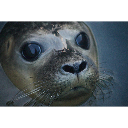
scientists confirm that 2/3 of the total population of the Mediterranean monk seal live in Greece
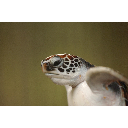
The Caretta- caretta turtles travel from different parts of the Mediterranean Sea to the Protected Area of the National Marine Park of Zakynthos, making it the largest breeding habitat in the Mediterranean.
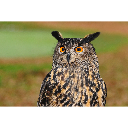
The national bird of Greece, the little owl, is also known as the owl of Athena and is believed to provide knowledge and wisdom worthy of the goddess.
- Full access to our public library
- Save favorite books
- Interact with authors
- < BEGINNING
- END >
-
DOWNLOAD
-
LIKE(2)
-
COMMENT()
-
SHARE
-
SAVE
-
BUY THIS BOOK
(from $3.99+) -
BUY THIS BOOK
(from $3.99+) - DOWNLOAD
- LIKE (2)
- COMMENT ()
- SHARE
- SAVE
- Report
-
BUY
-
LIKE(2)
-
COMMENT()
-
SHARE
- Excessive Violence
- Harassment
- Offensive Pictures
- Spelling & Grammar Errors
- Unfinished
- Other Problem





COMMENTS
Click 'X' to report any negative comments. Thanks!