
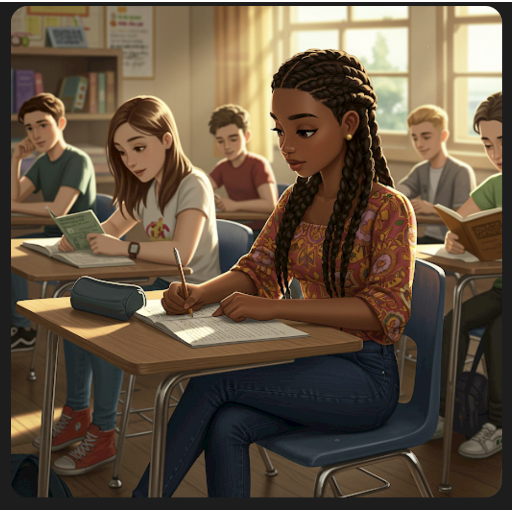
Imani, a high school senior, has recently moved from Brooklyn to a small town in Vermont since her mom got a new job. Her new school, Summit High, is very different from her old school. For one, not many students look like her in Summit High. In her old school, Imani’s friends and teachers were all black and sounded like her. She never felt out of place or thought she was different. Imani's first class was social studies. The teacher, Ms. Camden, guided Imani to an empty seat. As Imani looked around, she was the only black student in the class. She tried not to feel intimidated by it, so she directed her attention to the board that said: Explanatory Presentation Guidelines.
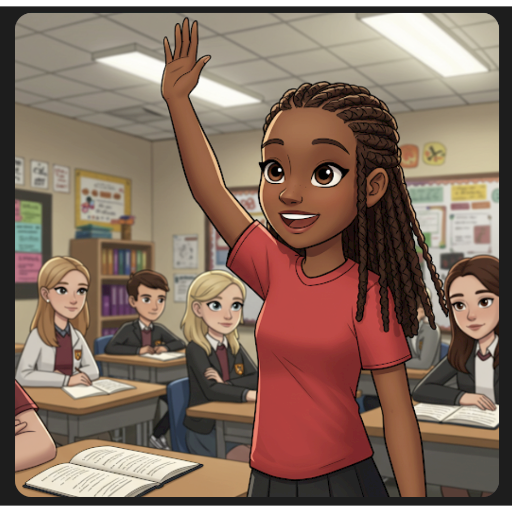
In class, Imani’s teacher informed her that they will be creating explanatory presentations with the goal of clarifying a topic or concept by providing detailed information and insights. It's a way to educate and inform an audience about something new, complex, or previously unknown. Imani raised her hand to ask a question: "So this be a presentation about teaching you somethin' you ain't know nothin' about?"
The class laughed. Ms. Camden scowled at her. "Young lady, I don't know what you just asked me, but whatever you did, I hope you learn to fix it so that I and everyone in this class can understand it." Imani felt embarrassed and confused. She didn't raise her hand again for the rest of the class.
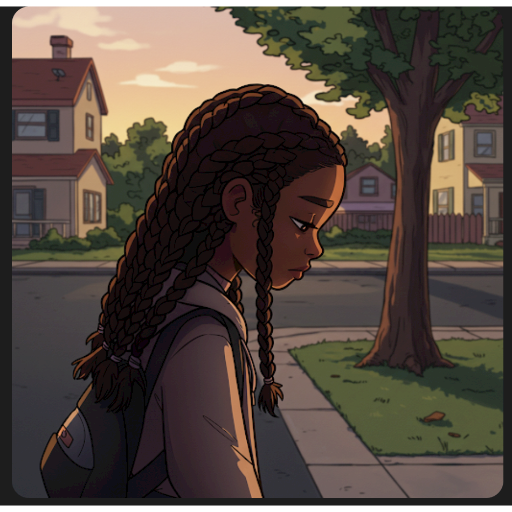
Imani walked home that day defeated. She didn’t understand why her teacher got so upset with her. The teacher was not even interested in what Imani said, she was more upset about how Imani spoke. Imani began to think about her old school, friends, and teachers. There, she never felt out of place or different. Nobody said she spoke incorrectly.
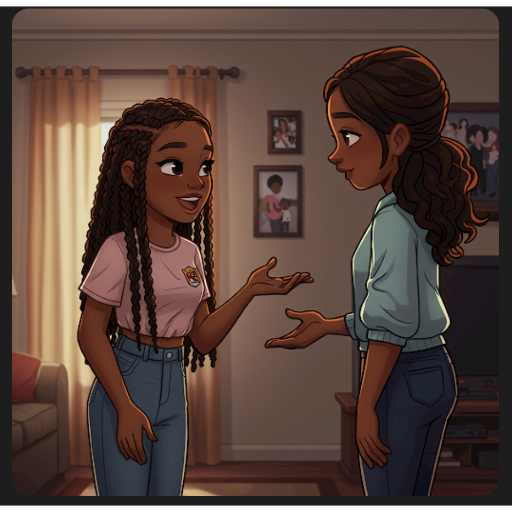
Imani went to her older sister. Surely, she had to have some sort of perspective on this situation. "Why you worried about what your teacher said?" Imani's sister asked. "This is the way you talk. Why change it? If you do, you’re not being true to yourself. This how we all talk, Imani. There no changing it. As long as you do your work, this teacher ain't gonna fail you for speaking. Forget her."
Imani felt better, but she still felt like her teacher’s demeanor was too harsh. She decided to speak with the guidance counselor.
The following week, Imani found herself outside of Ms. Maxwell's office. A tall woman with braids and cocoa skin opened the door. Imani was shocked. This was the first person in Summit High who resembled her in some way. She immediately felt at ease. Imani explained the situation in class and what her sister told her.
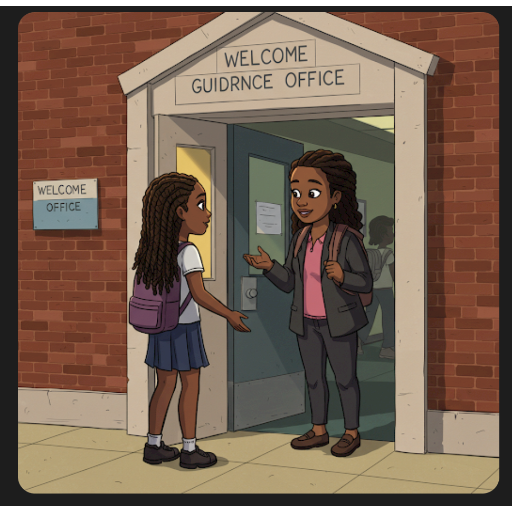
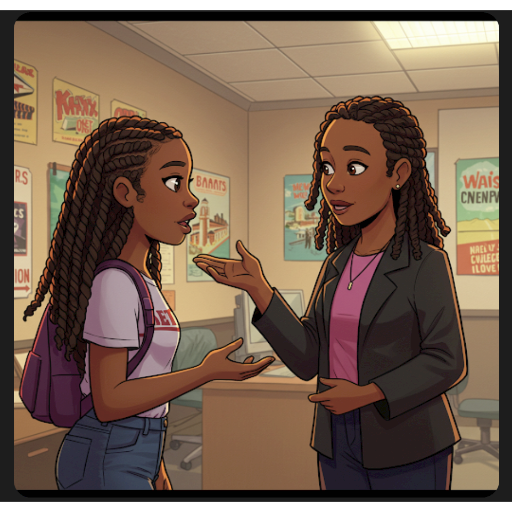
Ms. Maxwell took a deep breath. "Ms. Camden doesn’t understand the way you speak, Imani" she said. "It’s not her fault, she just doesn’t know any better. And if she doesn't know, she will view it as 'wrong.'" I think what you need to do is to educate her. She will not take it upon herself to do her own research or to ask questions, so you need to inform her. What we speak is a legitimate dialect of English called African American Vernacular English (AAVE). It’s just like any other language – it follows a system. It’s not just some made up way of speaking. Many people think it’s a sign of poor intelligence, but in reality, it’s just a cultural way of speaking. There’s nothing wrong with it. Maybe Ms. Camden will come around if you teach her something new" (Gollnick & Chinn, 2013).
Just then, Imani knew what her explanatory presentation would be on.
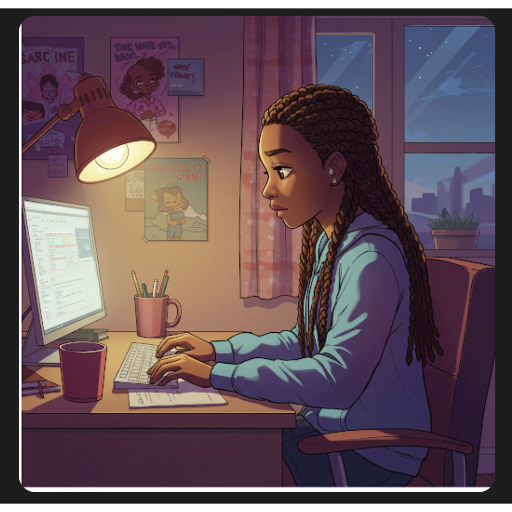
When Imani got home, she took a deep dive into research and started compiling resources for her project. It was time for her to be the teacher. She first found a YouTube video by Storied explaining the history of AAVE and how the language follows a structure.
Imani was intrigued since she never knew that AAVE originated from how African Americans dispersed throughout major cities in the US during what was called The Great Migration, and how her way of speaking follows a grammatical pattern (What People Get Wrong About African-American English, 2021). She had never learned about her dialect in such a formal way, since she grew up speaking like this her whole life.
In the video, it explains how AAVE follows a structured pattern with rules, making just as legitimate as Standard Mainstream English or any other language.
AAVE contains its own rules regarding phonological features and grammar. For example, Imani learned that AAVE implements TH Stopping, where a [d] sound replaces a [th] sound. She also learned that AAVE uses double negatives, possessive s absence, and restructures its question word order (What People Get Wrong About African-American English, 2021).
Imani could finally put a proper name to aspects of her language.
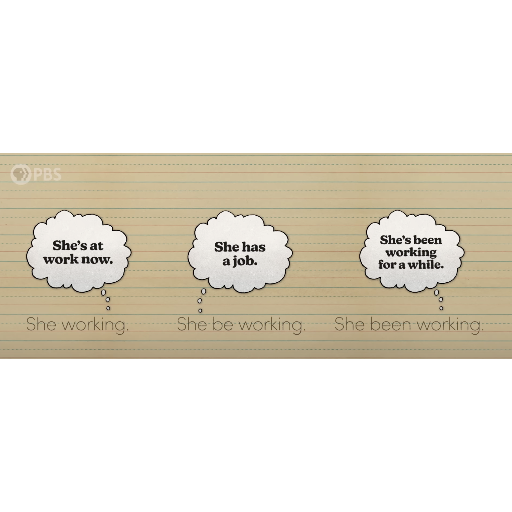
(What People Get Wrong About African-American English, 2021).
Imani found another video that further validated her feelings and uncovered more truth behind her way of speaking. In the video, Professor Robin Alva Marcus explains that if students who speak AAVE are silenced or reprimanded about the way they speak in class, it’s an “indictment” against the classroom since it’s not a place that is fostering inclusivity or equity.
Instead, silencing students or policing their language is causing them to become disinterested in learning and sharing in class (“Black English”: How AAVE Developed From Slave Resistance & African Dialects, 2021).
Imani was starting to understand how serious of an offense Ms. Camden's words were to her.
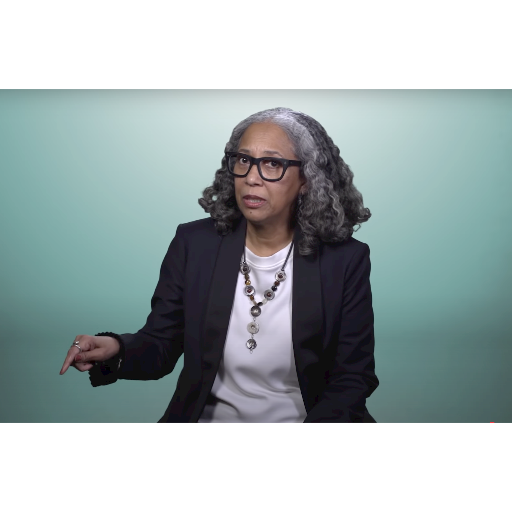
"If you have not learned the language of he classroom, that is not an indictment against you, that's an indictment against the classroom."
(“Black English”: How AAVE Developed From Slave Resistance & African Dialects, 2021).
Imani thought about how common AAVE is in the arts. She remembers learning about well-known poets such as Langston Hughes. A poem he wrote called “Mother to Son” famously uses AAVE to describe communication between an African American mother to her son. She noticed the use of double negatives, as in the lines: "Life for me ain't been no crystal stair" and "Where there ain't been no light" (Hughes, 1922). She even looked up her favorite singer, SZA, and realized her use of AAVE in her song lyrics. Specifically, a track called "Broken Clocks" has lyrics that say: “All I got is these broken clocks/I ain't got no time,/just burnin' daylight” (SZA, 2017).
Imani was learning that the world was no stranger to AAVE.
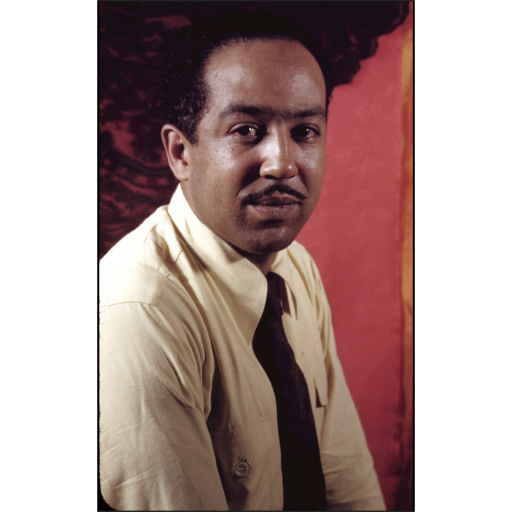

Image of SZA from “Why SZA's evolution into a popstar has earned her recognition as artist of the year” (2023)
Image of Langston Hughes from Yale University Library (1942)
Imani found a video called "3 Ways to Speak English" that asks an important question: Who controls articulation? In the video, Jamila Lyiscott performs a spoken word essay to explain how her 3 dialects of English are not all viewed the same way, but they all have value and purpose to her (Lyiscott, 2014).
Lyiscott is a "tri-lingual orator" and expresses her frustration with society in that she is considered less than for speaking languages that do not conform with American Standard English (Lyiscott, 2014).
Imani was moved by this performance and understood that individuals control their own articulation.
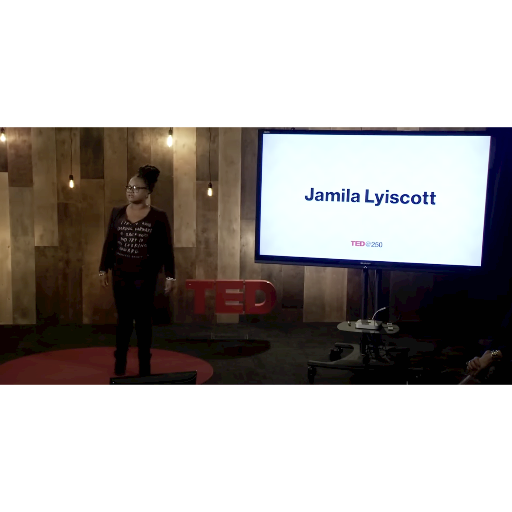
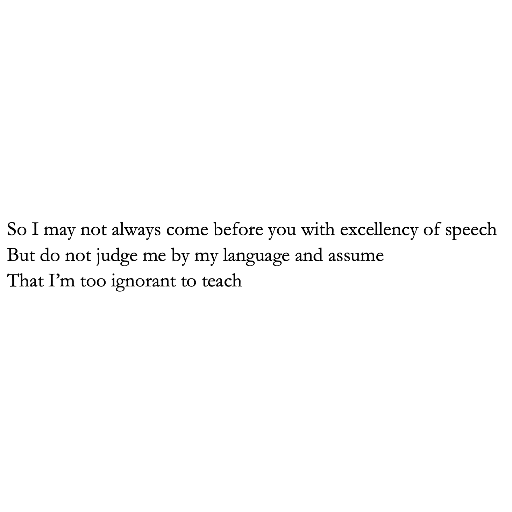
(Lyiscott, 2014)
In another video Imani found, Karen Leung describes how her parents' mixed use of Cantonese and English still granted them the ignorant and discriminatory label of “unintelligent” and that their English is “broken”, despite them knowing how to express ideas clearly and knowing the 2 languages well. The sentence, "You eat full yet?" in Cantonese has the same meaning as "Did you have enough to eat?" In English (Leung, 2018)
Imani felt heard through this video since Ms. Camden made her feel like her language was “broken” in class, even though she was asking a valid question.
- Full access to our public library
- Save favorite books
- Interact with authors
- < BEGINNING
- END >
-
DOWNLOAD
-
LIKE(2)
-
COMMENT()
-
SHARE
-
SAVE
-
BUY THIS BOOK
(from $7.39+) -
BUY THIS BOOK
(from $7.39+) - DOWNLOAD
- LIKE (2)
- COMMENT ()
- SHARE
- SAVE
- Report
-
BUY
-
LIKE(2)
-
COMMENT()
-
SHARE
- Excessive Violence
- Harassment
- Offensive Pictures
- Spelling & Grammar Errors
- Unfinished
- Other Problem






COMMENTS
Click 'X' to report any negative comments. Thanks!