 We dedicate this to our friends, family, and U.S. History teacher Ms.
Prepster.
This book was created and published on StoryJumper™
©2014 StoryJumper, Inc. All rights reserved.
Publish your own children's book:
www.storyjumper.com

 popular sovereignty


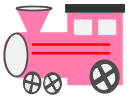
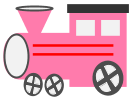
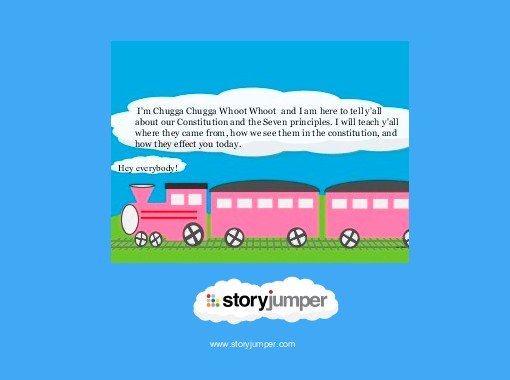
 I'm Chugga Chugga Whoot Whoot and I am here to tell y'all
 about our Constitution and the Seven principles. I will teach y'all
where they came from, how we see them in the constitution, and
how they effect you today.
 Hey everybody!
2

 Popular sovereignty
 The first principle I will teach y'all about today is popular
 sovereignty. It is the idea that the people are the ultimate authority
and the source of the authority of government is a fundamental
principle of democracy. They are reflected in in the constitution when
it says "We the People" because its saying that the people agree to let
the government make some decisions, but the people also get to make
some.
 The origin of this principle
 is from John Locke.These principle affects us because it gives
us the idea that the people rule.
3

 Limited Government
 The next principle is limited government. It means the rule of law
 protects the rights of citizens, maintains order, and limits the
power of the government. No one, not even the president, is above
the law. An example of this in the Constitution is Article 2 section
4. It says that the president can be impeached if he commits a high
crime.This idea came from the Fundamental orders of Connecticut
where it wrote out all the things the government can and
cant do. This principle affects us because it
protects the rights we have.


4



 Republicanism
 Another one I am going to tell you about is Republicanism. It is when people elect
 representatives to vote for things. These elected people are voting on, hopefully, what
the majority wants. Some people get confused between Popular Sovereignty and this
because they both have to do with the people choosing power. An example of this in
the constitution is Article 2 section 1 where it says how the president will be chose. He
is chosen by elected representatives voting on him.This principle came from the Virginia House
of Burgess. There were representatives
who would vote on important topics.This principle effects us because if we want
our opinion in congress we have to vote for a
Representative.
5
Separation of Powers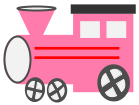



 The fourth principle I am going to teach y'all about is Separation of Powers. It means that instead
 of having all the power in one group of people, it is divided into three branches. These branches
are the Legislative branch, the Judicial branch, and the Executive branch. An example if this in the
Constitution is any where it talks about one of the branches. A specific example of this is Article 1
because it is how the legislative branch is to be run. This idea came from Montesquieu in
around 1750, give or take a few years. This principle effects us today because a single
branch could make unfair decisions with
nobody to stop them.
6
Checks and Balances
 Next, I'm going to tell y'all about Checks and Balances. These are the powers and
 controls that each branch has over the other two branches. If one branch makes a law that
is bad, another branch could call off that law. Each branch has specific powers and
weaknesses against the other two branches. This principle is found in the first three
articles of the Constitution. The three Articles sum up that one branch can't be more
powerful than the others.Checks and balances came from Baron
de Montesquieu idea of separation of
powers.This principle effects us because
one branch could make bad decisions
and no one would be able to stop them
7
Federalism The next of the seven principles is Federalism. It is a system of government in which
power is divided between a central government and the states. This means that the states
hold some of the power and the federal government holds the rest of the power that the
states don't have. In the Constitution, Federalism is stated in Article one. In Article one
section eight, it states the powers of the government, and Article nine states the powers
that the government doesn't have and the ones the states have.



 This effects us by giving some power
to us and some to the national
government.Federalism came from the Founding
Fathers when they created the
Constitution.
8
Individual Rights The last principle I will tell Y'all about is Individual Rights. This is the idea that all people
are born with certain rights that the government can't take away. Everyone who is born in the
U.S comes with rights that the government can not violate or take away. The Individual Rights
that we have are found in the original Constitution and the Bill of Rights. The Bill of Rights
lists all the rights and freedoms we are guaranteed as citizens of the United States.

 Individual Rights came from John
 Locke's idea of unalienable rights.This principle effects us majorly
because it tells the government the
rights we have that can't be taken away.
9
 Hey! Thank Y'all so much for
following me on my adventure
through the seven principles of
the Constitution. I hope you
enjoyed my presentation and I'll see Y'all
next time! Whoot Whoot Bye!




10
You've previewed 10 of 16 pages.
To read more:
Click Sign Up (Free)Benefits:
- Full access to our public library
- Save favorite books
- Interact with authors
11

READ
- < BEGINNING
- END >
-
DOWNLOAD
-
LIKE
-
COMMENT()
-
SHARE
-
SAVE
BUY THIS BOOK (from $3.19+)
-
BUY THIS BOOK
(from $3.19+) -
BUY THIS BOOK
(from $3.19+) - DOWNLOAD
- LIKE
- COMMENT ()
- SHARE
- SAVE
- Report
Liked By
X
Encourage this author
-
BUY
-
LIKE
-
COMMENT()
-
SHARE
Problem with this book
X
- Excessive Violence
- Harassment
- Offensive Pictures
- Spelling & Grammar Errors
- Unfinished
- Other Problem
Which pages have problems?
Please describe the problem:
left text
right text
"Our Constitution and the 7 Principles"

A lively train named Chugga Chugga Whoot Whoot teaches kids about the seven principles of the Constitution, including popular sovereignty, limited government, republicanism, separation of powers, checks and balances, federalism, and individual rights.
(17 pages)
Privacy level:
PUBLIC
56 reads
Report





COMMENTS
Click 'X' to report any negative comments. Thanks!