 For Government
This book was created and published on StoryJumper™
©2014 StoryJumper, Inc. All rights reserved.
Publish your own children's book:
www.storyjumper.com


 The English Colonies
 Royal Colonies
 Proprietary Colonies
 Charter Colonies
 Royal Colonies
 New Hampshire
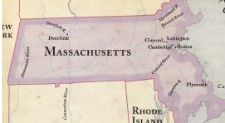
Massachusetts
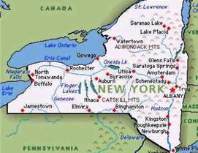
New York
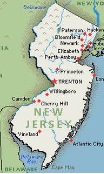
New Jersey
Virginia
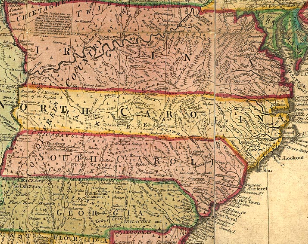
North Carolina
South Carolina
GeorgiaThe royal colonies
were under direct
control of the Crown

 Proprietary Colonies
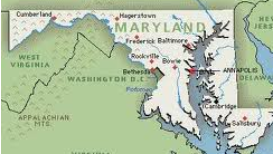
 Maryland
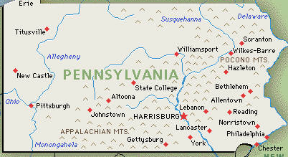
 Pennsylvania
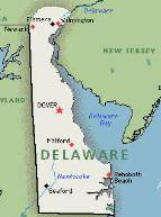
Delaware
The proprietary
colonies were organized
by a person to whom
the king made a grant
of land.
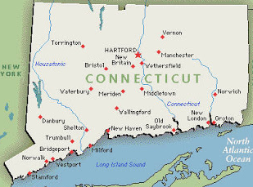
 Charter Colonies
 Connecticut
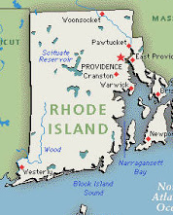
 Rhode Island
The charter
colonies
were mainly
self-governing
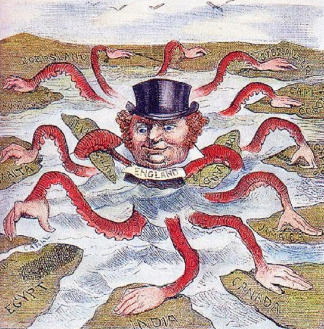
 Britain's Colonial Policies
The relationship between these
colonies and Britain became federal.
The colonies basically self-ruled
until 1760. Restrictive trading acts
were then enforced and new taxes
were imposed.
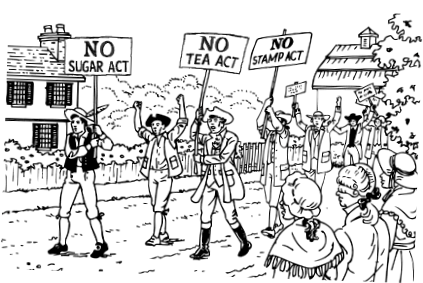
 The colonists objected to these taxes
and claimed them to be
"taxation without representation".
As policies began being pushed harder
onto the colonies, the colonies were
forced to either revolt or submit.
 Colonial Unity
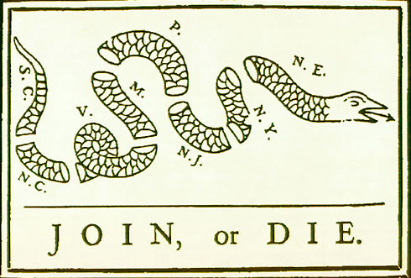
In order to revolt the colonies would have to
team up, otherwise they could not succeed.
Attempts made by the colonies included:
The New England Confederation
The Albany Plan
The Stamp Act Congress
Boston Tea Party
Parliament was not happy with these attempts
and took matters into their own hands
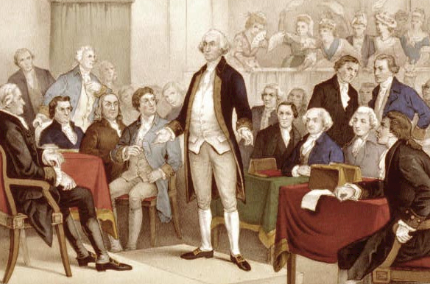
 The First Continental Congress
in 1774 Parliament decided to punish the
colonies by passing another set of laws.
These laws prompted a meeting of the
colonies.
Delegates from every colony except Georgia
met on September 5, 1774 in Philadelphia.
After many discussions, the meeting ended
on October 26.
There was to be another meeting in May of
the Second Continental Congress.
 The Second Continental Congress
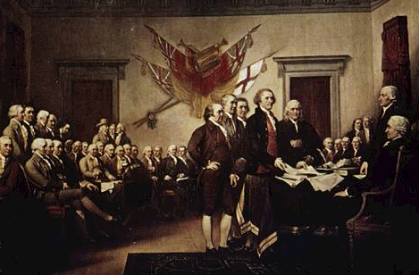
 On May 10, 1775, the Second
Continental Congress met in
Philadelphia. Each colony sent a
representative to the congress. The
Second Continental Congress became
the nation's first national government.
In July 1776 the Declaration of
Independence was formally adopted.
Then on March 1, 1781 the Articles of
Confederation went into effect.
 Declaration of Independence
Benjamin Franklin, John Adams, Roger
Sherman, Robert Livingston,and
Thomas Jefferson prepared the
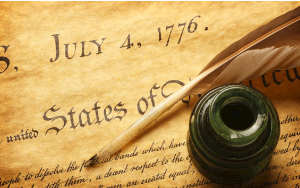
Declaration of Independence. On July 4,
1776, the Declaration was adopted.
This proclaimed the existence of a new
nation.
There was still a need for "a plan of
confederation.
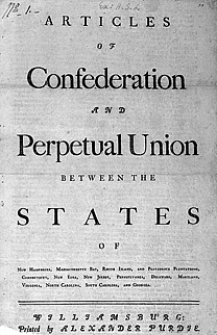
 Articles of Confederation
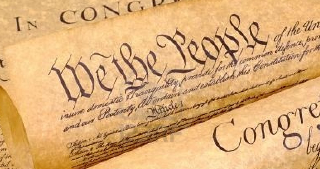
On November 15, 1777 the Articles of
Confederation was approved. It was
finally ratified on March 1, 1781. The
Articles were weak and did not work.
The government could not handle the
nation's problems.
The failure of the Articles of
Confederation lead to the Constitutional
Convention.
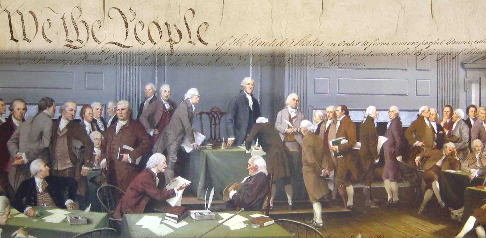
 Constitutional Convention
All of the states except Rhode Island
sent delegates to Philadelphia for the
convention. They discussed revising the
Articles of Confederation. Then they
decided they would build a new
constitution that would replace the
Articles.
 Virginia Plan
You've previewed 26 of 40 pages.
To read more:
Click Sign Up (Free)- Full access to our public library
- Save favorite books
- Interact with authors


- < BEGINNING
- END >
-
DOWNLOAD
-
LIKE(1)
-
COMMENT()
-
SHARE
-
SAVE
-
BUY THIS BOOK
(from $7.99+) -
BUY THIS BOOK
(from $7.99+) - DOWNLOAD
- LIKE (1)
- COMMENT ()
- SHARE
- SAVE
- Report
-
BUY
-
LIKE(1)
-
COMMENT()
-
SHARE
- Excessive Violence
- Harassment
- Offensive Pictures
- Spelling & Grammar Errors
- Unfinished
- Other Problem





COMMENTS
Click 'X' to report any negative comments. Thanks!