The main framework of our project is
focusing on literacy skills within the context of
21st-century skills. Before starting the main project activities, we aimed to establish a strong conceptual and pedagogical foundation for our students and teachers, Therefore, we designed an interactive, participatory and student-centred preparatory phase. This phase consists of two steps stemming from two sources of information: articles and webinars.

We planned two online webinars to introduce the concept of literacy from a broader and more contemporary perspective and to present the methods that can be used while doing a project. Prior to the webinars, we shared several articles related to literacy and methods on our project twinspace and encouraged students to read them.
This phase aimed to develop students' information of literacy, critical reading skills, and ability to independently access and interpret academic content. Each teacher had meetings to both introduce the project and to support students’ reading those articles for acquiring the intellectual background of our project.
Then, we proceeded with the webinars. The first webinar focused on literacy skills in the 21st century and discussed how literacy has expanded beyond traditional reading and writing skills. Students were introduced to various types of literacy and their importance in daily life as well as school life.
For this purpose, we invited Associate Professor Nuri Can AKSOY from Hasan Kalyoncu University to provide us with training about literacy.
We are grateful to him for accepting.
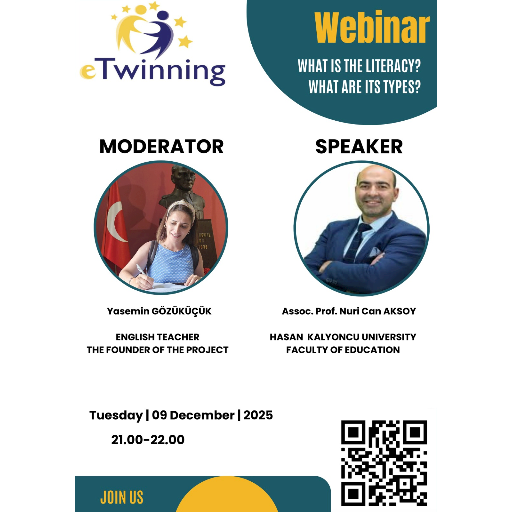
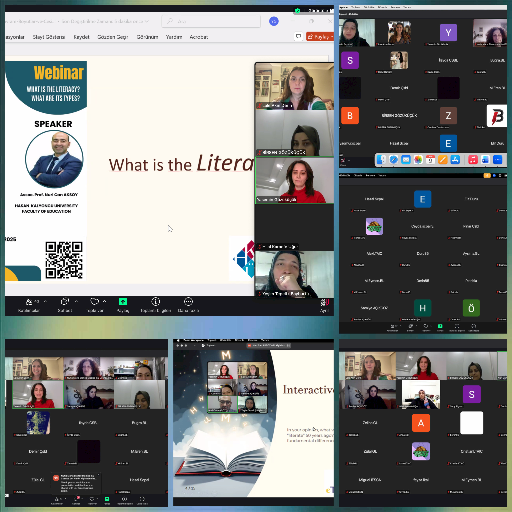
The webinar was very educative, informative and enjoyable.
The students participated actively.
After this webinar, we conducted an online survey in which students actively participated in selecting the four literacy types that the project would focus on. We asked the question:
"Which literacy skills would you like to work on?"
This process promoted democratic participation, decision-making skills, and student agency, allowing learners to feel ownership of the project from the very beginning.
We conducted this survey using Microsoft Forms and obtained the results from our students.
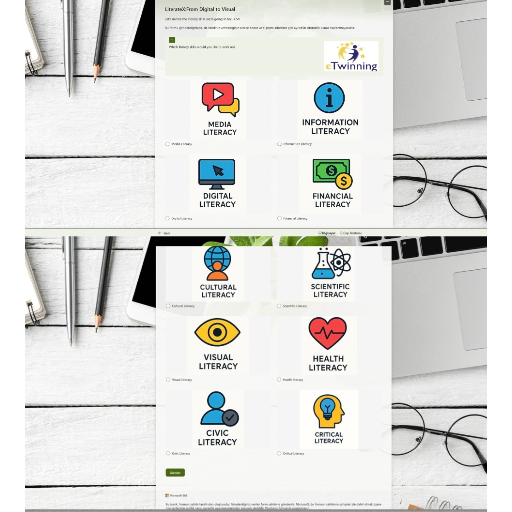
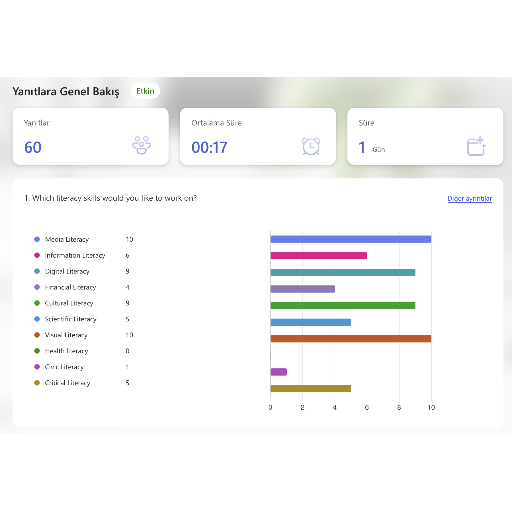
As can be seen here, our students voted and their votes showed us that they wanted to work on the following four literacy skills:
1- Digital literacy
2- Visual literacy
3- Media literacy
4- Cultural literacy
The next step was to select our pedagogical methods and approaches to be used in the process of implementing our project.
We wanted to make this decision together with our students again and to hear their views on the matter.
Therefore, it was appropriate to first provide them with training on this subject and then ask them to make their selection through another survey.
That's why, the second webinar concentrated on pedagogical methods and teaching approaches that could be effectively used throughout the project.
During this session, participants explored innovative, student-centered methodologies suitable for developing 21st century skills.
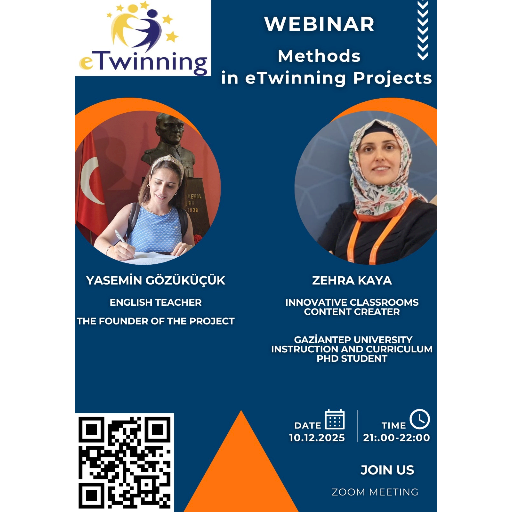
We invited Ms.Zehra KAYA who is an Innovative Classroom Content Creator at the Turkish Ministry of Education to give a webinar on methods that can be used in eTwinning projects.
We thank her for accepting.
- Full access to our public library
- Save favorite books
- Interact with authors
- < BEGINNING
- END >
-
DOWNLOAD
-
LIKE
-
COMMENT()
-
SHARE
-
SAVE
-
BUY THIS BOOK
(from $3.79+) -
BUY THIS BOOK
(from $3.79+) - DOWNLOAD
- LIKE
- COMMENT ()
- SHARE
- SAVE
- Report
-
BUY
-
LIKE
-
COMMENT()
-
SHARE
- Excessive Violence
- Harassment
- Offensive Pictures
- Spelling & Grammar Errors
- Unfinished
- Other Problem




COMMENTS
Click 'X' to report any negative comments. Thanks!