This book was prepared as part of the eTwinning project "Cultural Bridges: Discovering UNESCO World Heritage Together". Our students are introducing their national dishes.We hope you enjoy reading.

CEZERYE
Cezerye is a type of dessert particularly popular in the Mersin region. It is made from carrots, powdered sugar, walnuts, and coconut.
A product with "geographical indication" registration in Mersin, cezerye is described as "the sweetest form of carrot" and is considered an indispensable delicacy.
Işıl SÖNMEZ-Hadiye Kuradacı Bilim ve Sanat Merkezi
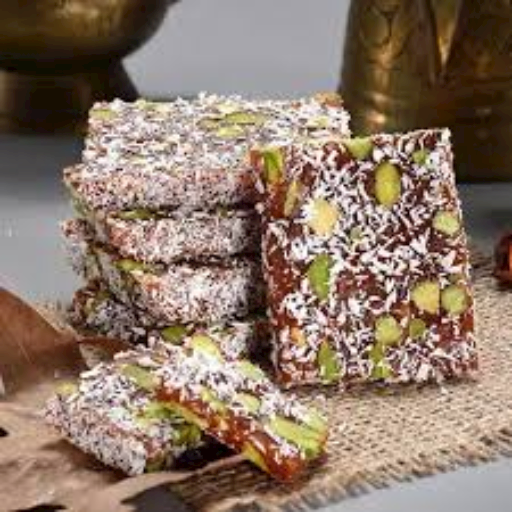
Işıl SÖNMEZ-Hadiye Kuradacı Science and Art Center
Cezerye, which stands out as a "healthy dessert" because it contains no additives, is ready after the delicious journey of carrots that lasts approximately 1.5 days.
The process begins at dawn in the fields, with the carrots being transported to processing plants, the first stops on their journey to becoming a sweet treat. To prevent damage, the carrots are cut while flying, then boiled in large pots at a high altitude for an hour.
While still in their most vibrant orange color, the carrots in the pots are passed through sorting machines and can be boiled for another hour until they become marmalade.
Işıl SÖNMEZ-Hadiye Kuradacı Science and Art Center
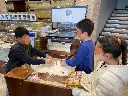
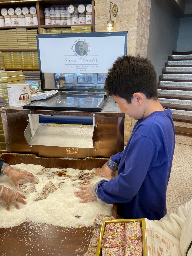
The marmalade, transferred to another cauldron, is mixed with water, beet sugar, spices, and chronically substituted with hazelnuts, pistachios, walnuts, or almonds. Stirred by masters who spend minutes at the cauldron, the marmalade is distributed into trays and smoothed with a rolling pin when it reaches the desired consistency. It is then sliced and served.
Işıl SÖNMEZ-Hadiye Kuradacı Science and Art Center

Burhan YALÇIN-Kdz. Ereğli Şahinde Hayrettin Yavuz Science and Art Center
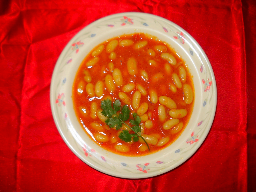
Kuru fasulye (dried beans) is a bean dish cooked in Turkish cuisine.
The beans used are Phaseolus vulgaris, a variety native to Central America. It is made with white beans and olive oil, and often includes onions and tomato paste. Vegetables or meat can also be added to the dish. Kuru fasulye is served with rice or bulgur pilaf. It can also be eaten by dipping bread into the soup. It is considered one of Türkiye's national dishes.


Burhan YALÇIN-Kdz. Ereğli Şahinde Hayrettin Yavuz Science and Art Center
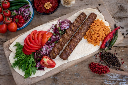
Kebab is the name given to meat dishes cooked over charcoal, in a wood-fired oven, or in traditional ovens today. It is cooked directly over an open fire or in a pot without adding water. It is very delicious.
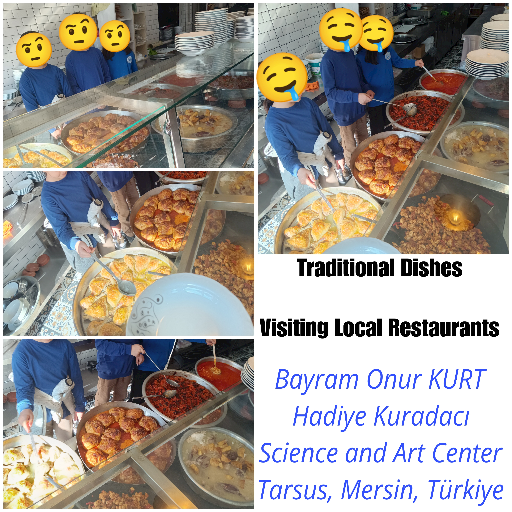
We visited nearby local restaurants serving traditional dishes such as dolma, güveç, rice and beans, lentil soup, kebab, döner etc.
Bayram Onur Kurt, Hadiye Kuradacı Science and Art Center, Tarsus, Mersin, Türkiye
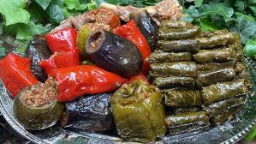
Dolma is a delicious dish unique to Türkiye, made using vegetables or leaves stuffed with a mixture of rice, herbs, and sometimes meat. The word "dolma" means "stuffed," and children love their small, colorful appearance. Dolma is usually eaten with family at special occasions and can be served hot or cold. It is both healthy and tasty.
Bayram Onur Kurt, Hadiye Kuradacı Science and Art Center, Tarsus, Mersin, Türkiye
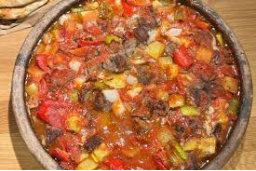
Güveç is a traditional Turkish dish cooked in an earthenware pot throughout the country. It's made with meat, vegetables, and spices, all of which combine to create a rich and creative flavor. Because it's cooked for a long time, the dish becomes very tender and easy to eat. Many families enjoy making güveç on weekends or when guests come over because it can be used to share.
Bayram Onur Kurt, Hadiye Kuradacı Science and Art Center, Tarsus, Mersin, Türkiye
Bayram Onur Kurt, Hadiye Kuradacı Science and Art Center, Tarsus, Mersin, Türkiye
Melek Erdal Kurt
Karadiken Ortaokulu, Tarsus, Mersin, Türkiye
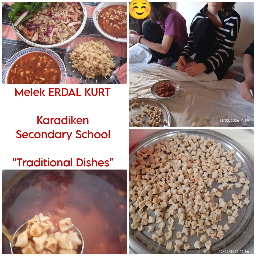
Manti is a traditional dish unique to Türkiye.
In Tarsus district of Mersin, it is prepared like a delicious soup with tomato sauce.
Melek ERDAL KURT
Karadiken Secondary School, Tarsus, Mersin, Türkiye
First, the tiny mantı dumplings are cooked in hot water. Then, tomato paste and spices are added to make a red, tasty broth. The soup smells delicious and looks warm and colorful.
Melek ERDAL KURT
Karadiken Secondary School, Tarsus, Mersin, Türkiye
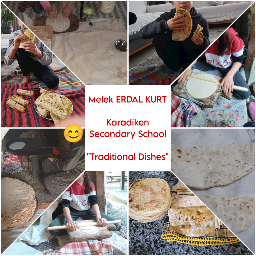
Börek is a popular dish in Turkey. It is made with very thin dough called pastry. Inside, there can be cheese, meat, spinach, or potatoes.
The layers of dough are placed on top of each other with filling in between. Then it is baked in the oven until it is golden and crispy.
Melek ERDAL KURT
Karadiken Secondary School, Tarsus, Mersin, Türkiye
Sıkma is a traditional food from Turkey. It is made with thin flatbread. Inside the bread, people put tasty fillings like cheese, potatoes, or herbs.
Sıkma is a great snack for breakfast or lunchtime. It is simple, yummy, and fun to hold in your hands!
The Legend of The Golden Mountains-
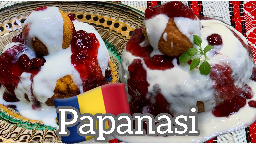
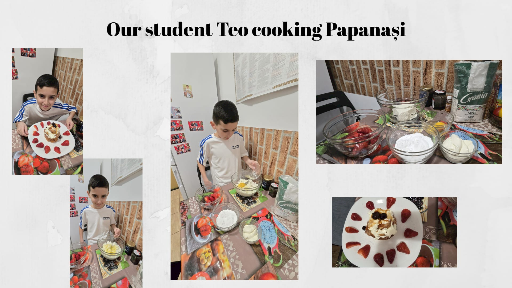
The Romanian Papanași
Simona Ștefan- Secondary School ''Ana Lugojana'', Bucharest, Romania
Once upon a time, in the heart of the Carpathian Mountains, there lived a cheerful cook who wanted to make a dessert that looked exactly like the snow-capped peaks outside his window. But he wanted the dessert to be warm, golden, and sweet.
Bölüm 1: Bulutların Toplanması
Our story begins in a large, magical bowl. First, the cook gathered 500 grams of white, fluffy cow's cheese—these were the "clouds." To make the clouds stick together, he sprinkled in two golden suns (eggs) and the zest of a lemon that smelled like a summer morning.The woman whispered a secret spell (a pinch of salt and a teaspoon of baking soda) and began to stir.
Chapter 2: The Flour Snowfall
Suddenly, a "snowstorm" began! She sifted 300g of flour over the yellow clouds. She invited the children to use their hands—their "magic paddles"—to knead the dough. They worked and they turned it until the sticky clouds transformed into a soft, giant snowball that didn't melt.
Chapter 3: The King and His Crown
The cook decided that every dessert should be a King.
She gave each child a piece of dough to roll into a big, round wheel. "This is the King’s throne," she said, pressing a hole in the middle.
Then, they rolled a tiny, perfect sphere. "And this," she whispered, "is the King’s crown."
Chapter 4: The Golden Transformation
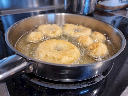
With the help of a Fire Guardian (an adult), the thrones and crowns were tossed into a bubbling lake of golden oil. Sizzle! Hiss! The dough puffed up with pride. When they emerged, they weren't white anymore—they were glowing gold, like treasures found in a dragon's cave.
Chapter 5: The Winter Coat and the Ruby Jewels
Now came the final magic.
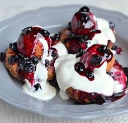
The cook took a spoon of cool, white sour cream and poured it over the golden throne—it looked like a fresh blanket of winter snow. On top of the snow, she drizzled dark red blueberry jam, the "Ruby Jewels" of the
mountain.
Finally, she placed the small golden crown on the very top.
The End: The Happy Feast
The children sat around the table, and as they took the first bite of the warm, cheesy mountain, they realised the best part of the story: The Magic was delicious.

Szkoła Podstawoa nr 30, Bydgoszcz,Poland
OSCYPEK by Stefa
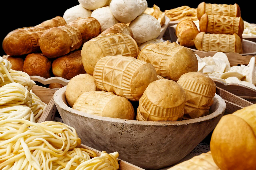
Oscypek is a traditional smoked sheep cheese native to the sprawling Tatra Mountains of Poland, produced primarily by mountain herders in the Podhale region. It has a distinctive needle shape and decorative patterns carved into the cheese using wooden molds. Produced mainly from the main line (sometimes with a small amount of cow's milk), the cheese is naturally smoked, acquiring a rich flavor and golden yellow color. Oscypek is one of Poland's most iconic regional dishes and is protected by a European Union designation of origin. It is served hot, grilled, or fried, often with cranberry sauce.
Rosół by Pola
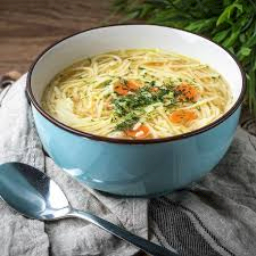
Broth is a food that requires a long aging process. Its preparation involves cooking meat with various vegetables. To ensure a stable and productive broth, it is kept in cold water and the contents of the strained liquids are preserved. This cooking method ensures the preservation of the nutrients and moisture in the meat and vegetables, which, after seasoning, becomes broth. Broth is also used as a semi-finished product; it forms the base for many other soups.
Szkoła Podstawowa nr 30, Bydgoszcz,Poland
Galat (also known as galart or galertl) is a traditional Polish cold appetizer consisting of meat, usually pork (leg or shank), marinated in vegetable jelly. This dish is particularly popular in Wielkopolska, Kujawy, and Pomerania, and is often served with vinegar or lemon juice.
Galat by Nina
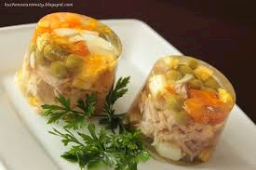
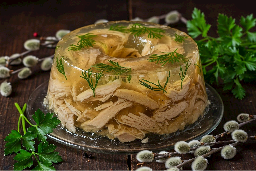
Szkoła Podstawowa nr 30, Bydgoszcz, Poland
Pierogi by Marta
Pierogi are a popular dish from Polish cuisine that has been passed down through generations. They are dough dumplings filled with various fillings such as potatoes, cheese, meat, cabbage, mushrooms, and even fruit. There are many regional varieties of pierogi, such as Russian pierogi, cabbage and mushroom pierogi, and Christmas Eve pierogi. The dough of pierogi, which can be prepared in many different ways, is delicate and pliable, which makes it very delicious.
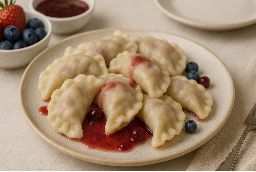
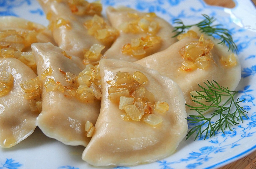
Szkoła Podstawowa nr 30, Bydgoszcz, Poland
Żurek by Kira
Żurek is one of the most characteristic dishes of Polish cuisine. Its base consists of fermented rye flour yeast (zakwas), which gives the soup its distinctive sour, slightly tangy taste. Żurek originates from ancient Polish cuisine. It was a simple, inexpensive, and filling dish made from fermented rye flour and water. Over time, it became an important part of Polish culinary tradition, especially during Christmas celebrations.
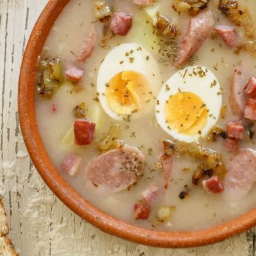
Szkoła Podstawowa nr 30, Bydgoszcz, Poland
BIGOS by Mateusz
Bigos is a traditional dish of Polish, Lithuanian, and Belarusian cuisine. Its name probably comes from the German word "begießen," which means "to pour" or "to baste." In the 17th century, bigos was a dish made from chopped fish, crayfish, and meat, and it was only in the 18th century that sauerkraut began to be added, which changed its character. Bigos often appears on tables during holidays such as Christmas and Easter, as well as at family dinners.
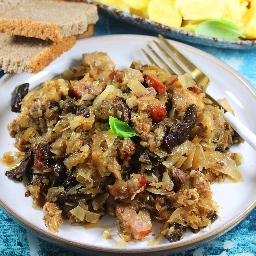
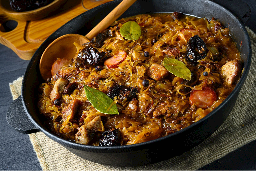
Szkoła Podstawowa nr 30, Bydgoszcz, Poland
Czernina by Beata
Żurek is one of the most characteristic dishes of Polish cuisine. Its base consists of fermented rye flour yeast (zakwas), which gives the soup its distinctive sour, slightly tangy taste. Żurek originates from ancient Polish cuisine. It was a simple, inexpensive, and filling dish made from fermented rye flour and water. Over time, it became an important part of Polish culinary tradition, especially during Christmas celebrations.
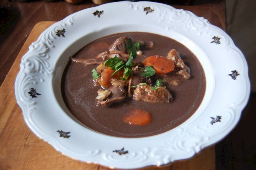
Szkoła Podstawowa nr 30, Bydgoszcz, Poland
Gołąbki by Nela
Gołąbki is a classic Polish dish
consisting of steamed white cabbage
leaves stuffed with minced meat.
Most often served in tomato sauce.
In the past, it was believed that eating cabbage rolls brought good luck, which is why they were served at important celebrations and weddings.
Traditional, pre-war cabbage rolls were a Lenten dish prepared for Christmas Eve. The filling consisted of buckwheat, potatoes, and onions, and cabbage leaves were often pickled.
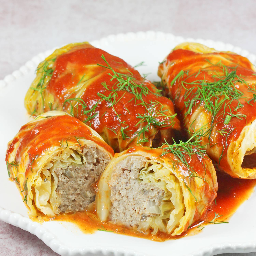
Szkoła Podstawowa nr 30, Bydgoszcz, Poland
One popular legend says that King Casimir IV Jagiellon fed his troops pigeons before the battle with the Teutonic Order at Chojnice in 1454. The hearty meal was supposed to give the soldiers strength to achieve victory, although historians consider it more of a colorful story than a historical fact.
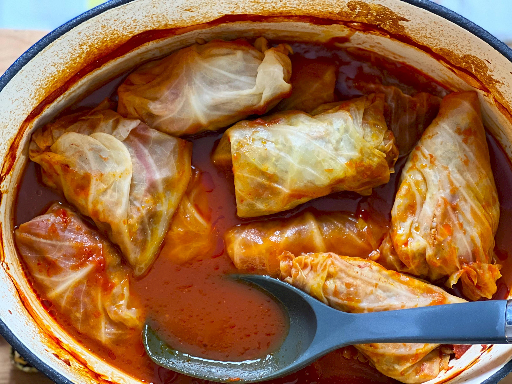
Szkoła Podstawowa nr 30, Bydgoszcz, Poland
Greek Pastitsio
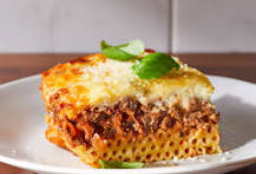
Pastitsio is one of Greece's most famous traditional dishes. It is often served at family gatherings, Sunday lunches, celebrations, and special occasions.
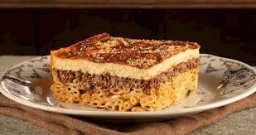
Irene Tsiga, Ellinogermaniki Agogi, Greece
The name “pastitsio” comes from the Italian word pasticcio, which means “mess” or “mixture.” The modern Greek version was influenced by the famous Greek chef Nikolaos Tselementes in the early 20th century. He introduced the creamy béchamel sauce layer, which makes the dish rich and unique.
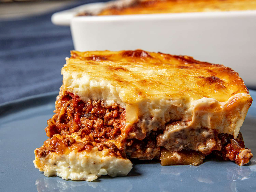
Pastitsio consists mainly of pasta, meat sauce, and a creamy béchamel topping, baked together in layers.
Pastitsio is sometimes called the “Greek lasagna,” but it has its own special taste because of the cinnamon and nutmeg used in the meat sauce and béchamel. These spices give the dish its characteristic Greek flavor.
It represents Greek hospitality, as it is a dish that brings people together around the table.
Greek Souvlaki
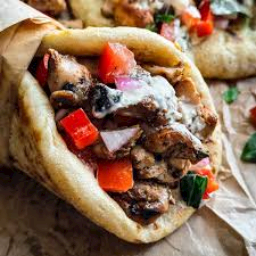
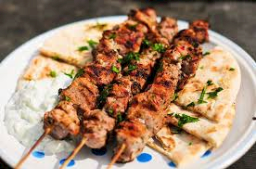
Souvlaki is one of the most popular traditional dishes of Greece. The word “souvlaki” means “little skewer,” and it refers to small pieces of meat grilled on a stick.
Souvlaki mainly consists of marinated grilled meat, and it can be served either on a skewer or inside warm pita bread with fresh vegetables and sauce or tzatziki.
It is one of the most famous Greek street foods and is very popular among both locals and tourists.
MOUSAKA
1st Primary School of Sykies, Greece (group 2)
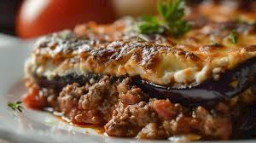
Greek Moussaka (mousaka) is without a doubt, Greece’s most popular, traditional dish! You’ll be hard pressed to find a taverna that doesn’t serve it or a household that doesn’t make it on special occasions!
So what is Moussaka? Moussaka is a traditional Greek eggplant casserole made with baked or pan fried eggplants (aubergines) and potatoes, a rich, tomatoey beef or lamb mince sauce and topped off with a deliciously creamy bechamel sauce. In other words, the ultimate comfort food.
Ingredients 1st primary school of Sykies, Greece (group 2)
For the Eggplant Layer:
3 large eggplants, sliced into 1.25 cm lengths.
Salt, Olive oil
For the Meat:
450 grams minced meat (lamb or beef), 1 thin onion, 3 cloves of minced garlic, 1 can (14 oz / 400 g) crushed tomatoes, 2 tablespoons tomato paste, ½ teaspoon ground cinnamon, ¼ teaspoon ground allspice (optional), ½ cup red wine (optional but traditional), Salt and pepper (to taste), Olive oil
For the béchamel sauce:
4 tablespoons flour, 2 cups warm milk, 2 eggs, ½ cup grated Kefalotyri or Parmesan cheese, a pinch of nutmeg, salt and white pepper
Place the slices of eggplant on paper towels and sprinkle with salt.
Let stand for 30 minutes to remove the bitterness.
Massage with your hands and brush with olive oil.
Bake at 200°C (400°F) for 20-25 minutes, or until tender and lightly golden.
Heat olive oil in a pan over medium heat.
Sauté the onion until softened; add the garlic and cook for 1 minute.
Add the minced lamb and sauté well.
Add the tomato paste, crushed tomatoes, wine, spices, bay leaf, salt, and pepper and stir.
Simmer over low heat for 20-30 minutes, or until thickened. Remove the bay leaf.
1st primary school of Sykies, Greece (group 2)
Add the warm milk gradually, whisking until smooth and thick.
Remove from heat; let cool slightly.
Whisk in the eggs, cheese, nutmeg, salt, and pepper. Assemble.
Layer the eggplant slices in a greased baking dish.
Spread the meat sauce evenly over the eggplant slices.
Pour the béchamel sauce over the meat layer and smooth the top.
Optionally, sprinkle with extra cheese.
Bake at 350°F (180°C) for 45-50 minutes, or until golden brown.
Let rest for 20-30 minutes before slicing (important for achieving even layers!). Prepare the béchamel sauce.
Melt the butter in a saucepan.Whisk in the flour; cook for 1-2 minutes.
Enjoy!
1st primary school of Sykies, Greece (group 2)
1st Primary School of Sykies [ Thessaloniki, Greece ] Group 1, Theano Papadatou
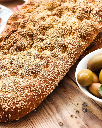
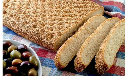
'' Lagana Bread '' is a traditional flatbread baked on Clean Monday, the first day of the Greek Lent.
Ingredients: 500 g all-purpose flour
1 packet dry yeast ( 8-9 g )
1 teaspoon sugar
1 teaspoon salt
300 ml warm water
2 tablespoons olive oil and sesame seeds
Instructions
1. In a bowl, mix warm water, sugar, and yeast. Leave for 10 minutes. 2. Add flour, salt, and olive oil. 3. Mix and knead the dough for about 10 minutes. 4. Cover and let it rise for 1 hour. 5.Shape into a flat oval bread. 6. Press your fingers on the surface to make small holes.7. Sprinkle sesme seeds on top. 8. Bake at 200 degrees C for 20-25 minutes until golden.
lagana bread

1st Primary School of Sykies [ Thessaloniki, Greece ] Group 1, Theano Papadatou
Taramosalata (Greek Fish Roe Dip)
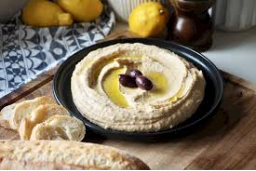
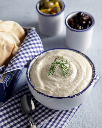
Taramosalata is a traditional Greek dip made from fish roe. It's eaten during Lent and served with ''Lagana bread''
INGREDIENTS:
100g white tarama ( fish roe )
one small onion
400g of stale bread ( without crust )
Juice of 1 lemon
150ml of olive oil
a little water
INSTRUCTIONS:
1. Soak the bread in water and then squeeze it well
2. Blend the onion in a food processor.
3. Add tarama and bread. Mix well
4. Slowly add olive oil while mixing.
5. Add lemon juice and a little water until creamy
6. Serve with lagana bread.

Istituto comprensivo Cisano Bergamasco, Italy : the Recipe of Tiramisu' : an Italian dessert from the Venetian region (city of Treviso)
Ingredients: Authentic tiramisu is a no-bake Italian dessert made by layering coffee soaked ladyfingers biscuits and whipped mascarpone cheese, mixed with eggs (yolk and white) and sugar. It is finished with a dusting of cocoa powder and must be refrigerated for at least 2 hours.

HISTORY OF TIRAMISU
Tiramisu. Meaning "pick me up" in Italian, it was designed as a high-energy, creamy dessert combining coffee-soaked ladyfingers with mascarpone and cocoa, rapidly spreading from Veneto to become a globally recognized, beloved Italian dessert.
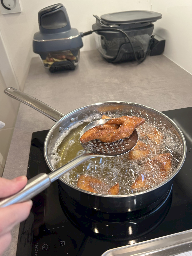
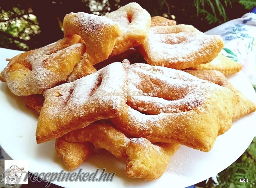
Forgácsfánk:
Ingredientes:
· 25dkg flour
· 5dkg butter
· 2tbsp sugar
· 2tbsp vanilla sugar
· 0,5dl sour cream
· 0,5dl milk
· 2 egg yolks
· 1dkg yeast
· oil for baking
Preparation:
Mix everything in one bowl and knead them together, put it in acold place and wait for 30 minutes. Then stretch the dough out until it’s about 4mm thick, cut it into a square shape and make a slit in the middle of each piece and pull one end through the slit. Lastly and fry them until they’re golden brown and when they cooled down top them of with powdered sugar.
Dunakeszi King Béla IV. Secondary School
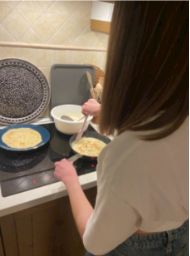
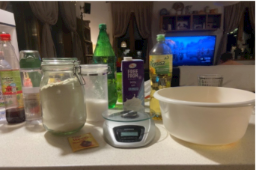
Pancake:
Instructions
· Crack the eggs into a bowl and mix them with the sugar and vanilla sugar.
· While stirring, add the flour to the egg mixture. Then pour in the milk and the sparkling water. Finally, add the oil and mix everything well until the batter is smooth and without lumps.
· Lightly brush a frying pan or pancake pan with oil, then cook the pancakes on both sides until golden brown.
Preparation time: 15 minutes
Cooking time: 15 minutes
Ingredients
· 3 eggs
· 2 tablespoons sugar
· 1 packet vanilla sugar
· 240 g all-purpose flour
· 250 ml milk
· 250 ml sparkling water (soda water)
· 50 ml sunflower oil
Dunakeszi King Béla IV. Secondary School
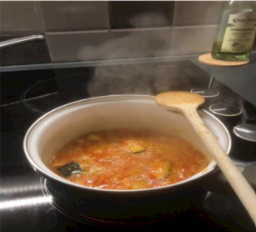
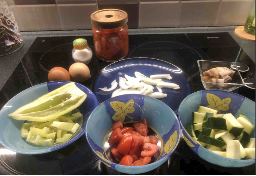
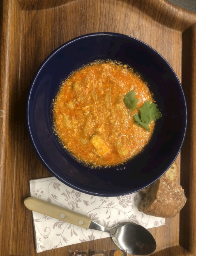
LECSÓ
what you need:
white pepper
tomato
zucchini
onion
bacon
egg(for extra)
spices:
salt
ground paprika
Dice the bacon and onion, cut out the pepper’s inside and cut into small pieces, cut the tomato into strips and also cut the zucchini into small pieces.
Melt the bacon in the oil.
Fry the onion. Let it brown a little!
Add the pepper and zucchini, fry and let them brown a little too! When they start to release their juices, cover and reduce the heat.
When the pepper and zucchini have collapsed, add the tomatoes, salt and add the ground paprika (if you can, find homemade), cover again and wait until the tomatoes soften, then take the heat down. Then add an egg if you want (I think it tastes better this way). Stir it till the egg is well mixed and cooked in it and here you go, you can eat it now with bread on the side.
Dunakeszi King Béla IV. Secondary School
Ingredients for Adıyaman Style Egg Meatball Recipe
Halil Dündar CANGÜVEN
Mezitli Science and Art Center
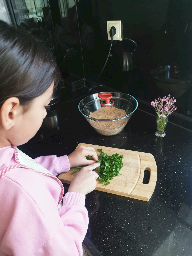
Ingredients for Adıyaman Style Egg Meatball Recipe:
2 tea glasses of fine bulgur
1 medium onion
2 cloves of garlic
1 tablespoon of tomato paste
1 tablespoon of red pepper paste
A pinch of parsley
2 eggs
Half a tea glass of olive oil
Salt, black pepper, cumin, oregano, isot (Turkish chili flakes), red pepper flakes
3 tablespoons of pomegranate molasses
1 tea glass of boiling water
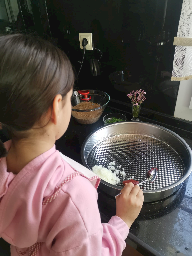
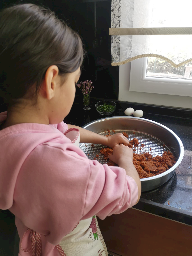
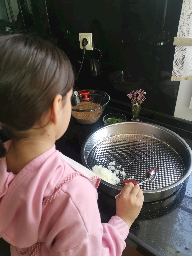
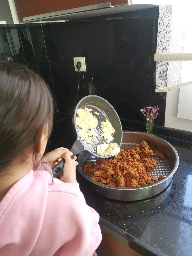
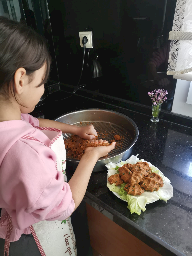
Ingredients for Adıyaman Style Egg Meatball Recipe
Halil Dündar CANGÜVEN / Mezitli Bilim ve Sanat Merkezi
Fine bulgur is placed in a kneading bowl, boiling water is poured over it, and it is stirred.
It is covered and left to rest for 5 minutes.
Meanwhile, the onion is finely chopped, and crushed garlic, tomato paste, red pepper raste and spices are also added to the kneading bowl.
The rested bulgur is mixed with the other ingredients in the kneading bowl and kneaded. (If you want it to be softer, you can add boiling water occasionally.)
Then, finely chopped parsley and pomegranate syrup are added and kneading continues.
İn a separate pan, 2 eggs are cooked in half a teacup of olive oil.
They are added to the kneaded meatballs and kneaded again. (Be careful not to burn your hands.)
Finally, the well-kneaded meatballs are shaped and served.
Sıkma
Halil Dündar CANGÜVEN
Mezitli Science and Art Center
Hello, my name is Çınar and today I will introduce you to sıkma, a regional delicacy from Mersin. It's usually filled with cheese, but you can add cocoa hazelnut spread or boiled potatoes instead. The necessary ingredients are whole wheat flour and water. The cooking steps: the flour and water are mixed to make the dough, the dough is rolled out, baked, and then eaten.
See you later!
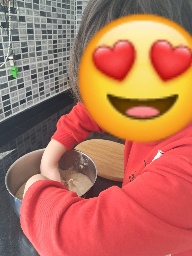
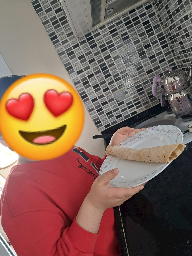
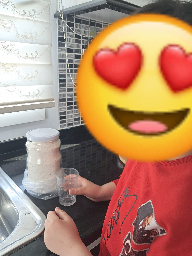
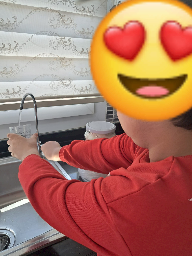
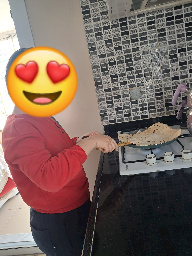
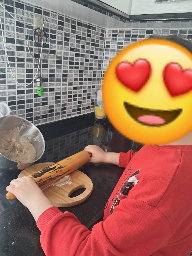
Sıkma / Halil Dündar CANGÜVEN / Mezitli Science and Art Center
Tirşik/ Halil Dündar CANGÜVEN / Mezitli Science and Art Center
Tirşik
Ingredients
5kg beetroot, 3.5kg yoghurt (better if sour), 1kg flour, 1kg mashed potatoes, half kg garlic, 3 tablespoons of salt to taste.
Ayaz A.
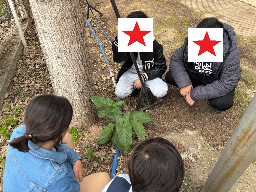
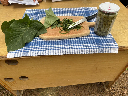
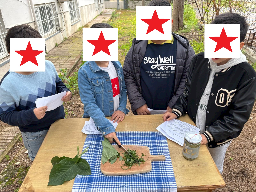
Tirsik beet is a wild plant collected from mountains and gardens. This plant is collected and brought home. Its stems are cleaned in the same way that a green nature is affected. It is then made into bundles as large as one hand can hold. These bundles are finely chopped with a knife on a board. Then, after the chopping process is finished, it is washed two or three times with clear water in large containers.
Murat A.
Gloves should be worn while washing and chopping. Otherwise, it may cause itching in the hands. After the washing work is finished, we put the 5 kg beet we bought in a 10 kg pot. Boiled water is added to the level that will rise above the beet. Then, approximately 3-3.5kg of yogurt is mixed thoroughly with the help of a whisk. Add 1 cup of flour to this mixed yogurt. It is mixed and poured into the beet.
Sare S.
The pot is thoroughly mixed. Then the surface of the beet is covered with flour so that it does not get airtight. The lid of the pot is closed and the top is covered with a table and a blanket to keep the pot warm. We should do this in the evening and wait until morning. In the morning, we open it and scrape the flour on the surface of the beet with the help of a spoon. Then we mix the beets again. We light the fire and put the pot on it. In the meantime, 1kg of tattoo is placed.
K. Çınar U.
The beetroot is cooked until the juice is reduced. Boiled water is added again. Again, it is cooked until the water decreases. Boiled water is added again. It is boiled a little more so that it becomes a soup consistency. Then, crushing the garlic and adding salt is added to the tirşik, mixed and eaten with pleasure. Those who wish can store it as canned while boiling.
It is a type of food made in Kahramanmaraş, Osmaniye, Hatay, Adana and Mersin regions. It
is also known as the Reminder Doctor.
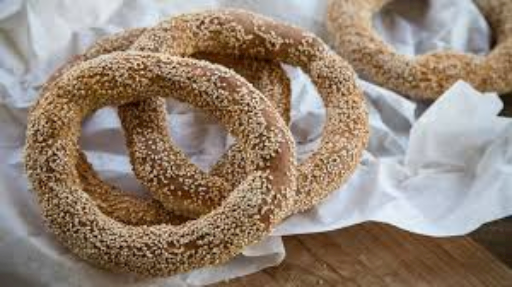
Koulouri Thessalonikis (Greek Sesame Bagels) 8th Primary School of Ptolemaida - Greece
Our students visited a local bakery and learned all about the Greek Sesame Bagels called "Koulouria"
Koulouria - 8th Primary School of Ptolemaida - Greece
Ingredients:
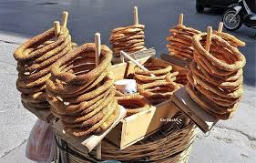
Koulouria - 8th Primary School of Ptolmeaida - Greece
Cooking Method:
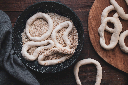
Use the mixing bowl from your mixer. Add the water and yeast and mix with a spoon until the yeast has dissolved. Let it rest for 5-6 minutes until the yeast becomes foamy.
Add the rest of the ingredients to the mixing bowl. Beat them, using the hook attachment. It should take about 7-8 minutes until if forms a soft, elastic dough. The dough will start to pull off the bottom.
Grease the interior of a bowl with oil. Transfer the dough to the bowl, cover with plastic wrap. Allow to rest for 1 ½ hours, until it doubles in size.

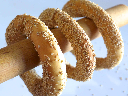
Koulouria - 8th Primary School of Ptolemaida - Greece
Cooking Method:

KARADENİZ EREĞLİ PİDESİ/ TÜRKİYE
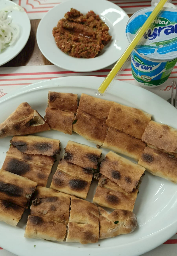
Sevilay YALÇIN
Cumhuriyet Secondary School
Zonguldak/Türkiye
500 gr minced meat
100 gr tomatoes
50 gr onions
50 gr pointed peppers
15 gr salt
5 gr black pepper
50 ml water
For the Dough
500 gr whole wheat flour
10 gr dry yeast
20 gr sugar
20 gr salt
300 ml lukewarm water
For the Topping
50 gr melted butter
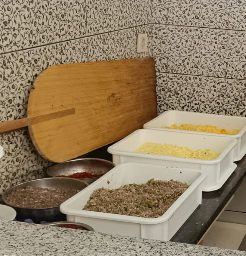
INGREDIENTS
Cooking Process
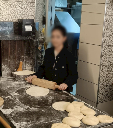
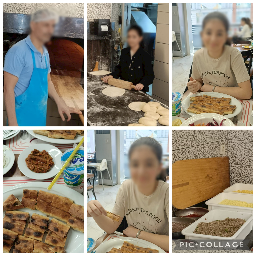
The ingredients for Karadeniz Ereğli pide include flour, water, salt, fresh yeast, sugar, minced meat, onions, butter, black pepper, and parsley (optional). The filling is sautéed, then the pide is sealed and baked. Sunflower oil or olive oil can be used instead of butter, and the spices can be varied. Sautéing the filling in a stone oven, using a stone oven for baking, and using rib meat all contribute to the pide's flavor. Variations in the options – with or without kashar cheese or eggs – also add to its appeal. Ereğli pide is served with salad, pickles, and ayran (a yogurt-based drink).
Enjoy your meal!
- < BEGINNING
- END >
-
DOWNLOAD
-
LIKE(2)
-
COMMENT()
-
SHARE
-
BUY THIS BOOK
(from $13.19+) -
BUY THIS BOOK
(from $13.19+) - DOWNLOAD
- LIKE (2)
- COMMENT ()
- SHARE
- Report
-
BUY
-
LIKE(2)
-
COMMENT()
-
SHARE
- Excessive Violence
- Harassment
- Offensive Pictures
- Spelling & Grammar Errors
- Unfinished
- Other Problem





COMMENTS
Click 'X' to report any negative comments. Thanks!