In this activity, students explore the concept of Digital Balance through collaborative storytelling and problem-solving.
Working in international teams, students analyse real-life inspired scenarios related to common digital challenges.

Story starter: Alex is a 15-year-old student who spends most of the day on their phone. Before school, during breaks, after school, and even late at night, Alex is always scrolling, watching videos, or playing games.Recently, Alex has started to feel tired in class,..
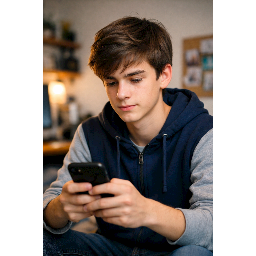
CLIMAX TEAM:Students develop the story and escalate the problem, showing how digital imbalance affects the character’s wellbeing, relationships, and daily life
ARAL/Beril ARAL/Asya ARAL/Semih ARAL/Nehir
As the weeks pass, Alex’s screen time slowly increases. At first it is just a few extra minutes after school, but soon Alex is spending six or seven hours a day on the phone. A typical day now starts with Alex checking messages and videos immediately after waking up. On the bus to school, during every break, and even while doing homework, Alex keeps scrolling through social media or playing games. Late at night, instead of sleeping, Alex watches videos for hours, telling himself, “Just one more.”

Because of this routine, Alex’s sleep becomes worse and worse. He often goes to bed after midnight and wakes up feeling exhausted. In class, Alex struggles to keep his eyes open. His mood also changes — he becomes more irritable and impatient, especially when someone asks him to put his phone away. Even simple tasks feel difficult because he has very little energy.
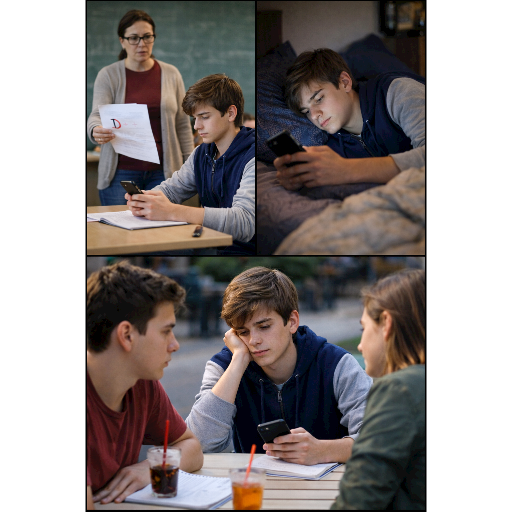
Soon, other people begin to notice the changes. Alex’s teachers see that he is less focused and his grades are starting to drop. His parents notice that he rarely joins family conversations anymore and spends most evenings alone in his room with his phone. His friends also complain that when they meet, Alex keeps looking at the screen instead of talking with them.
At one point, Alex decides he should try to reduce his phone use. He promises himself that he will not use it after 10 p.m. However, when the time comes, he hears the familiar sound of a notification. Curious, he checks the phone — and suddenly another hour passes. Alex realises that stopping is harder than he expected.

The turning point comes during an important math test at school. Alex stayed up very late the night before watching videos. During the exam, he feels extremely tired and cannot concentrate on the questions. His mind keeps wandering, and he struggles to remember things he studied. When the teacher collects the test papers, Alex suddenly understands that his phone habits are seriously affecting his life.
For the first time, Alex begins to wonder if his screen use has gone too far.
RESOLUTION AND RECOVERY TEAM:
Viktoria and Azime
Group 2 – Resolution Team: Students continue the story by recognising the problem and offering realistic, healthy solutions that restore digital balance.
A few days later, when the math tests are returned, Alex realises that he has a serious problem. He looks at the grade and feels disappointed. Normally, math is not difficult for him, but this time the result is much lower than expected. He remembers how tired he felt during the test after staying up late watching videos. At that moment, Alex understands that his phone habits are starting to affect his school performance, his sleep, and his ability to concentrate.
- Full access to our public library
- Save favorite books
- Interact with authors
- < BEGINNING
- END >
-
DOWNLOAD
-
LIKE
-
COMMENT()
-
SHARE
-
SAVE
-
BUY THIS BOOK
(from $4.99+) -
BUY THIS BOOK
(from $4.99+) - DOWNLOAD
- LIKE
- COMMENT ()
- SHARE
- SAVE
- Report
-
BUY
-
LIKE
-
COMMENT()
-
SHARE
- Excessive Violence
- Harassment
- Offensive Pictures
- Spelling & Grammar Errors
- Unfinished
- Other Problem





COMMENTS
Click 'X' to report any negative comments. Thanks!