

Aspects of the Meaning of 'Challenge':
1.Building Self-Confidence: Facing and overcoming challenges helps to boost our self-belief and confidence.
2.Developing Problem-Solving Skills: Challenges push us to think creatively and come up with unique solutions.
3.Enhancing Collaboration and Communication: Many challenges require teamwork, communication, and mutual assistance.
4.Personal Growth and Learning: Challenges encourage us to grow, acquire new skills, and gain new knowledge.
The significance of the LEGO constructor: many scientific studies show that LEGO toys stimulate children's creativity, problem-solving skills, cooperation and communication.
*Division of tasks into levels (recommendation):
Level I: children create an individual object and connect it to a common challenge;
Level II: children are divided into groups of 5 and together create one element, which is later connected to a common challenge
Level III: Children work together to implement the challenge;
*Structure of the activity:
Children are presented with a challenge, the final result that they will have to implement;
*First of all, there is a discussion, sharing of work, who will do what: in the first and second levels the conversation is moderated by the teacher, in the third, an attempt is made to allow the children to reach an agreement themselves, distribute the work, and choose a leader.
LEGO CHALLENGE 1


Description of activities:
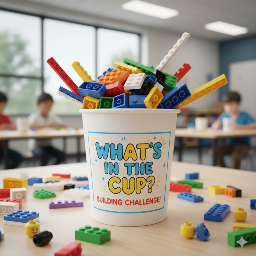
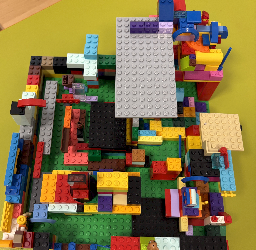
Children build their own school from LEGO.
Workflow:
*Stage I: Children receive a glass with randomly selected LEGO parts and use them to create one of the school parts;
*Stage II: Children connect their built part with other parts.
*Agreement: children can, if they want and need to, exchange LEGO bricks with each other
After the activity, time is allocated for discussion: how did it go? What
difficulties did you encounter? How did you solve them? What did you like?
etc.
LEGO CHALLENGE 2
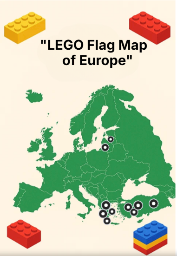
"LEGO Flag Map of Europe"
Let’s create a shared European map showing the LEGO flags of all partner countries!
Through this activity, students will get to know the countries participating in the project in a creative and playful way.
Students work in small groups to build the national flag of their country using LEGO bricks. They should try to represent the colors and patterns of the flag as accurately as possible. Children can also add a small LEGO base or decorative border if they wish. Take a clear, well-lit photo that shows the LEGO flag from above or straight on.
You may also include a small label with the country’s name. Each partner school uploads its photo to the shared Genially map created for the project. Place your country’s LEGO flag in the correct geographical location on the European map.

All partners together will create the “LEGO Flag Map of Europe”,a colorful, visual, and collaborative representation of all participating countries, built entirely by children using LEGO bricks!


LEGO CHALLENGE 3
“Little Architects: Design and Construction Competition”
Age Group: 3-6 years
20-30 minutes
1. Introduction – Getting to Know a Famous Architect (5 min)
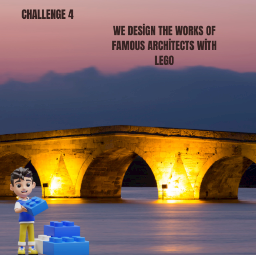
Introduce a famous architect in a simple and block-appropriate way (e.g., Antoni Gaudí, Zaha Hadid, Mimar Sinan).
The pieces they design consist of 2-3 photo shelves.
Use simple language, example:
“Architects are the people who design buildings.”
“First they draw, then they live!”
2. Drawing – “If I Were an Architect…” (10 min)
The child is invited to draw a building they would like to create.
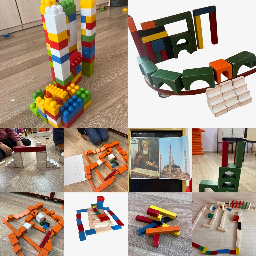
Ideas:
A house, a tall tower, a castle, a playground, a bridge, etc.
Encourage creativity with simple guidance:
“What shape will your building be?”
“Will it be tall or short?”
3. LEGO Building Phase (15-)
Children build a structure using LEGO pieces based on their drawings.
Teachers support children by helping them integrate their drawings into their LEGO creations.
Encourage experimentation:
“Can you achieve a look like your drawing?”
“What else do you think?”
4. Sharing Time (5-10 minutes)
They briefly show their drawings and LEGO models.
Simple sharing questions:
“What did you build?”
“What’s your favorite part?”
Learning Objectives:
By the end of this activity, children will be able to:
Learn what an architect does.
Design a simple building on paper.
Build a structure with LEGO pieces according to their drawings.
Improve planning and development.
Learn to share your ideas with others. (20 minute)
They are supported by being helped with their matching.
Encourage experimentation:
“Can you make it look like your picture?”
“What else do you think?”
4. Sharing Time (5-10 minutes)
They briefly show their drawings and LEGO models.
Simple sharing questions: “What did you build?” “What’s your favorite part?”
Learning Objectives:
By the end of this activity, children will be able to:
Know what an architect does.
Design a simple building on paper.
Build a structure with LEGO pieces according to the drawings.
Develop creativity, planning, and development.
Learn to share your ideas with others.
LEGO CHALLENGE 4
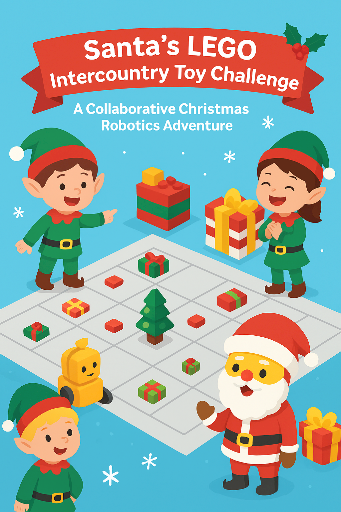
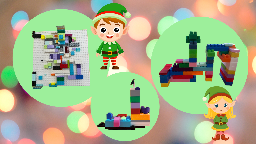
Santa’s LEGO Toy Factory Challenge
A Collaborative Christmas Robotics Adventure!
This Christmas, students from all participating countries become little elves of the North Pole and work together in a unique robotics challenge! With LEGO creativity, imagination, and programming, they help Santa collect gifts.
Activity Goals
• Strengthen collaboration between partner countries
• Develop programming skills using any educational robot available in each school
• Encourage creativity and teamwork through LEGO constructions
• Produce a shared presentation on Canva
Instructions for the Elves – Students
1. Transform into North Pole Elves!
Put on elf hats, Christmas accessories, or small costumes. Today you are working in the international toy factory!
2. Form LEGO Creator Teams
Students in each school work in groups. Each group builds one or more Christmas gifts using LEGO, such as:
toy car, teddy bear, Christmas tree, snowflake, toy robot, ornament, etc.
3. Upload Your Gifts to the TwinBoard
When your LEGO creations are ready:
• Take a clear photo of your LEGO gifts
• Upload the photo to the TwinBoard on page 5.3.2 of the project
This allows all partner countries to see the gifts created by your school’s elves.
4. Choose Gifts from Other Countries
To make the activity truly collaborative, each country:
• Selects several LEGO gifts created by students from another partner country
• Prints them or rebuilds them using local LEGO bricks
• Places them on the floor mat, each in a different square
5. Transform Your Robot into Santa Claus
Each school uses its own educational robot (Bee-Bot, Blue-Bot, Edison, Photon, Kubo, etc.).
Give your robot a festive Santa look:
• Small Santa hat
• Cotton beard or mustache
• Red belt or red paper
Your robot becomes the SantaBot!
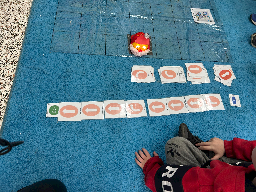
6. Create the SantaBot Path (Algorithm)
Mission:
Guide the SantaBot so that it visits all the gifts from the other countries and “collects” them!
Steps:
• Plan the path on the mat
• Discuss and agree on the commands as a team
• Program the robot with your algorithm
• Test – correct – try again
• Complete the collection of all international gifts!
7. Photograph the Mission & Upload to Canva
Each school:
• Photographs the robot while following the path
• Photographs the mat with all selected gifts
• Creates one slide in the shared Canva presentation
including the photos and the country’s name
Together, we will create the European SantaBot Toy Journey Presentation!
LEGO CHALLENGE 5
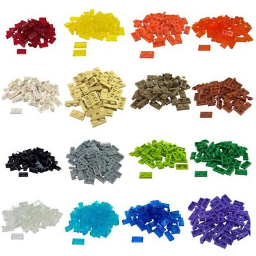
Children learn to recognize colors, sort LEGO bricks, and creatively build using a limited number of colors.
Let’s Sort the Colors
Children are given mixed LEGO bricks. Their task is to sort the
bricks by color (e.g., red bricks in one box blue in another, etc.).
From the sorted bricks, children choose 1-2 colors they will use for building.
Using the chosen colors, children build 1-2 structures (for example: a house, a tower, a garage, a castle, or animal homes).
LEGO CHALLENGE 6

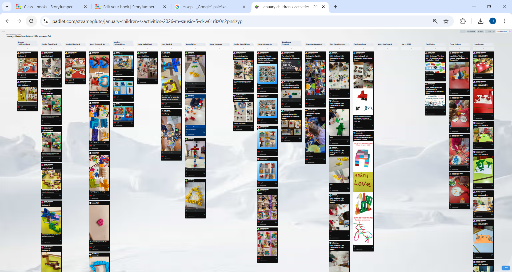
Small Bricks, Big Wishes!!!


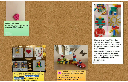
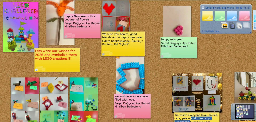
Small bricks, Big wishes (Challenge 6)
Project Description
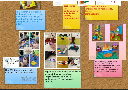
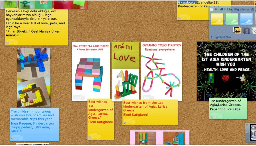
Children from each school are invited to express their wishes for 2026 and then work in groups to create symbols made with LEGO that represent their wishes. Next, we will write their wish or wishes in Linoit (link is given below) and upload one or more photos of the LEGO symbols they created.
For example, if they wish for love, joy, and peace, they might symbolize these wishes by creating a heart, a colorful sun, and a dove.
Please do not forget to write the name of the school and the name of the teacher, after writing your wishes.
Instructions
LEGO CHALLENGE 7
Activity Description
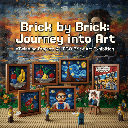
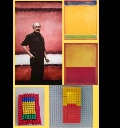
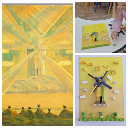
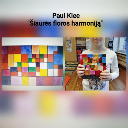
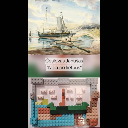
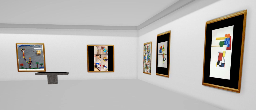
Each school selected a well-known painter, either from their own country or from another cultural context. Students were introduced to the artist through one or two representative works, along with brief references to their background and artistic significance. The discussion focused on key visual elements, guided by questions about colors, shapes, patterns, dominant forms, and the emotions the artworks evoked.
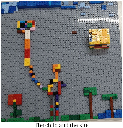
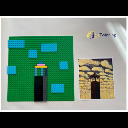
Students then worked in groups to create their own artworks using LEGO bricks, drawing inspiration from the studied paintings. The emphasis was on creativity, encouraging exploration of colors, lines, shapes, and repeating patterns rather than faithful reproduction.
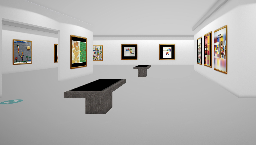
The completed works were photographed and uploaded to a shared Twinboard, accompanied by short descriptions of the artist and artworks. A digital exhibition was then created.

LEGO CHALLENGE 8
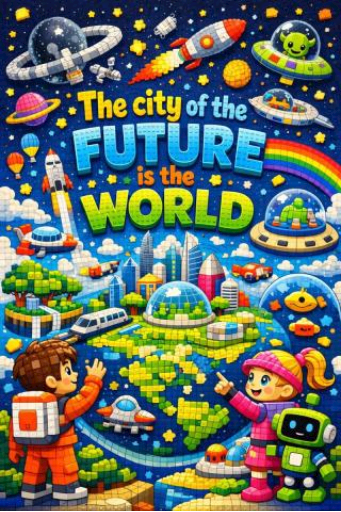
“THE CITY OF THE FUTURE – THE WORLD”
Goal: to develop children’s creativity and imagination, to develop an understanding of the world and the future.
Challenge task: “Create a city of the future where all the children of the world can live well.”
A city should have at least 3 elements:
• a place to learn • a place for nature or recreation
• a place to live (children can add transport, energy sources, technologies).
Progress: Introduction to the activity (5–10 min.)
Conversation with children: What will cities of the future look like? What will people need to be happy?
Creativity (20–30 min.) Children create their future city or part of it. Presentation (5–10 min.) Children tell: what is the name of their city, what is special about it, why is it friendly to the world. End: Discussion with children after reviewing the works of other countries: How are cities similar and different? Which one do you like better?
LEGO CHALLENGE 8
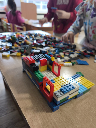
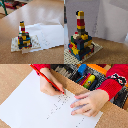
CHILDREN'S ACTIVITIES PHOTOS
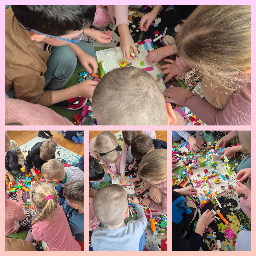
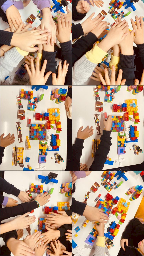
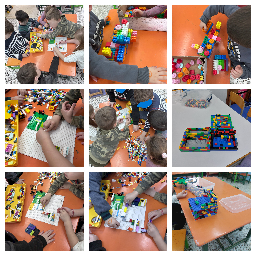
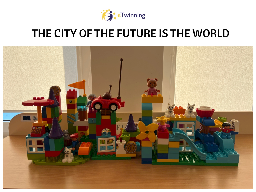
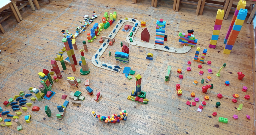
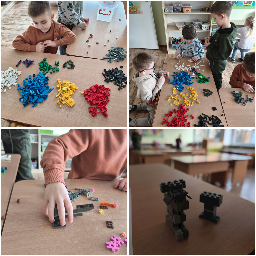
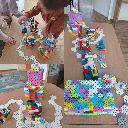
Indrė Mažeikienė, kindergarten "Pumpurėlis" Ledo chalanges activitys
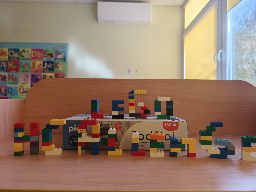
"LEGO Challenge: I can/We can" eTwinning projesinin kitap yaratıcıları ve ortakları:
Jurgita Žinevičienė, Serpil Dağçayır Ay,
Papadopoulou Olga, Indrė Mažeikienė,
Gkasdogka Evangelia, TomaKerienė, ,
SAİME EKİNCİ, Dovilė Ušinskienė
Elenu Galani, Simona Plusčiauskienė
Rabia Rumeysa Seremet
Deria Süer ,
Odeta Kadkauskienė,
Jurgita Ramoškienė,
Eleni Katigianni,
Ināra Boldavenko
Pınar Börekçi
- Full access to our public library
- Save favorite books
- Interact with authors
- < BEGINNING
- END >
-
DOWNLOAD
-
LIKE
-
COMMENT()
-
SHARE
-
SAVE
-
BUY THIS BOOK
(from $8.79+) -
BUY THIS BOOK
(from $8.79+) - DOWNLOAD
- LIKE
- COMMENT ()
- SHARE
- SAVE
- Report
-
BUY
-
LIKE
-
COMMENT()
-
SHARE
- Excessive Violence
- Harassment
- Offensive Pictures
- Spelling & Grammar Errors
- Unfinished
- Other Problem






COMMENTS
Click 'X' to report any negative comments. Thanks!