This book is dedicated to my Mom, My Meama, My Aunt, and My older sister, who all have type 1 Osteogenesis Imperfecta. I also want to dedicate this book to the people who are struggling with OI and their families.

Page 1: Dedication page
Page 3: Introduction
Page 4: Symptoms
Page 5: Impact
Page 6: Data/research
Page 7: Diagram 1
Page 8: Diagram 2
Page 9: Graph
Page 10: Chart
page 11: Map
Page 12: Timeline
Page 13: Spine x-ray
Page 14: Arm x-ray
Page 15: Blue scarla image
Page 15: Double-jointed image
Page 16: Glossary
Inroduction
Brittle bones, fractures, and pain. These are just a few of the symptoms of Osteogenesis Imperfecta. Osteogenesis Imperfecta is a hereditary bone disease that significantly affects patients and their families; Doctors continue to treat and research it to give OI patients the best quality of life possible with their disease.
Symptoms
Osteogenesis Imperfecta is a rare genetic disorder that affects collagen formation. The predominant cause of Osteogenesis Imperfecta is genetic mutations in genes that encode type I collagen. Osteogenesis Imperfecta, also known as brittle bone disease or OI, is characterized by symptoms like altered bone formation, recurrent fractures, blue sclera, thin skin, bone deformities, low bone mass, early-onset hearing loss, curved spine, double-jointed, bowed legs, and reduced physical activity. Osteogenesis Imperfecta is a disease that significantly affects the quality of life for individuals with this disease.
Impact
Osteogenesis Imperfecta presents many struggles for the patient and their families, like inadequate recognition, poor care coordination, and incomplete information. (OI) can also have an impact on the caregivers and their community. Individuals with severe (OI), and especally the one's who require surgery, often present a more difficult management to ensure the patient with (OI) can live their life to the fullest possible.
Treatment of (OI)
The current management or treatment approach to patients with OI is multidisciplinary, meaning the patient is given amteresarptive medications, physiotherapy, occupational therapy, and orthopedic surgery, which all provide relief but no cure, although doctors are continuing to research Osteogenesis Imperfecta's impacts and how to treat them, hoping to give the patients the best quality of life possible while managing their disease.
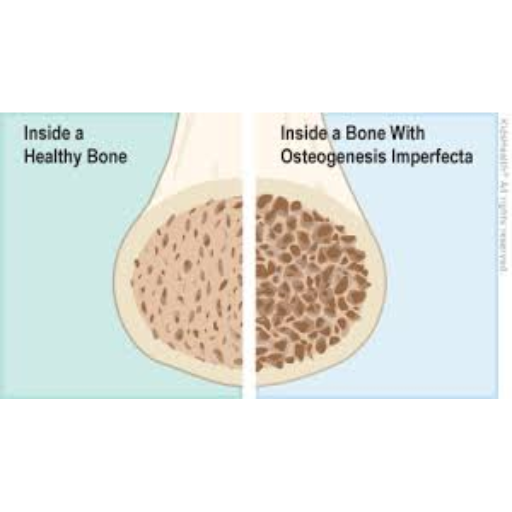
A comparison of a healthy human bone and a bone of someone with osteogenesis imperfecta.
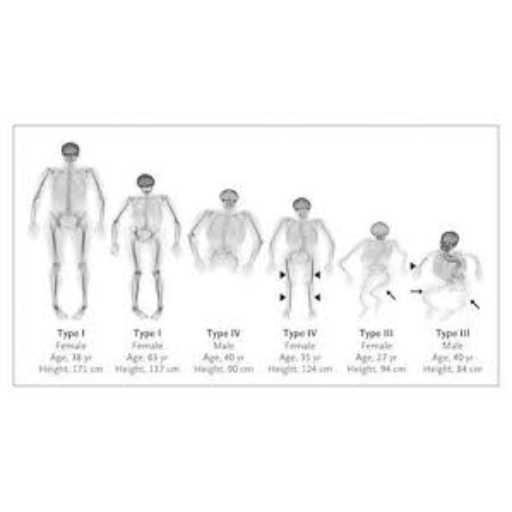
Diagram/x-ray of individuals of different ages with different types of osteogenesis imperfecta.
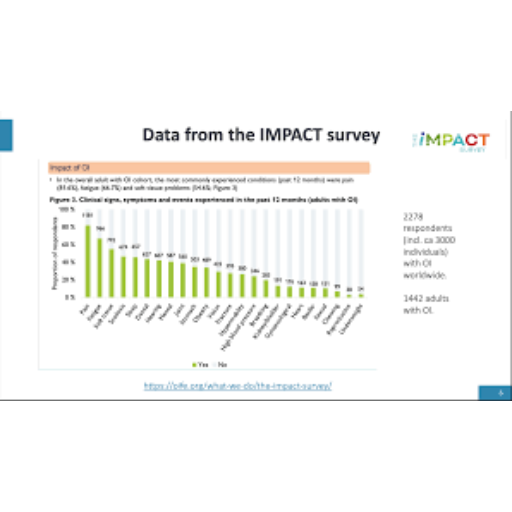
A bar graph of a survey of the impacts of osteogenesis imperfecta on individuals with the disease.
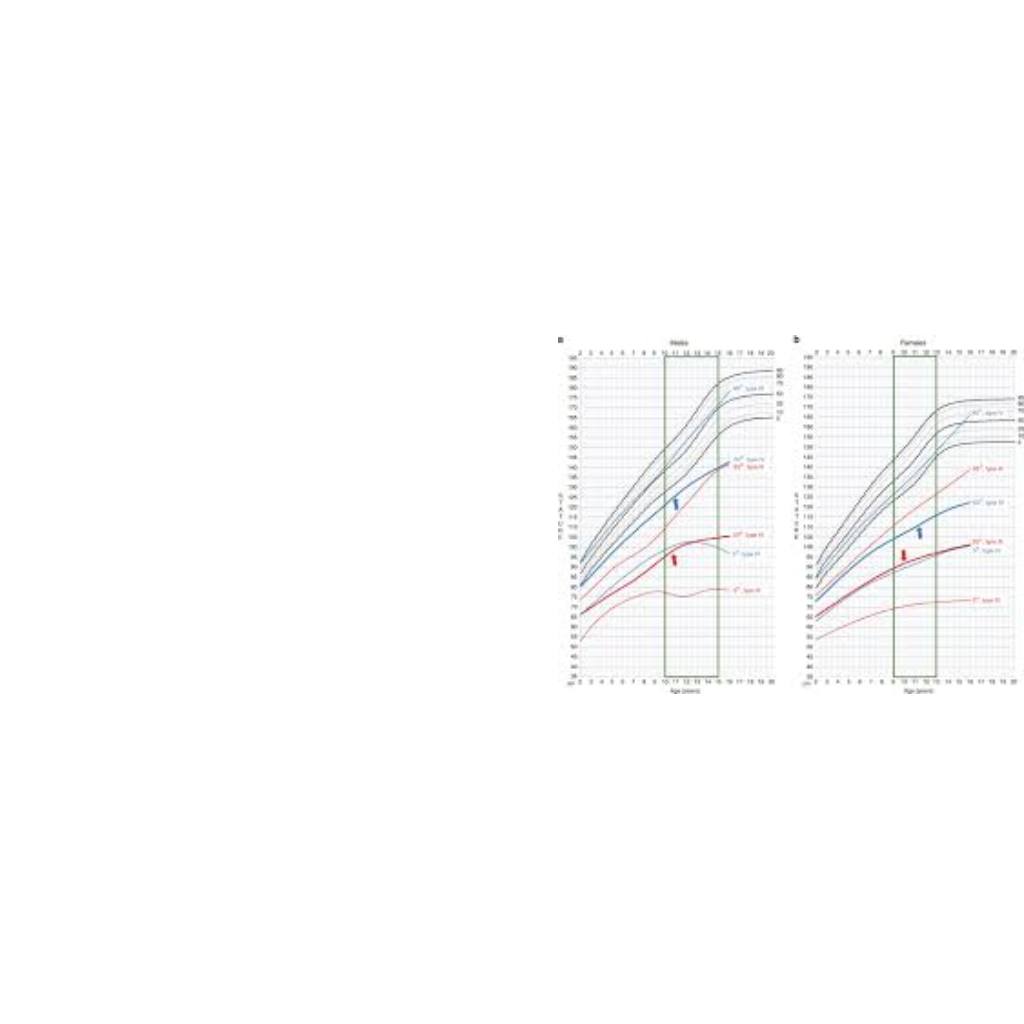
Longitudinal growth curves for children with types III and type IV osteogenesis imperfecta.
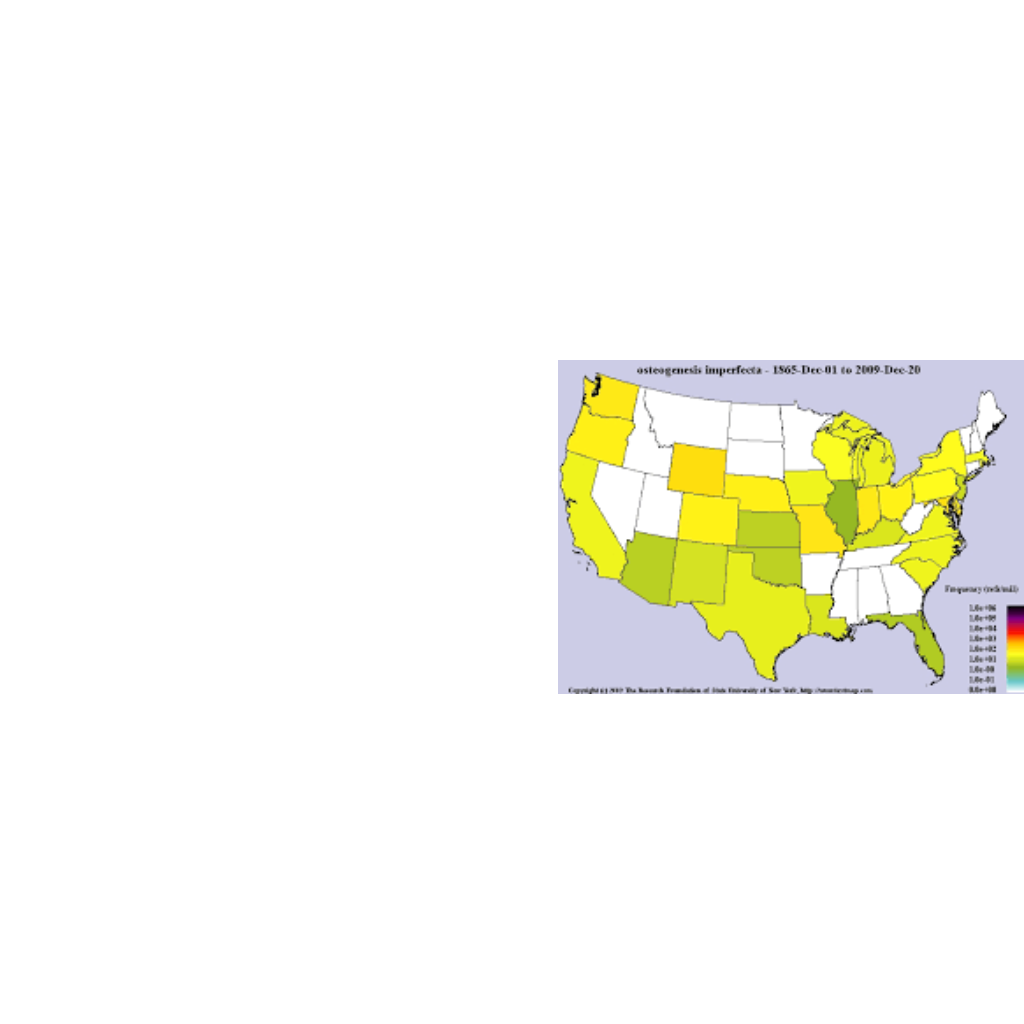
Map of people with Osteogenesis imperfecta in the U.S from 1865-Dec 01to 2009-Dec 20.
- Full access to our public library
- Save favorite books
- Interact with authors
- < BEGINNING
- END >
-
DOWNLOAD
-
LIKE
-
COMMENT()
-
SHARE
-
SAVE
-
BUY THIS BOOK
(from $3.39+) -
BUY THIS BOOK
(from $3.39+) - DOWNLOAD
- LIKE
- COMMENT ()
- SHARE
- SAVE
- Report
-
BUY
-
LIKE
-
COMMENT()
-
SHARE
- Excessive Violence
- Harassment
- Offensive Pictures
- Spelling & Grammar Errors
- Unfinished
- Other Problem





COMMENTS
Click 'X' to report any negative comments. Thanks!