
In this eBook we would like to share visuals, materials and short descriptions of the kindness-themed lessons that we implemented in our own schools.
These lessons aim to introduce kindness and related values through age-appropriate, engaging and meaningful activities.
Together, we created an ePack of various contexts
for teachers with an aim to inspire them to integrate kindness into their own teaching contexts through different activities.
Özlem Çelik, Prof. Dr. Mustafa Zengin Secondary School, İstanbul, Türkiye
Lucia Poliaková, ZŠ s MŠ Hargašova, Bratislava, Slovakia
Martina Šujanová, ZŠ s MŠ Hargašova, Bratislava, Slovakia
Neslihan Gürsoy, Fethiye Merkez Atatürk Secondary School, Muğla, Türkiye
Özlem Çelik, Prof. Dr. Mustafa Zengin Secondary School, İstanbul, Türkiye


The Lesson Objectives:
- identify and explain the concept of kindness and its importance in daily life.
During our lesson, step by step, our students:
-watched some short films about kindness
-brainstormed about kindness and their kind acts
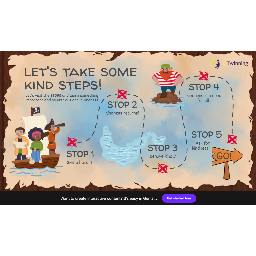
-took part in a values and kindness-themed treasure hunt game prepared in Genially, and discovered that the real treasure was kindness itself.
-finally prepared a kindness board decorated with dandelion hearts with kindness acts and messages.
Just like dandelion seeds spread when they are blown, we wanted to spread kindness from heart to heart and from one person to another. We hope our lesson creates inspiration for many educators and learners across borders :)

To be able to see our activity video and interactive game, scan the QR Codes below:

Rosso San Secondo, Italy
Lesson Objectives
The lesson aimed to:
Two-Hour Lesson: Kindness and Emotions, STEP by STEP
4. Interactive Whiteboard Activity
5. Emotion Cards Introduction
6. Memory Game
7. Video Viewing "Life Vest Inside: Kindness Boomerang"
8. Pair Work: Chain of Kind Actions



🎬Watch our video!
Scan the QR Code below
Learning Objectives
Activities
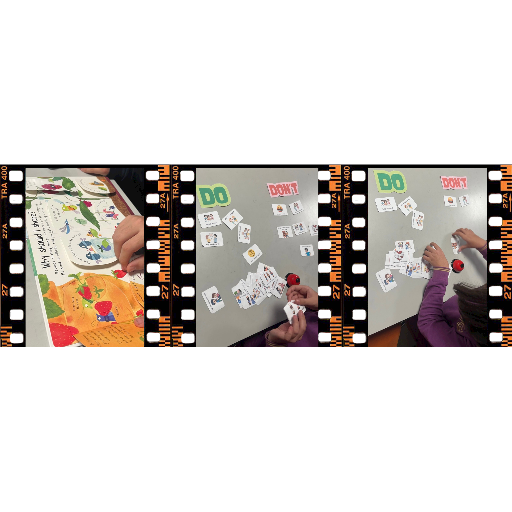
1. Discovery: The Kindness Flipbook
The lesson begins with a digital or physical Kindness Flipbook.
2. Analysis: "Do" vs. "Don't" Sorting
After the reading, students move to a hands-on categorization task.
3. Energy: The "Kindness Bell" Challenge
This is a high-energy, competitive matching game to test their quick thinking.
At the very beginning of the project, we had a "good" lesson. The aim of this lesson was to introduce kindness and related values through age-appropriate, engaging and meaningful activities.
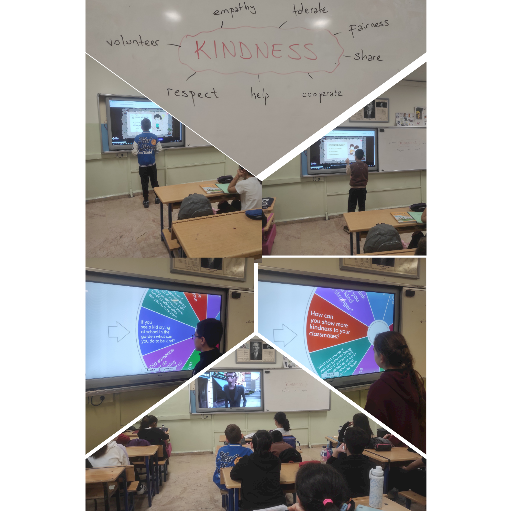
We started our lesson with warm up questions. We tried to answer what kindness is and we discussed why it matters. Then, we played a wheel game about kindness. Lastly, we played the treasure hunt game our dear partner Özlem Çelik prepared. We watched the videos about kindness and tried to get the treasure by answering the questions. Thanks to Özlem teacher for the game and letting us use it. It was a nice lesson for all of us :)
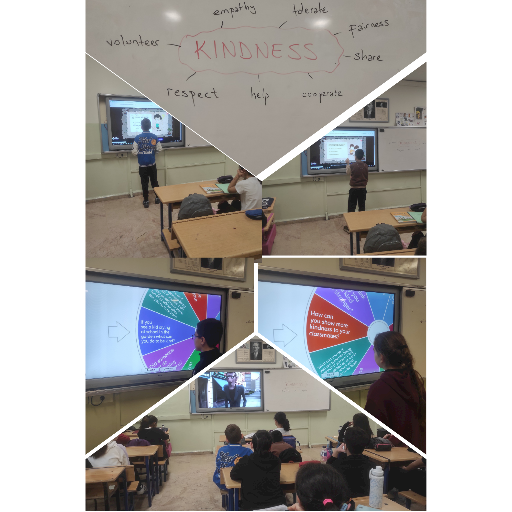

Lesson Objectives: Kindness
By the end of the lesson, students will be able to:
Introduction
We had a fantastic kindness lesson. At the beginning, we talked about what kindness is and why it really matters. Students shared their ideas and examples of kind behavior.
Main Activities

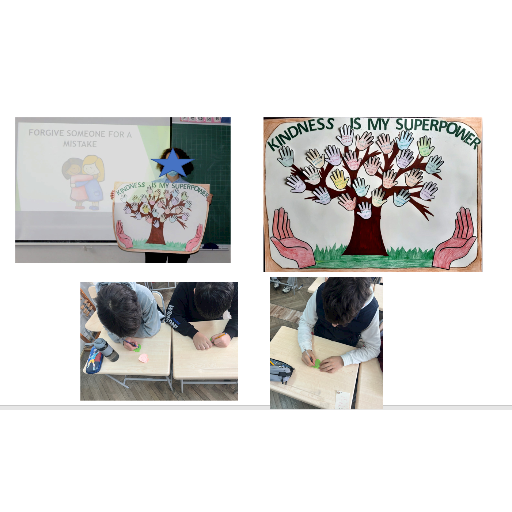

Lucia Poliaková, ZŠ s MŠ Hargašova, Bratislava, Slovakia
Our lesson about kindness - lesson structure and flashcards activities. We got the inspiration about lesson structure and flashcards from Chat GPT AI.
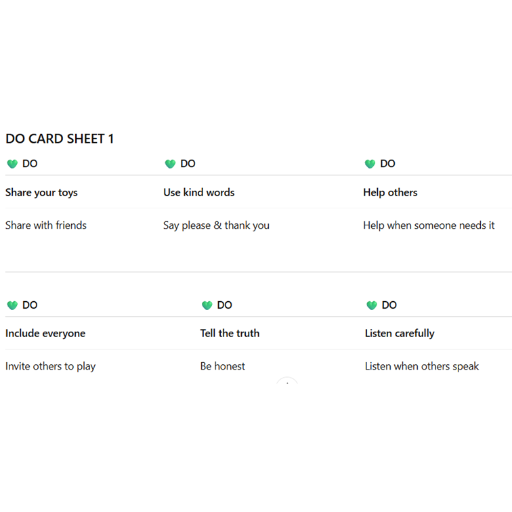
DO CARDS (Kind & Good Choices)
DO Card 1:
Share your toys with others
DO Card 2:
Say “please,” “thank you,” and “sorry”
DO Card 3:
Help someone who is hurt or sad
DO Card 4:
Include everyone in games
DO Card 5:
Tell the truth
DO Card 6:
Listen when someone is speaking
DON’T CARDS (Unkind Choices)
DON’T Card 1:
Hit, push, or hurt others
DON’T Card 2:
Call people mean names
DON’T Card 3:
Laugh when someone makes a mistake
DON’T Card 4:
Take things without asking
DON’T Card 5:
Leave someone out on purpose
DON’T Card 6:
Lie or blame others
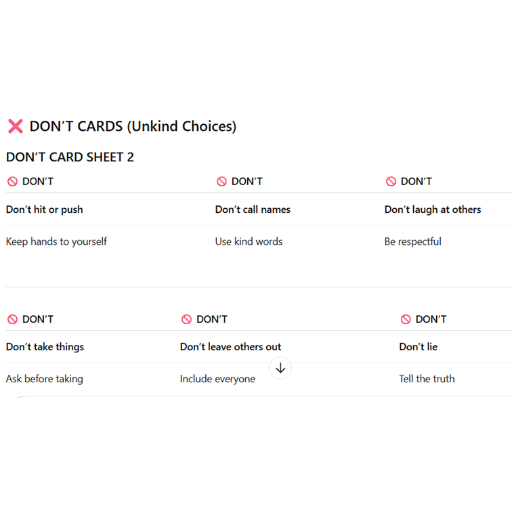
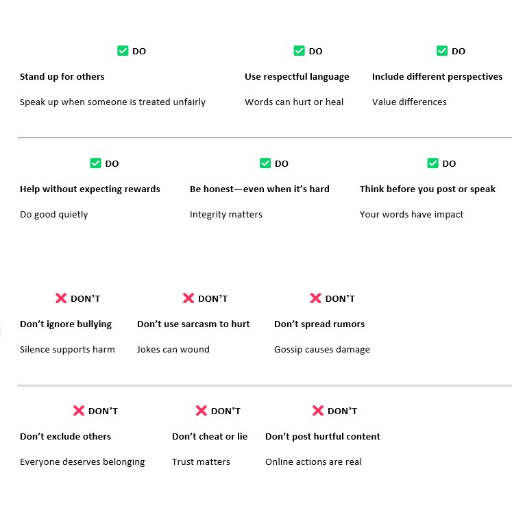
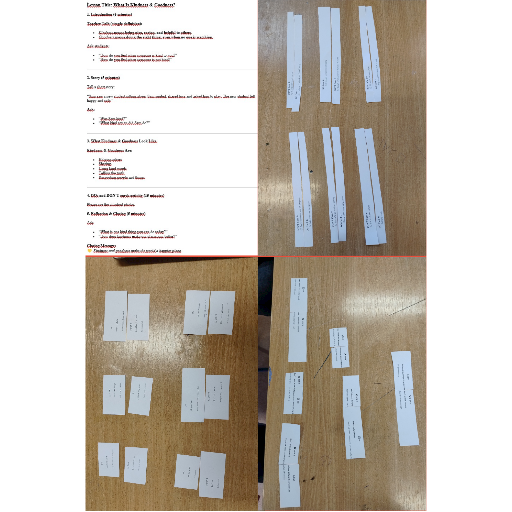
Martina Šujanová, ZŠ s MŠ Hargašova, Bratislava, Slovakia
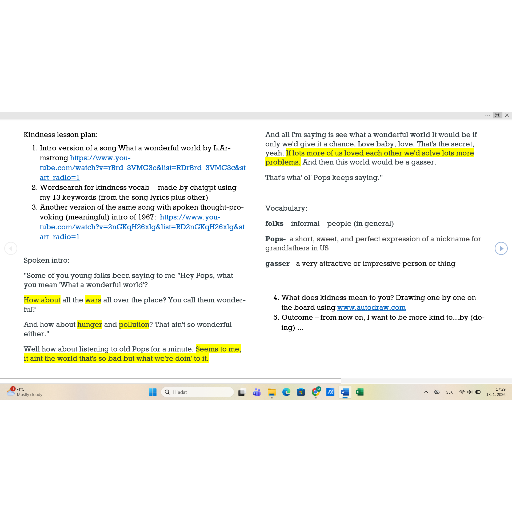
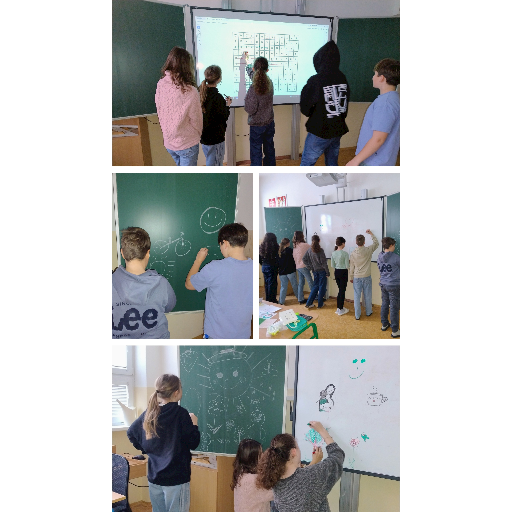
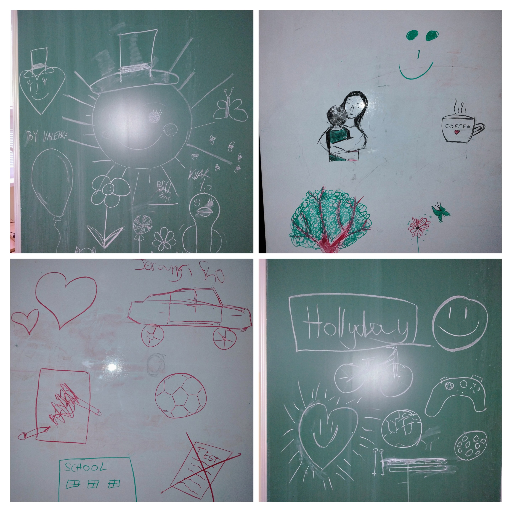
Lesson on Kindness
Learning objectives
- understand what kindness means
- name kind and unkind behaviour
- practice ways to show kindness in everyday life
- reflect on how kindness affects others
- self-reflect their own behaviour
Lesson activities
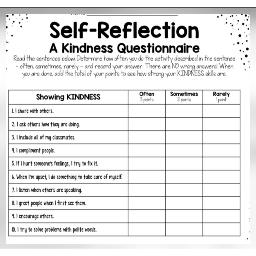
- Students took a self-reflection questionaire on kindness.
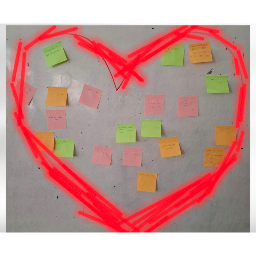
- In pairs they chose the kind act which they considered to be the most important and wrote it on sticky notes. .
- The heart was created from these sticky notes.
- We discussed the importance of kindness and how it can change our day.
- We agreed on a key message:
Kindness is a simple choice which can make a big difference in someone´s day.
Project Objectives. The project moved well-being initiatives from theory into active school life. The goals were for students to:
- Reflect on universal emotional needs like recognition, safety, and inclusion.
- Distinguish between behavior that promotes community and behavior that creates distance (DO / DON'T reflection).
- Plan and execute behavior-changing initiatives in practice.
- Participate in visual community markers to strengthen collective identity.
Inside/Outside the Circle. We formed a large circle on the floor. I read statements about feeling insecure or happy, and students stepped inside if they recognized the situation.
Pedagogical outcome: This exercise provided a powerful shared baseline. It visually proved to the 6th graders that, beneath the surface, they share the exact same vulnerabilities and needs to belong.
The Boomerang Effect. We watched the short film "Kindness Boomerang" to see how a single positive action spreads and returns to its origin. Based on this, the class co-created a DO / DON'T overview of daily behaviors that either trigger a positive chain reaction (e.g., active listening) or close the community down (e.g., whispering/excluding).
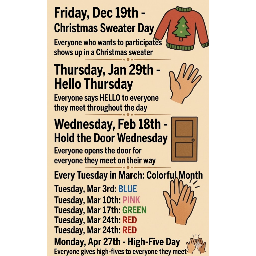
Kindness in Practice. To test the effect in real life, the students defined and practiced different simple dogmas in the hallways:
Outcome: Students observed how small adjustments in their own behavior immediately improved the response from their surroundings.
Unity Day. To signal solidarity, we organized some joint action days where all students and teachers showed up wearing a specific, agreed-upon color. This simple visual marker generated curiosity across the school and gave the students a powerful sense of collective identity and pride.
Evaluation and Reflection. We concluded with an oral evaluation in a circle.
Students reflected on the challenges (such as greeting strangers) and noted
that actions like holding a door quickly became permanent habits.
Evaluation and Pedagogical Outcome. Shifting from written work to action-oriented
and visual elements fully engaged the students. The project proved to them that
well-being and community are the direct results of small, daily choices—from the
way they greet others to standing together as a group.
Small steps, big impact
With this activity, students are expected to: Understand the concept of kindness and recognize kind vs. unkind behaviors. Realize that small acts of kindness can make a significant difference.
Discussed what kindness means, how it spreads, and what makes a person truly kind.
Watched the short film “Kindness Keeps the World Afloat” to observe how people treat one another.
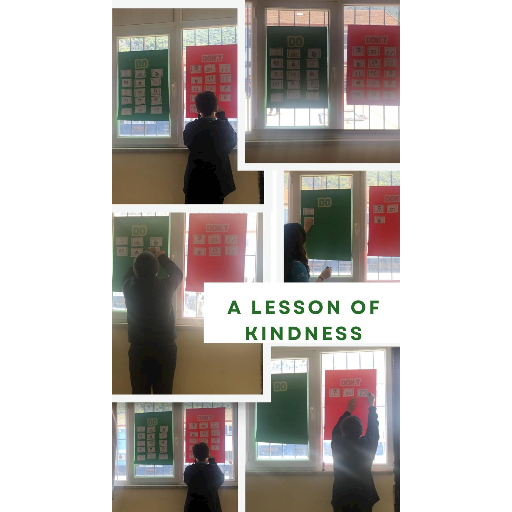
Classified various behavior cards by cooperating to create a visual "DO / DON’T" board for the classroom.
Committed to positive action by choosing one specific, small act of kindness to practice throughout the day.
The lesson is concluded with the following sentence:
“Kindness may be small, but its impact is very big.”
Students are asked to choose one small act of kindness they will try to do during the day.
Assessment
Students are assessed through:
their participation in the discussion,
their answers to the questions,
their contribution to the DO / DON’T board activity.
Watch our video!
Scan the QR Code

Marion Biaudet, Fraize middle school, France
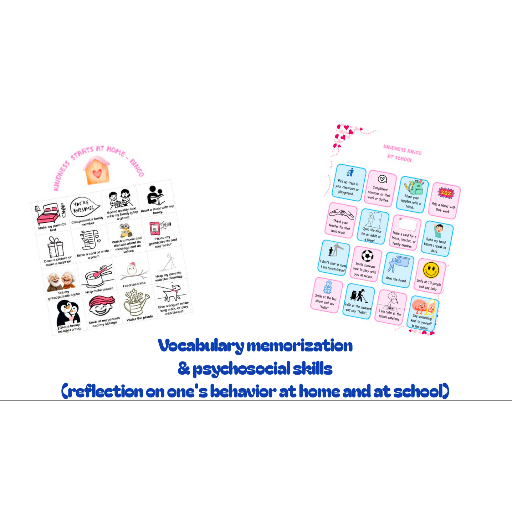
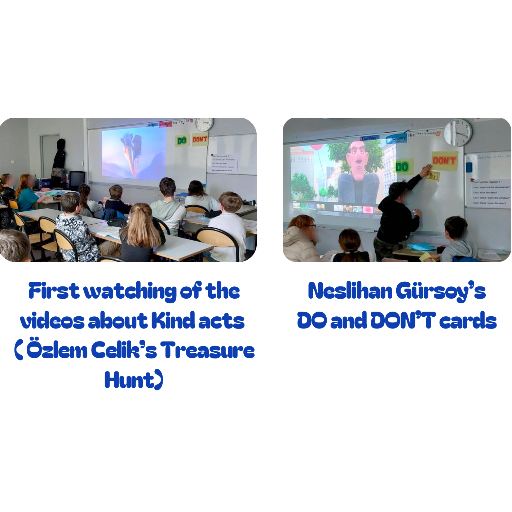
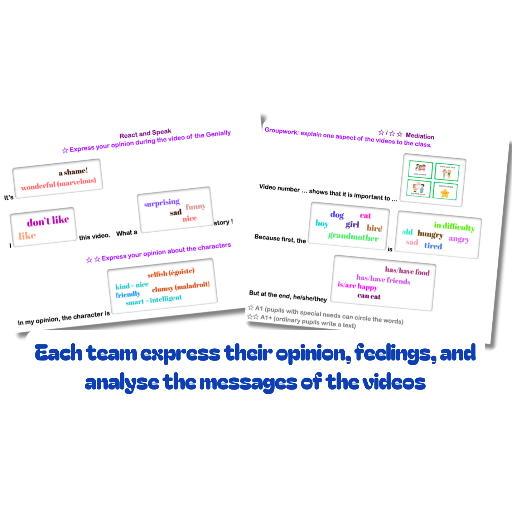
Gülbin AKDEMİR YELKOVAN Karacahisar Secondary School Uşak TÜRKİYE
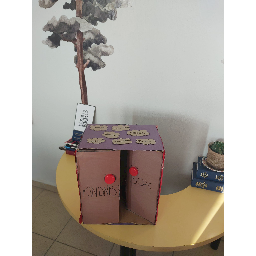
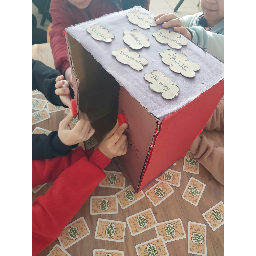
Lesson Theme: The Kindness Box & Rules
Target Group: Middle School (A1-A2 Level)
Materials: An empty recycled box (e.g., a shoebox), pieces of recycled paper, colorful markers, board.
Aims / Objectives:
To practice expressing gratitude and writing short sentences in English.
To encourage a positive, supportive, and sustainable classroom atmosphere.
Step-by-Step Implementation:
1. Crafting the Box (15 mins):
Introduce the concept: "Today, we are making a Kindness Box!"
Work with the students to decorate the recycled box using waste materials and label it "KINDNESS BOX".
Place the box in an easily accessible corner of the classroom.
2. Establishing the Routine (10 mins):
Explain the purpose of the box: "If someone helps you or does something nice, write a short note."
Write a few basic sentence starters on the board to guide them (see the list below).
3. Writing the First Notes (15 mins):
Distribute small pieces of recycled paper.
Ask each student to write their first appreciation note to a classmate.
Drop the notes into the box. Make it a weekly routine to spend the last 10 minutes of Friday's lesson reading the notes aloud.
You can provide these simple templates to help them write their notes easily:
"Thank you for [helping me with my homework]."
"You are a very [kind / helpful / good] friend."
"I was happy when you [shared your pencil with me]."
"It was very kind of you to [play with me]."
"You did a great job today!"
Özden Uğur Hamdullah Suphi Tanrıöver Ortaokulu, İzmir-Türkiye
I designed a lesson to help students better understand the role of kindness in everyday life.
In the lesson throughout the activities, students will be able to explore what it means to be kind, why it is important and how small positive actions can make a difference in their surroundings.
During the lesson students were encouraged to think about their own experiences and share examples of kind behaviors. They worked collaboratively in groups, exchanged ideas and built empathy through discussion and interaction. Various creative tasks allowed them to express their thoughts and feelings about kindness in unique ways.
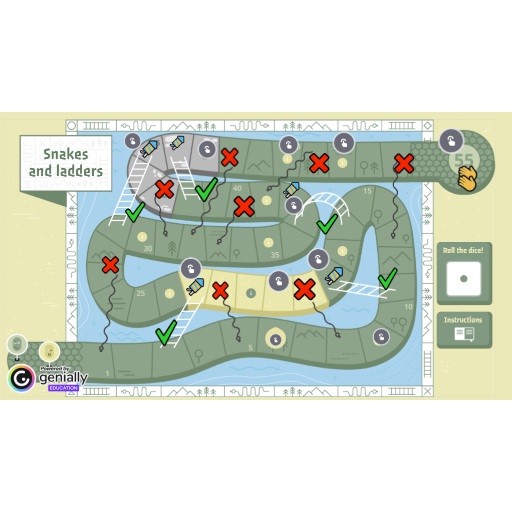
As part of the lesson, students played "Wheel of Fortune" game prepared on Worldwall and ‘’Snakes and Ladders’’ prepared on Genially. On the game students should answer the questions about Kindness on their way through the finish line.
It was a great lesson in which all of us had great fun and entertainment.
To spread the kindness throughout the school we want all of the students to write what kindness they did lately on a piece of paper and stick it on our Kindness Tree.
We hope this experience encourages more educators and learners to share and promote kindness in their own environments.
Scan QR Code
& play the game
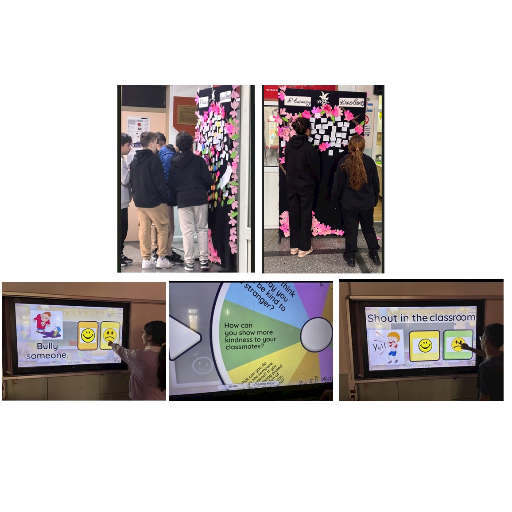
Giovanna Romaniello, "I.C. L. de Lorenzo", Viggiano, Italy
We introduced the topic of kindness through an interactive activity called “Inside and Outside the Circle”.
Students stood in a circle. Then, according to the sentences read by the teacher, they took a step inside or outside the circle if the statement was true for them or not.
During the activity, students had time to observe their classmates and understand similarities and differences among them. They discovered that, even if we are all different, we all want to be happy and to be treated with kindness and compassion.
After the activity, we had a class discussion about these questions:
Together, we reflected on the importance of creating a kind and respectful classroom environment.
Finally, students created a word cloud with words related to kindness.
This activity helped students understand that kindness can make everyone feel included, respected, and happy.
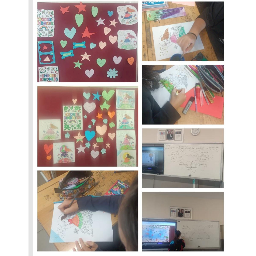
Our students wrote what kindness means to them on colorful papers and created kindness bulletin board.Kindness means love,compassion,happiness..etc.
They played treasure hunt game and watched short videos on Kindness.They learned simple ways te be kind in saily life.After wayching,they shared their ideas and give examples from their own experiences.They gained awareness of Kindness.
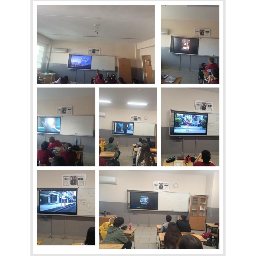
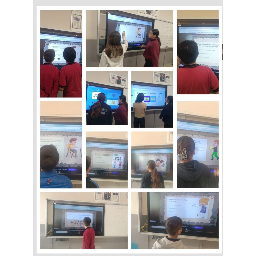
We prepared online games and played them at class.We revised 'should or shouldn't' in games.
Almida Dyrmo School of Arts"Ajet Xhindole"Berat, Albania
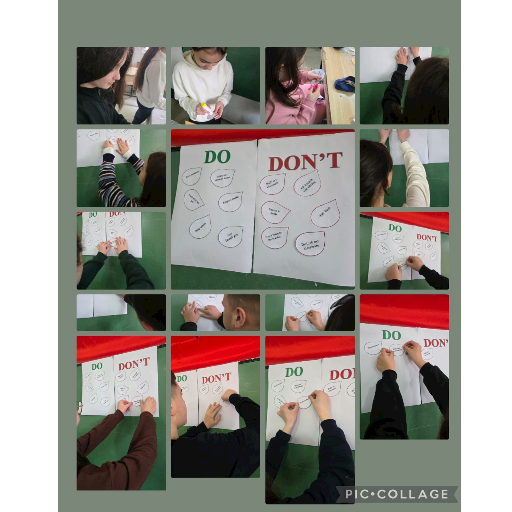
The lesson on the topic of Kindness was developed with the aim of raising students' awareness of the importance of good behavior and respect for others in everyday life. Students were encouraged to express their thoughts on the meaning of kindness, bringing concrete examples from personal experience in family, school and society. Then they themselves decided on the good behaviors that should and should not be done.
Angelita Cariati, IC “L. De Lorenzo”, Viggiano, Italy
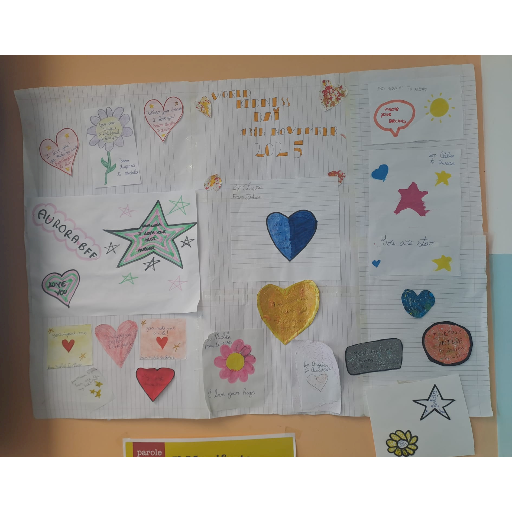
Lesson on Kindness and the “World Kindness Day”
Learning objectives
For our lesson about kindness, the main learning objectives were to help students develop empathy, respect, positive communication, and collaboration skills. Students learned the importance of kindness in everyday life and reflected on how small actions and words can make others feel valued and included.
The lesson also encouraged creativity and the use of English in a meaningful and engaging context.
Activities
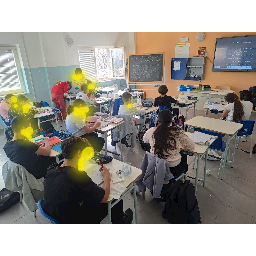
During the lesson about World Kindness Day, I explained the meaning and importance of this special day (13th November) and discussed with the students how kindness can improve relationships at school and in daily life. After the discussion, the students created small hearts and cards with kind words and positive messages in English.
They exchanged their messages with classmates to spread kindness, friendship, and encouragement within the classroom.
Kindness – A Power That Changes the World
At the end of the activity, my students were be able to:
- explain what kindness means;
- give examples of kind gestures in everyday life;
- identify the effects of kindness on people;
- actively participate in collaboration and reflection activities.
I wrote on the board the word "Kindness" and I told the students a short story: “A boy was walking to school and saw a sad classmate sitting alone on a bench. He sat next to him and asked if he was okay. After a few minutes, the classmate began to smile. Sometimes, a small gesture can change someone’s day.” We discussed about what act of kindness the boy did , why they thought the gesture was important and if they had you ever received or offered help.
I suggestes the students these activities: “The Kindness Tree”
I gave the students sticky notes on which they wrote a kind act they had done or a kind act they had received from someone. These notes were placed on a drawing of a tree made on the board.
The other activity was a role play: I divided the students into small groups and received situations such as: a classmate is excluded from a game; someone forgot their pencil case at home; a classmate is sad; a new student joins the class. They had to role play and present to the other students and discussed about the differences between the two behaviors.
At the end of the classs, I wrote on the board “Kindness means…” and the students completed the sentence with a word or expression: respect, help, friendship, care, honesty, encouragement and so on. expression: respect; help.
The conclusion was that we can make a difference beginning with small acts of kindness.
The studnets enjoyed the activities and they also suggested a "drawing" competition about Kindness and I suggested them to organize activities such as "A cookie for a smile!", "Take one act of Kindness and pass it on!", "The week of kindness".
- < BEGINNING
- END >
-
DOWNLOAD
-
LIKE
-
COMMENT()
-
SHARE
-
BUY THIS BOOK
(from $9.59+) -
BUY THIS BOOK
(from $9.59+) - DOWNLOAD
- LIKE
- COMMENT ()
- SHARE
- Report
-
BUY
-
LIKE
-
COMMENT()
-
SHARE
- Excessive Violence
- Harassment
- Offensive Pictures
- Spelling & Grammar Errors
- Unfinished
- Other Problem





COMMENTS
Click 'X' to report any negative comments. Thanks!