This book is dedicated to all the students who explored the beauty of nature through mathematics and collaboration.


The flower represents radial symmetry, as its petals are arranged evenly around the center. It also shows repeating patterns found in nature and can be associated with geometric shapes such as circles and star-like forms. (Angela)

This plant highlights a circular arrangement, where all elements grow outward from a central point. It demonstrates geometric organization in nature, with lines forming a star-like structure and showing balance and proportion. (Paula)
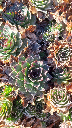
This plant illustrates a spiral pattern, where the leaves grow in a circular, layered form from the center. It reflects natural geometry and shows how patterns repeat and expand outward in an organized way. (Alex)

This branch shows a linear pattern, where buds and leaves grow at regular intervals along a line. It illustrates sequence and spacing in nature, similar to mathematical patterns and repetition. (Andrei)
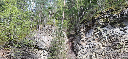
This rock formation shows layered patterns, where the lines represent different stages formed over time. It illustrates geometry through parallel lines and demonstrates how natural structures can reflect mathematical concepts like stratification and order. (Ananya)
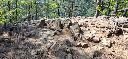
The rocks form different polygons and show how randomness and variation can still create a structured pattern in nature. (Roxy)

This surface shows wave-like patterns formed by natural processes over time. It illustrates curves and repetition, similar to mathematical functions. (Violeta)

This rock surface shows parallel lines and repeated vertical patterns. It represents direction, alignment, and repetition, which are important concepts in geometry. (Alexandru)
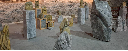
This scene shows three-dimensional shapes and geometric forms created from stone. It illustrates volume, symmetry, and spatial arrangement, highlighting how mathematics can be seen in art and sculpture. (Anastasia)

This structure shows a complex geometric pattern made of repeating small shapes arranged in a circular form. It highlights tessellation and symmetry, demonstrating how nature creates organized and intricate designs. (Teo)

It highlights balance, proportion, and the use of shapes and space in a structured design. (Alexuțu)

This shape shows radial lines extending from the center, forming a circular pattern. It illustrates division, symmetry, and how nature organizes structures evenly around a central point. (Laura)

This image shows how small elements form a scattered pattern across a surface. It highlights variation and spacing, illustrating how nature creates irregular but meaningful arrangements. (Daria)

This pine cone shows a repeating pattern of overlapping scales arranged in a spiral. It reflects mathematical order in nature, similar to sequences and growth patterns. (Narcis)
Ayşegül Özcan -Atatürk Secondary School/Batman/Türkiye
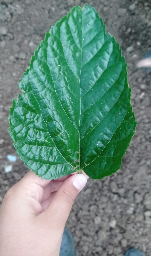

When we look at this leaf, we can see how mathematics appears in nature. The two sides of the leaf are very similar to each other, which is an example of symmetry. The veins branch out and form geometric patterns. Therefore, a leaf is like a small mathematical shape drawn by nature.
(Osman)
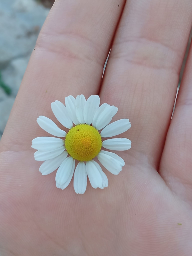
Many mathematical and symmetrical features can be observed in this image. The yellow center of the flower resembles a circle. The white petals are arranged around this center in a regular, balanced, and repeating pattern. This shows the presence of radial symmetry in the flower. In addition, the similar sizes of the petals reveal the mathematical order and harmony found in nature. (Irmak)
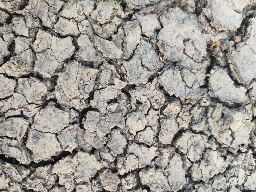
In this image, the soil has shrunk as it dried, creating irregular polygonal shapes on its surface. These naturally formed patterns resemble a mosaic structure that covers a plane without leaving gaps. The polygons of different sizes and shapes provide an interesting example of the geometric order found in nature.
(Salih)
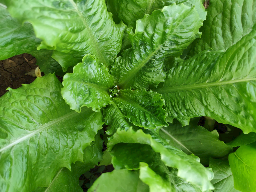
The arrangement of the leaves from the center outward displays a pattern that is consistent with the Fibonacci sequence, which is commonly found in nature. The curves along the leaf edges and the vein structures resemble fractal geometry, where a small shape is repeated in similar forms. These features provide a beautiful example of the mathematical order and patterns found in nature.
(Semanur)
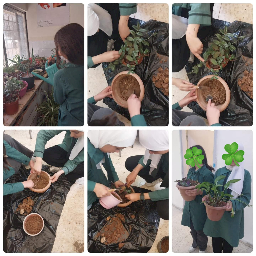
Our amazing team, consisting of Maryam, Rital, Rama, and Layla, worked hand in hand to add a touch of green to our school environment. As shown in FB_IMG_ and FB_IMG_1, their brilliant teamwork and shared enthusiasm made the practical activity a delightful and unforgettable experience for everyone involved.
Alaa Abu Yabes / Almustanada secondary mixed school / Amman Jordan
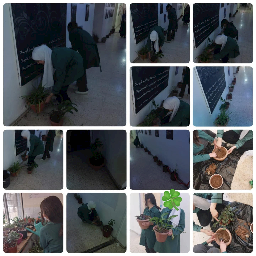
Learning mathematics becomes much more exciting when it comes to life! Through this hands-on project, Maryam, Rital, Rama, and Layla explored how geometric shapes, Perimeter, and Area function in the real world. The visual steps captured in _IMG and FB_IMG_beautifully document their mathematical journey with the planting pots."
Using English to communicate their ideas, Maryam, Rital, Rama, and Layla successfully shared their unique discoveries with our international partner schools. Their dedicated efforts in planting and measuring, illustrated in FB_ and FB_IMG_.jpg, highlight how creative young minds can connect globally through a shared eBook project.
A beautiful blend of science, math, and nature! In FB.jpg and FB_IMG_, you can see our wonderful students—Maryam, Rital, Rama, and Layla—caring for plants while exploring practical measurements. Their meaningful contribution to this international eBook reminds us that the best learning often happens when we interact with the world around us.
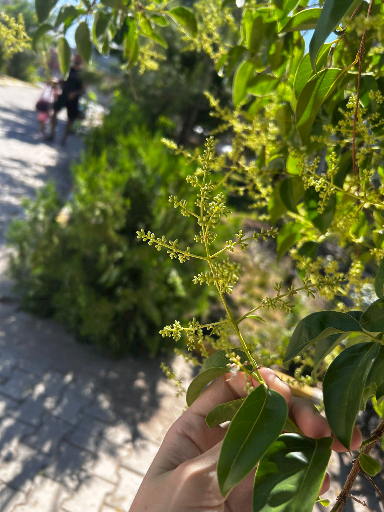
Privet
The main flower stalk branches into smaller stems, which further divide into even smaller branches, creating a fractal-like (self-repeating) pattern.
Özge SEZER-Karaköprü İşitme Engelliler Ortaokulu-TÜRKİYE
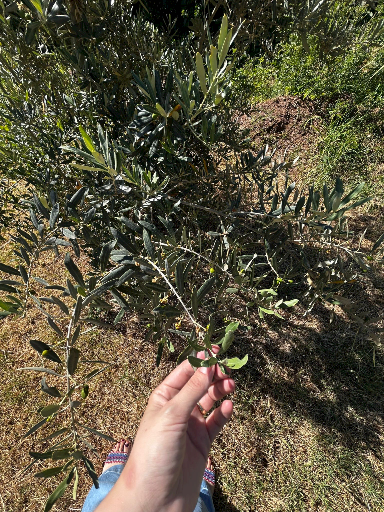
The olive tree shows several examples of symmetry in nature. Its leaves have line symmetry, as each side is approximately a mirror image of the other along the central vein. The olives also have an approximately symmetrical oval shape, making them a great example of natural mathematical patterns.
Olive Tree
- Full access to our public library
- Save favorite books
- Interact with authors
- < BEGINNING
- END >
-
DOWNLOAD
-
LIKE(5)
-
COMMENT()
-
SHARE
-
SAVE
-
BUY THIS BOOK
(from $4.59+) -
BUY THIS BOOK
(from $4.59+) - DOWNLOAD
- LIKE (5)
- COMMENT ()
- SHARE
- SAVE
- Report
-
BUY
-
LIKE(5)
-
COMMENT()
-
SHARE
- Excessive Violence
- Harassment
- Offensive Pictures
- Spelling & Grammar Errors
- Unfinished
- Other Problem





COMMENTS
Click 'X' to report any negative comments. Thanks!