 Mr. Walker- Economics Spring 2015
This book was created and published on StoryJumper™
©2014 StoryJumper, Inc. All rights reserved.
Publish your own children's book:
www.storyjumper.com

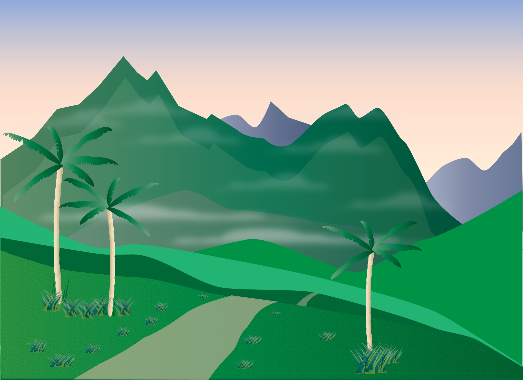









Welcome to MacroLand! I will be giving you a tour of our wonderful
land today. My name is Czar Nicolaus Frederick III, but my friends
call me Freddy. This is my right hand man, Steve. Today we will show
you how the good people of MacroLand track the economy, and why
we have become one of the most prosperous realms in the world!
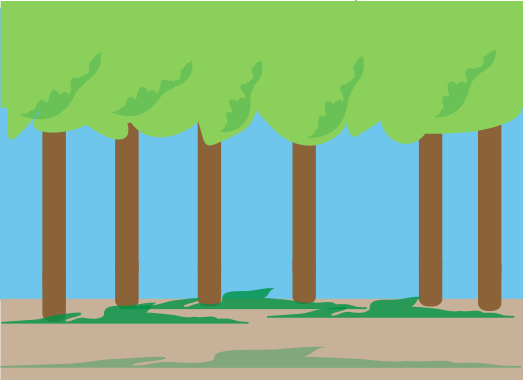












Here we are in the forest of MacroLand with Chuck the Monkey and
Glenda the Witch to talk about one way we measure the economy of
MacroLand: GDP, or the total value of all finished products made in
MacroLand each year. This includes the number of apples Chuck grows,
how many brooms Glenda makes, and much, much, more. How much we
produce is worth is calculated by adding private consumption, gross
investment, government spending, and the difference of exports and
imports together. Nominal GDP is merely the monetary value of
production for the year. Real GDP, however accounts for inflation when
calculating GDP by dividing Nominal GDP by the rate of inflation plus
100%.

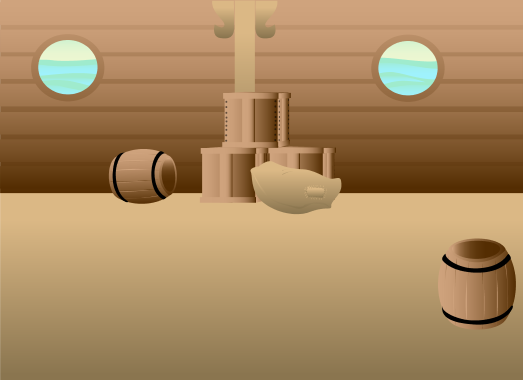








We are visiting Scurvy Bob and his crew, who transport much of the
goods we produce here in MacroLand. Because he works with both
producers and consumers, he sees both sides of Supply and Demand. In
MacroLand, as prices decrease, people plan to purchase more, thus,
Aggregate Demand and GDP increases as prices decrease. This price
decrease is not on one specific good, but on the overall economy.
Moreover, Aggregate Supply will increase as more resources become
available, but in the long run, the AS graph will hit a vertical asymptote
at the real GDP, meaning that in the long run, supply is not actually
affected by pricing.




We are here in the mountains of MacroLand with Sir Galahad and his old
nemesis, Nessi, to discuss inflation. Inflation is an overall rise in prices,
which is usually classified as either cost push, where a rise in production
costs causes a price increase, or demand-pull, where an increase in
demand causes prices to rise. Nessi here is struggling to keep up with
inflation, as much of the treasure he has hoarded over the years has not
retained its value, and no longer has as much buying power as it did when
he first stole it from the dwarves. Two of the ways we track inflation are
the Consumer and Producer Price Indices, which measure the price changes
for both consumers and producers over time by taking samples of the
prices of a variety of different products.
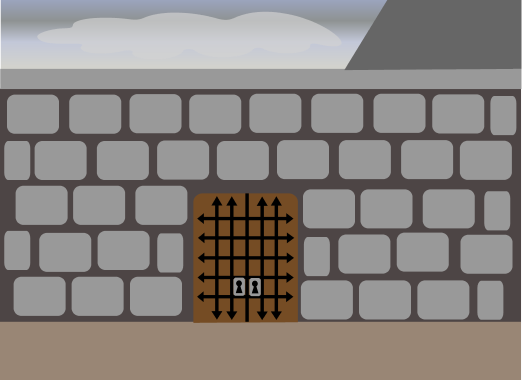





We have entered into the province of Mordor to discuss unemployment.
The unemployment rate is used to measure the strength of the economy,
and is defined as the percent of the labor force (those sixteen years and
older willing and able to work) that is currently unemployed. Zargulg and
Xorakk have been out of work since the Dark Lord Sauron was
overthrown last year, and because they only know how to fight and be
scary, they have been facing structural unemployment, as there are few
jobs that still require pillaging and preying on the innocent. However, we
hope to help them find jobs at the haunted house during the state fair, but
this would only be a temporary fix, and they would have to deal with
seasonal unemployment, only being able to work during the fall.
You've previewed 11 of 17 pages.
To read more:
Click Sign Up (Free)- Full access to our public library
- Save favorite books
- Interact with authors


- < BEGINNING
- END >
-
DOWNLOAD
-
LIKE(1)
-
COMMENT()
-
SHARE
-
SAVE
-
BUY THIS BOOK
(from $3.39+) -
BUY THIS BOOK
(from $3.39+) - DOWNLOAD
- LIKE (1)
- COMMENT ()
- SHARE
- SAVE
- Report
-
BUY
-
LIKE(1)
-
COMMENT()
-
SHARE
- Excessive Violence
- Harassment
- Offensive Pictures
- Spelling & Grammar Errors
- Unfinished
- Other Problem





COMMENTS
Click 'X' to report any negative comments. Thanks!