Table Of Contents

2. How to make Pho - Pages 8-14
3. The Caged Nightingale of Saigon - Pages 15-23
4. A Profile of Japan’s Coexisting Eras - Pages 24-28
5. The Mid-Autumn Moon Over Silt and Sky - Pages 29-36
6. The Silent Signposts of the River - Pages 37-47

I dedicate this book to my wonderful mom and dad, thank you for being my constant anchors and my greatest source of inspiration. Your unconditional love has filled my life with warmth, while your tireless care has always kept me safe and comforted. Because of your patient guidance throughout the years, I have had the strength to pursue my dreams and write these stories. This book is a small token of my immense gratitude for everything you have given me.
Born in 2007, I grew up surrounded by an intricate web of peaceful canals, sprawling rice paddies, and a landscape punctuated by sudden, majestic mountains rising from the flat terrain of the Mekong Delta. While the world around me was bustling with the vibrant trade of floating markets and local festivities, I was a quiet spectator. I was a remarkably shy and timid boy, someone who preferred the comforting shelter of the background rather than the center of attention. My voice was rarely louder than a whisper, but my quiet world became infinitely richer the day I met Hao.
Hao was everything I was not: adventurous, outgoing, and entirely unbothered by the fears that kept me rooted to the ground. Despite our differences, or perhaps because of them, we became inseparable anchors for one another. Every morning, we walked side-by-side to Cay Dau School, our footsteps mirroring the steady rhythm of our developing bond. In the classroom, our desks were a shared universe. Understanding my quiet nature, Hao would gently nudge me to speak up when the teacher called on me. We studied together constantly, sharing everything we had. If I forgot a notebook, Hao would slide his over; if his family cooked a special treat, it was split evenly between us before lunchtime.
Our true adventures, however, unfolded outside the school gates. By the time we
reached the upper elementary grades, the scorching summer afternoons presented a daily temptation. While my mother believed we were safely asleep taking our mandatory afternoon naps, Hao and I would silently slip out the back door, our bare feet hitting the warm, dusty paths of our neighborhood. The stifling heat melted away the moment we plunged into the cool water of the local canals, swimming until our eyes were bloodshot and laughing until our stomachs ached. We spent hours waiting for fish to bite, talking about everything and nothing at all.
Yet, our favorite thrill was sneaking into the neighbors’ sprawling fruit gardens. Protected by the dense canopy of tropical trees, we would hunt for ripe plums, juicy guavas, and sweet longans. It was an unwritten rule of childhood that stolen fruit tasted the sweetest, and we indulged in everything a kid could possibly do to have fun in the countryside.
That reckless joy came to a sudden halt on an unusually hot afternoon in 2018. We had climbed a massive tree in a neighbor's garden, reaching for the plumpest fruit near the top. Suddenly, a sickening crack echoed through the leaves. Before I could look up, Hao lost his footing and plunged through the branches, crashing heavily onto the hard dirt below.
I scrambled down the tree, my heart hammering violently against my ribs. Hao lay on the grass, his face pale and contorted in agony, clutching his left leg, which was bent at a terrifying angle. Panic seized me. We were trespassing, doing exactly what we had been forbidden to do. Terrified of the consequences but desperate to help my friend, I swallowed my shyness and screamed for help at the top of my lungs.
The very neighbor whose fruits we were "illegally" picking came running out. Seeing Hao's condition, the anger vanished from his face, replaced by immediate concern. He helped gather local adults, and Hao was quickly rushed to the provincial hospital. I followed in a daze of tears and guilt. At the hospital, the sterile smell of antiseptic overwhelmed my senses as doctors and nurses sprang into action. They administered a soothing painkiller, carefully wrapped Hao’s leg in thick layers of cotton padding, and skillfully applied a hard white plaster cast to immobilize the broken bone. Watching them work with such precise care eased the knot of terror in my chest.
That incident changed us. From that day on, we never "stole" fruits again; the sight of a garden only brought back the memory of that frightening fall. Our bond, however, only deepened as I helped carry Hao's books and walked slowly beside him while his leg healed.
By 2019, as our 6th-grade year drew to a close, my family made the life-altering decision to leave Vietnam. In those days, we did not possess cellphones or social media accounts to anchor our connection across oceans. We said our goodbyes with the heavy, unspoken grief of children who do not truly understand the vastness of the world.
We completely lost touch after my departure, but time and distance have done nothing to fade his memory. Now, as an 11th grader living a completely different life, I often look out the window and find myself transported back to the peaceful rivers of An Giang. Though we are separated by thousands of miles, a piece of my heart remains on those dusty trails and canal banks. I carry the warmth of our nice friendship with me every day, holding onto the enduring hope that someday, somehow, the currents of life will allow me to find Hao once again.

Authentic Vietnamese Beef Pho is more than just a noodle soup; it is a labor of love characterized by a crystal-clear, aromatic broth and tender slices of beef. While the process is time-consuming, the result is a deeply restorative meal that rivals any restaurant version. By following these steps, you can master the art of the slow-simmered broth and the delicate assembly of a perfect bowl of Pho.
Cooking Equipment:
12–16 quart stockpot
Fine mesh skimmer/strainer
Tongs
Chef’s knife and cutting board
Small saucepan
Noodle strainer or basket
Spice bag or cheesecloth
Ingredients:
For the Broth: 4 lbs beef marrow and knuckle bones, 1 lb beef brisket, 2
large onions (halved), 4 inches of fresh ginger (sliced lengthwise), 5 star anise, 6 cloves, 1 cinnamon stick, 2 tbsp coriander seeds, 1 tbsp salt, 2 tbsp fish sauce, and 1 chunk of rock sugar.
For the Bowls: 1 package of dried or fresh banh pho (rice noodles), 1/2 lb eye of round steak (frozen for 30 minutes for easy slicing), and 1 onion (thinly sliced).
Garnish: Fresh Thai basil, bean sprouts, lime wedges, cilantro, and Hoisin or Sriracha sauce.
1. Parboil and Clean the Bones First. Place the beef bones in your large stockpot and cover them with cold water. Bring the water to a vigorous boil for 3 to 5 minutes. You will see a grey, foamy "scum" rise to the top; this contains the impurities that make a broth cloudy. Afterward, drain the bones into a sink and rinse them thoroughly under cold running water. Scrub the pot clean before returning the bones to it. This
"parboiling" step is the secret to a professional, clear broth (RecipeTin Eats).
2. Char the Aromatics. While the bones are simmering, place the halved onions and sliced ginger directly over a gas flame or under a broiler. Turn them frequently with tongs until the skins are blackened and charred. Peel away the burnt skin and rinse the aromatics. This charring process infuses the broth with a smoky, sweet depth that cannot be achieved through boiling alone (The Woks of Life).
3. Toast the Spices. In a small skillet over medium heat, add the star anise, cloves, cinnamon stick, and coriander seeds. Toast them for 2 to 3 minutes until they become highly fragrant. Immediately place them into a spice bag or cheesecloth. This prevents the small seeds from floating in your broth, making it easier to serve later.
4. The Long Simmer Fill the stockpot with 6 quarts of fresh water. Add the cleaned bones, brisket, charred aromatics, spice bag, rock sugar, and salt. Bring to a boil, then immediately reduce the heat to a very low simmer. Use your fine mesh skimmer to remove any fat or bubbles that rise to the
surface throughout the process. Let the broth simmer for at least 6 to 10 hours. The longer it simmers, the richer the flavor will be (Tastes Better from Scratch).
5. Prepare the Components Once the broth is finished, use tongs to remove the brisket and submerge it in a bowl of cold water for 10 minutes to prevent the meat from darkening. Use your chef’s knife to slice the brisket and the partially frozen eye of round steak into paper-thin slices. Separately, boil a small saucepan of water and cook your rice noodles according to the package instructions until they are "al dente."
6. Final Assembly (The Action) Place a portion of cooked noodles into a large bowl. Arrange the slices of cooked brisket and raw eye of round steak on top of the noodles. Bring your strained broth back to a rolling boil. Pour the boiling broth directly over the raw steak; the heat from the liquid will cook the thin meat instantly.
To achieve the best results, remember that patience is your most important ingredient. Skimming the broth frequently and resisting the
urge to boil it rapidly will ensure a clean, elegant soup. By meticulously cleaning the bones and charring your aromatics, you create a complex flavor profile that balances salty, sweet, and savory notes. Once you garnish your bowl with fresh herbs and a squeeze of lime, you will have a restaurant-quality meal that showcases the heart of Vietnamese cuisine.
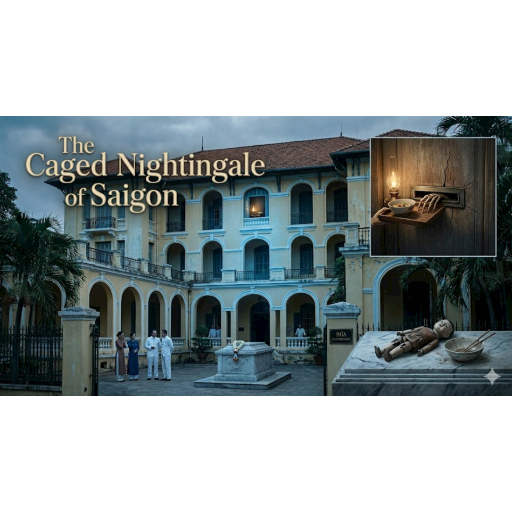
The building in this picture is real and can still be visited today as the Ho Chi Minh City Museum of Fine Arts. This story is inspired by the haunting urban legend of Uncle Hỏa’s daughter that has been passed down through generations in Vietnam since the 1930s.
To understand the legend, one must first grasp the astronomical scale of the wealth that built this house. In the 1930s, Saigon was the 'Pearl of the Orient,' a bustling hub of French colonial commerce, and at its economic center stood Hứa Bổn Hòa, universally known as 'Uncle Hỏa.' He was a real estate titan, a magnate whose holdings were so vast that a common saying declared: "Uncle Hỏa owns half of Saigon."
His primary residence, the current Fine Arts Museum, was a monument to this immense power. It was a labyrinth of opulent reception halls, marble staircases, and hidden courtyards, designed to house his sprawling dynasty. The wealth was not just displayed; it was a form of protection. But money, as Uncle Hỏa was to learn, provides no immunity against fate or fear.
The Hứa family was populous, but the story narrows its focus to the patriarch's most cherished possession: his daughter. Described by all accounts as stunningly beautiful, she was the family's 'nightingale,'
poised to marry into another wealthy dynasty and solidify the Hứa empire. Then, abruptly, at the peak of her social radiance, she simply disappeared.
There were no announcements of illness, no reports of travel. The social calls ceased; the invitations were politely, then tersely, declined. A wall of silence, built with the family’s limitless wealth, was erected around the mansion. The public was told nothing, which in Saigon meant that everyone believed something truly terrible had happened.
The standard legend, whispered in the markets and echoed by the local staff, states that the daughter contracted leprosy. In the 1930s, this was not just a disease; it was a curse. Leprosy carried an absolute social stigma. It was believed to be highly contagious, incurable, and a mark of divine disfavor upon the entire bloodline. To acknowledge its presence in the family was to destroy their reputation and their empire.
Uncle Hỏa chose reputation over humanity.
To maintain the illusion of purity, the family engineered a massive
deception. They announced that their beloved daughter had succumbed to a sudden, mysterious, and highly localized illness. They staged a public funeral of immense scale. A closed, heavy mahogany coffin, supposedly holding her remains, was processed through the streets of Saigon, attended by paid mourners and grieving family members. The entire city watched the charade, while the real body lay in a living tomb.
In reality, the 'dead' girl was very much alive, imprisoned within a small, private apartment on the mansion's topmost floor. The doors were double-locked from the outside, the windows barred and covered, reducing her world to a few square meters of isolated, sterile captivity. The girl, who once had the world at her feet, was now reduced to a phantom in her own home.
Her only connection to the outside world, and her own family, was a small, unassuming slot built into the bottom of her heavy wooden door. This was not for conversation. This was for disposal. Her meals were passed through this opening, three times a day, without a word spoken
by the servants who delivered them. They were too terrified to make eye contact, convinced that even looking at her doorway might invite the curse.
She lived in this isolation for months, perhaps years. We can only imagine the psychological torture: the sound of her family’s laughter echoing in the courtyards below, the music of their parties, the entire world carrying on while she faded into the shadows.
The date of her actual death is unknown, but the supernatural occurrences began almost immediately. Housekeepers, cleaning the corridors outside her sealed room, claimed to hear distinct, muffled sobbing coming from inside. It was a weeping so profound and despairing that it was identifiable only as her. Shadows, too distinct to be natural, began gliding through the mansion’s maze of hallways, always moving toward the top floor.
But the most terrifying incidents were physical manifestations of her presence. The legend relates that family staff would enter
her sealed room (which was now used for storage) and find partially eaten bowls of food—the same specific rice dishes she was served in life—sitting precisely where she used to take her meals. Even more heartbreaking was the phenomenon of her childhood toys: a specific porcelain doll or a hand-carved spinning top would inexplicably appear on top of her actual coffin, which was stored within the mansion compound. The coffin was sealed, yet the items were placed upon it as if by a playful, unseen hand. These were not ghosts of fear; they were ghosts of a life stolen.
The Hứa family mansion still stands, and since its conversion into the Ho Chi Minh City Museum of Fine Arts, it has become a central location for dark tourism. Its beautiful structure attracts artists, but its hidden history attracts ghost hunters.
Visitors and museum staff frequently report eerie sensations, especially in the vicinity of the upper floors and the specific room where she was alleged to have been held. They describe sudden, localized cold spots, the
overwhelming feeling of being watched, and occasional, inexplicable whispers that cut through the silence of the museum halls. The room of her isolation remains a frequent highlight of ghost tours, its dark door a permanent threshold between the opulence below and the tragedy above. The legend of the Hứa ghost endures because it is not just a scary story; it is a profound lesson about the terrifying price some are willing to pay for reputation, and the enduring nature of a caged soul's sorrow.
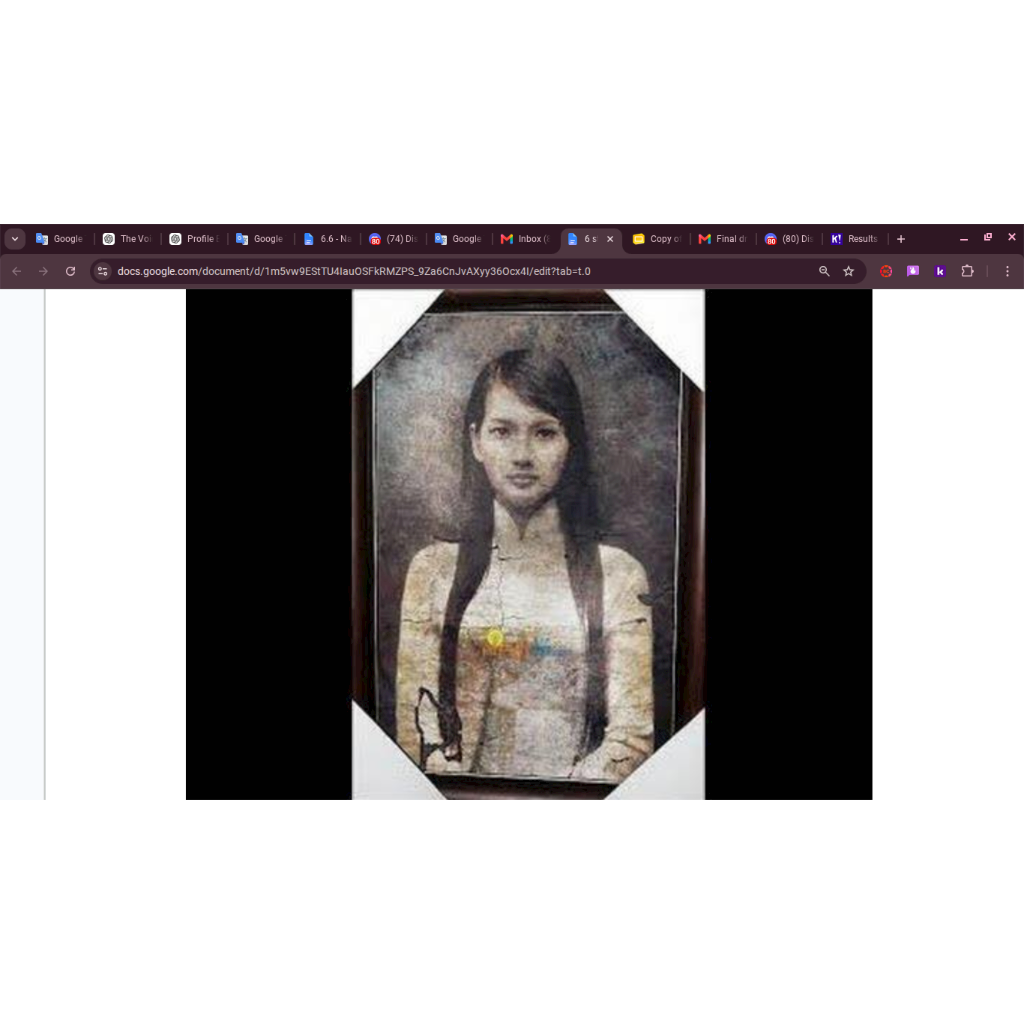
Uncle Hỏa’s daughter
Uncle Hỏa
To look at a map of the modern world is to see a collection of nations that have often traded their history for development. Yet, isolated in the Pacific, Japan stands as a mesmerizing contradiction. It is a place where ultra-modern skyscrapers cast shadows over ancient wooden shrines, and where bullet trains streak past snow-capped peaks unchanged by time. This unique archipelago seamlessly bridges the gap between tomorrow’s technology and yesterday’s traditions. While global media and animation often serve as the world’s entry point to Japanese culture, the physical reality of the country reveals a deep, structural harmony between the hyper–modern and the deeply ancient.
Central to Japan’s profile is its sacred relationship with geography and nature, perfectly encapsulated by its most iconic symbol. Rising majestically to an elevation of 3,776 meters, Mount Fuji– or Fujisan–is a towering stratovolcano that has acted as a spiritual anchor for centuries. In the traditional Shinto religion, natural features are revered as the homes of spirits, or kami, and Fuji is considered a sacred entity. This reverence is permanently etched into Japanese art history, most notably
in Katsushika Hokusai’s famous ukiyo-e woodblock prints, Thirty-Six Views of Mount Fuji. In reality, the visual landscape of Japan mirrors this artistic legacy; the sheer, rugged scale of the volcanic peak, contrasted against the delicate pink of spring cherry blossoms (sakura), illustrates a cultural identity deeply rooted in the fleeting beauty of nature.
Beyond its topography, Japan’s global profile is defined by its culinary arts, which are governed by strict philosophical traditions. While Japanese cuisine has spread globally, true authenticity remains anchored to its birthplace, where food is treated as an art form. The traditional approach to sushi relies on absolute simplicity, fresh seasonal ingredients, and precision craftsmanship. This dedication is driven by the philosophy of shokunin—the social and spiritual obligation of a craftsman to master their trade through a lifetime of relentless repetition and refinement. Furthermore, the dining experience is elevated by omotenashi, Japan’s deep-rooted culture of anticipatory hospitality, where the host dedicates
absolute care to the comfort of the guest. Through these practices, a simple meal is transformed into a profound demonstration of respect and cultural preservation.
This meticulous attention to detail is woven directly into the fabric of everyday Japanese life, bridging the gap between historical aesthetics and modern urban planning. The poetic, orderly scenes often popularized in media are grounded in genuine cultural practices. The immaculate, silent train stations operate on a philosophy of collective responsibility, while the quiet neighborhood alleyways, lit by traditional paper lanterns, showcase a blend of historical architecture and modern community living. In historical capitals like Kyoto, the peaceful moss gardens of ancient temples are intentionally designed using wabi-sabi—the aesthetic appreciation of transience and imperfection. Japan continually demonstrates an ability to find art in the mundane, turning a
simple daily commute or a rainy afternoon into a visually profound experience.
Ultimately, Japan’s global significance lies in its role as a living blueprint for how tradition, culture, and innovation can coexist. It offers the neon-drenched, high-tech excitement of Tokyo’s robotics and tech districts alongside the tranquil, meditative silence of a bamboo forest. Japan proves that a nation can sprint into the future of technological advancement while still fiercely respecting its history, its ancestors, and the natural world. It remains a uniquely distinct global treasure—a place where the past is never forgotten, because it is actively used to shape the future.
There is a distinct alchemy to a September evening in the Mekong Delta, a precise moment when the oppressive heat of the tropical day collapses into a cool, heavy twilight. Growing up in An Giang Province, this seasonal shift heralded more than just a break in the weather; it signaled the arrival of Tết Trung Thu, the Mid-Autumn Festival. For a boy as quiet and painfully introverted as I was, the festival was a sanctuary. In a world that often demanded I speak louder and move faster, the festival was a celebration of shadows, soft candlelight, and stories whispered under the protective gaze of a swollen, golden moon.
My childhood memories of those nights are inextricably tied to the earthy, fertile scent of the Hau River and the erratic flickering of homemade lanterns. In the weeks leading up to the full moon, the quiet rural paths of our village would transform. Children who normally spent their afternoons splashing in the canals or sneakily climbing the neighbors' guava trees would suddenly gather on porches, hunched over strips of bamboo and vibrant sheets of red and yellow cellophane. Because I was too timid to join the loud, competitive groups of boys
constructing massive, elaborate lanterns shaped like dragons or military ships, I preferred the solace of our back porch. There, with my hands stained by glue and ink, I would fashion a simple star-lantern. It wasn't grand, but when a small candle was wedged into its center, the red cellophane cast a warm, crimson safety zone around my feet.
To a child in An Giang, the moon was not a cold, barren rock floating in the vacuum of space. It was a crowded, living theater. As the full moon rose above the jagged silhouettes of the distant Bảy Núi mountains, painting the winding canals in ripples of liquid silver, my mother would gather us on the porch. She would cut open a rich, dense mooncake—the savory smell of salted egg yolk and lotus seed paste mingling with the humid night air—and point a slender finger toward the sky.
"Look closely," she would whisper, her voice carrying the rhythmic cadence of generations of Delta storytellers. "Do you see the dark shadow beneath the ancient banyan tree? That is Cuội. He is still waiting."
For me, the ancient legend of Cuội was far more than a fairy tale; it was a mirror of my own internal world. The story, as old as the soil beneath our
feet, spoke of a poor, kind-hearted woodcutter named Cuội who discovered a magical banyan tree capable of healing the sick and restoring life. The only rule was that the tree had to be cared for with pure water; it could never be dirtied. But one tragic evening, through a terrible misunderstanding, the tree’s roots were desecrated. Infuriated and wounded, the magical banyan began to rip itself from the earth, floating upward toward the heavens.
Desperate to save the source of his miracles, Cuội lunged forward, grabbing the exposed roots. But the tree was too powerful. It carried him higher and higher, past the clouds, past the reach of human voices, until it firmly rooted itself on the barren surface of the moon. There Cuội remained, an eternal exile, sitting beneath the silver leaves of his tree, looking down at the earth, forever homesick, forever longing for the world he had left behind.
As a shy boy who often felt like he was observing life from a distant, untouchable orbit, I felt a deep, unspoken kinship with Cuội. On those festive nights, while the other children ran through the dirt paths
screaming with joy, banging tin cans and performing chaotic lion dances, I would sit quietly on the edge of the canal. I would look up at the dark silhouette on the lunar surface and imagine Cuội looking back down at me. We were two quiet souls navigating our own isolation.
But the legend was not entirely sorrowful, for the moon also belonged to Chị Hằng, the beautiful and compassionate Moon Goddess. While Cuội represented the ache of longing, Chị Hằng represented ultimate comfort. She was the guardian of children's dreams, the entity who turned the night into a playground of light so that even the most timid children could find their way in the dark. The festival was a bridge between her celestial palace and our muddy riverbanks. When we lit our lanterns, we weren't just illuminating the paths; we were sending signals to the sky, letting Chị Hằng and Cuội know that they were not forgotten.
The climax of the night was always the lantern procession. Even for someone as reserved as me, the sheer magic of the spectacle was irresistible. Hundreds of children would line up, their individual stars, fish, and butterflies coalescing into a long, undulating river of fireflies snaking
through the dark An Giang countryside. The reflection of the lanterns danced on the black surface of the canals, blurring the line between the earth and the heavens. For a few hours, the village was completely untethered from the hardships of rural life. The economic anxieties of our parents, the poor harvests, the uncertainties of the future—all of it dissolved under the benevolent, golden glow of the mid-autumn sky.
In 2019, that luminous world abruptly collapsed into memory. When my family immigrated across the ocean, we left behind the canals, the banyan trees, and the shared communal warmth of the Delta.
My first Mid-Autumn Festival in the West was an exercise in profound disorientation. There were no handmade bamboo lanterns, no synchronized processions through dirt lanes, and no smell of river silt baking under a tropical twilight. Instead, I stood on a concrete suburban sidewalk, surrounded by manicured lawns and the hum of distant highway traffic. The air was crisp with the onset of autumn, lacking the heavy, nurturing humidity of my birthplace. I felt entirely untethered, a stranger in a landscape that didn't know how to celebrate the moon.
I remember looking up through the gaps of unfamiliar pine trees, searching for the familiar golden orb. When I found it, my heart ached with a sudden, violent wave of nostalgia. It was the exact same moon that was currently shining down on An Giang, but from this angle, it felt terribly cold.
In that moment of intense homesickness, the legend of Cuội returned to me, hitting me not as a childhood story, but as a lived reality. I realized that by leaving Vietnam, I had become Cuội. I had been uprooted from my native soil, carried across a vast, unimaginable distance, and deposited on a strange, foreign shore. Like the mythical woodcutter, I was now the one sitting beneath an unfamiliar tree, looking across a great void, desperately longing for a home that felt completely out of reach. I understood his silence now. I understood the quiet weight of looking at a world you love from a place where your voice cannot be heard.
Yet, as the years have passed and I have grown into the 11th grade, the story has evolved within me once again. I have come to realize that the moon is not a symbol of separation, but the ultimate connective tissue of
my life. It is the only physical object that remains completely unchanged from my childhood. The same light that illuminates my textbooks tonight is the light that used to guide my footsteps alongside Hao on our way home from Cay Dau School. It is the same light that reflects off the white plaster cast he wore, and the same light that glints off the yellow colonial walls of the Hứa family mansion in Saigon.
Now, when Tết Trung Thu arrives, I no longer view it with bitterness. I buy a manufactured mooncake from a local Asian grocery store, step out into my backyard, and light a small, simple candle. As the flame catches, casting its familiar red glow against the suburban grass, I look up at the dark shadows on the moon’s surface.
I know that thousands of miles away, across the international date line, the waters of the Hau River are rising with the autumn tides, reflecting that very same light. The shy boy from An Giang is older now, his world is much larger, and his responsibilities are different. But beneath the surface, the magic remains intact. The festival taught me that home is not just a geographic coordinate; it is a repository of stories, a collection of
lights kept alive in the quietest corners of the heart, waiting to be rekindled every time the autumn moon reaches its fullness.
- Full access to our public library
- Save favorite books
- Interact with authors
- < BEGINNING
- END >
-
DOWNLOAD
-
LIKE
-
COMMENT()
-
SHARE
-
SAVE
-
BUY THIS BOOK
(from $11.79+) -
BUY THIS BOOK
(from $11.79+) - DOWNLOAD
- LIKE
- COMMENT ()
- SHARE
- SAVE
- Report
-
BUY
-
LIKE
-
COMMENT()
-
SHARE
- Excessive Violence
- Harassment
- Offensive Pictures
- Spelling & Grammar Errors
- Unfinished
- Other Problem
"Stories By Danh"






COMMENTS