




Lets do my science homework!
What are the building blocks of life?
Macromolecule serves as building blocks to make large molecules!
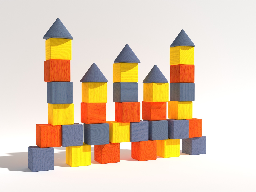
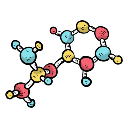
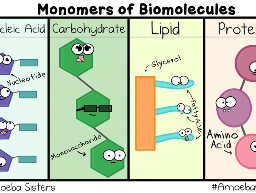
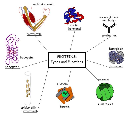
These are different types of macromolecules!

1. Carbohydrate!
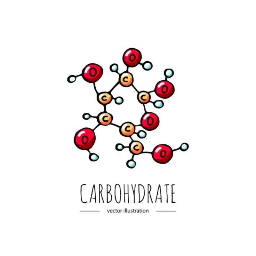
. Carbohydrates are made up of three elements: carbon, hydrogen, and oxygen.
They break down into glucose (which is basically sugar!) which is like gasoline for your body's engine!
Carbohydrates is how our body gets energy! It's structures are made of carbon, hydrogen, and oxygen! Known as Cₙ(H₂O)ₙ!
2. Protein!
Think of proteins as the "construction crew" that keeps everything running and growing in your body!
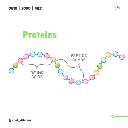
If you fall down and scrape your knee, your body uses proteins to build new skin and fix the damage.
3. Lipid!
Think of lipids (basically fat) as your body's "emergency pantry". When you run out of quick energy from carbs, your body taps into its lipid "battery" for long lasting power.
It also acts as a winter coat! Helps maintain your body temp, especially when its freezing outside.
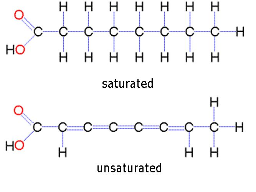
Lipids are mainly made of carbon, hydrogen, and oxygen. There is a small part at the front called glycerol. It acts like the anchor that holds everything together. Attached to that, are 3 long chains called fatty acids.
4. Nucleic acids
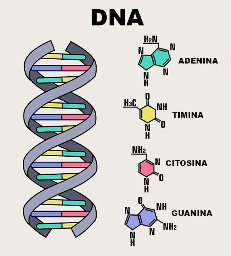
Nucleic acids are the blueprints. They tell your body exactly how to build and operate "you". They hold a secret code (called DNA). This code has recipes for everything, like what color your eyes should be or how tall you'll grow!
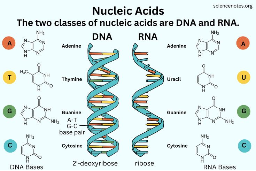
A nucleic acid's structure is like a long, twisted ladder. It is built from three specific parts that repeat over and over again.
Deoxyribonucleic acid simply means DNA, it is locked inside the nucleus of the cell to keep the master instructions safe!
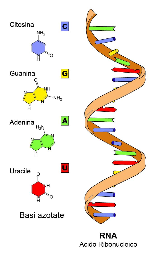
Ribose nucleic acid, normally known as RNA, is the messenger that takes those instructions out to the rest of the cell so it knows how to build proteins.
DNA shape is a twisted ladder held together by hydrogen bonds between bases. RNA is usually just one single chain.
Now that I know what micro- molecules are. What are monomers?
Monomers!
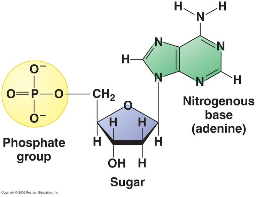
Now, think of monomers as a single building block. On its own, it is a complete, small molecule, but it gets real when you connect many of them together!
It is usually to create large macromolecules when bonded together. They also look different depending on the type of macromolecule they build. Many amino acids (monomers) link together via peptide bonds to form a protein.
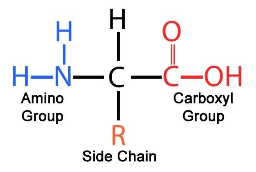
Amino acids are a specific type of building block used exclusively to construct proteins. There are 20 common amino acids used to build the different proteins in your body! Think of their structure as a hub with four different arms branching out. The central carbon, amino group, carboxyl group, r-group, hydrogen, is the structure of every amino.
To make a protein, the carboxyl group of one amino acid joins with the amino group of another
Fatty Acids
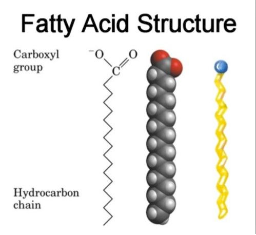
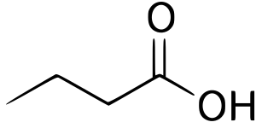
A fatty acid is a special kind of carboxylic acid. Think of it as a long chain made mostly of carbon and hydrogen atoms. This long chain is called a hydrocarbon tail. At one end, it has a special group called a carboxyl group. Scientists study fatty acids in organic chemistry and biochemistry.
Fatty acids are very important for your body. They are a big source of energy or "fuel." When your body uses them, they create a lot of ATP. ATP is like the tiny power packets that make your cells work.
Glucose
Glucose is a simple carbohydrate, also known as a type of sugar. It's super important because cells in every living thing use it to get energy. This process of turning glucose into energy is called cellular respiration, and it happens inside the cells of an organism.
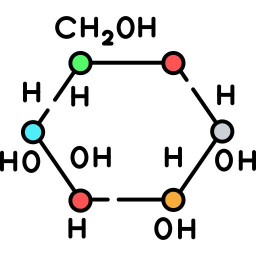
Glucose has a chemical formula of CHO. This means each glucose molecule is made of 6 carbon atoms, 12 hydrogen atoms, and 6 oxygen atoms all bonded together.
Nucleotides
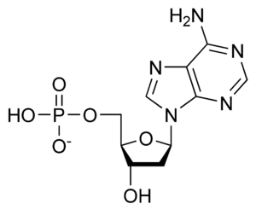
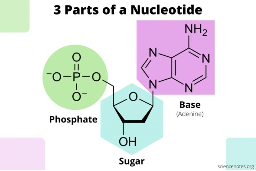
A nucleotide is a very important tiny molecule. Think of nucleotides as the basic building blocks for two super important molecules in all living things: RNA and DNA. These two molecules, RNA and DNA, carry all the instructions that make you, well, YOU! They are found in every living creature on Earth.
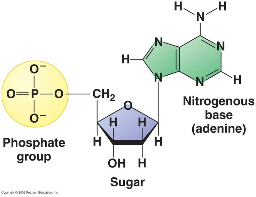
Each nucleotide is made of three main parts. First, there's a nucleobase, which is also called a nitrogenous base. Second, there's a five-carbon sugar. This sugar can be either ribose or deoxyribose. Third, there's at least one phosphate group.
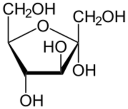
Monosaccharides
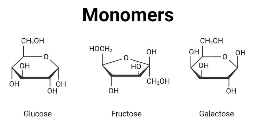
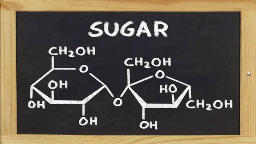
Monosaccharides are the simplest kind of sugar. Think of them as the basic building blocks for all other carbohydrates. They are usually clear, dissolve easily in water, and often look like tiny crystals. Many monosaccharides also have a sweet taste!
Most monosaccharides can be represented by the general formula (CH2O)n, although not all compounds with this formula are monosaccharides.

Okay, now that I know that the monomers and what it does. What are chemical bonds?
Chemical bonds
Chemical Bonds are like invisible glue that holds atoms together. Once atoms are bonded, they usually stay connected. It takes a lot of energy to break these connections apart.
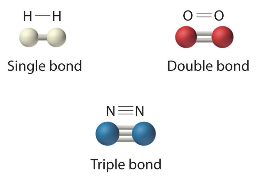
Strong chemical bonds happen when atoms share or swap tiny particles called electrons. You can find chemical bonds holding atoms together in many things. They are in molecules, crystals, metals, and even in the air we breathe (like oxygen gas).
- Full access to our public library
- Save favorite books
- Interact with authors
- < BEGINNING
- END >
-
DOWNLOAD
-
LIKE
-
COMMENT()
-
SHARE
-
SAVE
-
BUY THIS BOOK
(from $5.59+) -
BUY THIS BOOK
(from $5.59+) - DOWNLOAD
- LIKE
- COMMENT ()
- SHARE
- SAVE
- Report
-
BUY
-
LIKE
-
COMMENT()
-
SHARE
- Excessive Violence
- Harassment
- Offensive Pictures
- Spelling & Grammar Errors
- Unfinished
- Other Problem






COMMENTS
Click 'X' to report any negative comments. Thanks!