To my Mom, Dad, and my little brother. My dream is to become a meteorologist as an adult, even if it's a part-time job along with my full-time job. I spent a while making this book as a random wannabe storm chaser 12-year-old. I hope you learned something new!

Tornadoes are extraordinary for countless reasons like how they can harmlessly pass through empty fields, or destroy an entire town in minutes, and that's why meteorologists (scientists who study weather) study them so they can improve tornado warning times to save as many lives as possible. But you might be wondering, "How do they do that?" Well, the answer to that is that they use three things: Doppler radar, armored pods, and drones. Doppler radar is a large, heavy-duty flatbed truck equipped with a big, mobile
, circular radar attached on the back to measure wind speed, rotation, and direction of the tornado in high-
-resolution.
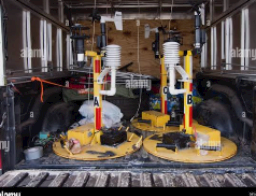
Armored pods
are very rugged, low-profile
instruments designed to sit
directly on the ground in
the path of the tornado
to measure its extreme, near-
-surface winds and atmospheric changes in the tornado. Because traditional weather stations are instantly ripped up or completely blown-
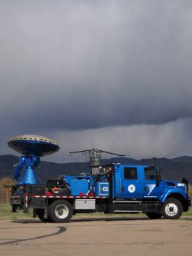
Doppler
radar
-away by severe storms, these pods are engineered to take a direct hit.
Storm drones are rugged, carbon-fiber UAVs flown into severe thunderstorms to scan dangerous atmospheric blind spots. By streaming
live temperature and wind data from directly inside the storm's engine, they help predict exactly when a tornado will strike.

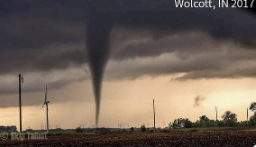
Tornadoes also have 6 different strength ratings including EF0-EF5, EF5 being the strongest. Here is what each rating of tornado looks like, the wind speed of the different levels, and the damage. (EF scale is based on damage)
EF0: shingles off roof and damages gutters.
65-85 mph wind speeds
- Wolcott, IN 2017 EF0 May 20, 2017
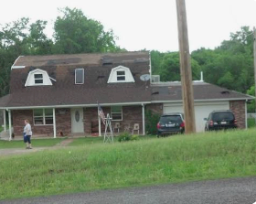
EF0 house damage
EF1: partially rips roofs and collapses garages
86-110 mph wind speeds
-Campo, Colorado May 31, 2010 EF1
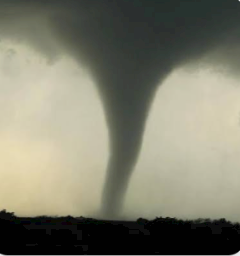
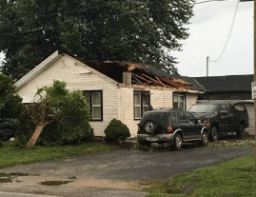
EF1 house damage
EF2: Completely rips off roofs and destroys mobile homes
111-135 mph wind speeds
-Carbon-Morton Mills, Iowa May 21, 2024 EF2
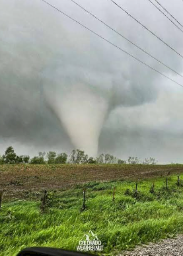
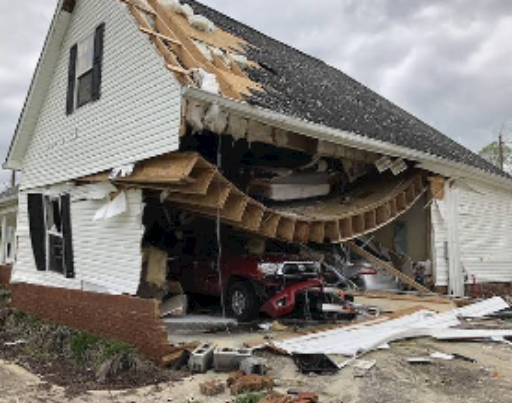
EF2 house damage
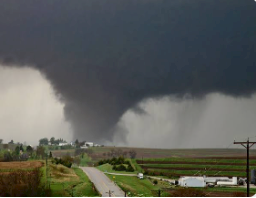
EF3: Rips off entire upper parts of houses and uproots larger trees
136-165 mph wind speeds
-Lincoln, Nebraska, April 26, 2024 EF3
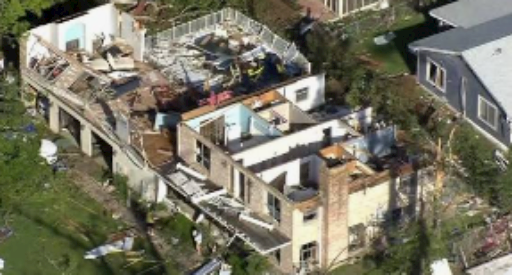
EF3 house damage
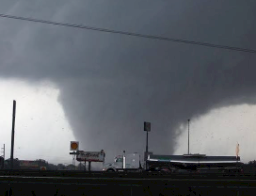
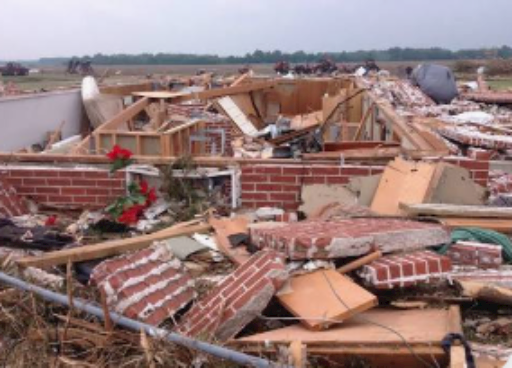
EF4: Can level sturdy houses and turns cars into missiles
166-200 mph wind speeds
- Tuscaloosa-Birmingham, April 27, 2011 EF4
EF4 house damage
EF5: Cleanly levels very well-built homes into small rubble and turns cars and trucks into unrecognizable balls of metal
201+ mph wind speeds
- Bridge Creek-Moore, May
3, 1999 EF5
EF5 house damage
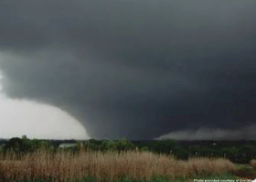
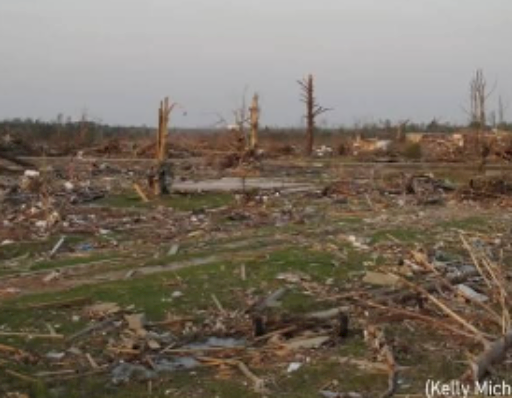
Tornadoes form when two totally different air masses collide, like a real-world scientific battle. First, warm, sticky air near the ground crashes into cool, dry air above. This mismatch creates massive atmospheric instability, forcing the warm air to shoot upward like a rocket. Next, strong winds blowing at different speeds and directions create an invisible, horizontal spinning tube of air. The powerful rising air currents tilt this spinning air completely vertical, trapping it inside the storm. Finally, a heavy downpour of cool air pushes this violent, rotating funnel down until it touches earth.
Ten most violent tornadoes in the past 100 years.
10- Smithville, Mississippi, April 27, 2011
~260 mph wind speeds
9- Jarrell, Texas, May 27, 1997
~260 mph wind speeds
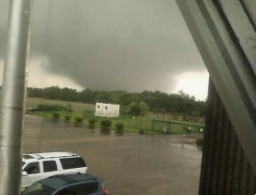
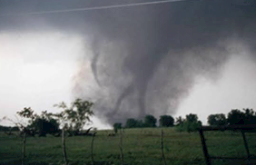
8- Spencer, South Dakota, May 30, 1998
264 mph wind speeds
7- Red Rock, Oklahoma, April 26, 1991
286 mph wind speeds
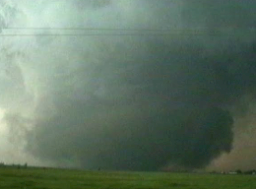
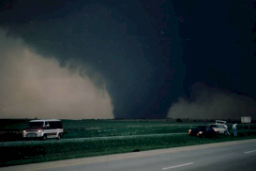
6- El Reno-Piedmont Oklahoma, May 24, 2011
295 mph wind speeds
5- Mulhall, Oklahoma, May 3, 1999
299 mph wind speeds
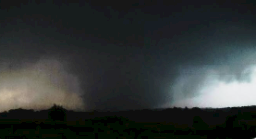
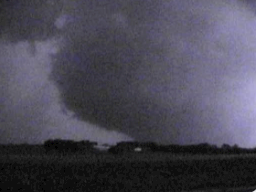
4- Xenia, Ohio, April 3, 1999
305 mph wind speeds
3- El Reno, Oklahoma, May 31, 2013
313 mph wind speeds
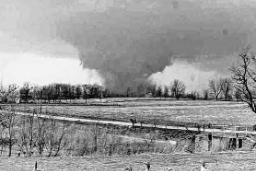
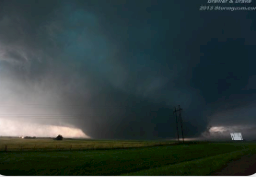
2- Greenfield, Iowa, May 21, 2024
318 mph wind speeds
1- Bridge Creek-Moore, May 3, 1999
321 mph wind speeds
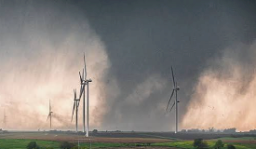
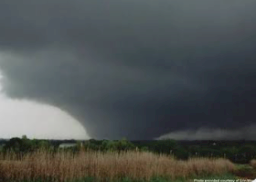
Did you know almost all EF4 to EF5 tornadoes have something called subvortices (like in Jarrell 1997) which are like small vacuums inside a "wedge tornado" that are small but have extreme winds that basically help clean out the debris that the main tornado destroyed? Here's a pretty cool example.
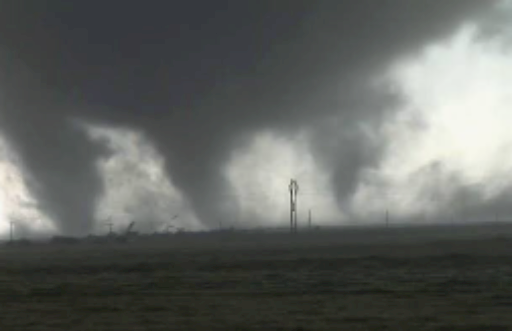
FACTS ABOUT FAMOUS TORNADOES
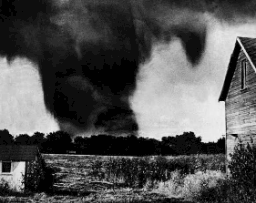
The Tri-State tornado, March 18, 1925 F5
-695 lives lost (RIP)
~2500 injured
This massive and unstoppable 1925 storm traveled over two hundred miles, completely wiping out hundreds of homes and taking nearly seven hundred lives. Making it America's deadliest twister ever recorded, it changed weather history forever.
Greensburg tornado, May 4, 2007 EF5
-11 lives lost (RIP)
~65 injured
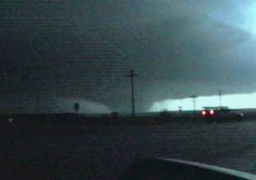
In May 2007, a massive EF5 nearly wiped the small town of Greensburg, Kansas off the map. Packing devastating 205 mph wind speeds, the 1.7-mile-wide monster destroyed 95 percent of the town. It was a nocturnal tornado as well, making it even more dangerous because it could be seen only by lightning.
Joplin, Missouri, May 22, 2011 EF5
-158 lives lost (RIP)
~1000 injured
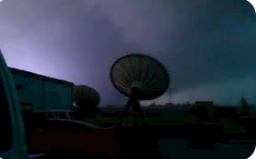
In May 2011, a catastrophic EF5 slammed into Joplin, Missouri, packing winds over 200 mph. The multi-vortex monster killed 158 people, injured over 1000 others, and directly hit a hospital. It shattered windows, ripped off the roof, and forced a heroic evacuation, becoming the single most costly tornado in American history.
- Full access to our public library
- Save favorite books
- Interact with authors
- < BEGINNING
- END >
-
DOWNLOAD
-
LIKE
-
COMMENT()
-
SHARE
-
SAVE
-
BUY THIS BOOK
(from $6.19+) -
BUY THIS BOOK
(from $6.19+) - DOWNLOAD
- LIKE
- COMMENT ()
- SHARE
- SAVE
- Report
-
BUY
-
LIKE
-
COMMENT()
-
SHARE
- Excessive Violence
- Harassment
- Offensive Pictures
- Spelling & Grammar Errors
- Unfinished
- Other Problem






COMMENTS
Click 'X' to report any negative comments. Thanks!