

I'd like to dedicate this to my beautiful daughters.


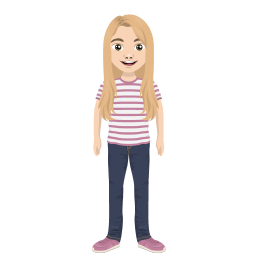
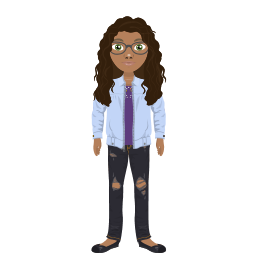
Mia was a bright and creative twelve-year-old who loved drawing, reading mystery books, and spending time with her family. She noticed things that other people sometimes missed. She could remember small details and was always curious about what people were thinking.
But Mia had one big problem.

Trust was difficult for her.
Sometimes, Mia worried that people were talking about her when they were whispering. If her friends laughed while looking in her direction, Mia immediately wondered if they were laughing at her. If someone forgot to invite her somewhere, she thought they might have left her out on purpose.
One morning at school, Mia walked into her classroom and noticed her two best friends, Lily and Emma, whispering together.


Mia stopped at the door.
“They're talking about me,” she thought.


When Lily looked up and smiled, Mia quickly looked away.
At lunch, Lily asked, “Mia, do you want to sit with us?”
Mia crossed her arms.
“Were you talking about me this morning?”
Lily looked surprised. “No! We were planning your birthday surprise.”
Mia didn't believe her right away.
“You promise?”
“I promise,” Lily said.
Mia had been experiencing these kinds of thoughts for a long time. Her counselor explained that Mia showed symptoms of Paranoid Personality Disorder (PPD), a mental health condition that can cause a person to have a long-lasting pattern of distrust and suspicion toward other people.
People with PPD may believe that others are trying to hurt, trick, or take advantage of them, even when there is little or no evidence that this is happening. They may have difficulty trusting others and may interpret harmless actions as threatening or insulting.
Mia learned that having these thoughts did not make her a bad person.
It simply meant that her brain sometimes made it difficult for her to feel safe around other people.
Her counselor taught her to stop and ask herself questions when she became suspicious.
“What evidence do I have?”
“Could there be another explanation?”
“Am I assuming what someone is thinking?”
The next day, Mia's teacher, Mrs. Parker, asked her to stay after class.
Mia immediately became nervous.
Did I do something wrong? she wondered.
Mrs. Parker smiled.
“I wanted to tell you how much I liked your drawing today.”
Mia felt embarrassed.
For a moment, she had assumed the worst.
Mia took a deep breath and remembered what her counselor had taught her.
Maybe not every situation was a mystery that needed to be solved.
Maybe sometimes people really did mean what they said.
Over time, Mia practiced trusting the people who cared about her. She learned to talk about her worries instead of immediately believing every suspicious thought.
Trust didn't become easy overnight.
But Mia learned something important:
A thought is not always a fact.
She still had difficult days, but now she knew she didn't have to face them alone.
And little by little, Mia began solving the biggest mystery of all—
learning how to trust.
- Full access to our public library
- Save favorite books
- Interact with authors

- < BEGINNING
- END >
-
DOWNLOAD
-
LIKE
-
COMMENT()
-
SHARE
-
SAVE
-
BUY THIS BOOK
(from $3.99+) -
BUY THIS BOOK
(from $3.99+) - DOWNLOAD
- LIKE
- COMMENT ()
- SHARE
- SAVE
- Report
-
BUY
-
LIKE
-
COMMENT()
-
SHARE
- Excessive Violence
- Harassment
- Offensive Pictures
- Spelling & Grammar Errors
- Unfinished
- Other Problem

COMMENTS
Click 'X' to report any negative comments. Thanks!