Meet Judge Hoot ........ page 2
What is a law, anyway? ........ page 3
How a bill becomes a law (7 steps) ........ page 4-7
Federal, state & local laws ........ page 8-11
Letter vs. spirit of the law ........ page 12-14
The hidden lawmakers ........ page 15-17
How courts make laws ........ page 18-21
Judge Hoot's quiz & glossary ........ page 22

Table of Contents

Meet Judge Hoot!
Hoo-hoo! I'm Judge Hoot. Owls are wise, and I've spent years learning how rules are made.
Come with me and I'll show you:
• how an idea becomes a LAW
• who the secret rule-makers are
• why judges matter
Let's go!
Hoot's Fun Fact: A "bill" is just a law that isn't finished yet!


What is a law, anyway?
A law is a rule that everyone in a place has to follow.
Laws keep us safe, keep things fair, and help people get along.
Your school has rules. Your town has rules. Your state and your whole country have rules too. Those are called LAWS.
Hoot's Fun Fact: Laws can be as big as "no stealing" or as small as "no parking here on Tuesdays"!


How a Bill Becomes a Law
Step 1 — The Idea. A problem needs fixing! Anyone can have the idea (kids, parents, teachers), but only a member of Congress can turn it into a bill.
Step 2 — The Bill is Introduced. A Senator or Representative writes the idea down as a BILL and drops it into a special box called the hopper.
Hoot's Fun Fact: Thousands of bills are introduced in Congress each year, but only a small number become laws.



Steps 3 and 4
Step 3 — Committee Time. A small group of lawmakers called a committee studies the bill, holds hearings, and can change it. Many bills "die" here!
Step 4 — Debate and Vote. The whole House or Senate talks about the bill, then votes. It needs more than half of the votes to pass.
Hoot's Fun Fact: The House of Representatives has 435 voting members. The Senate has 100, two from each state.



Steps 5 and 6
Step 5 — The Other Chamber. The bill goes to the other half of Congress (House → Senate, or Senate → House) and goes through Steps 3 and 4 all over again. Both must pass the exact same words.
Step 6 — The President. The President can SIGN it (it becomes a law) or VETO it (say NO).
Hoot's Fun Fact: The President has 10 days (not counting Sundays) to sign or veto a bill.



Step 7: It's a LAW!
Step 7 — It becomes a law (or Congress overrides).
If the President signs it, it's a LAW for the whole country!
If the President vetoes it, Congress can STILL make it a law if 2 out of every 3 members in BOTH the House and Senate vote yes. That's called overriding a veto.
All 7 steps: Idea → Bill → Committee → Debate & Vote → Other Chamber → President → LAW!
Hoot's Fun Fact: Overriding a veto is rare. It's hard to get two-thirds of Congress to agree!


Federal Laws (the whole USA)
Federal laws are made by Congress in Washington, D.C. They apply to all 50 states.
Example: COPPA, the Children's Online Privacy Protection Act. Websites and apps can't collect personal information from kids under 13 without a parent's permission.
That's why so many apps say "13 and up"!
Hoot's Fun Fact: Federal laws are collected in a giant set of books called the United States Code.
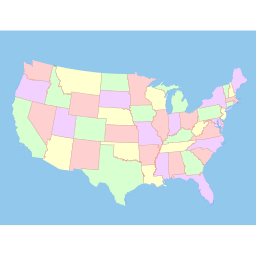


State Laws (New Jersey)
State laws are made by the NJ Legislature in Trenton and signed by the Governor. They apply only inside New Jersey.
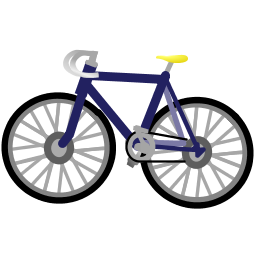
Example: NJ law says anyone under 17 must wear a helmet when riding a bike, skateboard, scooter, or roller skates (N.J.S.A. 39:4-10.1).
Cross into New York and the rules might be different!
Hoot's Fun Fact: New Jersey's State House in Trenton is one of the oldest state capitols still in use.

Local Laws (Woodbridge Township)
Local laws are made by the Woodbridge Township Council. A town law is called an ORDINANCE. It only counts inside Woodbridge.
Example: In 2025, Woodbridge introduced an ordinance that lets police give tickets to people who ride e-bikes or e-scooters on sidewalks or in town parking lots. Riders were zooming past walkers at over 20 mph!
Hoot's Fun Fact: Woodbridge Council meetings are open to the public. You can watch laws being made!
Which level affects kids MOST?
Local laws! Federal laws are the biggest, but kids spend almost all their time inside their own town.
Town ordinances decide:
• where you can ride your bike or scooter
• what time the parks close
• leash rules for your dog
• curfews for kids at night
Local laws touch your everyday life the most: walking to school, playing at the park, visiting the library!
Hoot's Fun Fact: Every Woodbridge ordinance is posted on the township's website. Ask a grown-up to show you!


Letter vs. Spirit of the Law
Letter of the law = exactly what the words say.
Spirit of the law = what the rule-writers were trying to do (the purpose).
Our example: A restaurant has a sign that says "NO DOGS ALLOWED."
Why? To keep the food clean and keep customers safe from bites and allergies.
Turn the page to see the same rule two different ways!
Hoot's Fun Fact: The famous version of this puzzle is "No vehicles in the park." Does a kid's bike count? A wheelchair?
Picture 1: Only the LETTER
A waiter blocks the door and turns away a blind girl with her trained guide dog. He followed the exact words, but the result is unfair, and the rule-writers never wanted that!


"The sign says NO DOGS. No exceptions!"
- Full access to our public library
- Save favorite books
- Interact with authors
You did it!
Now you know how an idea becomes a law, and who REALLY makes the rules. Keep asking questions, future lawmakers!
— Judge Hoot
- < BEGINNING
- END >
-
DOWNLOAD
-
LIKE
-
COMMENT()
-
SHARE
-
SAVE
-
BUY THIS BOOK
(from $4.19+) -
BUY THIS BOOK
(from $4.19+) - DOWNLOAD
- LIKE
- COMMENT ()
- SHARE
- SAVE
- Report
-
BUY
-
LIKE
-
COMMENT()
-
SHARE
- Excessive Violence
- Harassment
- Offensive Pictures
- Spelling & Grammar Errors
- Unfinished
- Other Problem






COMMENTS
Click 'X' to report any negative comments. Thanks!