 This book is dedicated to Coach Sloan.
This book was created and published on StoryJumper™
©2014 StoryJumper, Inc. All rights reserved.
Publish your own children's book:
www.storyjumper.com







 The American Revolution
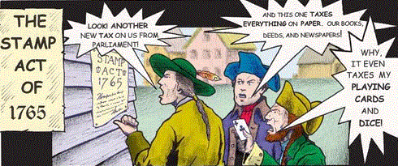
 Chapter One: The Stamp Act
(March 22, 1765) - Britain sets a tax that requires a
stamp on all public documents like newspapers or legal
documents. The colonists did not like having this tax
placed on them. This led to unrest in the colonies and
the Stamp Act Congress (October 1765).
 Chapter Three: The Boston Massacre
(March 5, 1770) - 5 Boston colonists are shot by
British troops. The local British officer of the watch,
Captain Thomas Preston, sent a number of soldiers
over to the Custom House to maintain order.
However, the sight of British soldiers armed with
bayonets just aggravated the crowd further. They
began to shout at the soldiers, daring them to fire.
Captain Preston then arrived and tried to get the
crowd to disperse. Unfortunately, an object thrown
from the crowd struck one of the soldiers, Private
Montgomery, and knocked him down. He fired into
the crowd. After a few seconds of stunned silence, a
number of other soldiers fired into the crowd as well.
Three colonists died immediately and two more died
later from wounds.
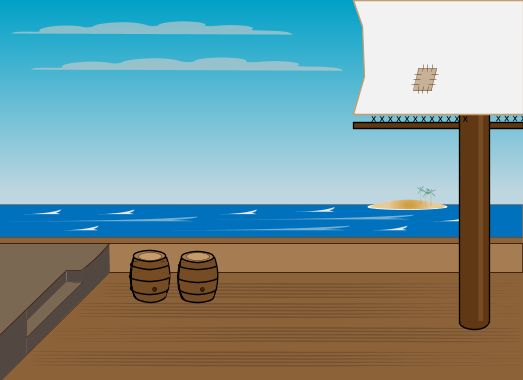


TEA
TEA
TEA
TEA
TEA
TEA
TEA
TEA
TEA
TEA
TEA
TEA
 Chapter Four: The Boston Tea Party
(Dec. 16, 1773) - Angry with a new tax on tea, some Boston colonists
calling themselves the Sons of Liberty board British ships and dump
crates of tea into the Boston Harbor.
At first, throwing tea into the ocean dressed as Mohawks might seem a
bit silly, but the colonists had their reasons. Tea was a favorite drink
among the British and the colonies. It also was a major source of
income to the East India Trading company. This was a British company
and the colonies were told they could only buy tea from this one
company. They were also told they had to pay high taxes on the tea.
This tax was called the Tea Act.
This didn't seem fair to the colonies as they were not represented in
British Parliament and didn't have a say on how the taxes should be
done. They refused to pay taxes on the tea and asked that the tea be
returned to England. When it wasn't, they decided to protest Britain's
unfair taxes by throwing the tea into the ocean.
 Chapter Four: The First Continental Congress
The First Continental Congress took place from September 5 through
October 26, 1774. Delegates from each colony, except Georgia, met at
Carpenter's Hall in Philadelphia, Pennsylvania. They discussed the
current situation with Britain including the Intolerable Acts, which the
British Parliament had imposed on Boston as punishment for the
Boston Tea Party.
The delegates took two major actions:
1. They sent a letter to King George III explaining the issues the
colonies had with the way they were being treated. They demanded
that the King stop the Intolerable Acts or they would boycott English
goods. However, the King chose to ignore them and the Americans
began the boycott.
2. They made a plan to meet again in May of 1775 if the British did not
meet their demands.
Members of the First Continental Congress included John Adams,
Patrick Henry, and George Washington. The President of the First
Congress was Peyton Randolph.
 The Revolutionary War Begains
 Chapter Five: Paul Revere's Ride.
In April of 1775 the British Army was stationed in Boston and rumor had it that they
were about to make a move on the leaders of the Sons of Liberty and other American
Patriots. The Sons of Liberty were watching the British closely so they could warn the
colonists if they started to attack.
Two main riders were to set out and warn Samuel Adams and John Hancock in
Lexington. Paul Revere would go across the Charles River to Charlestown and then to
Lexington. William Dawes would ride a longer, but different route. This way, hopefully
one of them would make it there safely to warn Adams and Hancock. There also were
other riders that Revere and Dawes would tell along the way. They would pass the
warning on to other locations.
There was one other warning system that Paul Revere put in place just in case none of
the riders made it. Robert Newman was to set lanterns in the steeple of the Old North
Church to alert the colonists in Charleston. He would put one lantern if the British were
coming by land and two if they were coming by sea. There is a famous phrase about
this event "one if by land, two if by sea".
It was during the night on April 18-19 in 1775 when the British began to move. They
were coming to Lexington by the Charles River, or "by sea". Dr. Joseph Warren told
Revere and Dawes the news and the riders set out.
Revere was the first to arrive in Lexington. Dawes made it about half an hour later.
There they warned John Hancock and Samuel Adams. They decided to ride toward
Concord to warn the militia there. However, they were detained by British soldiers.
They managed to escape and Paul Revere walked back to where John Hancock was
staying so he could help Hancock and his family to escape Lexington.
 Chapter Six: Battle of Lexington and Concord
(April 19, 1775)Battle of Lexington: The Battle of Lexington was a very small
fight. You could hardly call it a battle, but it's important because it's where the
Revolutionary War started. When the British arrived, there were only around 80
American militiamen in the town. They were led by Captain John Parker. They
were up against a much larger British force led by Major John Pitcairn. Neither
side expected to actually fight, but in the midst of the confusion a gunshot went
off forcing the British to attack. Some of the colonists were killed and the rest
fled.
The gunshot was the first shot of the American Revolution and the start of the
war. It was called the "shot heard around the world" by Ralph Waldo Emerson in
his poem Concord Hymn. No one is actually sure who fired the first shot or if it
was an American or British soldier.
Battle of Concord: After the Americans fled from Lexington, the British marched
to the city of Concord. When they first got to Concord, they met little resistance
and began to search the town for the militia's hidden stash of weapons and
munitions. The Americans had retreated to the outskirts of Concord and
observed the British from other side of the North Bridge. As the Americans
waited, more and more local militiamen arrived making their forces stronger and
stronger.
The Americans decided to cross the North Bridge back into Concord. They
defeated the British troops at the North Bridge, giving the Americans renewed
confidence. Soon the British commander, Colonel Francis Smith, realized that the
American militia resistance was rapidly growing and it was time to retreat.
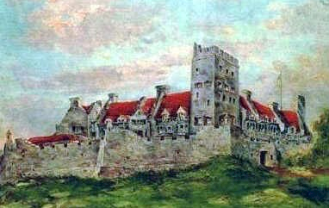
 Chapter Seven: Capture of Fort Ticonderoga
(May 10, 1775)- The Green Mountain Boys led
by Ethan Allen and Benedict Arnold capture
Fort Ticonderoga from the British.
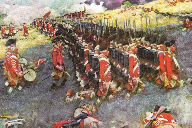
 Chapter Eight: Battle of Bunker Hill
(June 16, 1775)-Major battle where William Prescott told
the American troops "don't fire until you see the whites
of their eyes". The Battle of Bunker Hill took place on
June 17, 1775, just a few months after the start of the
American Revolutionary War. Boston was being besieged
by thousands of American militia. The British were trying
to keep control of the city and control its valuable sea
ports. The British decided to take two hills, Bunker and
Breeds, in order to gain a tactical advantage. The
American forces heard about it and went to defend the
hills.
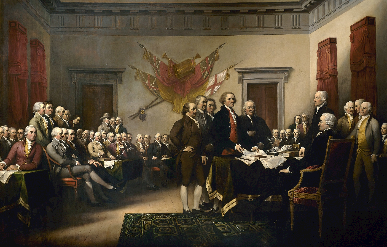
 Chapter Nine: The Declaration of Independence
(July 4, 1776) - The Continental Congress agrees to
Thomas Jefferson's Declaration of Independence.
You've previewed 12 of 19 pages.
To read more:
Click Sign Up (Free)- Full access to our public library
- Save favorite books
- Interact with authors


- < BEGINNING
- END >
-
DOWNLOAD
-
LIKE(2)
-
COMMENT()
-
SHARE
-
SAVE
-
BUY THIS BOOK
(from $3.79+) -
BUY THIS BOOK
(from $3.79+) - DOWNLOAD
- LIKE (2)
- COMMENT ()
- SHARE
- SAVE
- Report
-
BUY
-
LIKE(2)
-
COMMENT()
-
SHARE
- Excessive Violence
- Harassment
- Offensive Pictures
- Spelling & Grammar Errors
- Unfinished
- Other Problem





COMMENTS
Click 'X' to report any negative comments. Thanks!