 Portfolio task 2.4
Literacy Promoting Activities
This book was created and published on StoryJumper™
©2014 StoryJumper, Inc. All rights reserved.
Publish your own children's book:
www.storyjumper.com

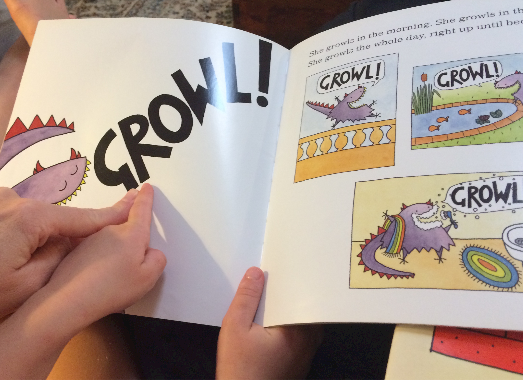
It is well accepted that reading aloud to children is
an effective strategy in developing language skills
and encouraging emergent literacy skills (Seely
Flint, Kitson, Lowe & Shaw, 2014). In the
classroom setting, the teacher chooses a book and
reads it aloud to the class. It is typical for the
book to be re-read throughout the week with the
teacher targeting different areas of language and
literacy development on each reading.
Justice and Sofka (2010) reported that teachers
need to include the following elements for effective
and engaging storybook reading:
1. Orientation of the book (e.g. looking at the
cover, turning pages)
2. Physical delivery (facial expressions, body
language, pitch, intonation)
3. Word learning (vocabulary development)
4. Language elicitation (asking open-ended
questions, predicting and problem solving)
5. Responsiveness (repeating and expanding the
utterances to encourage language development)
6. Behavior management
7. Extensions (follow-up activities)
The majority of teachers and adults who read to
young children would be aware of the importance
of most of the above elements and the role they
play in emergent literacy development. Certainly
as a Speech Pathologist these elements are
obvious. However during my further reading on
reading aloud, the work of Justice and Sofka
(2012) and Justice and Kaderavek (2002) on
children’s exposure to print during reading aloud
activities came as a surprise to me.

I was both shocked and horrified to realise that in
my career as a Speech Pathologist and as a mother
to young children, I had been so focused on
language stimulation, predicting, and problem
solving techniques, that I had inadvertently
ignored a technique that has such a profound
impact on emergent literacy skills. I had not
verbally or non-verbally highlighted the actual
print in the thousands of books I have read to
young children.
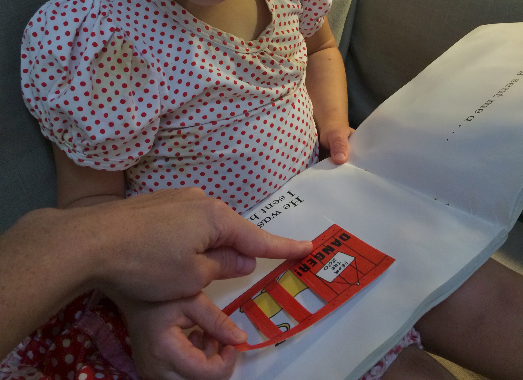

To create an awareness of print it is important for parents and
teachers to choose books with:
1. Few words per page
2. Large, bold narrative print that is easy for children to attend
to
3. Redundant print (e.g. certain words appear regularly)
4. Engaging illustrations
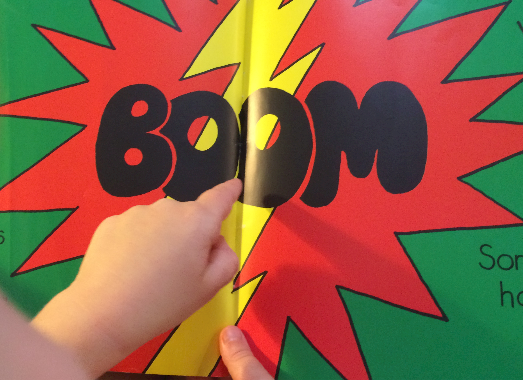
5. Embedded print (e.g. "boom" in "Meg and Mog")
(Justice and Kaderavek, 2002)
Justice and Sofka (2010) identified four major objectives of
reading aloud targeting print:
1. Book and print organization
2. Print meaning
3. Letters
4. Words
 How does it support
 literacy development?


You've previewed 10 of 16 pages.
To read more:
Click Sign Up (Free)- Full access to our public library
- Save favorite books
- Interact with authors


- < BEGINNING
- END >
-
DOWNLOAD
-
LIKE(1)
-
COMMENT()
-
SHARE
-
SAVE
-
BUY THIS BOOK
(from $3.19+) -
BUY THIS BOOK
(from $3.19+) - DOWNLOAD
- LIKE (1)
- COMMENT ()
- SHARE
- SAVE
- Report
-
BUY
-
LIKE(1)
-
COMMENT()
-
SHARE
- Excessive Violence
- Harassment
- Offensive Pictures
- Spelling & Grammar Errors
- Unfinished
- Other Problem





COMMENTS
Click 'X' to report any negative comments. Thanks!