 Julia Fernandez
Period 1
This book was created and published on StoryJumper™
©2014 StoryJumper, Inc. All rights reserved.
Publish your own children's book:
www.storyjumper.com



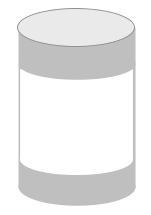
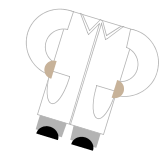
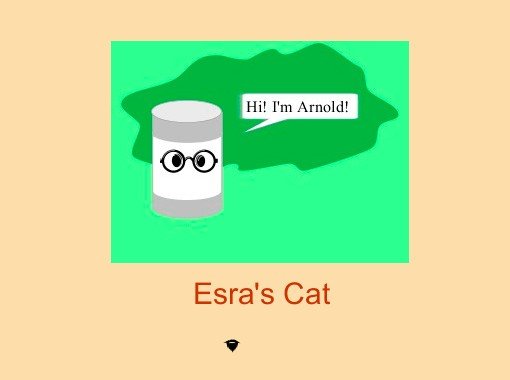
 Hi! I'm Arnold!



 Meet Arnold. Arnold is a can. He
 stores soup! There isn't anything
special about him except what he's
made from...
What is he made from?






 Atomic NumberAtomic SymbolAtomic Mass
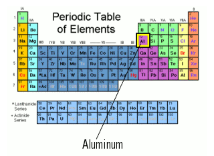
Arnold is made from
. aluminum. You can see
aluminum on the
Periodic Table of
Elements in Group 3! What is
there to know about it? To find out, let's take a look
in Arnold's photo album!

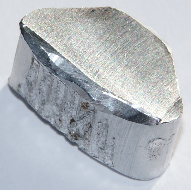

Here, we see Arnold as a baby, before he
became a can! This is him as a chunk of pure
aluminum. To become a can, a can producer
would have to buy aluminum for $15.72 per
100 grams. At room temperature, aluminum is
a solid, and has a density of 2.702 g/cm .
You can see that aluminum is a silvery-white,
metallic, malleable element. Untouched
aluminum is soft, but can easily be turned to a
hard substance after being alloyed. It is used
to form hard yet light, corrosion-resistant
materials. Aluminum can be found in many
transportation vehicles like cars, bikes, and
train cars; as a packaging item like soup cans,
and foil; and at construction sites as some
doors, siding, and building wire.


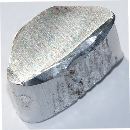




This is one of Arnold's great ancestors. He was the first to be
discovered by Hans Christian Ørsted in 1825. In 1761, de
Morveau thought of the name "alumine" for the base in alum. In
1807, Davy proposed the name alumium for the metal,
undiscovered at that time, and later agreed to change it to
aluminum with the other scientists. Shortly after, the name
aluminium was adopted by IUPAC, the
International Union of Pure and Applied Chemistry, and they
conformed its name with the "ium," the ending of most
elements. Aluminium is the IUPAC spelling and because of
that, it has become the international standard.
Aluminium was the accepted
spelling of the element in the
U.S.A. until 1925, when the
American Chemical Society
decided to change it back
to aluminum due to most people
calling it by its name today, aluminum. Today, Americans refer to
aluminium as "aluminum".



This is Arnold
during his first
trip to the
beach. It looks
like he's having
fun! Good thing
it wasn't 1,221
degrees Fahrenheit because that's
aluminum's melting point.
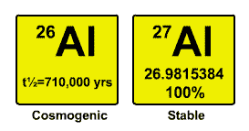
These are the properties of Arnold's cousins,
Aluminum 26, and Aluminum 27. They are
isotopes and 26 is radioactive while the other
is not.
Due to its thin layer of oxide, aluminum
does not react to water or air. This is
Arnold NOT reacting to water or air.





You've previewed 10 of 16 pages.
To read more:
Click Sign Up (Free)- Full access to our public library
- Save favorite books
- Interact with authors

- < BEGINNING
- END >
-
DOWNLOAD
-
LIKE
-
COMMENT()
-
SHARE
-
SAVE
-
BUY THIS BOOK
(from $3.19+) -
BUY THIS BOOK
(from $3.19+) - DOWNLOAD
- LIKE
- COMMENT ()
- SHARE
- SAVE
- Report
-
BUY
-
LIKE
-
COMMENT()
-
SHARE
- Excessive Violence
- Harassment
- Offensive Pictures
- Spelling & Grammar Errors
- Unfinished
- Other Problem





COMMENTS
Click 'X' to report any negative comments. Thanks!