 Dedicated to our geometry grade, doing this for you :)
May 11 2015-May 30, 2015
Period 5
This book was created and published on StoryJumper™
©2014 StoryJumper, Inc. All rights reserved.
Publish your own children's book:
www.storyjumper.com


 Freakshow
TABLE OF CONTENTS
Chapter 1(The Probability of shirts).......................................5-12
Chapter 2(Transformations of Performances).........................13-29
Chapter 3(Angle Pair Relations)............................................30-40
Chapter 4(Congruent Triangles)............................................41-61
Chapter 5(Similar Triangles & Trigonometry)...........................62-88
Chapter 6(Polygons)............................................................89-97
Chapter 7(3-D Geometry Plantonic solids)............................98-114
Chapter 8(Circles)............................................................115-141
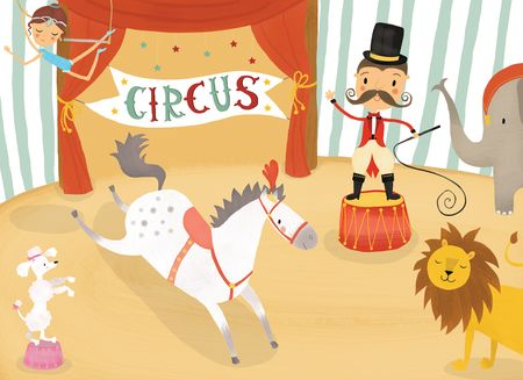

Chapter 1
The probability of shirts



 Geo. Geo is marvelous man.
A man with a courage different than
others. He was meant for the circus.
 Geo stumble upon a whole
new life, at a carnival



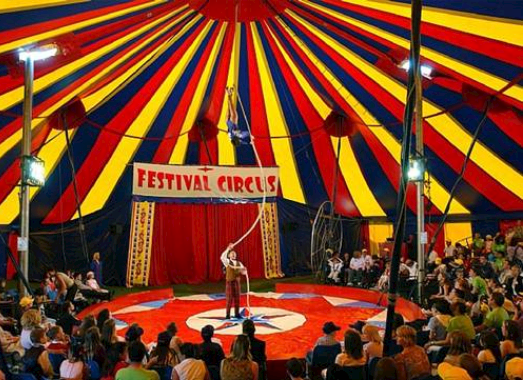

 Once inside, he noticed the variety of
colors worn by the audience. He wanted
to know the probability of the color of
the T-shirts.
Probability (T-shirts)
Women Men Total
RED 21 15 36
YELLOW 7 2 9
ORANGE 2 6 8
BLUE 25 36 61
PURPLE 8 3 11
TOTAL 63 62 125
 (a)If half of the male attending
 members from the circus (wearing an
orange shirt) left the show, what is the probability
you see another man wearing an Orange shirt?
P(Men:orange): 6/2=3,
3/125= 0.024 = .02%
Geo then responded "since half of the 'male
orange t-shirt' left the show, you would have
to divide the total number of 'male orange
t-shirt' by 1/2 (1/2 is half). The 3 is then
divided by the total number of members
attending the carnival. this gives me the
probability of seeing another man wearing Orange."
 (b)You poke a man wearing a red shirt, what is the probability that you'll
poke a different man with the purple shirt.
P(purple): 3/62= 0.048 =
After Geo calculations he concluded, "oh! geez, my chances of poking
someone else are VERY LOW considering that I divided the total number
of purple wearingmen with the total amount of men attending the circus
which was 62 not 125 since there are only 62 men out of the
125 audience."






 Courageous Geo wanted to go ahead and consider females in the circus.
(c) If one of the members attending the circus is randomly
selected, what is the probability she was wearing a red or blue shirt?
21+25= 46
P(Women: RED or BLUE)= 21+25=46, 46/125= 0.368 = 36.8%
Geo shared among the folks, "My probability of finding a women with
a red shirt OR a blue shirt is in fact 36.8%, this is because I added the
amounts of females wearing a red and a blue shirt, this would be 46, now
we divide that number (46) with the total amount of members in the circus





Chapter 2
Transformations of Performances



Courageous Geo later realized that there
was more to a circus than just fun and
probabilities. He decided to work on
transformations of the performances at
the circus. However, this task was going
to take a lot of work.

Courageous Geo started off by choosing the
performances he wanted to work with. He asks the tiger
and the tiger said that he'll be happy to help.

 I'd love to help.


 Cool, thanks!
The next performer that Courageous Geo wanted to ask
to help him with his task was Eleanor the Elephant. She
was one of Geo's best friends and curious to always
learn something new, just like him.

 Of course I want to help learn about transformations.

 Alright! Thanks Eleanor!

The final act that Geo asked to be a part of his findings
was Sparkie. Sparkie was a dog who was part of the
show and who actually demonstrates how to do
reflections as his act.

 It would be an honor for me to share my knowledge with you and help you with transformations.

 Then we're all set. Thank you Sparkie!
(a)
Geo wants to know what are the steps that need to be
taken in order to make a reflection.
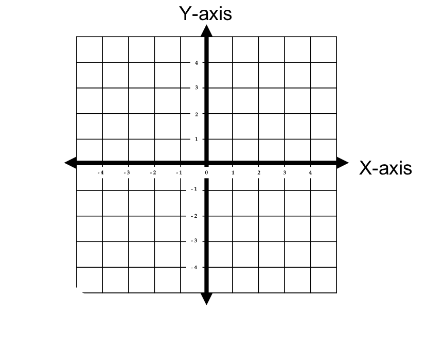

 ABCDA'B'C'D'
with the help of Sparkie and the assistance of Tiger, Geo was
able to figure out that the rule for reflecting is quite simple.

 You see Geo, the rule for making a reflection is :
 just change the sign of the X coordinate and swap the coordinates around

 WOW! You're right Sparkie The rule IS quite simple!
 Thank you for helping!.
Therefore, Geo concluded
that the coordinates of the
new reflected image were A'
. (-2,3) B' . (-3,3)
C' . (0, -3) D' . (-5,2)
As the day went on, Geo thought it
would be fun to learn about
translations as well. So, he went to his
friend Sparkie for help.


 Hey Sparkie, would you mind
teaching me about translations?
 Of course not, here come with me.

Sparkie explained to Geo that the rule for a counterclockwise
translation was to simply change the sign of the Y coordinate and
then swap the coordinates around.
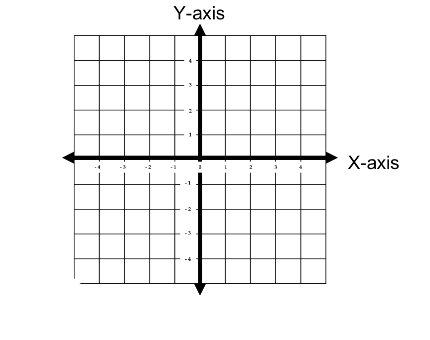



 AA'BB'CC'DD'
 You see Geo, to make a translation,
 you simply use slope, which is rise/run.


 Thank you Sparkie! Now we concluded that
 the rule for this translation is the same as any translation!


With the help of Sparkie and the assistance of Eleanor,
Geo was able to conclude that the points of the new
image went from A. (-4,2) to A' (-2,-4) B. (-3, 1) to B'(-
1,-3) C. (-2,1) to C'(-1, -2)
and D. (-2,3) to D' (-3,-2)
Now, Geo wanted to learn about slope criteria,
so he asked his friend Mia for help.






 Of course, I'd love to! Here, come with me.
 Hey Mia, would you mind teaching me about slope?
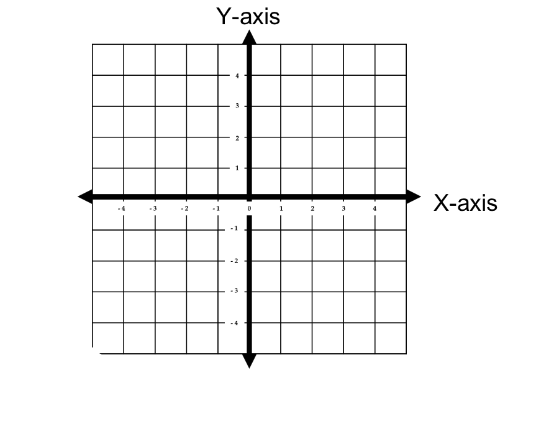


 AB
AB
 Hmmm.. I wonder what would be the
 slope of point A to point B?
As Geo's eagerness to learn about slope increased, Mia came
along to explain to Geo what exactly slope is.



 Hey Geo, did you know that slope is basically
 determined by the rise over run, which means how
many units a point goes up or down and left or right. Therefore,
the slope of point A to point B would be 2/2, which would equal 1.
Geo was very thankful that he had such nice friends who
share thier knowledge with him when he needs help, which is
why he loves being a part of the circus.



 You were right Mia! Finding slope IS
 quite simple! Thank you for helping
me and for being a great friend!
 I'm glad I could
help!


 Chapter 3
Angel Pair Relations
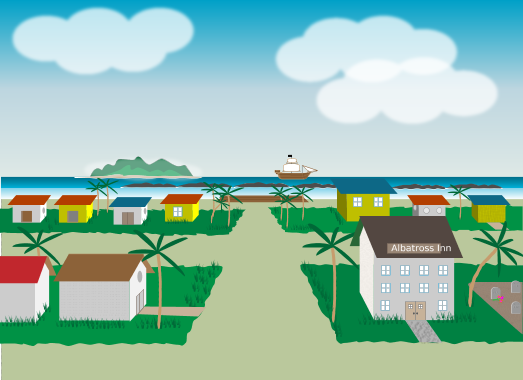
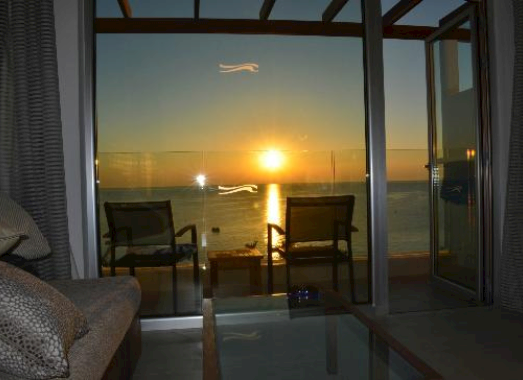 The next day, Geo got to experience a
beautiful sunrise in the hotel
near the circus, he didn't want to be
late for Day 2 here at the carnival.




 I have a problem..
I DONT KNOW
HOW TO GET
TO THE CIRCUS!
 Fortunately, Señor Pancho knew his
 way around. Señor Pancho was a giant
Penguin with an amazing mustache
who lived within the hotel.



 Can you
guide me to
the circus?
 DUH.
DUH.
 "It will be a beautiful day" said Señor Pancho.
 Señor Pancho and Geo rode through the city


 The giant penguin guided Geo to his
 private jet to get a good view of the city.





 Once in the sky, Senor Pancho kindly explains Geo all


 CAAA
CAAA





 Gift Shop


 the areas for that parts of the city including the circus.

 CA
CA AA
AA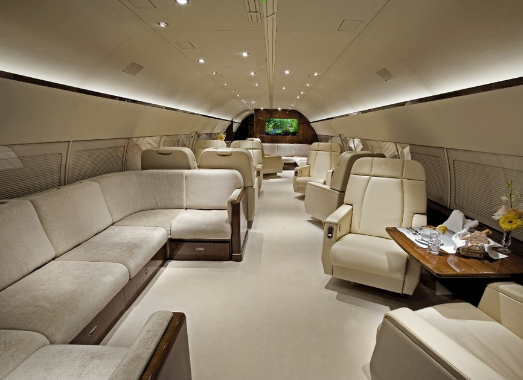


 It's quite simple
you see.
 Meanwhile inside the jet
Señor Pancho proceeds to say:
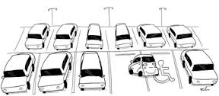
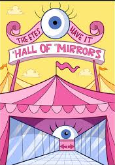
-"The house of mirrors is located to the corresponding
angles(CA) from the gift shop since two lines are crossed by
another line, the angles are in matching corners."
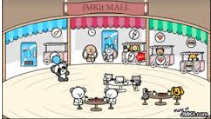
-"Alternative angles for the food court is located right next
the roller coaster far west of that block."
-"All Alternative interior Angles make up the surrounding
cites of Geo's carnival."
-"The angles located next to food court and the gift store
can be seen as consecutive angles to each other since the
angles are on one side of the transversal, but inside the two
lines."




 Now you
 simply follow
those angles,
go straight
ahead, and
you will find
the circus
 THANK YOU.
 Chapter 4
Congruent triangles

 After the act of Day 2, Geo was just
 so full of excitement, he paid the
roller coasters a visit.




 Once there, Geo met Penelope,
 Instantly, he fell in love. It was almost
like he transported to a whole new
world.





 Snap back to reality:
The horrific screams
of the TRIANGULAAR DROP keep
Geo from staring into Penelope eyes.



 Penelope had her eyes on something
 else, somthing much much bigger



 *looks up*Penelope was looking straight at the
 enormous size of the Triagulaar drop.
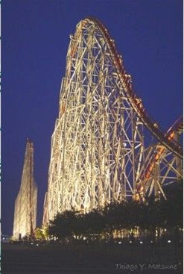 Confused, Penelope wanted to know
 more about the Triangular Drop.





 Can you
 help me?
 Who me!?
Penelope proposes: Considering the roller
at a 90 45 45 degree right triangle. I know
that the adjacent side from angle B is 125
feet long. I also know that the opposite
side(drop) is 200 ft long. However, The
part from the roller coaster that escalate us
to the top(hypotenuse), yeah I don't know
how long that is, Can you help me?
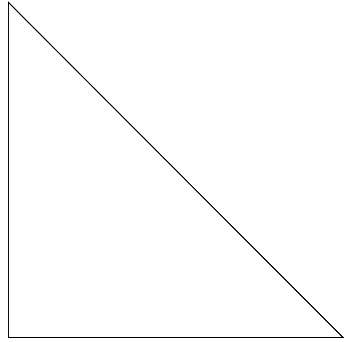 200 ft125XAngle B


 I know how to help!
Simply use the
Pythagorean Theorem
a^2+b^2=c^2

 Geo began to explain to Penelope:
"First plug in your available values
like so:
125^2(a)+200^2(b)=c^2
C is our unknown value so we want to
isolate C. Therofore, do the simple math
125^2+200^2=c^2
15,625+40,000= c^2
55,625=c^2(square root eliminate the
exponent)Therefore, the hyp is about 235.8ft

 WOW! Thanks Geo, can you actually help
me find the distance from here to the carousel?



 No prob, hey look! more charts


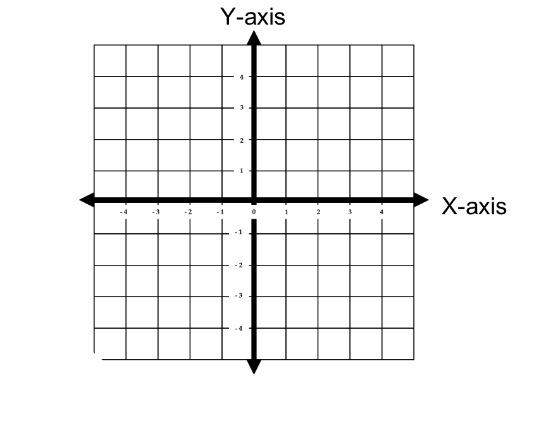


Geo explained to Penelope:
"Let me pull out my handy dandy Coordinate plane that i receive
from Senor Pancho. The carousel on the coordinate plane is
located on the black dot(5, 4). We are currently on the red dot
who is on the (4, 1) point. The way we can find the
distance in between would be through the distance formula.
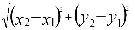
The follow formula in fact: d=
d=
d= [(5-4) + (4-1)]square root
d= [(1+3)]square root
d=(4)sqr
d=2
Therefore the distance from the Triangulaar Drop to the carousel is
2."
 Penelope proceed to go her way and
 said goodbye to Geo.
 Bye :)


 Geo continued to analyze the roller coaster.
 Then he realized the ASA, SSS, SAS Theorems
within the ride. Looking back to the right triangles
all over the park.


 Hmmm.Geo began to reflect on surrounding triangle
images. Such as the following, he wrote down
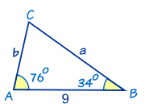
In this triangle we know:
angle A = 76°, angle B = 34°, and c = 9
It's easy to find angle C by using 'angles of a
triangle add to 180°':
So C = 180° − 76° − 34° = 70°
We can now find side a by using The Law of
Sines:
a/sinA = c/sin C
a/sin76° = 9/sin70°
a = (9 × sin76°)/sin70°
a = 9.29 to 2 decimal places

 Interestingdesign in front of roller coaster
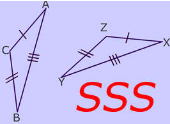
 The Geo bought some pies, 2 pies exactly
 the same size, he then looked how the
SSS theorem applied to the delicious pie.
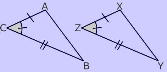
 All 3 sides are congruent
ZX = CA (side)
XY = AB (side)
YZ = BC (side)
Therefore, by the Side Side Side postulate, the triangles are congruent


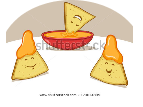
 He came to his Final conclusion about
 the SAS theorem that was portrayed in
the Nachos chips that he bought.
 Two sides and the included angle are congruent
AC = ZX (side)
∠ACB = ∠XZY (angle)
CB = ZY (side)
Therefore, by the Side Angle Side postulate, the triangles are congruent.


 At last, Geo decided to call it a night
and go home.
 CHAPTER 5
 Similar Triangles
& Trigonometry
When Geo woke the next day, he planned on learning
about Similar Triangles and Trigonometry.


To do so, he would need the help of a friend. Geo decided
to ask his friend Abigail for help.







 Hey Abigail, can you
 explain to me what the AA
Similar Postulate theory is?



 Of course! Here
come with me.


 As Abigail took Geo on a ride, she explained to him the AA Similarity Postulate.


 You see Geo, the AA (angle-angle) Similarity
Postulate is described as when two angles of one
triangle are congruent to two angles of another
triangle. This also means that the two triangles
are similar.
Abigail later stated, "In order for two triangles to be similar,
1. all corresponding angles need to be congruent 2.they have
to be the same shape and 3. all corresponding sides must be
proportional"
of two slices of pizza
as an example.
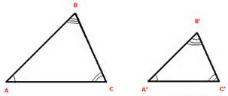
You see Geo, these two slices of
pizza are the same shape. And, if
<ABC is congruent to <A'B'C' and
<BAC is congruent to <B'A'C' , then
triangle ABC ~ triangle A'B'C'

 So basically, if the two
angles of two triangles are
congruent, the two triangles
are similar, right?


 Exactly!
 Geo, you're a really fast
learner. Here, lets talk about
Special Right Triangles next.



 You see Geo, there
are many types of special
triangles. Lets mainly focus
on the 30*-60*-90* triangle.
Here , lets use this diagram
of the Terror Drop as an
example.
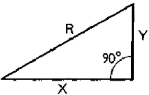
 Lets suppose:
R=Hypotenuse(H)
Y=long leg(across from 60*)
X=short leg(across from 30*)
Next, Mia says "To make your life even less
complicated, you can use a Short Cut Formula.
These give you answers directly , BUT can ONLY be
used in a 30-60-90 triangle."
SL:1/2(H)
LL:1/2(H)(square root of 3)
combining the first 2: LL=SL(square root of 3)
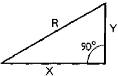


 Here, lets solve for x and y, suppose
R=100.X=SL
SL=1/2(H)
SL=1/2(100)
SL=50 Y=LL
LL=1/2(H)(square root of 3)
LL=1/2(100)(square root of 3)
LL=50(square root of 3)


 WOW! I thought learning
about special right triangles
was going to be hard, but
it's actually simple if you're
willing to do the work. Thank
you for helping me , Mia.


 Right!, and it was
 a pleasure to help, Geo.

 When Geo was going to sleep after a long day, he
had already planned on learning about
SOH-CAH-TOA the next day.
 The next morning,
 Geo contacted his
close friend
Kate and
asked her to help
him learn about
SOH-CAH-TOA.
 Kate is scary looking,
but really nice.


 Good morning, Kate.
I was wondering if you
like to help me learn
about SOH-CAH-TOA
today.

 I would love to!
 Kate explained to Geo
the concept of SOH-CAH-TOA.
 You see Geo, SOH-CAH-TOA
 is just a way of remembering
how to find the sine, cosine,
and tangent of an angle.
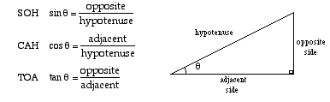
 angle they are
 asking you to
use

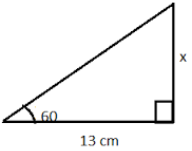

 Lets take this diagram of the
 Terror Drop as an example.
First, we determine what
it is we need to find. Once we
know, we simply do the work
by using the given angle
measurement. SOH sin60*= x/13cm
0.87 = x/13cm
(13cm)0.87 = x
11.26 = x26 cm

 While, we're at it, lets
 talk about indirect measurements.
You see Geo, indirect measurements
are the using of a proportion to find an unknown
length in similar figures.
Kate later explains to Geo, "In order to use the indirect measurement
method, we first have to find to figures to compare. Lets use your
shadow and the shadow of The Flash as an example,"
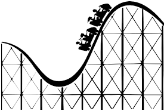




 ?20ft5ft 4ft
enter text here

 Now, since we have our measurements, we
create a proportion to find the height of The
Flash.5ft/x = 4ft/20ft
cross multiply
100ft/4ft=4ft/4ft
x=25ft
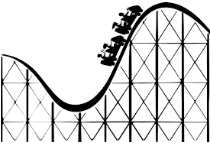

 Lets try a couple more problems.Kate later says "Lets use a clown's and a
hotel's shadow to find the hotel's height."
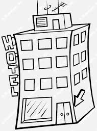
 6ft
6ft 5ft
5ft

 100ft?6ft/x=5ft/100ft
cross multiply
600ft/5ft=5ft/5ft
120ft=x
The final example that Kate gave Geo was finding the circus tent's height.




 ?20ft6ft5ft6ft/x=5ft/20
cross multiply
120ft/5=5ft/5
24ft=x

 Here, I'll explain dilations next.
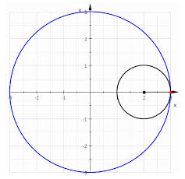
Kate explained the Geo, "A dilation is when a shape is
being enlarged or expanded."
 .
.
 You see Geo, these two circles are
 similar because they coincide, which
means they touch.A dilation is basically
the same thing as a scale factor.
Scale factors tell us how much
an object grew or how much
an object shrank,In this case, just like in any
other problem where you need
to find the scale factor, the
setup is : X/Y=R1/R2, where
R means radius.
enter text here
To finish off the problem, Kate explained to Geo, "First
we must identify the circles. In this case, the smallest
circle is being enlarged. So, we compare the radii and
therefore the scale factor would be: 2/6 , or 1/3."
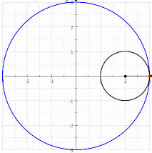 .R1 = 2
R2 = 6


 Oooh, now I
 get it!
 After a long day full of learning, Geo decided
to go to bed and rest. He was already eager to
learn more tomorrow.
 CHAPTER 6:
 POLYGONS
 Geo wanted to explore deeper into the world of
 geometry, so he decided to learn about polygons.
In order to do so, he would need someone's help. He
decided to ask Clarissa to help him with his task.


 yes no
 maybe

 Hey clarissa, would you like to
help me learn about polygons?
 Of course!


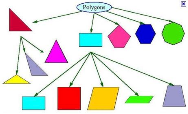
 Okay,polygons are closed, 2 dimensional shapes made of straight lines.
A polygon is regular when all of its angles are equal as
well as all of its sides.Polygons can be considered either concave or
convex. A convex polygon has no angles pointing
inwards, while a concave polygon has an internal angle greater than 180*.
Finally, a simple polygon doesn't cross over itself
and has only one boundary, while a complex polygon intersects itself.
 When a polygon is
 complex, many rules
don't work with it.
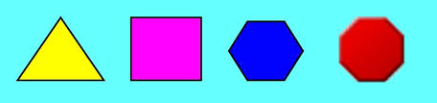
 Some examples of polygons are triangles,
quadrilaterals, pentagons, hexagons, and octagons.

You've previewed 92 of 140 pages.
To read more:
Click Sign Up (Free)- Full access to our public library
- Save favorite books
- Interact with authors


- < BEGINNING
- END >
-
DOWNLOAD
-
LIKE(2)
-
COMMENT()
-
SHARE
-
SAVE
-
BUY THIS BOOK
(from $27.99+) -
BUY THIS BOOK
(from $27.99+) - DOWNLOAD
- LIKE (2)
- COMMENT ()
- SHARE
- SAVE
- Report
-
BUY
-
LIKE(2)
-
COMMENT()
-
SHARE
- Excessive Violence
- Harassment
- Offensive Pictures
- Spelling & Grammar Errors
- Unfinished
- Other Problem





COMMENTS
Click 'X' to report any negative comments. Thanks!