 This book is dedicated to our awesome Social
Studies teacher Mrs. Lisa Schultz and to all the
amazing staff of the
Cochrane Community Learning Centre.
Mr. Murray Arnold, Principal
Mr. Sean Root, Lead Teacher
Mrs. Shannon Bradley-Green, L.S. Teacher
Mr. Wayne Smith, Learning Assistant
Mrs. Debbie Bujold - Receptionist
Keven Aitken; Kevyn Johansen; Jesse Cameron; Noah Ryall
This book was created and published on StoryJumper™
©2014 StoryJumper, Inc. All rights reserved.
Publish your own children's book:
www.storyjumper.com

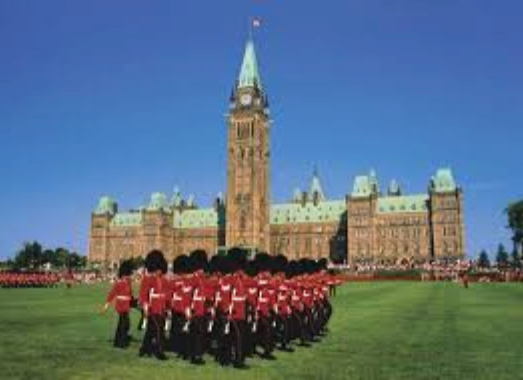
 CANADA ROCKS!!
Did you ever wonder who takes care
of the stuff that makes Canada work?
Who's the boss of Canada? Why do we
need something called government?
What does the government do for us?
Who's in the government and how did
they get to be in the government?
Let's find out what makes Canada a
really special place to live!


 Chapter 1.
How does your class at school work? Does your class
work together to make sure that everyone is treated
fairly and everyone has the best chance to do well at
school?
How do Canada’s leaders make Canada work for
everyone?
A long time ago when Canada first became a country we
made some rules on how we wanted to run a country
like Canada. They decided way back in 1867 what rules
we needed to make it work right. Canada will celebrate
its 150th birthday in 2017 - in just about 2 years from
now. The adults still come together, in a city called
Ottawa, which is in Ontario and talk about their ideas
and decide if we need to change any rules or make new
ones.
How do you decide things in your class at school? Who
makes the rules? Does everybody have a say in the rules?
Do you also get to have a say or a vote on things that
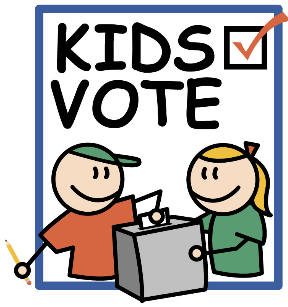
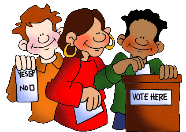
happen in your class? When a group of adults are trying to
get the chance to lead Canada they need to get the votes
of the people to do it. Just like if your class has a class
leader or leaders then everybody would have voted to see
who was the best people for the job. If people like one
group they vote for them. And if one of those groups wins
the most votes then they get to be the leaders of Canada.
We call this a majority (muh-jawr-i-tee) government
(guhv-ern-muh-nt). But a group can still lead Canada if
they don’t have more than half the votes, they just need
the most, we can call this a minority (mi-nawr-i-tee)
government.
Have you ever played in baseball game or a hockey game, there
are always rules for how you have to play these games. Just like
those games there is a set of rules for running Canada. All of
these rules are called laws.You probably know by now that
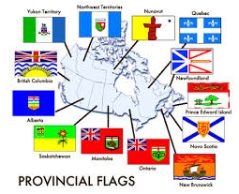
Canada is made up of 10 provinces and 3 territories - look at
the map in the picture on the next page and you will see all of
them. We live in the province of Alberta.
All of the provinces and territories agreed on the rules about
how we run Canada. All those rules together are called the
Constitution (kon-sti-too-shun). The constitution explains the
rules clearly, so that everybody knows what they are supposed to
do.
The most important rules are the ones that make sure each
person is treated fairly. All of these rules together are called the
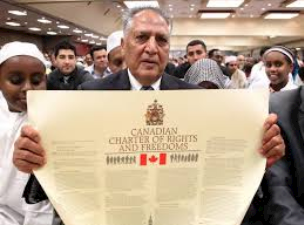
Canadian Charter of Rights and Freedoms. These rules make
sure that each person in Canada is treated just like every other
person - that everyone is treated the same or equal (ee-kwul).
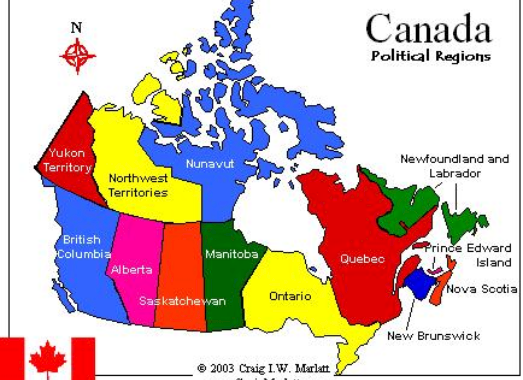
Have you ever wondered who makes rules (laws) like you can't
drive faster than 100 kilometers per hour on a big highway
like the TransCanada Highway? Or you can’t steal or you get in
trouble? Or you can’t hit someone without getting into trouble?
How do Canada’s leaders make laws for a whole country? How
do those rules get to be rules? And then who makes sure that
everybody follows those laws?
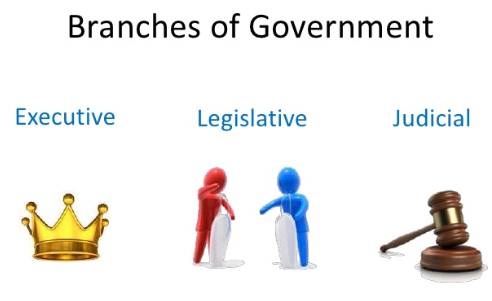
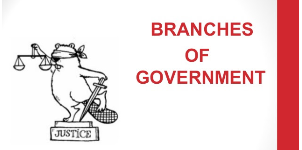
There are three - 3 - steps that happen to make a law for the
whole country. The first - 1st - step that happens is that all
those people that meet in Ottawa talk about what laws we
need. They have big meetings called the Parliament (par-
luh-munt) and the Senate (Sen-it) to talk about what laws
we need to make sure we are safe and happy in Canada. This
whole thing is called the legislative (lej-is-lay-tiv) branch
(bran-ch), and in this step the leaders in Ottawa make new
laws from the suggestions from people from Canada.
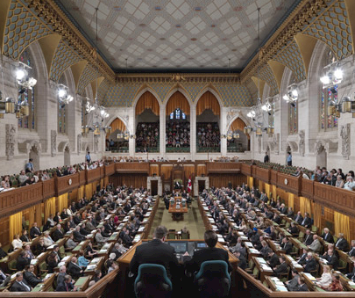
A Parliament meeting
Once all the leaders in the legislative branch have
decided what rules we should have someone has to
make sure that the rules get told to everyone and
that everyone knows what they are supposed to be
doing. The people that do this are called the
executive (eg-zek-yuh-tiv) branch. The Prime
Minister of Canada is the most important leader in
Ottawa - his job is to make sure that if the idea for a
new rule is voted on by all the leaders and they agree
that it is a good idea to have this new rule then he
makes sure that it becomes a rule and that everyone
knows about the new He has a lot of helpers to work
with him to help let everyone know about all the
rules.
Have you ever played in a soccer game or a football game or a
baseball game? Who is the person that makes sure the rules
are followed. It is usually someone called a referee, or the
umpire who makes sure that the rules of the game are being
followed. When it comes to running a big country like Canada
we need people who are like our referees or umpires. Some
of them are easy to spot - a police person in a police car is like
a referee - he makes sure we all follow the rules of the road.
If someone’s house is broken into then the police try to catch
the thief. If a thief is caught where does he go? He has to go
to court and see a judge. Sometimes bad people end up
having to go to jail - sometimes it is called prison - if what
they did is bad enough. All of the people that help to make
sure the rules get followed by everyone are called the judicial
(joo-dish-uh-l) branch. Sometimes the judicial branch
can even ask the legislative branch - the people who
make the rules - to change a rule if it is unfair.

Do you like to watch television (TV) or play games on your
computer with people who live far away from you or even read
a book? When we watch TV or listen to the radio in our car or
watch a movie on our computer or play computer games or
read a book we are using media (me-d-ya). Do you know
why media (me-d-ya) is important to our country? How do
all of those things help people in Canada?


Our media tells people about things that are
happening in Canada and all over the world. The
leaders of Canada can use the media to tell people
about themselves, things they do, and what they will
do to help with our Country. The leaders also listen
to what the people in Canada have to say to them
by watching and listening and reading to what is in
the media. The media is an important part of how
the government works in Canada because it is
used by the government to get messages out to
the people and it allows the government to listen
to the people about what they want the
government to do.
Did you know that sometimes the leaders of Canada change
their minds. Sometimes a new idea comes along that is better
than the old one. Did you ever had a good idea for something
in your class at school? Maybe you had an idea for a new
game to try during P.E. Well there are people who talk to the
government all the time about their ideas. They are called
lobbyists (law-b-ists). A lobbyist is someone, whose job is
to change our leaders minds. A lobbyist will speak for the
idea’s that belong to a group of people, and will try to make
our leaders like the ideas of that group. But not everyone can
be a lobbyist, there are rules about being a lobbyist that
our government have made to keep our leaders playing fair.
Lobbyists have become an important part of how the
government works because they work for different groups of
people and try to tell the government what their group
thinks about what the government should be doing.
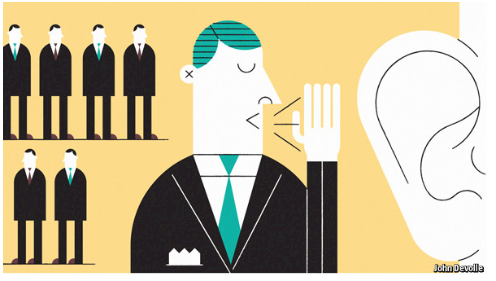
A lobbyist at work.
Chapter 2
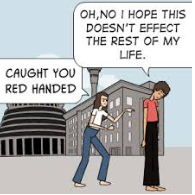
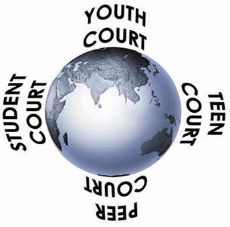
Kids make mistakes all the time, even older kids like teenagers. That
does not mean they're bad people because everyone makes
mistakes. But some mistakes can get you in trouble with the police.
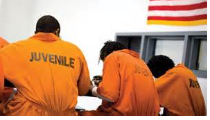
If you are a kid under the age of 17 then you probably won't go to
prison(a place you go if you do a crime). Instead people will
help you and try and understand why you made that mistake. So
instead of going to prison with all the other bad people who made
these mistakes on purpose. The police will make you help your town
or city you are living in. This is called the youth criminal justice
act. The youth criminal justice act deals with 12-17 year old's
who are in trouble with the police. The youth criminal justice
system gives consequences to kids like community (kuh-myoo-
ni-tee) service - making you do things that help your community.
You might have to go see someone to help you with problems with
the police. There are people that work with kids when they get in
trouble with the police.

If you are between the age of 12 to 14 then you will not
have to go to prison with all the other bad people unless
you do something really bad. You also won't get a criminal
record(a list of things you have done that are against
the law). This gives young teenagers a second chance to
prove to their teachers, parents and any other adults that
they are good kids. For example an older kid is with his
friend in a store and his friend breaks a window by
accident, and the two kids get arrested. Instead of the
police putting the two kids in prison the kid who
accidentally broke the window might get a fine and may
have to do community service(an act to help your
community) and the kid who didn't break the window
won't have to do anything. So instead of getting a serious
punishment the youth criminal justice system will give
the child a reasonable punishment - a punishment that fits
the crime.
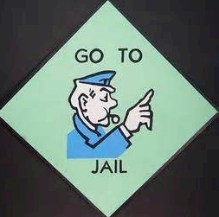
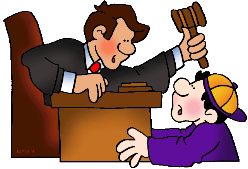
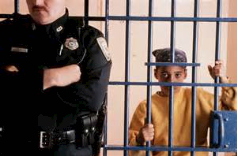
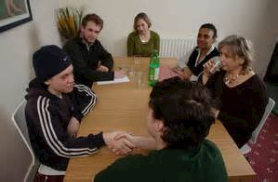
When older people like adults make these kinds of
mistakes they can go to a place called jail for a night or
two, or if they do something really bad they can go to
prison. This is called the criminal code of Canada. The
criminal code of Canada deals with adults (a person
over 18). When an adult does something against the law
that person will have to go to court (a place where
people go to decide their punishment if they do
something against the law.) Most adults who do
something against the law they will get a criminal record
- the bad thing they have done go on a list.
The criminal justice system and the youth criminal
justice system make sure that children and youth under
the age of 18 are treated differently then those who are
over the age of 18 and are adults. Adults know better, but
kids sometimes don't.

Chapter 3
Chapter 4
Have you ever wondered about what makes Canada different
or unique(yoo-neek) or special - only found in Canada?
What makes Canada different than other countries, such as
the United States?
Here’s one thing that makes Canada different or unique:
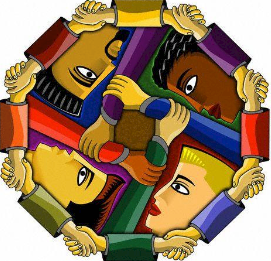
collective(kuh-lek-tiv) rights(rites). You can think of
your class as a collective - a group of people who are
together for the same reason - you are all in the same class at
school and that makes your class a collective.All the kids in
your school are another collective. All the people that live in
your neighbourhood are a collective and all the people in
your town or city are a collective and so are all the people
that live in your province of Canada and as people who live in
Canada we all share the collective identity of being
Canadians.

Collective rights (rites) - rights are things we are
allowed to do because we are part of a collective. You are
part of the collective of your class and your class is
allowed to do certain things that maybe other classes at
your school are not - maybe because of the grade that you
are in. Collective rights belong to groups of people and
are an important part of the laws in Canada. Like we
learned in Chapter 1 all the rules that tell the leaders how
to run Canada go together to make up the Constitution.
In our Constitution we have collective rights to make
sure that everyone knows that some groups of people
have a collective identity (i-den-ti-tee). Like we
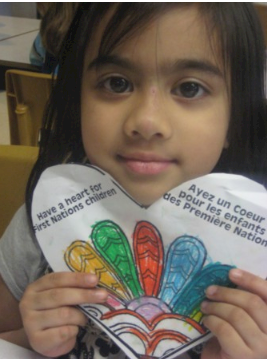
learned earlier the First Nations, Inuit and Métis groups in
society have special collective rights. Our constitution
makes sure that create a society where people of different
identities belong.
enter text here
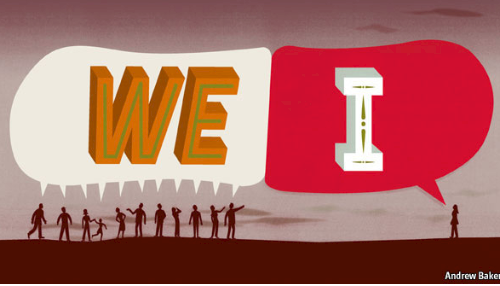
Collective rights are part of what makes Canada work.
How the government treats these special groups has been
agreed to by everyone that in Canada. Throughout Canada's
history, laws that affect collective rights, and the promises
of the government to make sure that everyone follows these
laws has made for tricky times Canadians but because
everybody thought that these collective rights were
important we all go along with it.
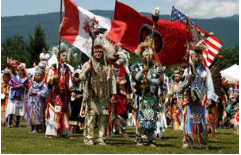
One of the important groups that has collective rights are
the First Nations people.
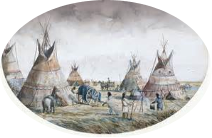
First Nations people lived here in Canada before any other
people came here from anywhere else. These First Nations
people were nice enough to share the lands and the things
on the land in peace.


The reason they are called First Nations people is that
they lived in Canada first - before the people from Europe
came to live here. Sometimes these people are called native
peoples, sometimes they were called aboriginal (ab-uh-
rij-uh-nl) people sometimes they are called Indigenous
(in-dij-uh-nus) people - in the old days they were called
some not so nice names like Indians or Eskimos (Es-kuh-
mohs) or heathens (hee-th- uh-nz). The reason they
were called heathens was that the First Nations people
did not believe in the same God as the ‘white man’ or ‘pale
face’ - as the First Nations people called them - because
our skin was mostly white. The government (guv-ern-
ment) believed that because they did not believe in God
that they could not decide things for themselves and that
they would need help from the government. Canada’s
government the people who run the country. They talked it
over and decided what help they would give to the First
Nations people and how much money they were going to
spend looking after them.
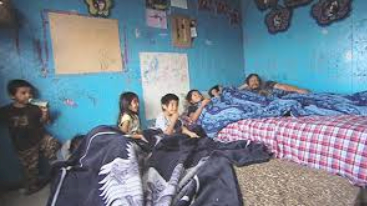
First Nations people wanted to be sure about their future
because the new people coming to Canada were causing
problems for them. These new people did things a lot
differently than the First Nations people. One of the
problems was about money - First Nations people didn’t
use money like we do today so they didn’t understand how
it worked - they had never really had to buy anything -
they just hunted and gathered up the things they needed
and shared and traded with each other without using
money. The new people also brought other kinds of
problems with them - things like sickness that the First
Nations people had never had, like smallpox. The new
people also did not understand how to live with nature and
were very greedy and did things like kill all the buffalo just
so they could have the fur from them to send back to their
countries in Europe like England and France.
enter text here
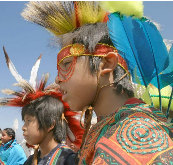
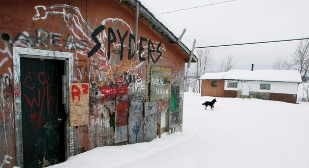

One of the main reasons that the government of Canada
needed the First Nations people to share their land in
peace is that they wanted to build one of the longest
railways in the world to join the province (prov-ins) of
British Columbia (B.C.) to the rest of Canada. It was more
than 4,000 kilometers long. This railway also was to open
the western part of the Canada and make it much easier for
people to be able to move to the provinces of Alberta,
Saskatchewan and B.C. from the eastern part of Canada.
The main part of the work was done on this railway between
1881 and 1885 after the government had made some deals
with the First Nations about how they would share their
land to build the railroad. The province of B.C. joined in the
country of Canada in 1871 just a few years after the railway
was finished. Finally Canada had a railroad that went all the
way across Canada that people could use to go right across
the country.
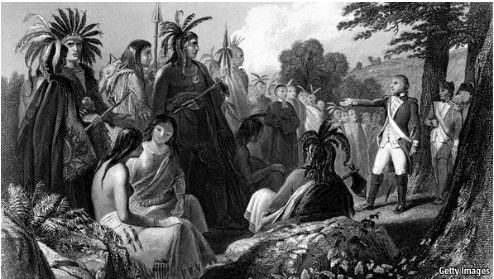
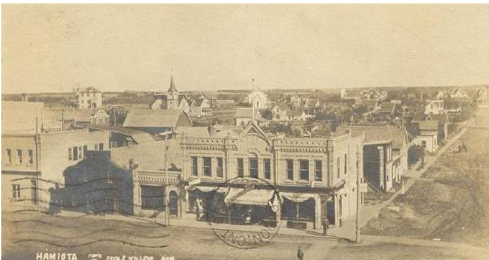
In 1870 Manitoba decided to join the Canadian
confederation (kun-fed-uh-rey-shun-all the
provinces together) of provinces in 1870 as a
bilingual (bi-ling-gyoo-uh-l) province (meaning
the people could speak English or French - whichever
they liked most). The people of Manitoba were able
to go to Catholic schools (the money came from the
government for schools that believed the same as the
Catholic church - some of you might go to a Catholic
church). Many French people were Catholic so it made
sense to have Catholic schools. There were also
Protestant schools that served the people. It was
important to Manitoba to join confederation (kuh
n-fed-uh-rey-shuh-n) as a bilingual (bi-ling-
gyool) province.
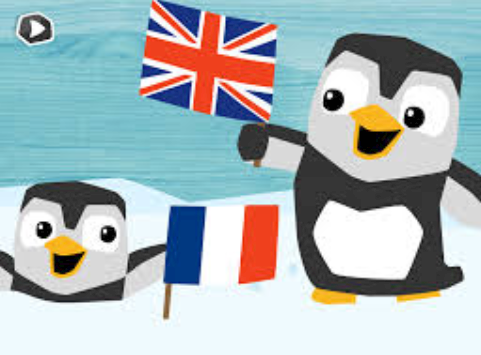
Did you know that in Canada it is a law that you are
allowed to speak English or French, whichever one you
choose. Maybe you even go to a French Immersion school.
Under the “Canadian Charter of Rights and Freedoms”
you can be equal and different at the same time. The
Charter of Rights and Freedoms makes sure that you
are free and safe because of who you are and keeps your
place in this great country. It says we can be different from
one another and that we are all the same in the eyes of
the government. In Canada we believe in sharing our
different cultures (kuhl-chers). Maybe you or your mom
and dad or grandma or grandpa came from another
country to Canada. Maybe you have special holidays or eat
different food or maybe you wear some different clothes
during family time. That’s one of the nicest things about
our country is that it is ok to be different.
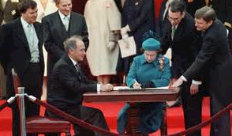
In our Canadian Charter of Rights and
Freedoms we decided that French and English
would the languages of Canada. As Canadians
this means that there is a law that says we can
speak whichever one want when we talk to the
government about things. English and French
are known as our “official (uh-fish-uhl)
languages.” Official just means that these are
the two languages that everybody agrees that
anyone can speak - of course there are lots of
other languages in Canada because many
people come from different countries and speak
different languages than English or French.

As we already learned First Nations people can also be
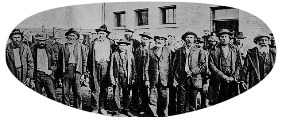
called Aboriginal people.These were the first people that
were here which is why we call them First Nations - besides
what the people back then called Indians there were also
people living up in the far north of Canada that we first called
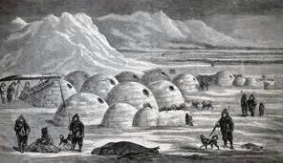
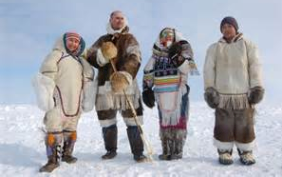
Eskimos but later learned to call Inuit. There were another
kind of people in Canada that started being born real early in
our history that are different from the Aboriginal and Inuits
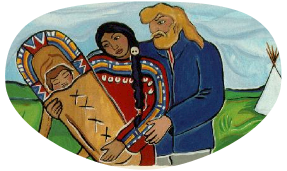
and they were the Métis (Ma-teez) - they were children of
one of the Aboriginal people and a white person who came to
Canada, especially the ones who came real early in the history
of Canada and were French - they came from the country of
France in Europe. For a long time in the history of Canada the
Métis people wanted to be treated like a special people just
like the First Nations people but it took a really long time
before the governments finally said that they really were a
special people and that they should have some
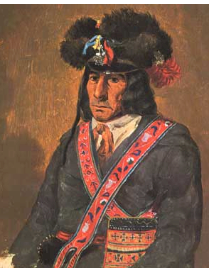
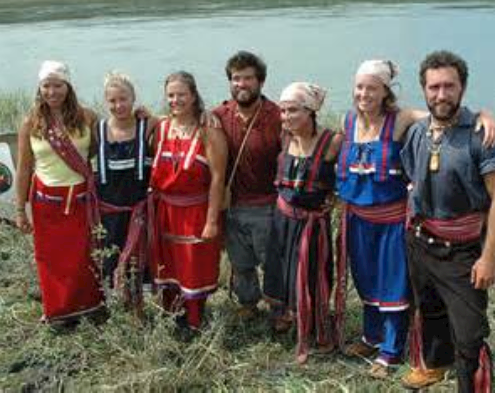
In 1982 the Métis asked the Canadian government
to say that they were also special people just like the
First Nations people. The government of Canada
agreed and made a new law saying that the Métis
would be special people in Canada.
In 1990 Alberta’s government passed a new law that
gave Métis their own land to live on. This new law
allowed the Métis people to make their own rules on
the land where they live. It was like they got their
own new country. The Métis were finally allowed to
get the money from the oil that is under the ground
on the land that they were given. This means they
have money to do the things they want to do.
CHAPTER 5
If you asked your mom or dad where your family started, you
will probably find out that they were born in a different country
than Canada and came here during some point in their life. That
process they used to get to Canada is something called
immigration. immigration is something that still goes on in our
world. There are many positive and negative things that go with
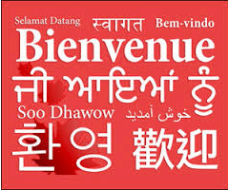
immigration. In this chapter we will look at Canada’s rules and
policies (po-li-sees - these are like rules or laws) for
immigration. We will also look at the problems people have
with it and how our country’s leader can benefit from it.
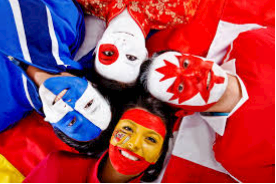
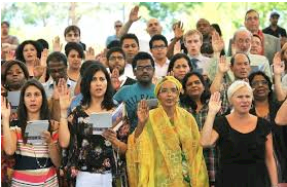
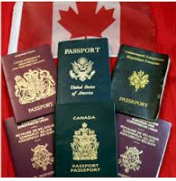
When you become a citizen of Canada you have to swear to the
country that you will follow the rules and always do the right
thing for Canada. As soon as you become a citizen you then have
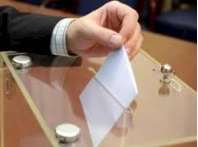
the right to vote.
• How do economic, political, health, and security factors
influence Canada’s immigration policies?
All of these things do stuff to this country’s immigration
policies. Most immigration is related to things dealing with
economics – Canada needs strong and mighty workers for our
economy and immigrants to have more life chances in this
country. Political factors are anything that is related to leaders
here or in other countries. Our leaders increase or decrease
how many immigrants get here based on what they think will
give them the best chance of being the leader for many more
years. Immigrants are required to pass a scanner that looks
for sicknesses because Canadians do not want to have people
that might make other people sick or cost our health places a
lot of money. Canada also wants to be sure people who will do
bad things to their country and people are not allowed to
enter.

• What impact does increasing immigration have on Aboriginal
peoples and communities?
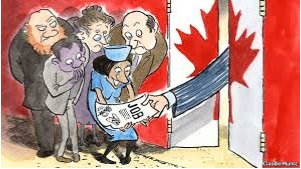
Most Aboriginal people are mad because they think
immigrants are being treated to better things by our country’s
leader than they are. They say that immigrants are taking
chances away from them like filling up workplaces and not
being able to hire new people and not being able to get into
good work training places for the same reasons. Imagine if
you were a kid on your hockey team that always does well
and you’re good at it, but then some new person comes along
and snatches your position away from you, you would be
really mad right? well this is how the aboriginal people feel.
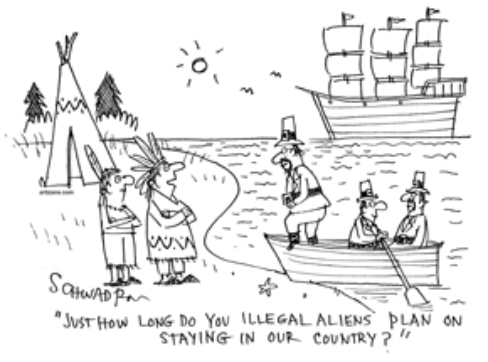
• How are provincial Leaders able to influence and implement
immigration policies?
Provincial leaders are able to make certain immigrants part of
their province because of a system they created. This system is
called the Provincial Nominee Program. It is there so
Provincial leaders can choose who gets into their province based
on what things they are good at and where their skills are
needed. When you play a game at school like floor hockey and
the captain chooses their team members, he/she makes sure
that the people that are chosen first are the ones that they know
are good at floor hockey. This is sort of what immigrants have to
go through in order to get into a certain province. The province
of Quebec often asks for people who want to come to Canada
and who already speak French because their province is French-
speaking. In Alberta they have a lot of oil so when oil workers
want to come to Canada they often are asked for by Alberta.

• How does Quebec use immigration to
strengthen the French language in Canada?
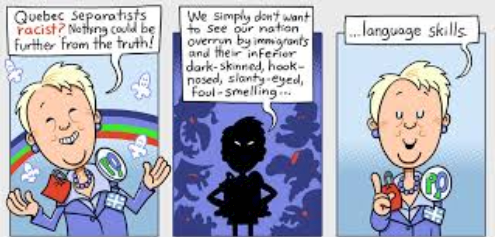
Quebec makes immigrants go through a french
school because they want to make sure they
speak french instead of english so that the
french people can get their language more
popular throughout Canada. This is also why
you have to take french in school. Even if you
don’t have to take french in school, it’s still in
the school system because the french want to
empower their language over the english
language.
• How does the Canadian Charter of Rights and Freedoms affect
immigration?
When an immigrant gets to Canada they then get all the things that
you or I might get like toys or being able to go to sporting events
like hockey or basketball. The only thing they do not have access to
is voting. Also once they get here from wherever they are coming
from they then have to explain their case to Canada and why they
think they should be able to stay here. It’s like if you wanted to get
into a new club at your school, so you go and find out information
about it and then you have to explain to people why you think you
should be in that club. And if they think you have a good enough
reason for being there then you can join it. We do the same as
Canadians to new immigrants who come here. They are welcomed
here with open arms, just like how your mom and dad would hug
you when you get home from school.


• How much does Canada benefit from immigration?
Canada does not have enough people to keep our country
working the way it should. So the new immigrants that
come from other places help us to make sure we have
enough people to do all the work that needs to be done.
Also you may not believe it but Canada is going down or
shrinking in people size, so the immigrants make sure
that they come here and help the number of people in our
country increase - going up. The immigrants also help
us learn about their culture and we can learn about where
they started and what their beliefs are. They also give our
leader connections to other world leaders so we can be
bigger and stronger.
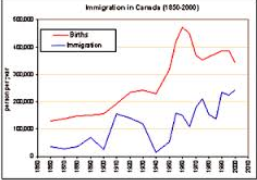
This chart shows immigration on the blue line and
births on the red line in Canada between 1850 and
the year 2000. Time is across the bottom and
numbers in hundreds of thousands is across the left.
This shows that there have been high periods of
lower and higher immigration which was often
because we needed people to work here.
Chapter 6
What if you had to make all the money decisions for your home?
What things would you spend your money on? How would you make
sure you had enough money to keep living in your house? These
are things your parents have to think about when you ask for
things you want and they also have to think about money when
they think about things they want. If you told your parents you
wanted to buy a video game, they would probably say that is a bad
idea and you should spend more time thinking about if it’s worth it
to buy that game. Most likely you would get upset and try to
explain why you need that game and this might cause a fight within
your family. This is what economics (ek-uh-nom-iks) are like. It’s
about what to make, grow, eat, sell and buy, and how to make sure
that everyone gets the things they need.
In this chapter we will discover new things about the economic
system in Canada and of Canada’s friend, the United States.
• What are the principles (prin-suh-puh ls) of a market
economy?
In a market economy valuables (val-yoo-uh-buh ls) - the
things that we want to buy or use - are owned privately (pri-
vit-ly) - meaning that they are not owned by the government
and people like you and me are the ones that make choices on
how to use them. Private businesses own and look after the
valuables and sell their items to the buyers. The buyers are the
ones who make all the choices. Supply and demand is the most
important thing that makes up the cost of the items - (supply is
how much of an item stores have and demand is how many
people want to buy that item). Have you ever wanted something
really bad that you saw on tv but when you went to the store
there were none left - well the store can charge people more for
it then because so many people want it. This is why gold costs so
much - so many people want it but there isn't much of it.
• What is the role of the consumer (kun-soo-mer) in
market and mixed economies?
Consumers are the people who make the choices in
both economies. If you go out and buy something
like a video game or a baseball bat then after you
purchase (pur-chus - just means to buy)those
things you have then become a consumer. When
you buy these items or things then you are choosing
that the company who made that video game will do
good and be successful (suk-ses-ful)because you
bought their item. If you didn’t buy that video game
then you would be choosing to let that business fail.
Consumers are very important to the economy.


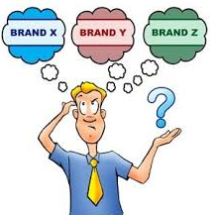
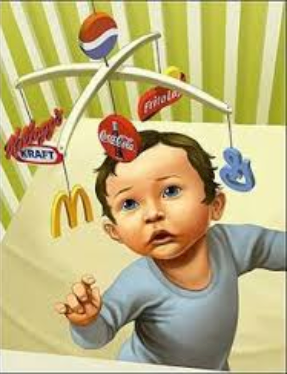
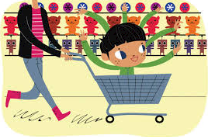
• What do the things that you buy say about you?
Did you ever stop to think about the things you need
to live and the things you want. We need to have
food and water but do we need a new video game?
People like me and you buy things because we want
it, we want it because it we like the toy or the game.
You might ask your parents to buy you something
like new shoes because everyone else is wearing
them and you want to be cool like them but do you
need them?
If your parents buy something really expensive, like a
big boat, then they might feel like they are like
people. Do you ask your parents to buy things you
don't really want - not too often likely.
You've previewed 72 of 110 pages.
To read more:
Click Sign Up (Free)- Full access to our public library
- Save favorite books
- Interact with authors


- < BEGINNING
- END >
-
DOWNLOAD
-
LIKE(2)
-
COMMENT()
-
SHARE
-
SAVE
-
BUY THIS BOOK
(from $21.99+) -
BUY THIS BOOK
(from $21.99+) - DOWNLOAD
- LIKE (2)
- COMMENT ()
- SHARE
- SAVE
- Report
-
BUY
-
LIKE(2)
-
COMMENT()
-
SHARE
- Excessive Violence
- Harassment
- Offensive Pictures
- Spelling & Grammar Errors
- Unfinished
- Other Problem






COMMENTS
Click 'X' to report any negative comments. Thanks!