 Instead of Night, I chose Darkened & Crestfallen as a new title for the book.
Darkened was put because Elie's life got dark and surrounded by death
really quickly and for a long time. Every day was a struggle and every day
he took a beating whether it was mentally or physically. Crestfallen was
added because of all the sadness that came. Elie had shed many tears and
has had many moments of suffering whether it was from leaving his mother
and his sisters, to watching the executions of others, to struggling to keep
his father alive. For these moments and reasons, I chose the title Darkened
& Crestfallen.
This book was created and published on StoryJumper™
©2015 StoryJumper, Inc. All rights reserved.
Publish your own children's book:
www.storyjumper.com


Summary of Chapter 1
Moche the Beadle is a poor foreigner that
becomes Eliezer Wiesel's jewish teacher in 1942.
Moche is transported from Sighet to a camp along
with other foreigners and then escapes. He comes
back to Sighet and starts to warn all the jews
about what he has seen and been through but
everybody just ignores him. Then later on the
jews are transported from Sighet to ghetto areas
where they are under German rule.
Chapter 1: I Tried To Warn You
Literary Device
Foreshadowing
The literary device I picked for chapter one is
foreshadowing. Moche is a huge example of this when
he goes to a camp, escapes, and comes back to warn
the other jews. He goes on and on and doesn't stop
warning the people about the danger that lied ahead.
This is why I picked foreshadowing as my literary
device.
Quote
"Optimism soon revived" page 19
Early this year I was very optimistic when my dad
was in the hospital for a long time. It was a scary
time because out of nowhere he became sick and
there wasn't a lot of things I could do to help.
Pretty much the only thing I could do was sit
around and hope for the best.

The symbol of a "blind eye" stands for denial. This
concept shows up in chapter one when Moche tried to
warn the jewish community and is ignored. A lot of
people brush Moche's stories and his experiences off
thinking that can never happen to them. Even after
many attempts he found no luck in reaching out to
people for their own safety. This is why "denial" is an
appropriate concept to tie in this chapter.
Symbolism
Summary of Chapter 2
The jews are packed tightly into cattle wagons
and are lied to about the conditions being good. The
conditions are actually very harsh as they travel for
many days. One night a woman named Madame
Schachter screams out in horror that she sees a
massive fire. Everyone else doesn't see the fire and
assumes that the woman has gone mad. After hearing
her scream for so long, young men beat her and
restrain her just so she can't cry out anymore. Upon
arrival, the doors open and then all the jews finally see
big fires and smell the scent of burning flesh.
Chapter 2: Dead On Arrival
Literary Device
Irony
The literary device I picked for chapter two is irony, for
it plays a big role in this chapter. Madame Schachter is
considered crazy and annoying by the passengers on
the train. She screams about the fire and about
everyone being burned up, and the other passengers
silence her, thinking that she is insane. However, in her
fear, she is the most honest and accurate about what is
going to happen, and everyone realizes when they get
to the camp. This is why I picked irony as my literary
device.
Quote
"The doors were nailed up; the way back was finally cut
off. The world was a cattle wagon hermetically sealed."
page 22
There have been many times in my life where I had
little freedom and wasn't able to do much. Once I was
grounded and I could only be in my room with no
phone, computer, or anything electronic. It sucked
because I really could not do much but read or sleep.
The symbol of two arms being chained together stands
for confinement. This concept shows up in chapter two
when the jews are packed into the cattle wagons and
can't escape or they will be killed. They couldn't even
sit down because they were all shoulder to shoulder.
This is why "confinement" is an appropriate concept to
tie in this chapter.

Symbolism
Summary of Chapter 3
As soon as they get off the train, the men and women
are separated. As the new arrivals enter the camp, a
veteran prisoner advises Elie and his father to lie about
their ages so they could be together. Another prisoner
points to the chimney of the crematory and warns them
that it is the place of their graves. In the middle of the
square an SS officer with a conductor's baton in his
hand separates the men according to who can work and
who cannot. Elie and his father remain together. Elie
thinks about jumping to his death into the ditch with
flames. He chooses to live and after they get clothes
and an identity number, they continue to live at the
camp for three weeks before being moved to another
camp.
Chapter 3: Separation
Literary Device
Imagery
The literary device used in chapter three is imagery.
Imagery was used greatly in this chapter describing the
horrible events in camp Auschwitz. The things Elie
describes such as the babies being thrown into the
flaming ditch emphasize how cruel the camp was and
add a great emotional effect on the reader. A lot of
detail was being used and put into this chapter. This is
why I chose imagery to be the main literary device used
in chapter three.
Quote
"I did not deny God's existence, but I doubted His
absolute justice." page 42
I have sometimes questioned my own beliefs. Some
reasons were because I also had bad things happen to
me and I also wondered if such bad things could
happen under God. Other reasons were just because of
the people around me not believing and trying to get me
to be a non-believer. I still stuck to my faith even after
all these things happening.
The symbol of "flames" stand for death. This shows up
when a prisoner tells Elie and his father that the
chimneys spewing smoke are their graves. It also
shows up when Elie thinks about killing himself in the
electric fence instead of burning in the flames.
Everytime fire and flames is brought up in the story,
death is always near so thats why I chose flames to be
the symbol for chapter three.

Symbolism
Summary of Chapter 4
Elie and his father arrive at Buna. After a medical
examination and a new pair of clothes, him and his dad end up
being placed in an orchestra block. They befriend some musicians
and get put to some easy work. While there, Elie goes to the
dentist where he avoids getting his gold crown removed. One
day a Kapo named Idek beats Elie and a french girl who passes as
an Aryan comforts Elie in German. Another day Elie's dad is
beaten with an iron bar for working slowly. Elie ends up giving his
gold crown to Franek so that his father wouldn't get hurt
anymore. Another day Elie gets whipped for walking in on Idek
doing things with a girl. About a week later the SS officers start
setting up gallows and also started hanging people. Elie
witnessed many executions in his stay at Buna in chapter four.
Chapter 4: Raining Death
Literary Device
Hyperbole
I chose hyperbole as the literary device for this chapter
because there is an exaggeration when two huge bowls
of soup are left out in front of everyone and Elie
describes it as "A feast for kings!" Even though it was a
super huge amount of food, he describes it as a feast
for kings because of the extreme hunger him and
everyone else feels daily. This is why I chose hyperbole
as a literary device for chapter 4.
Quote
“Jealousy consumed us, burned us up like straw.” page
67
There has been MANY times I have been jealous but the
big one is me being jealous of my cousin. The older one,
smarter one, funnier one, etc. I would copy everything
he did in hoping to be just like him. Now I don't care
anymore and have become my own self, but he
impacted my life hugely because I was jealous.
Symbolism
I chose soup to symbolize greed and temptation. In the
chapter two bowls were left out and EVERYBODY
wanted to gobble it down. Elie and a lot of people kept
their will not to jump right in but one man did give in.
The man stuck his head right in and ate some but kills
himself in the process as everyone else watches. This is
why I chose soup to symbolize temptation for this
chapter.

Chapter 5: New Years, New Challenges
Summary of Chapter 5
Rosh Hashanah comes and all the Jews assemble in a place
wondering if the last day of the year might actually be their last day living.
Elie continues to deny God's greatness, especially when all the other men
bless his name when Elie wonders why they can bless a God that allows
crematories to exist. Elie finds his father and while everyone else is saying
"Happy New Year", Elie and his dad do not say anything to each other. Elie
gets put in a different block from his father and is put to work. "Selection
Day" comes and Elie passes and so does his father. His father actually
passes two tests but one of the guys selected doesn't and is killed. Winter
comes and Elie gets his foot operated on so it doesn't have to get
amputated. Elie and his father leaves the hospital in fear that they will be
killed along with other patients in the hospital. Elie goes back to the
barracks and prepares for evacuation. Before they leave the head of the
barracks orders for some guys to clean up the block a little bit. After that all
the prisoners start to march in blocks to their next destination, even though
it is snowing extremely hard.
Literary Device
Internal Conflict
I chose internal conflict as the literary device for this
chapter. Elie struggles to keep his faith in God,
especially on Rosh Hashanah. When everybody is
praising God's name Elie constantly questions why he
should praise God. He eventually keeps his faith but he
no longer thinks that God is a good being. This is why I
chose Internal Conflict as the literary device for this
chapter.
Quote
"The race seemed interminable. I thought I had been
running for years..." page 79
For soccer tryouts at the school we had a running test.
If you passed you had a great shot at being on varsity
and if you failed you couldn't be on varsity at all. I
failed the first time but he let me redo it because he
wanted me on the team and the second time I ran it it
felt like an eternity. One lap after the other, slowly
counting until the end. I passed it but god was it
painstakingly long.
Symbolism
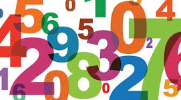
I chose numbers for symbolism because they
symbolized motivation. During the selection tests the
Jews had to run for their test and anyone who got their
number written down failed. To fail the test was to be
killed as you were not suited good enough to work
anymore. Elie ran for literally his life because he was
super afraid of being written down and failing to
survive to help his dad. This is why I chose numbers as
my symbolism for this chapter.
Chapter 6: Pushing Limits
Chapter 6 Summary
The SS officers start making the prisoners run through
the snow and then promise to shoot anyone that falls behind.
Elie is physically tired but his mind pushes him on and he keeps
running to stay alive and so he can help his father. After running
for what seems forever they all stop to rest. Elie and his father
realize that people are dying in the snow around them so they
decide to take shifts sleeping so they don't die as well. After they
rest they continue to march on until they arrive at Gleiwitz. All the
prisoners are stuffed into barracks and Elie has to fight his way
out so he doesn't die of suffocation. They then stay there for
three days without any food or drink and another selection
happens. He sneaks him and his dad into the unselected section
and then the remaining men left are loaded into cattle cars
where they head to another camp.
Literary Device
Personification
I chose personification as the literary device and an
example of it in chapter six is when Elie and the others
are running through the snow. "Death wrapped itself
around me till I was stifled." Elie thought this and it
gives human qualities to death because it doesn't
actually wrap Elie physically. It instead describes
greatly how much Elie was near dying due to his
infection, the cold, exhaustion, and starvation. This is
why I chose personification as the literary device for
this chapter.
You've previewed 24 of 37 pages.
To read more:
Click Sign Up (Free)- Full access to our public library
- Save favorite books
- Interact with authors


- < BEGINNING
- END >
-
DOWNLOAD
-
LIKE(1)
-
COMMENT()
-
SHARE
-
SAVE
-
BUY THIS BOOK
(from $7.39+) -
BUY THIS BOOK
(from $7.39+) - DOWNLOAD
- LIKE (1)
- COMMENT ()
- SHARE
- SAVE
- Report
-
BUY
-
LIKE(1)
-
COMMENT()
-
SHARE
- Excessive Violence
- Harassment
- Offensive Pictures
- Spelling & Grammar Errors
- Unfinished
- Other Problem





COMMENTS
Click 'X' to report any negative comments. Thanks!