CONTENT PAGE
Introduction to light wave................................2
The Pupil.............................................................3
Diagram of pupil................................................4
The Iris................................................................5
The Retina...........................................................6
The Lens.............................................................7
Diagram of concave and convex.....................8
Rods and Cones................................................9
The Optic Nerve................................................10
Diagram of the Optic s nerve..........................11
The Visual cortex

Created & published on StoryJumper™ ©2026 StoryJumper, Inc.
All rights reserved. Sources: storyjumper.com/attribution
Preview audio:
storyj.mp/amgpzfzi32m
Introduction to light waves
Electromagnetic radiation is one of the many ways that energy travels through space. If you’ve ever gone swimming in the ocean, you are already familiar with waves. The swell of the wave of the ocean and the subsequent dip that follows is simply a vibration of the water at the oceans surface.
2
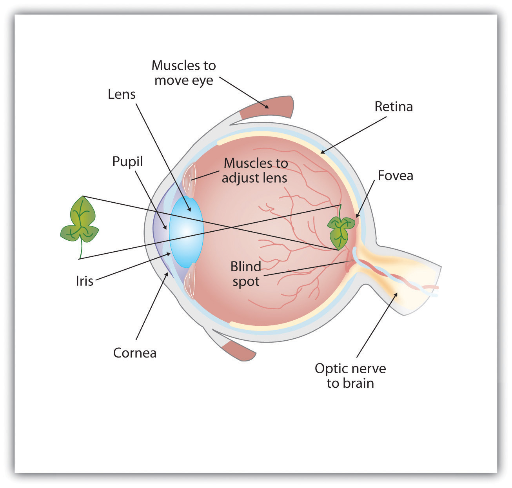
The pupil is the black opening in the center of the eye. Light enters through the pupil and goes through the lens, which focuses the image on the retina. The size of the pupil is controlled by muscles. When more light is needed, the pupil is made larger. In brighter light, the pupil is made smaller.
THE PUPIL
3

4
THE IRIS
Behind the aqueous humor is a colored ring called the iris. The color of the iris is inherited and does not affect vision. The iris is like a muscular curtain that opens and closes. It controls the amount of light entering the eye through the pupil, an opening in the iris.
5
THE RETINA
Retina: Once the light is in our eye it passes through fluids and lands on the retina at the back of the eye. The retina turns the light rays into signals that our brain can understand. The retina uses light sensitive cells called rods and cones to see. The rods are extra sensitive to light and help us to see when it's dark. The cones help us to see color.
6
LENS
A lens works by refraction: it bends light rays as they pass through it so they change direction. That means the rays seem to come from a point that's closer or further away from where they actually originate and that's what makes objects seen through a lens seem either bigger or smaller than they really are.
Types of lenses are convex lenses and concave lenses.
7
Benefits:
- Full access to our public library
- Save favorite books
- Interact with authors
READ
storyjumper.com
- < BEGINNING
- END >
-
DOWNLOAD
-
LIKE
-
COMMENT()
-
SHARE
-
SAVE
BUY THIS BOOK (from $2.99+)
-
BUY THIS BOOK
(from $2.99+) -
BUY THIS BOOK
(from $2.99+) - DOWNLOAD
- LIKE
- COMMENT ()
- SHARE
- SAVE
- REMIX
- Report
Liked By
X
Encourage this author
-
BUY
-
LIKE
-
COMMENT()
-
SHARE
Problem with this book
X
- Excessive Violence
- Harassment
- Offensive Pictures
- Spelling & Grammar Errors
- Unfinished
- Other Problem
Which pages have problems?
Please describe the problem:
left text
right text
"LOOK AT MY EYES"
An introduction to light waves, explaining concepts such as electromagnetic radiation, the eye's anatomy, and how we perceive light.
(13 pages)
Privacy level:
PUBLIC
33 reads
Report





COMMENTS
Click 'X' to report any negative comments. Thanks!