 Bailey Peterson
 6th hour world history
This book was created and published on StoryJumper™
©2010 StoryJumper, Inc. All rights reserved.
Publish your own children's book:
www.storyjumper.com

Table of contents:
1. Judaism
-Leader & Beginnings (timeline)
-Holy Writings and Guidelines
-Beliefs/Influence of Beliefs
2. Christianity
-Leader & Beginnings (timeline)
-Holy Writings and Guidelines
-Beliefs/Influence of Beliefs
3. Hinduism
-Leader & Beginnings (timeline)
-Holy Writings and Guidelines
-Beliefs/Influence of Beliefs
4.Buddhism
-Leader & Beginnings (timeline)
-Holy Writings and Guidelines
-Beliefs/Influence of Beliefs
5.Islamic\Muslim
-Leader & Beginnings (timeline)
-Holy Writings and Guidelines
-Beliefs/Influence of Beliefs
6.Confucianism
-Leader & Beginnings (timeline)
-Holy Writings and Guidelines
-Beliefs/Influence of Beliefs
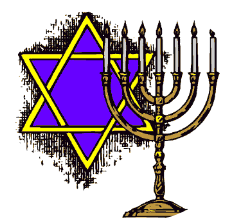
Judaism

c. 2000-1500 BCE Abraham and the Patriarchs
c. 1500-1200 BCE Egypt, the Exodus and wandering in the desert
1200-1050 BCE Occupation of Canaan, the Promised Land
1050-920 BCE United kingdom under Saul, David and Solomon, with capital at Jerusalem
920-597 BCE Divided kingdom of Israel (north) and Judah (south)
722 BCE Assyria conquers Israel
701 BCE Egyptians conquer Judah
612 BCE Ninevah destroyed by Babylonains and Medes
605 BCE Babylon conquers Egypt, now rules Judah
568-538 BCE Babylonian Exile
586 BCE Destruction of the first temple
550 BCE Second Isaiah composed
c. 520 BCE Haggai and Zechariah prophesy
516 BCE Second Temple built
5th cent. BCE Oldest known example of a ketubah
3rd cent. BCE Rise of the Sadducees; Septuagint formed
2nd cent. BCE Idea of resurrection of the dead gains popularity in Jewish circles
c. 20 BCE Philo Judaeus born
0-100 CE Compilation of the Tenakh
c. 50 CE Philo dies
70 CE Destruction of the Second Temple by the Romans on the 9th of Av
c. 90-150 Canonization of Hebrew Bible essentially complete
135 Bar Kokhba rebellion defeated at Betar by Romans on 9th of Av
c. 135 Roman governors ban circumcision
164 Hasmonean revolt against the Romans
c. 200 Compilation of the Mishnah by Judah ha-Nasi
337 Proselytizing for Judaism is punishable by death in the Roman Empire.
358 Rabbi Hillel II introduces permanent fixed ritual calendar
c. 425 Compilation of the Jerusalem Talmud
500-600 Compilation of the Babylonian Talmud
700-1100 Karaite sect rejects Rabbinic Judaism
933 Saadiah Gaon writes the Book of Beliefs and Opinions
1040-1105 Rashi (Rabbi Solomon ben Isaac)
1096 First Crusade prompts anti-Jewish violence in France and Germany
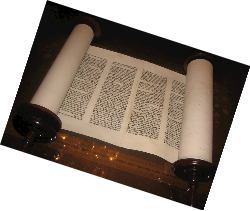
The Holy writings for Judaism in the Torah. It is made up of 5
books. The Torah was considered the most sacred writings.
The 10 commandments were the basics for the civil and
religious laws for Judaism.
There is only 1 God. He watches out for his
people as well as cares for them. God holds
people accountable for their own sins. Jewish
people honor God by studying the Torah.
2. Christianity
c. 4 BC Birth of Jesus
c. 26 AD John the Baptist begins ministry
c. 27 AD Jesus begins ministry
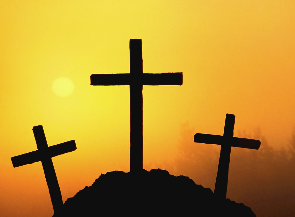
c. 30 AD Crucifixion of Jesus
c. 35 Conversion of Paul
c. 44 Martyrdom of James
c. 46-48 Paul's first missionary journey
c. 49 Council of Jerusalem
c. 50-52 Paul's second missionary journey
c. 51-52 First and Second Thessalonians written
c. 53-57 Paul's third missionary journey
c. 57 Letter to the Romans written
c. 59-62 Paul imprisoned in Rome
c. 60 Andrew martyred by crucifixion in Achaia (Greece).
c. 66-67 Second Timothy written
c. 68 Martyrdom of Paul
70 Fall of Jerusalem
c. 90-95 John exiled on island of Patmos
c. 95 Book of Revelation written
c. 96 Clement of Rome's Letter to the Corinthians written
c. 120 Didache written
202 Christians persecuted under Septimus Severus
211 Christians tolerated under Emperor Antoninus Caracalla
222 Christians favored Emperor Alexander Severus
230 Origen's On First Principles
235 Christians persecuted under Emperor Maximin the Thracian
238 Christians tolerated under Emperor Gordian III
244 Christians favored under Emperor Philip the Arabian
251 Cyprian's Unity of the Catholic Church
254 Death of Origen
303 Diocletian orders burning of Christian books and churches
312 Emperor Constantine's conversion to Christianity
313 Edict of Milan establishes official toleration of Christianity
325 Council of Nicea
336 Death of Constantine
354 Birth of Augustine
367 Athanasius lists all 27 books of NT
379 Basil the Great dies
380 Christianity made official religion of Roman Empire
381 Council of Constantinople
386 Augustine converts to Christianity
389 Gregory of Nazianzus dies
395 Gregory of Nyssa dies
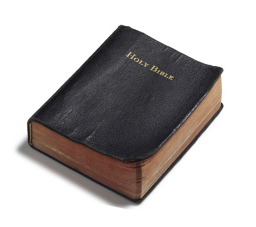
The Bible Holy writing is the Bible. Christians prey
to their God. They also song and hold sermons.
They have services for Baptism and celebrate many
holidays like Christmas, the day Christ was born,
and Easter the day he was resurrected.
Christians believe that their in only 1 God, this God
watches over and cares for the people. Also they
believe that Jesus Christ was the son of God. He
died on the cross to save anyone that believes in
him so they can have eternal life in Heaven.

Hinduism

2800-2000 BCE Indus Valley civilization.
1200-900 BCE Early Vedic Period - earliest Vedas are compiled.
900-600 BCE Late Vedic period - Brahmanical religion develops, emphasizing ritual and social obligation.
800-300 BCE The 11 major Upanishads are written, which include the ideas of reincarnation and karma.
500 BCE-1000 CE Epics and Puranas are written, reflecting the rise of devotional movements dedicated to Shiva,
Vishnu and Devi.
5th cent. BCE Buddhism and Jainism founded in India.
c. 320-185 BCE Mauryan Dynasty founded by Chandragupta.
c. 320-500 CE Gupta empire.
c. 500-650 CE Gupta empire divides into several kingdoms.
c. 600-1600 CE Rise of devotional movements, puja (worship) rituals, and idea of equality of devotees.
7th-11th cent. Esoteric movements based on Tantras develop.
c. 870-1280 Cholas dynasty. Hinduism arises in the south.
1498 European presence in southern Asia begins with the arrival of Vasco de Gama.
1540s Portugese missionaries arrive in India.
17th-19th cent. Hindu Renaissance.
c. 1700 British East India Company formed.
1720 Collapse of the Mughal empire; British begin to take power.
1857 National War of Independence against the British is sparked by the British use of cow fat in guns.
1876 Queen Victoria becomes Empress of India.
1895 Vedanta Society founded by Vivekananda. Promotes Hinduism as a world religion and India as a single
nation.
1915 Gandhi joins the nationalist movement.
1947 India regains independence, but its partitioning leads to conflicts between Hindus, Muslims, and Sikhs.
1948 Assassination of Gandhi.
1950 Constitution of the Republic of India.
There are 3 main gods in Hinduism they are,
Brahma, Vishnu, and Shiva. The Gurus is the
spiritual leader. They spread the Hindu beliefs. The
Gurus always watches out for the sacred wrings.
Hinduism has no 1 sacred book. They believe
freeing them self's of early desires comes from a
life of worship, knowledge, and virtuous acts.
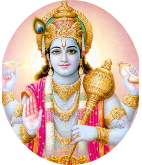
In Hinduism they believe that the spirit never dies
but is continually reborn. Also that to achieve
happiness and enlightenment they must free them
self's of earthly desires. Each spring Hindus
celebrate the festival of Holi to celebrate the story
of Prince Prahlada, who died rather than stop
worshiping Vishnu. To remember this people dance
in the streets and through colored power and dyed
water at each other.

Buddhism

c. 480 BCE Birth of the Buddha in Kapilavastu.
c. 450 BCE The Buddha's enlightenment and first sermon.
c. 405 BCE Death of the Buddha.
c. 405 BCE First Buddhist Council, at Rajagrha.
c. 350 BCE Second Buddhist Council, at Vaisali.
327-325 BCE Alexander the Great in India.
c. 300 BCE Buddhism arrives in SE Asia.
272 BCE Emperor Asoka takes throne.
250 BCE Third Buddhist Council, resulting in Great Schism and Theravada and Mahayana Buddhism
247 BCE Mahinda introduces Buddhism to Sri Lanka.
200-0 BCE Stupa construction at Sanci.
1st cent. BCE Theravada Buddhist Canon (Tripitaka) completed in Sri Lanka.
1st cent. CE Indian Buddhists settle in Southeast Asia.
150-250 CE Life of Nagarjuna.
4th cent. Rise of Vajrayana Buddhism.
350-650 Gupta dynasty in India; Buddhist philosophy and art flourish.
372 CE Chinese monks bring Buddhism to Korea.
399-414 Fa-hsien travels to India.
c. 420 Schools of Tiantai, Huayan, Chan, and Jingtu appear in China.
520 Bodhidharma arrives in China.
526 Viniaya school founded in Korea.
527 Korea accepts Buddhism.
6th cent. Burma adopts Theravada Buddhism.
552 Buddhism enters Japan from Korea.
572-621 Prince Shotoku sponsors Buddhism in Japan.
c. 589 Chinese Buddhist commentaries written.
c. 600 First diffusion of Buddhism in Tibet.
618-50 Life of Songtsen Gampo; establishment of Buddhism in Tibet.
618-907 Chinese T'ang Dynasty; golden age of Buddhism in China.
7th cent. Mahayana Buddhism adopted in Indonesia.
8th cent. Buddhism becomes state religion of Japan.
741 Japanese emperor orders a temple be built in every province.
c. 792-94 The Great Samye Debate decides on Indian Mahayana Buddhism as the form for Tibet.
836-842 King Langdharma persecutes Tibetan Buddhists.
845 Chinese emperor suppresses Buddhism.
early 10th cent. Korea institutes a Buddhist constitution
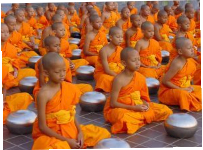
To reach nirvana, or complete peace and
happiness, they must follow the Noble
Eightfold Path: Right views; Right resolve;
Right speech; Right conduct; Right livelihood;
Right effort; Right mindfulness; Right
concentration. People who dedicate there lives
to the Buddha must live a life of poverty,
meditation, and study.
You've previewed 17 of 26 pages.
To read more:
Click Sign Up (Free)- Full access to our public library
- Save favorite books
- Interact with authors


- < BEGINNING
- END >
-
DOWNLOAD
-
LIKE(4)
-
COMMENT()
-
SHARE
-
SAVE
-
BUY THIS BOOK
(from $5.19+) -
BUY THIS BOOK
(from $5.19+) - DOWNLOAD
- LIKE (4)
- COMMENT ()
- SHARE
- SAVE
- Report
-
BUY
-
LIKE(4)
-
COMMENT()
-
SHARE
- Excessive Violence
- Harassment
- Offensive Pictures
- Spelling & Grammar Errors
- Unfinished
- Other Problem





COMMENTS
Click 'X' to report any negative comments. Thanks!