 I dedicate my book to Danny Greenhalgh,
Mariah Severud, and Olivia Garcia.
This book was created and published on StoryJumper™
©2010 StoryJumper, Inc. All rights reserved.
Publish your own children's book:
www.storyjumper.com

1.Judaism
Leader and Beginnings (Timeline)
Holy Writings and Guidelines
Beliefs/influence of Beliefs

3800 B.CE - 2001 BCE - The Dawn of “History”
2000 B.C.E. - 587 BCE - Context of Ancient Israelite Religion
538 BCE - 70 CE - Judaism After the Babylonian Exile
230 BCE-400 CE - Rule of Rome
70 - 500 - Rabbinic Jewish Period of Talmud Development
325 - 590 - Consolidation & Dominance of Classical Christianity
600 - 1500 - “Medieval” Period in the West
570 - 1258 - Reception & Classical Development of Muhammad's Islamic
Message
1095-1258 - Crusades
1258-1500 - Further Transitions and Rebuilding of Political Islam
1291-1516 - Mamluk Rule
1517-1569 - Reformation and Post-Reformation Christian Period
1500-1920 - Dominance of Ottoman Muslim Empire in Turkey
1700-1917 - Jewish Modern and Contemporary Periods
1914-1918 - Islamic Unrest and Realignment in the Middle East
1918-1947 - British Rule in Palestine
1947-Present - Modern Israel & the Diaspora
Founded by Abraham

Made up of three parts: The Torah, The first five books
The Nevi'im, Eight books
The Ketuvim, Eleven books
Jews Believe in...
~One eternal, all knowing,God
~Heaven and Hell
~The Messiah hasn't come yet
~The words of the prophet are true
~Moses is the greatest prophet


2. Christianity
Leader and Beginnings (Timeline)
Holy Writings and Guidelines
Beliefs/Influence of Beliefs
c. 4 BC Birth of Jesus
c. 26 AD John the Baptist begins ministry
c. 27 AD Jesus begins ministry
c. 30 AD Crucifixion of Jesus Founded by Jesus
c. 35 Conversion of Paul
c. 44 Martyrdom of James
c. 46-48 Paul's first missionary journey
c. 49 Council of Jerusalem
c. 50-52 Paul's second missionary journey
c. 51-52 First and Second Thessalonians written
c. 53-57 Paul's third missionary journey
c. 57 Letter to the Romans written
c. 59-62 Paul imprisoned in Rome
c. 60 Andrew martyred by crucifixion in Achaia (Greece).
c. 66-67 Second Timothy written
c. 68 Martyrdom of Paul
70 Fall of Jerusalem
c. 90-95 John exiled on island of Patmos
c. 95 Book of Revelation written
c. 96 Clement of Rome's Letter to the Corinthians written
c. 120 Didache written
202 Christians persecuted under Septimus Severus
211 Christians tolerated under Emperor Antoninus Caracalla
222 Christians favored Emperor Alexander Severus
230 Origen's On First Principles
235 Christians persecuted under Emperor Maximin the Thracian
238 Christians tolerated under Emperor Gordian III
244 Christians favored under Emperor Philip the Arabian
251 Cyprian's Unity of the Catholic Church
The Holy Book of Christians is the Bible.
The Christians follow a list of rules called the Ten Commandments.
1. There is only one God
2. No other Gods before me.
3. Do not take the name of the Lord your God's name in vain.
4. Remember the Sabbath day and keep it holy.
5. Honor your father and mother.
6. Don't murder
7. Don't commit adultery
8. Don't steal
9. Don't lie
10. Don't covet
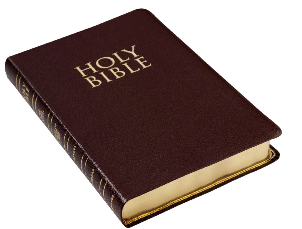
Christians believe that God came down to earth in human form as Jesus.He
loved us so much that He died on the cross and paid the debt for our sins so
that we could be let into heaven. The Jesus came back from the dead and is
now waiting for us in Heaven.

3.Hinduism
Leader and Beginnings (Timeline)
Holy Writings and Guidelines
Beliefs/influence of Beliefs
2800-2000 BCE Indus Valley civilization.
1200-900 BCE Early Vedic Period - earliest Vedas are compiled.
900-600 BCE Late Vedic period - Brahmanical religion develops, emphasizing ritual and social
obligation.
800-300 BCE The 11 major Upanishads are written, which include the ideas of reincarnation and
karma.
500 BCE-1000 CE Epics and Puranas are written, reflecting the rise of devotional movements
dedicated to Shiva, Vishnu and Devi.
5th cent. BCE Buddhism and Jainism founded in India. No one Founder
c. 320-185 BCE Mauryan Dynasty founded by Chandragupta.
c. 320-500 CE Gupta empire.
c. 500-650 CE Gupta empire divides into several kingdoms.
c. 600-1600 CE Rise of devotional movements, puja (worship) rituals, and idea of equality of devotees.
7th-11th cent. Esoteric movements based on Tantras develop.
c. 870-1280 Cholas dynasty. Hinduism arises in the south.
1498 European presence in southern Asia begins with the arrival of Vasco de Gama.
1540s Portugese missionaries arrive in India.
17th-19th cent. Hindu Renaissance.
c. 1700 British East India Company formed.
1720 Collapse of the Mughal empire; British begin to take power.
1857 National War of Independence against the British is sparked by the British use of cow fat in
guns.
1876 Queen Victoria becomes Empress of India.
1895 Vedanta Society founded by Vivekananda. Promotes Hinduism as a world religion and India as
a single nation.
1915 Gandhi joins the nationalist movement.
1947 India regains independence, but its partitioning leads to conflicts between Hindus, Muslims,
and Sikhs.
1948 Assassination of Gandhi.
1950 Constitution of the Republic of India.
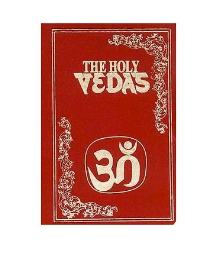
There are scared writings, but no one book. The vedas one of the many
scared writings that they use.
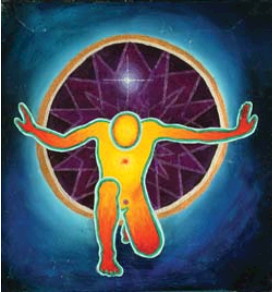
Hindus believe in a wide variety of things, but the main
goal is to release (moksha) from the cycle of rebirth
(samsara).
4.Buddhism
Leader and Beginnings (Timeline)
Holy Writings and Guidelines
Beliefs/Influence of Beliefs
c. 800-500 BCE Composition of Hindu Upanishads
552-479 BCE Life of Confucius
c. 500 BCE Life of Lao-Tzu
c. 480 BCE Birth of the Buddha in Kapilavastu.
c. 450 BCE The Buddha's enlightenment and first sermon.
c. 405 BCE Death of the Buddha.
c. 405 BCE First Buddhist Council, at Rajagrha.
c. 350 BCE Second Buddhist Council, at Vaisali. Founded by Buddha
327-325 BCE Alexander the Great in India.
c. 300 BCE Buddhism arrives in SE Asia.
272 BCE Emperor Asoka takes throne.
250 BCE Third Buddhist Council, resulting in Great Schism and Theravada and Mahayana
Buddhism
247 BCE Mahinda introduces Buddhism to Sri Lanka.
200-0 BCE Stupa construction at Sanci.
1st cent. BCE Theravada Buddhist Canon (Tripitaka) completed in Sri Lanka.
1st cent. CE Indian Buddhists settle in Southeast Asia.
150-250 CE Life of Nagarjuna.
4th cent. Rise of Vajrayana Buddhism.
350-650 Gupta dynasty in India; Buddhist philosophy and art flourish.
372 CE Chinese monks bring Buddhism to Korea.
399-414 Fa-hsien travels to India.
c. 420 Schools of Tiantai, Huayan, Chan, and Jingtu appear in China.
520 Bodhidharma arrives in China.
526 Viniaya school founded in Korea.
527 Korea accepts Buddhism.
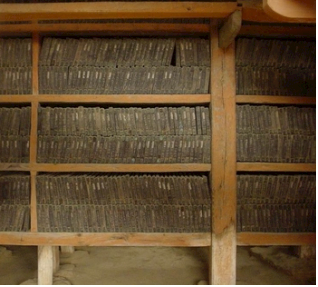
The Tripitaka is the Buddhist holy book, it is very big
and takes up forty volumes in the English language.
You've previewed 16 of 25 pages.
To read more:
Click Sign Up (Free)- Full access to our public library
- Save favorite books
- Interact with authors


- < BEGINNING
- END >
-
DOWNLOAD
-
LIKE(1)
-
COMMENT()
-
SHARE
-
SAVE
-
BUY THIS BOOK
(from $4.99+) -
BUY THIS BOOK
(from $4.99+) - DOWNLOAD
- LIKE (1)
- COMMENT ()
- SHARE
- SAVE
- Report
-
BUY
-
LIKE(1)
-
COMMENT()
-
SHARE
- Excessive Violence
- Harassment
- Offensive Pictures
- Spelling & Grammar Errors
- Unfinished
- Other Problem





COMMENTS
Click 'X' to report any negative comments. Thanks!