
From Wikipedia, the free encyclopedia
For the dog breed, see Hokkaido (dog).
Hokkaido
北海道
Japanese transcription(s)
• Japanese
北海道
• Rōmaji
Hokkaidō
Ainu transcription(s)
• Ainu
アィヌ・モシリ
• Rōmaji
Ainu-Mosir
Flag
Country
Hokkaido
Hokkaido
Government
• Governor
Area
• Total
83,453.57 km2(32,221.60 sq mi)
Area rank
Population (1 October 2010)
• Total
5,507,456[1]
• Rank
• Density
66.4/km2 (172/sq mi)
JP-01
74
179
Flower
Hamanasu (rugosa rose,Rosa rugosa)
Tree
Ezomatsu (Jezo spruce,Picea jezoensis)
Bird
Tanchō (red-crowned crane,Grus japonensis)
Fish
Website
Hokkaido (island)
Native name: 北海道(本島)
Geography
Location
Boundary between northwestern Pacific Ocean, Sea of Japan, andSea of Okhotsk
Coordinates
Archipelago
Area
77,981.87 km2(30,108.97 sq mi)
Highest elevation
2,290 m (7,510 ft)
Highest point
Administration
Japan
Hokkaido
Largest settlement
Sapporo (pop. 1,890,561)
Demographics
Population
approx. 5,600,000
Ethnic groups
Hokkaido (北海道 Hokkaidō?, literally "Northern Sea Circuit") (Japanese: [hokkaidoː] ( listen)), formerly known asEzo, Yezo, Yeso, or Yesso, is the second largest island of Japan, and the largest and northernmost prefecture. TheTsugaru Strait separates Hokkaido from Honshu.[2] The two islands are connected by the underwater railway Seikan Tunnel. The largest city on Hokkaido is its capital, Sapporo, which is also its only ordinance-designated city.
Contents
[hide]
1History1.1Naming of Hokkaido2Geography2.1Seismic activity2.2National parks and quasi-national parks2.3Wildlife3Sub prefectures4Climate5Major cities and towns6Economy7Transportation8Education9Sports9.1Association football9.2Baseball9.3Ice hockey9.4Basketball9.5American Football10Winter festivals11International relations12Politics12.1Governor12.2Assembly12.3National representation13See also14Notes15Bibliography16External linksENTER LINKS: Hokkaido ice village Tamamu



- 1List of smaller islands of Japan1.1Hokkaido prefecture1.2Islands off Honshu in the Sea of Japan1.3Islands in Tokyo Bay (artificial islands)1.4Islands in Osaka Bay (artificial islands)1.5Islands in Ise Bay1.6Islands in the Pacific Ocean1.7Islands around Kyushu1.8Ryukyu Islands (Nansei-shotō)1.8.1Satsunan Islands1.8.1.1Ōsumi Islands1.8.1.2Tokara Islands1.8.1.3Amami Islands1.8.2Ryukyu Islands (Ryūkyū-shotō)1.8.2.1Okinawa Islands1.8.2.2Sakishima Islands1.9Islands in the Inland Sea1.10Islands in lakes1.11Other artificial islands1.12Claims but does not control1.12.1The Northern Territories1.12.2Others
- 2See also
- 3References
- Twelve prefectural natural parks (道立自然公園). The prefectural natural parks cover 146,802 ha, the largest area of any prefecture.[20]Akkeshi Prefectural Natural ParkEsan Prefectural Natural ParkFurano-Ashibetsu Prefectural Natural ParkHiyama Prefectural Natural ParkKariba-Motta Prefectural Natural ParkMatsumae-Yagoshi Prefectural Natural ParkNorth Okhotsk Prefectural Natural ParkNopporo Shinrin Kōen Prefectural Natural ParkNotsuke-Fūren Prefectural Natural ParkSharidake Prefectural Natural ParkShumarinai Prefectural Natural ParkTeshiodake Prefectural Natural Park
- Hokkaido University (former Sapporo Agricultural College)[27]
- Hokkaido University of Education
- Muroran Institute of Technology
- Otaru University of Commerce
- Obihiro University of Agriculture and Veterinary Medicine
- Asahikawa Medical University
- Kitami Institute of Technology
- Sapporo Snow Festival
- Asahikawa Snow Festival
- Sōunkyō Ice Festival
- Big Air - snowboarding freestyle competition
- Alberta, Canada, since 1980[29][30]
- Heilongjiang, China, since 1980[29]
- Massachusetts, USA, since 1988[29][31]
- Sakhalin Oblast, Russia, since 1998[29]
- Busan, South Korea, since 2005
- Gyeongsangnam-do, South Korea, since 2006
- Seoul, South Korea, since 2010[32]
- 2006 Kuril Islands earthquake
- Asia League Ice Hockey
- Former Hokkaido government office building
- Kuril Islands dispute
- People from Hokkaido
- Sankebetsu brown bear incident
- Hokkaido dialects
- Red-crowned crane

- 1History1.1Naming of Hokkaido
- 2Geography
- 2.1Seismic activity
- 2.2National parks and quasi-national parks
- 2.3Wildlife
- 3Sub prefectures
- 4Climate
- 5Major cities and towns
- 6Economy
- 7Transportation
- 8Education
- 9Sports
- 9.1Association football
- 9.2Baseball
- 9.3Ice hockey
- 9.4Basketball
- 9.5American Football
- 10Winter festivals
- 11International relations
- 12Politics
- 12.1Governor
- 12.2Assembly
- 12.3National representation
- 13See also
- 14Notes
- 15Bibliography
- 16External links
Contents
[hide]
- 1History1.1Naming of Hokkaido
- 2Geography
- 2.1Seismic activity
- 2.2National parks and quasi-national parks
- 2.3Wildlife
- 3Sub prefectures
- 4Climate
- 5Major cities and towns
- 6Economy
- 7Transportation
- 8Education
- 9Sports
- 9.1Association football
- 9.2Baseball
- 9.3Ice hockey
- 9.4Basketball
- 9.5American Football
- 10Winter festivals
- 11International relations
- 12Politics
- 12.1Governor
- 12.2Assembly
- 12.3National representation
- 13See also
- 14Notes
- 15Bibliography
- 16External links
History[edit]
See also: List of Historic Sites of Japan (Hokkaido)
Map of Hokkaido
Hokkaido () was settled by the Ainu,[3] Nivkh, and Orok before recorded history.[4] The Nihon Shoki, finished in 720 AD, is often said to be the first mention of Hokkaido in recorded history. According to the text, Abe no Hirafu[4]led a large navy and army to northern areas from 658 to 660 and came into contact with the Mishihase and Emishi. One of the places Hirafu went to was called Watarishima (?), which is often believed to be present-day Hokkaido. However, many theories exist in relation to the details of this event, including the location of Watarishima and the common belief that the Emishi in Watarishima were the ancestors of the present-day Ainu people.
During the Nara and Heian periods (710–1185), people in Hokkaido conducted trade with Dewa Province, an outpost of the Japanese central government. From the Middle Ages, the people in Hokkaido began to be called Ezo. Hokkaido, formerly known as Ezochi[5] Ezochi (?, lit. "Ezo-land") or Ezogashima (?, lit. "Island of the Ezo"). The Ezo mainly relied upon hunting and fishing and obtained rice and iron through trade with the Japanese.
During the Muromachi period (1336–1573), the Japanese created a settlement at the south of the Oshima Peninsula. As more people moved to the settlement to avoid battles, disputes arose between the Japanese and the Ainu. The disputes eventually developed into a war. Takeda Nobuhiro killed the Ainu leader, Koshamain,[4] and defeated the opposition in 1457. Nobuhiro's descendants became the rulers of the Matsumae-han, which was granted exclusive trading rights with the Ainu in the Azuchi-Momoyama and Edo periods (1568–1868). The Matsumae family's economy relied upon trade with the Ainu. They held authority over the south of Ezochi until the end of the Edo period in 1868.
The Matsumae clan rule over the Ainu must be understood in the context of the expansion of the Japanese feudal state. Medieval military leaders in northern Honshū (ex. Northern Fujiwara, Akita clan) maintained only tenuous political and cultural ties to the imperial court and its proxies, the Kamakura Shogunate and Ashikaga Shogunate. Feudal strongmen sometimes located themselves within medieval institutional order, taking shogunal titles, while in other times they assumed titles that seemed to give them a non-Japanese identity. In fact many of the feudal strongmen were descended from Emishi military leaders who had been assimilated into Japanese society.[6] The Matsumae clan were of Yamato descent like other ethnic Japanese people, whereas the Emishi of northern Honshu where a distinctive group related to the Ainu. The Emishi were conquered and integrated into the Japanese state dating back as far as the 8th century, and as result began to lose their distinctive culture and ethnicity as they became minorities. By the time the Matsumae clan ruled over the Ainu most of the Emishi were ethnically mixed and physically closer to Japanese than they were to Ainu. This dovetails nicely with the "transformation" theory that native Jōmon peoples changed gradually with the infusion of Yayoi immigrants into the Tōhoku rather than the "replacement" theory which posits that one population (Jōmon) was replaced by another (Yayoi).[7]
Matsumae Takahiro, a Matsumae lord of the lateEdo period. December 10, 1829 – June 9, 1866
There were numerous revolts by the Ainu against feudal rule. The last large-scale resistance was Shakushain's Revolt in 1669–1672. In 1789, a smaller movement, the Menashi-Kunashir Rebellion, was also crushed. After that rebellion the terms "Japanese" and "Ainu" referred to clearly distinguished groups, and the Matsumae were unequivocally Japanese. In 1799–1821 and 1855–1858 the Edo Shogunate took direct control over Hokkaido in response to a perceived threat from Russia.
Leading up to the Meiji Restoration, the Tokugawa Shogunate realized there was a need to prepare northern defenses against a possible Russian invasion and took over control of most of Ezochi. The Shogunate made the plight of the Ainu slightly easier, but did not change the overall form of rule.[8]
Hokkaido was known as Ezochi until the Meiji Restoration. Shortly after the Boshin War in 1868, a group of Tokugawa loyalists led byEnomoto Takeaki temporarily occupied the island (the polity is commonly but mistakenly known as the Republic of Ezo), but the rebellion was crushed in May 1869. Ezochi was subsequently put under control of Hakodate-fu (?), Hakodate Prefectural Government. When establishing the Development Commission ( Kaitakushi?), the Meiji Government introduced a new name. After 1869, the northern Japanese island was known as Hokkaido;[2] and regional subdivisions were established, including the provinces of Oshima, Shiribeshi, Iburi, Ishikari, Teshio, Kitami, Hidaka, Tokachi, Kushiro, Nemuro and Chishima.[9]
Ainu are Hokkaido's indigenous people
The primary purpose of the development commission was to secure Hokkaido before the Russians extended their control of the Far East beyond Vladivostok. Kuroda Kiyotaka was put in charge of the venture. His first step was to journey to the United States and recruit Horace Capron, President Grant's Commissioner of Agriculture. From 1871 to 1873 Capron bent his efforts to expounding Western agriculture and mining with mixed results. Capron, frustrated with obstacles to his efforts returned home in 1875. In 1876, William S. Clark arrived to found an agricultural college in Sapporo. Although he only remained a year, Clark left lasting impression on Hokkaido, inspiring the Japanese with his teachings on agriculture as well as Christianity.[10] His parting words, "Boys, be ambitious!" can be found on public buildings in Hokkaido to this day. The population of Hokkaido boomed from 58,000 to 240,000 during that decade.[11]
In 1882, the Development Commission was abolished, and Hokkaido was separated into three prefectures -- Hakodate Prefecture ( Hakodate-ken?), Sapporo Prefecture ( Sapporo-ken?), and Nemuro Prefecture ( Nemuro-ken?). In 1886, the three prefectures were abolished, and Hokkaido was put under the Hokkaido Agency ( Hokkaidō-chō?). Hokkaido became equal with other prefectures in 1947, when the revised Local Autonomy Law became effective. The Japanese central government established the Hokkaido Development Agency ( Hokkaidō Kaihatsuchō?) as an agency of the Prime Minister's Office in 1949 to maintain its executive power in Hokkaido. The Agency was absorbed by theMinistry of Land, Infrastructure and Transport in 2001. The Hokkaido Bureau ( Hokkaidō-kyoku?) and the Hokkaido Regional Development Bureau ( Hokkaidō Kaihatsukyoku?) of the Ministry still have a strong influence on public construction projects in Hokkaido.
In mid-July 1945 shipping, cities and military facilities in Hokkaido were attacked by the United States Navy's Task Force 38. On 14 and 15 July aircraft operating from the task force's aircraft carriers sank and damaged a large number of ships in ports along Hokkaido's southern coastline as well as in northern Honshu. In addition, on 15 July a force of three battleships and two light cruisers bombarded the city of Muroran.[12]
Naming of Hokkaido[edit]
Former Hokkaido Government Office in Chūō-ku, Sapporo
When establishing the Development Commission ( Kaitakushi?), the Meiji Government decided to change the name of Ezochi. Matsuura Takeshirō submitted six proposals, including names such as Kaihokudō (?) and Hokkaidō (?), to the government. The government eventually decided to use the name Hokkaidō, but decided to write it as , as a compromise between and because of the similarity with names such as Tōkaidō (?). According to Matsuura, the name was thought up because the Ainu called the region Kai. Historically, many peoples who had interactions with the ancestors of the Ainu called them and their islands[dubious – discuss] Kuyi, Kuye, Qoy, or some similar name, which may have some connection to the early modern form Kai. The Kai element also strongly resembles the Sino-Japanese reading of the characters (Sino-Japanese Japanese pronunciation: [ka.i], Japanese kun'yomi [emisi])[dubious – discuss], which have been used for over a thousand years in China and Japan as the standard orthographic form to be used when referring to Ainu and related peoples; it is possible that Matsuura's Kai was actually an alteration, influenced by the Sino-Japanese reading of Ka-i, of the Nivkh exonym for the Ainu, namely Qoy or IPA: [kui].[13]
There is no known established Ainu language word for the island of Hokkaido. However, the Ainu people did have a name for all of their domain, which included Hokkaido along with the Kuril Islands, Sakhalin, and parts of northern Honshu, which was Aynu Mosir (), a name taken by the modern Ainu to refer to their traditional homeland.[14][15][16][17][18] "Ainu Mosir" literally translates as "The Land Where People (the Ainu) Live", and it was traditionally used to be contrasted with Kamuy Mosir, "The Land of the Kamuy (spirits)".[19]
Geography[edit]
Sōunkyō, a gorge in the Daisetsu-zan Volcanic Area.
Satellite image of Hokkaido
The Oyashio Current colliding with the Kuroshio Current off the coast of Hokkaido. When two currents collide, they create eddies. Phytoplanktongrowing in the surface waters become concentrated along the boundaries of these eddies, tracing out the motions of the water.
The island of Hokkaido is located at the north end of Japan, near Russia, and has coastlines on the Sea of Japan, the Sea of Okhotsk, and the Pacific Ocean. The center of the island has a number of mountains and volcanic plateaus, and there are coastal plains in all directions. Major cities include Sapporo and Asahikawa in the central region and the port of Hakodatefacing Honshu.
The governmental jurisdiction of Hokkaido incorporates several smaller islands, including Rishiri, Okushiri Island, and Rebun. (By Japanese reckoning, Hokkaido also incorporates several of the Kuril Islands.) Because the prefectural status of Hokkaido is denoted by the dō in its name, it is rarely referred to as "Hokkaido Prefecture", except when necessary to distinguish the governmental entity from the island.
The island ranks 21st in the world by area. It is 3.6% smaller than the island of Ireland while Hispaniola is 6.1% smaller than Hokkaido. By population it ranks 20th, between Ireland and Sicily. Hokkaido's population is 4.7% less than that of the island of Ireland, and Sicily's is 12% lower than Hokkaido's.
In the east, there are two areas (surrounding, for example, Shari and the Nakashibetsu Airport) where a grid with spacing of nearly 3 km is formed by narrow bands of forest.[citation needed] It was designed to buffer wind, especially during blizzards, to protect cattle. It also serves as habitat and transportation corridors for animals and hikers.
Seismic activity[edit]
Like many areas of Japan, Hokkaido is seismically active. Aside from numerous earthquakes, the following volcanoes are still considered active (at least one eruption since 1850):
See also: Category:Volcanoes of Hokkaido
In 1993, an earthquake of magnitude 7.7 generated a tsunami which devastated Okushiri, killing 202. An earthquake of magnitude 8.3 struck near the island on 26 September 2003.
National parks and quasi-national parks[edit]
Main article: National parks in Hokkaido
Overview of Kushiro Wetland
Lake Akan and Mount Meakan
Overview of Lake Mashu
Lake Shikotsu
There are still many undisturbed forests in Hokkaido, including:
National parks
Kushiro-shitsugen National Park
Rishiri-Rebun-Sarobetsu National Park
* designated a World Heritage Site by UNESCO on 2005-07-14.
Quasi-national parks ()
Hidaka-sanmyaku Erimo Quasi-National Park
Niseko-Shakotan-Otaru Kaigan Quasi-National Park
Shokanbetsu-Teuri-Yagishiri Quasi-National Park
- Twelve prefectural natural parks (). The prefectural natural parks cover 146,802 ha, the largest area of any prefecture.[20]Akkeshi Prefectural Natural ParkEsan Prefectural Natural ParkFurano-Ashibetsu Prefectural Natural ParkHiyama Prefectural Natural ParkKariba-Motta Prefectural Natural ParkMatsumae-Yagoshi Prefectural Natural ParkNorth Okhotsk Prefectural Natural ParkNopporo Shinrin Kōen Prefectural Natural ParkNotsuke-Fūren Prefectural Natural ParkSharidake Prefectural Natural ParkShumarinai Prefectural Natural ParkTeshiodake Prefectural Natural Park
since
1980-06-17
1989-07-06
1991-12-12
1993-06-10
Lake Akkeshi, Bekkanbeushi Wetland
1993-06-10,
enlarged 2005-11-08
2002-11-18
2005-11-08
Notsuke Peninsula, Notsuke Bay
Wildlife[edit]
There are three populations of the Hokkaido brown bear (Ursus arctos yesoensis). There are more brown bears than anywhere else in Asia. The Hokkaido brown bear is separated into three distinct lineages. There are only eight lineages in the world.[21] Those on Honshu died out long ago.
Sub prefectures[edit]
Map of Hokkaido showing the subprefectures and the primary cities
Main article: Subprefectures of Hokkaido
Main article: List of mergers in Hokkaido
1
a
2
3
b
4
c
5
d
6
7
8
9
e
(disputed)
(disputed)
Japanese
Capital
Largest city
Pop.
(2009)
Area
(km2)
1
Iwamizawa
338,485
5,791.19
10 cities
14 towns
a
Sapporo
2,324,878
3,539.86
6 cities
1 town
1 village
2
234,984
4,305.83
1 city
13 towns
6 villages
3
419,115
3,698.00
4 cities
7 towns
b
76,084
4,811.97
7 towns
4
Hakodate
433,475
3,936.46
2 cities
9 towns
c
43,210
2,629.94
7 towns
5
Asahikawa
527,575
10,619.20
4 cities
17 towns
2 villages
d
Rumoi
53,916
3,445.75
1 city
6 towns
1 village
6
Wakkanai
71,423
4,625.09
1 city
8 towns
1 village
7
309,487
10,690.62
3 cities
14 towns
1 village
8
Obihiro
353,291
10,831.24
1 city
16 towns
2 villages
9
Kushiro
252,571
5,997.38
1 city
6 towns
1 village
e
Nemuro
84,035
3,406.23
1 city
4 towns
*
* Japan claims the southern part of Kuril Islands (Northern Territories), currently administered by Russia,
belong to Nemuro Subprefecture divided into six villages. However, the table above excludes these islands' data.
From April 2010, Hokkaido has 9 General Subprefectural Bureaus () and 5 Subprefectural Bureaus (). Prior to that, Hokkaido is one of eight prefectures in Japan that have subprefectures ( shichō). However, it is the only one of the eight to have such offices covering the whole of its territory outside the main cities (rather than having them just for outlying islands or remote areas). This is mostly due to its great size: many parts of the prefecture are simply too far away to be effectively administered by Sapporo. Subprefectural offices in Hokkaido carry out many of the duties that prefectural offices fulfill elsewhere in Japan.
Before the current political divisions and after 1869, Hokkaido was divided into provinces. See Former provinces of Hokkaido.
Climate[edit]
Satellite image of Hokkaido in winter
Hokkaido has relatively cool summers and icy/snowy winters. Most of the island falls in the humid continental climate zone with Köppen climate classification Dfb (hemiboreal) in most areas but Dfa (hot summer humid continental) in some inland lowlands. The average August temperature ranges from 17 to 22 °C (62.6 to 71.6 °F), while the average January temperature ranges from 12 to 4 °C (10.4 to 24.8 °F), in both cases depending on elevation and distance from the ocean, though temperatures on the western side of the island tend to be a little warmer than on the eastern.
The northern portion of Hokkaido falls into the taiga biome,[22] with significant snowfall. Snowfall varies widely from as much as 11 metres (400 in) on the mountains adjacent to the Sea of Japan down to around 1.8 metres (71 in) on the Pacific coast. The island tends to see isolated snowstorms that develop long-lasting snowbanks, in contrast to the constant flurries seen in the Hokuriku region. Total precipitation varies from 1,600 millimetres (63 in) on the mountains of the Sea of Japan coast to around 800 millimetres (31 in) (the lowest in Japan) on the Sea of Okhotsk coast and interior lowlands and up to around 1,100 millimetres (43 in) on the Pacific side.
Unlike the other major islands of Japan, Hokkaido is normally not affected by the June–July rainy season and the relative lack of humidity and typically warm, rather than hot, summer weather makes its climate an attraction for tourists from other parts of Japan.
In winter, the generally high quality of powder snow and numerous mountains in Hokkaido make it a popular region for snow sports. The snowfall usually commences in earnest in November and ski resorts (such as those at Niseko, Furano, Teine and Rusutsu) usually operate between December and April. Hokkaido celebrates its winter weather at the Sapporo Snow Festival.
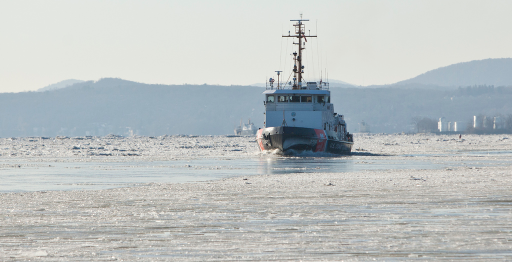
During the winter, passage through the Sea of Okhotsk is often complicated by large floes of drift ice. Combined with high winds that occur during winter, this frequently brings air travel and maritime activity to a halt beyond the northern coast of Hokkaido. Ports on the open Pacific Ocean and Sea of Japan are generally ice-free year round, though most rivers freeze during the winter.
Major cities and towns[edit]
See also: List of cities in Hokkaido
Hokkaido's largest city, Sapporo
Hokkaido's largest city is the capital, Sapporo, which is a designated city. The island has two core cities: Hakodate in the south and Asahikawa in the central region. Other important population centers include Kushiro, Obihiro, Kitami, Abashiri,Wakkanai, and Nemuro.
Hokkaido has the highest rate of depopulation in Japan. In 2000, 152 (71.7%) of Hokkaido's 212 municipalities were shrinking. Altogether, shrinking municipalities in Japan in the same year numbered 1,171.[citation needed]
Economy[edit]
Large farm of Tokachi plain
Although there is some light industry (most notably paper milling and beer brewing) most of the population is employed by the service sector. In 2001, the service sector and other tertiary industries generated more than three-quarters of the gross domestic product.[23]
However, agriculture and other primary industries play a large role in Hokkaido's economy. Hokkaido has nearly one fourth of Japan's total arable land. It ranks first in the nation in the production of a host of agricultural products, including wheat, soybeans, potatoes, sugar beet, onions, pumpkins, corn, raw milk, and beef. Hokkaido also accounts for 22% of Japan's forests with a sizable timber industry. The prefecture is also first in the nation in production of marine products and aquaculture.[23]
Tourism is an important industry, especially during the cool summertime when visitors are attracted to Hokkaido's open spaces from hotter and more humid parts of Japan and other Asian countries. During the winter, skiing and other winter sports bring other tourists, and increasingly international ones, to the island.[24]
Transportation[edit]
Hokkaido's only land link to the rest of Japan is the Seikan Tunnel. Most travellers travel to the island by air: the main airport is New Chitose Airport at Chitose, just south of Sapporo. Tokyo-Chitose is in the top 10 of the world's busiest air routes, handling more than 40 widebody round trips on several airlines each day. One of the airlines, Air Do was named after Hokkaido. Hokkaido can also be reached by ferry from Sendai, Niigata and some other cities, with the ferries from Tokyo dealing only in cargo.
Within Hokkaido, there is a fairly well-developed railway network (see Hokkaido Railway Company), but many cities can only be accessed by road.
Hokkaido is home to one of Japan's three Melody Roads, which is made from grooves cut into the ground, which when driven over causes a tactile vibration and audible rumbling transmitted through the wheels into the car body.[25][26]
Education[edit]
The Hokkaido Prefectural Board of Education oversees public schools (except colleges and universities) in Hokkaido. Public elementary and junior high schools (except Hokkaido Noboribetsu Akebi Secondary School and schools attached to Hokkaido University of Education) are operated by municipalities, and public high schools are operated by either the prefectural board or municipalities.
Hokkaido has 37 universities (7 national, 5 local public, and 25 private universities), 34 junior colleges, and 5 colleges of technology (4 national and 1 local public colleges). National universities located in Hokkaido are:
- Hokkaido University (former Sapporo Agricultural College)[27]
- Hokkaido University of Education
- Muroran Institute of Technology
- Otaru University of Commerce
- Obihiro University of Agriculture and Veterinary Medicine
- Asahikawa Medical University
- Kitami Institute of Technology
Hokkaido government runs Sapporo Medical University, a medical school in Sapporo.
Sports[edit]
The 1972 Winter Olympics were held in Sapporo.
The sports teams listed below are based in Hokkaido.
Association football[edit]
Baseball[edit]
Ice hockey[edit]
Basketball[edit]
American Football[edit]
Winter festivals[edit]
Sapporo Snow FestivalAsahikawa Snow FestivalSōunkyō Ice FestivalBig Air - snowboarding freestyle competitionInternational relations[edit]
Hokkaido has relationships with several provinces, states, and other entities worldwide.[28]
- Alberta, Canada, since 1980[29][30]
- Heilongjiang, China, since 1980[29]
- Massachusetts, USA, since 1988[29][31]
- Sakhalin Oblast, Russia, since 1998[29]
- Busan, South Korea, since 2005
- Gyeongsangnam-do, South Korea, since 2006
- Seoul, South Korea, since 2010[32]
As of January 2014, 74 individual municipalities in Hokkaido have sister city agreements with 114 cities in 21 different countries worldwide.[33]
Politics[edit]
Governor[edit]
The current governor of Hokkaido is Harumi Takahashi. She won a fourth term in the gubernatorial election in 2015 with centre-right support. Her first election in 2003 in a close race against centre-left supported Yoshio Hachiro and seven other candidates ended a 20-year streak of victories by Socialist Party heavyweightTakahiro Yokomichi and then his former vice governor Tatsuya Hori who beat Hideko Itō twice by large margins. Itō, a former Socialist Diet member was supported by the Liberal Democratic Party against Hori in 1995 (at the time, Socialists and Liberal Democrats formed the ruling "grand" coalition on the national level); In 1999, Hori was supported by all major non-Communist parties and Itō ran without party support. Before 1983, the governorship had been held by Liberal Democrats Naohiro Dōgakinai and Kingo Machimura for 24 years. In the 1971 election when Machimura retired, the Socialist candidate Shōhei Tsukada lost to Dōgakinai by only 13,000 votes;[34] Tsukada was also supported by the Communist Party – the leftist cooperation in opposition to the US-Japanese security treaty had brought joint Socialist-Communist candidates to victory in many other prefectural and local elections in the 1960s and 1970s. In 1959, Machimura had defeated Yokomichi's father Setsuo in the race to succeed Hokkaido's first elected governor, Socialist Toshibumi Tanaka who retired after three terms. Tanaka had only won the governorship in 1947 in a run-off election against Democrat Eiji Arima because no candidate had received the necessary vote share to win in the first round as required by law at the time.
Assembly[edit]
The Hokkaido Prefectural Assembly has 101 members from 47 electoral districts. As of April 30, 2015, the LDP caucus holds a majority with 51 seats, the DPJ-led group has 26 members. Other groups are the Hokkaidō Yūshikai of New Party Daichi and independents with twelve seats, Kōmeitō with eight, and the Japanese Communist Party with four members.[35] General elections for the Hokkaido assembly are currently held together with gubernatorial elections in the unified local elections (last round: April 2015).
National representation[edit]
For the lower house of the National Diet, Hokkaido is divided into twelve single-member electoral districts. In the 2014 election, candidates from the governing coalition of Liberal Democrats and New Komeito won nine districts, Democrats three. For the proportional election segment, Hokkaido and Tokyo are the only two prefectures that form a regional "block" district of their own. The Hokkaido proportional representation block elects eight Representatives. In 2014, the Liberal Democratic Party received 29.8% of the proportional vote and won three seats, the Democratic Party won two (27.6% of the vote), one seat each went to Kōmeitō (12.3%), Japan Innovation Party (9.9%) and – for the first time since the 2000 lower house election – the Japanese Communist Party (12.1%). More than four percent of Hokkaidō proportional votes in 2014 went to a minor protest group named shiji seitō nashi ("no party supported"/"[I/we] support no party").
In the upper house of the National Diet, a major reapportionment in the 1990s halved the number of Councillors from Hokkaido per election from four to two. After the elections of 2010 and 2013, the Hokkaido electoral district – like most two-member districts for the upper house – is represented by two Liberal Democrats and two Democrats. In the 2016 upper house election, the district magnitude will be raised to three, Hokkaidō will then temporarily be represented by five members and six after the 2019 election.
See also[edit]
Red-crowned cranes in Hokkaido
- 2006 Kuril Islands earthquake
- Asia League Ice Hockey
- Former Hokkaido government office building
- Kuril Islands dispute
- People from Hokkaido
- Sankebetsu brown bear incident
- Hokkaido dialects
Red-crowned crane n,ml,k...l,.kk,,..k.
Wsxsx shkjkxj
Shjhukjkjrfer
Nftyiogjjikk.
H ';l bgvnlhjhp[nlhplnlonp
Abcdefghijklmnopqrstuvwxyz
Tnnmjkjkj,mknmnmhhjgg
N1234567890-=1`qwertyuiop[]\zxcvbnm,./
- Ouexdgrdfrgefrgee
Notes[edit]




nmhAn ice hotel is a temporary hotel made up of snow and sculpted blocks of ice.[1] They could be visited by adventurous travelers that are comfortable with the outdoors. Ice hotels are dependent on sub-freezing temperatures. They are constructed from ice and snow and typically have to be rebuilt every year. Ice hotels exist in several countries, and they have varying construction styles, services and amenities, the latter of which may include ice bars, restaurants, chapels, saunas and hot tubs.
Contents [hide]
1 Overview
2 Construction
3 By country
3.1 Canada
3.1.1 Ice Hotel
3.1.2 Snow Village
3.2 Finland
3.2.1 SnowCastle of Kemi
3.2.2 Lainio Snow Village
3.3 Japan
3.4 Norway
3.4.1 Ice Bar
3.4.2 Ice Lodge
3.4.3 Kirkenes Snow Hotel
3.4.4 Sorrisniva Igloo Hotel
3.5 Romania
3.6 Sweden
3.6.1 Icehotel Jukkasjärvi
3.7 Switzerland
4 See also
5 References
6 Further reading
7 External links

S,./';[]\=-+_~`'":;<,>.?/
Asbhghjmj,kj,,lnmmnn,n,ml,k...l,.kk,,..k.
Wsxsx shkjkxj
Shjhukjkjrfer
Nftyiogjjikk.
H ';l bgvnlhjhp[nlhplnlonp
Abcdefghijklmnopqrstuvwxyz
Tnnmjkjkj,mknmnmhhjgg
N1234567890-=1`qwertyuiop[]\zxcvbnm,./
Ouexdgrdfrgefrgee

Penguins (order Sphenisciformes, family Spheniscidae) are a group of aquatic, flightless birds living almost exclusively in the Southern Hemisphere, especially in Antarctica. Highly adapted for life in the water, penguins have countershaded dark and white plumage, and their wings have evolved into flippers. Most penguins feed on krill, fish, squid and other forms ofsealife caught while swimming underwater. They spend about half of their lives on land and half in the oceans.
Although all penguin species are native to the Southern Hemisphere, they are not found only in cold climates, such as Antarctica. In fact, only a few species of penguin live so far south. Several species are found in the temperate zone, and one species, the Galápagos penguin, lives near the equator.
The largest living species is the emperor penguin (Aptenodytes forsteri): on average adults are about 1.1 m (3 ft 7 in) tall and weigh 35 kg (77 lb) or more. The smallest penguin species is the little blue penguin (Eudyptula minor), also known as the fairy penguin, which stands around 40 cm (16 in) tall and weighs 1 kg (2.2 lb). Among extant penguins, larger penguins inhabit colder regions, while smaller penguins are generally found in temperate or even tropical climates (see alsoBergmann's rule). Some prehistoric species attained enormous sizes, becoming as tall or as heavy as an adult human. These were not restricted to Antarctic regions; on the contrary, subantarctic regions harboured high diversity, and at least one giant penguin occurred in a region not quite 2,000 km south of the equator 35 mya, in a climate decidedly warmer than today.
Contents [hide]
- 1Etymology
- 2Systematics and evolution2.1Living species and recent extinctions
- 2.2Fossil genera
- 2.3Taxonomy
- 2.4Evolution2.4.1The basal fossils
- 2.4.2Palaeeudyptines
- 2.4.3Origin and systematics of modern penguins
- 2.4.4Relationship to other bird orders
- 3Anatomy and physiology3.1Isabelline penguins
- 4Distribution and habitat
- 5Behaviour5.1Breeding
- 6Penguins and humans6.1In popular culture
- 7References
- 8Bibliography
- 9External links
The word penguin first appears in the 16th century as a synonym for great auk.[1] When European explorers discovered what are today known as penguins in the Southern Hemisphere, they noticed their similar appearance to the great auk of theNorthern Hemisphere, and named them after this bird, although they are not closely related.[2]
The etymology ofThe word penguin first appears in the 16th century as a synonym for great auk.[1] When European explorers discovered what are today known as penguins in the Southern Hemisphere, they noticed their similar appearance to the great auk of theNorthern Hemisphere, and named them after this bird, although they are not closely related.[2]
the word penguin is still debated. The English word is not apparently of French,[1] Breton[3] or Spanish[4]origin (the latter two are attributed to the French word pingouin "auk"), but first appears in English or Dutch.[1]
Some dictionaries suggest a derivation from Welsh pen, "head" and gwyn, "white",[5] including the Oxford English Dictionary, the American Heritage Dictionary,[6] the Century Dictionary[6] and Merriam-Webster,[7] on the basis that the name was originally applied to the great auk, either because it was found on White Head Island (Welsh Pen Gwyn) in Newfoundland, or because it had white circles around its eyes (though the head was black).
An alternative etymology links the word to Latin pinguis, which means "fat" or "oil".[8] Support for this etymology can be found in the alternative Germanic word for penguin, fettgans or "fat-goose", and the related Dutch word vetgans.
Systematics and evolution
Living species and recent extinctions
Adélie penguin (Pygoscelis adeliae) feeding young. Like its relatives, a neatly bi-coloured species with a head marking.
Magellanic penguins (Spheniscus magellanicus). The closed neck collar denotes this species.
Closeup of southern rockhopper penguin (Eudyptes chrysocome)
The number of extant penguin species is debated. Depending on which authority is followed, penguin biodiversity varies between 18 and 20 living species, all in the subfamily Spheniscinae. Some sources consider the white-flippered penguin a separate Eudyptula species, while others treat it as a subspecies of the little penguin;[9][10] the actual situation seems to be more complicated.[11] Similarly, it is still unclear whether the royal penguin is merely a color morph of the macaroni penguin. The status of the rockhopper penguins is also unclear.
Updated after Marples (1962),[12] Acosta Hospitaleche (2004),[13] and Ksepka et al. (2006).[14]
Subfamily Spheniscinae – modern penguins
Aptenodytes – great penguinsKing penguin, Aptenodytes patagonicusEmperor penguin, Aptenodytes forsteriPygoscelis – brush-tailed penguinsAdélie penguin, Pygoscelis adeliaeChinstrap penguin, Pygoscelis antarcticaGentoo penguin, Pygoscelis papuaEudyptula – little penguinsLittle blue penguin, Eudyptula minorWhite-flippered penguin, Eudyptula albosignata (provisional)Spheniscus – banded penguinsMagellanic penguin, Spheniscus magellanicusHumboldt penguin, Spheniscus humboldtiGalapagos penguin, Spheniscus mendiculusAfrican penguin, Spheniscus demersusMegadyptesYellow-eyed penguin, Megadyptes antipodesWaitaha penguin, Megadyptes waitaha (extinct)Eudyptes – crested penguinsFiordland penguin, Eudyptes pachyrynchusSnares penguin, Eudyptes robustusErect-crested penguin, Eudyptes sclateriWestern rockhopper penguin, Eudyptes chrysocomeEastern rockhopper penguin, Eudyptes filholiNorthern rockhopper penguin, Eudyptes moseleyiRoyal penguin, Eudyptes schlegeli (disputed)Macaroni penguin, Eudyptes chrysolophusChatham penguin, Eudyptes chathamensis (extinct)Fossil genera
Order Sphenisciformes
Basal and unresolved taxa (all fossil)Waimanu – basal (Middle-Late Paleocene)Perudyptes (Middle Eocene of Atacama Desert, Peru) – basal?Spheniscidae gen. et sp. indet. CADIC P 21 (Leticia Middle Eocene of Punta Torcida, Argentina)[15]Delphinornis (Middle/Late Eocene? – Early Oligocene of Seymour Island, Antarctica) – Palaeeudyptinae, basal, new subfamily 1?Archaeospheniscus (Middle/Late Eocene – Late Oligocene) – Palaeeudyptinae? New subfamily 2?Marambiornis (Late Eocene –? Early Oligocene of Seymour Island, Antarctica) – Palaeeudyptinae, basal, new subfamily 1?Mesetaornis (Late Eocene –? Early Oligocene of Seymour Island, Antarctica) – Palaeeudyptinae, basal, new subfamily 1?Tonniornis (Late Eocene –? Early Oligocene of Seymour Island, Antarctica)Wimanornis (Late Eocene –? Early Oligocene of Seymour Island, Antarctica)Duntroonornis (Late Oligocene of Otago, New Zealand) – possibly SpheniscinaeKorora (Late Oligocene of S Canterbury, New Zealand)Kairuku (Late Oligocene of E South Island, New Zealand)Platydyptes (Late Oligocene of New Zealand) – possibly not monophyletic; Palaeeudyptinae, Paraptenodytinae or new subfamily?[16]Spheniscidae gen. et sp. indet. (Late Oligocene/Early Miocene of Hakataramea, New Zealand)[17]Madrynornis (Puerto Madryn Late Miocene of Argentina) – possibly SpheniscinaePseudaptenodytes (Late Miocene/Early Pliocene)Dege (Early Pliocene of South Africa) – possibly SpheniscinaeMarplesornis (Early Pliocene) – possibly SpheniscinaeNucleornis (Early Pliocene of Duinfontain, South Africa) – possibly SpheniscinaeTereingaornis (Middle Pliocene of New Zealand)Inguza (Late Pliocene) – probably Spheniscinae; formerly Spheniscus predemersusPalaeoapterodytes (Late Oligocene/Early Miocene of Argentina)
A reconstruction of the ancient penguin Icadyptes
Family SpheniscidaeSubfamily Palaeeudyptinae – giant penguins (fossil)Crossvallia (Cross Valley Late Paleocene of Seymour Island, Antarctica) – tentatively assigned to this subfamilyAnthropornis (Middle Eocene? – Early Oligocene of Seymour Island, Antarctica) – tentatively assigned to this subfamilyNordenskjoeld's giant penguin, Anthropornis nordenskjoeldiIcadyptes (Late Eocene of Atacama Desert, Peru)Palaeeudyptes (Middle/Late Eocene – Late Oligocene) – polyphyletic; some belong in other subfamiliesPachydyptes (Late Eocene)Anthropodyptes (Middle Miocene) – tentatively assigned to this subfamilySubfamily Paraptenodytinae – stout-footed penguins (fossil)Arthrodytes (San Julian Late Eocene/Early Oligocene – Patagonia Early Miocene of Patagonia, Argentina)Paraptenodytes (Early – Late Miocene/Early Pliocene)Subfamily Palaeospheniscinae – slender-footed penguins (fossil)Eretiscus (Patagonia Early Miocene of Patagonia, Argentina)Palaeospheniscus (Early? – Late Miocene/Early Pliocene) – includes ChubutodyptesThe Early Oligocene genus Cruschedula was formerly thought to belong to Spheniscidae, however reexamination of the holotype in 1943 resulted in the genus being placed in Accipitridae.[18] Further examination in 1980 resulted in placement as Aves incertae sedis.[19]
Taxonomy
Some recent sources[14][15] apply the phylogenetic taxon Spheniscidae to what here is referred to as Spheniscinae. Furthermore, they restrict the phylogenetic taxonSphenisciformes to flightless taxa, and establish the phylogenetic taxon Pansphenisciformes as equivalent to the Linnean taxon Sphenisciformes,[15] i.e., including any flying basal "proto-penguins" to be discovered eventually. Given that neither the relationships of the penguin subfamilies to each other nor the placement of the penguins in the avian phylogeny is presently resolved, this is confusing, so the established Linnean system is followed here.
Evolution
The evolutionary history of penguins is well-researched and represents a showcase of evolutionary biogeography; though as penguin bones of any one species vary much in size and few good specimens are known, the alpha taxonomy of many prehistoric forms still leaves much to be desired. Some seminal articles about penguin prehistory have been published since 2005;[14][17][20][21] the evolution of the living genera can be considered resolved by now.
The basal penguins lived around the time of the Cretaceous–Paleogene extinction event somewhere in the general area of (southern) New Zealand and Byrd Land, Antarctica.[14] Due to plate tectonics, these areas were at that time less than 1,500 kilometres (930 mi) apart rather than the 4,000 kilometres (2,500 mi) of today. The most recent common ancestor of penguins and their sister clade can be roughly dated to the Campanian–Maastrichtian boundary, around 70–68 mya.[17][21][22] What can be said as certainly as possible in the absence of direct (i.e., fossil) evidence is that, by the end of the Cretaceous, the penguin lineage must have been evolutionarily well distinct, though much less so morphologically; it is fairly likely that they were not yet entirely flightless at that time, as flightless birds have generally low resilience to the breakdown of trophic webs that follows the initial phase of mass extinctions because of their below-average dispersal capabilities (see also Flightless cormorant).[citation needed]
The basal fossils
The oldest known fossil penguin species is Waimanu manneringi, which lived in the early Paleocene epoch of New Zealand, or about 62 mya.[21] While they were not as well-adapted to aquatic life as modern penguins, Waimanu were generally loon-like birds but already flightless, with short wings adapted for deep diving.[21]They swam on the surface using mainly their feet, but the wings were – as opposed to most other diving birds (both living and extinct) already adapting to underwater locomotion.[23]
Perudyptes from northern Peru was dated to 42 mya. An unnamed fossil from Argentina proves that, by the Bartonian (Middle Eocene), some 39–38 mya,[24]primitive penguins had spread to South America and were in the process of expanding into Atlantic waters.[15]
Palaeeudyptines
During the Late Eocene and the Early Oligocene (40–30 mya), some lineages of gigantic penguins existed. Nordenskjoeld's giant penguin was the tallest, growing nearly 1.80 meters (5.9 feet) tall. The New Zealand giant penguin was probably the heaviest, weighing 80 kg or more. Both were found on New Zealand, the former also in the Antarctic farther eastwards.
Traditionally, most extinct species of penguins, giant or small, had been placed in the paraphyletic subfamily called Palaeeudyptinae. More recently, with new taxa being discovered and placed in the phylogeny if possible, it is becoming accepted that there were at least two major extinct lineages. One or two closely related ones occurred in Patagonia, and at least one other—which is or includes the paleeudyptines as recognized today – occurred on most Antarctic and Subantarcticcoasts.
But size plasticity seems to have been great at this initial stage of penguin radiation: on Seymour Island, Antarctica, for example, around 10 known species of penguins ranging in size from medium to huge apparently coexisted some 35 mya during the Priabonian (Late Eocene).[25] It is not even known whether the gigantic palaeeudyptines constitute a monophyletic lineage, or whether gigantism was evolved independently in a much restricted Palaeeudyptinae and the Anthropornithinae – whether they were considered valid, or whether there was a wide size range present in the Palaeeudyptinae as delimited as usually done these days (i.e., including Anthropornis nordenskjoeldi).[14] The oldest well-described giant penguin, the 5-foot (1.5 m)-tall Icadyptes salasi, actually occurred as far north as northern Peru about 36 mya.
In any case, the gigantic penguins had disappeared by the end of the Paleogene, around 25 mya. Their decline and disappearance coincided with the spread of the Squalodontoidea and other primitive, fish-eating toothed whales, which certainly competed with them for food, and were ultimately more successful.[17] A new lineage, the Paraptenodytes, which includes smaller but decidedly stout-legged forms, had already arisen in southernmost South America by that time. The earlyNeogene saw the emergence of yet another morphotype in the same area, the similarly sized but more gracile Palaeospheniscinae, as well as the radiation that gave rise to the penguin biodiversity of our time.
Origin and systematics of modern penguins
Modern penguins constitute two undisputed clades and another two more basal genera with more ambiguous relationships.[20] The origin of the Spheniscinae lies probably in the latest Paleogene, and geographically it must have been much the same as the general area in which the order evolved: the oceans between the Australia-New Zealand region and the Antarctic.[17] Presumably diverging from other penguins around 40 mya,[17] it seems that the Spheniscinae were for quite some time limited to their ancestral area, as the well-researched deposits of the Antarctic Peninsula and Patagonia have not yielded Paleogene fossils of the subfamily. Also, the earliest spheniscine lineages are those with the most southern distribution.
The genus Aptenodytes appears to be the basalmost divergence among living penguins[14][26] they have bright yellow-orange neck, breast, and bill patches; incubate by placing their eggs on their feet, and when they hatch the chicks are almost naked. This genus has a distribution centered on the Antarctic coasts and barely extends to some Subantarctic islands today.
Pygoscelis contains species with a fairly simple black-and-white head pattern; their distribution is intermediate, centered on Antarctic coasts but extending somewhat northwards from there. In external morphology, these apparently still resemble the common ancestor of the Spheniscinae, as Aptenodytes' autapomorphies are in most cases fairly pronounced adaptations related to that genus' extreme habitat conditions. As the former genus, Pygoscelis seems to have diverged during the Bartonian,[27] but the range expansion and radiation that led to the present-day diversity probably did not occur until much later; around the Burdigalian stage of the Early Miocene, roughly 20–15 mya.[17]
The genera Spheniscus and Eudyptula contain species with a mostly Subantarctic distribution centered on South America; some, however, range quite far northwards. They all lack carotenoid coloration, and the former genus has a conspicuous banded head pattern; they are unique among living penguins by nesting in burrows. This group probably radiated eastwards with the Antarctic Circumpolar Current out of the ancestral range of modern penguins throughout the Chattian(Late Oligocene), starting approximately 28 mya.[17] While the two genera separated during this time, the present-day diversity is the result of a Pliocene radiation, taking place some 4–2 mya.[17]
The Megadyptes–Eudyptes clade occurs at similar latitudes (though not as far north as the Galapagos penguin), has its highest diversity in the New Zealand region, and represents a westward dispersal. They are characterized by hairy yellow ornamental head feathers; their bills are at least partly red. These two genera diverged apparently in the Middle Miocene (Langhian, roughly 15–14 mya), but again, the living species of Eudyptes are the product of a later radiation, stretching from about the late Tortonian (Late Miocene, 8 mya) to the end of the Pliocene.[17]
The geographical and temporal pattern or spheniscine evolution corresponds closely to two episodes of global cooling documented in the paleoclimatic record.[17]The emergence of the Subantarctic lineage at the end of the Bartonian corresponds with the onset of the slow period of cooling that eventually led to the ice agessome 35 million years later. With habitat on the Antarctic coasts declining, by the Priabonian more hospitable conditions for most penguins existed in the Subantarctic regions rather than in Antarctica itself.[28] Notably, the cold Antarctic Circumpolar Current also started as a continuous circumpolar flow only around 30 mya, on the one hand forcing the Antarctic cooling, and on the other facilitating the eastward expansion of Spheniscus to South America and eventually beyond.[17]Despite this, there is no fossil evidence to support the idea of a crown radiation from the Antarctic continent in the Paleogene, although DNA study favors such a radiation.[28]
Later, an interspersed period of slight warming was ended by the Middle Miocene Climate Transition, a sharp drop in global average temperature from 14–12 mya, and similar abrupt cooling events followed at 8 mya and 4 mya; by the end of the Tortonian, the Antarctic ice sheet was already much like today in volume and extent. The emergence of most of today's Subantarctic penguin species almost certainly was caused by this sequence of Neogene climate shifts.
Relationship to other bird orders
Penguin ancestry beyond Waimanu remains unknown and not well-resolved by molecular or morphological analyses. The latter tend to be confounded by the strong adaptive autapomorphies of the Sphenisciformes; a sometimes perceived fairly close relationship between penguins and grebes is almost certainly an error based on both groups' strong diving adaptations, which are homoplasies. On the other hand, different DNA sequence datasets do not agree in detail with each other either.
What seems clear is that penguins belong to a clade of Neoaves (living birds except paleognaths and fowl) that comprises what is sometimes called "higher waterbirds" to distinguish them from the more ancient waterfowl. This group contains such birds as storks, rails, and the seabirds, with the possible exception of the Charadriiformes.[29]
Inside this group, penguin relationships are far less clear. Depending on the analysis and dataset, a close relationship toCiconiiformes[21] or to Procellariiformes[17] has been suggested. Some think the penguin-like plotopterids (usually considered relatives of anhingas and cormorants) may actually be a sister group of the penguins, and that penguins may have ultimately shared a common ancestor with the Pelecaniformes and consequently would have to be included in that order, or that the plotopterids were not as close to other pelecaniforms as generally assumed, which would necessitate splitting the traditional Pelecaniformes in three.[30]
A 2014 analysis of whole genomes of 48 representative bird species has concluded that penguins are the sister group of Procellariiformes,[31] from which they diverged about 60 million years ago (95% CI, 56.8-62.7).[32]
Anatomy and physiology
Penguins are superbly adapted to aquatic life. Their vestigial wings have become flippers, useless for flight in the air. In the water, however, penguins are astonishingly agile. Penguins' swimming looks very similar to bird's flight in the air.[33] Within the smooth plumage a layer of air is preserved, ensuring buoyancy. The air layer also helps insulate the birds in cold waters. On land, penguins use their tails and wings to maintain balance for their upright stance.
All penguins are countershaded for camouflage – that is, they have black backs and wings with white fronts.[34] A predator looking up from below (such as an orca or a leopard seal) has difficulty distinguishing between a white penguin belly and the reflective water surface. The dark plumage on their backs camouflages them from above.
Diving penguins reach 6 to 12 km/h (3.7 to 7.5 mph), though there are reports of velocities of 27 km/h (17 mph) (which are more realistic in the case of startled flight).[citation needed] The small penguins do not usually dive deep; they catch their prey near the surface in dives that normally last only one or two minutes. Larger penguins can dive deep in case of need. Dives of the large emperor penguin have been recorded reaching a depth of 565 m (1,854 ft) for up to 22 minutes.
Penguins either waddle on their feet or slide on their bellies across the snow, a movement called "tobogganing", which conserves energy while moving quickly. They also jump with both feet together if they want to move more quickly or cross steep or rocky terrain.
Penguins have an average sense of hearing for birds;[35] this is used by parents and chicks to locate one another in crowded colonies.[36] Their eyes are adapted for underwater vision, and are their primary means of locating prey and avoiding predators; in air it has been suggested that they are nearsighted, although research has not supported this hypothesis.[37]
Penguins have a thick layer of insulating feathers that keeps them warm in water (heat loss in water is much greater than in air). The emperor penguin has the largest body mass of all penguins, which further reduces relative surface area and heat loss. They also are able to control blood flow to their extremities, reducing the amount of blood that gets cold, but still keeping the extremities from freezing. In the extreme cold of the Antarctic winter, the females are at sea fishing for food leaving the males to brave the weather by themselves. They often huddle together to keep warm and rotate positions to make sure that each penguin gets a turn in the center of the heat pack.
Calculations of the heat loss and retention ability of marine endotherms [38] suggest that most extant penguins are too small to survive in such cold environments.[39] In 2007, Thomas and Fordyce wrote about the "heterothermic loophole" that penguins utilize in order to survive in Antarctica.[40] All extant penguins, even those that live in warmer climates, have a counter-current heat exchanger called the humeral plexus. The flippers of penguins have at least three branches of the axillary artery, which allows cold blood to be heated by blood that has already been warmed and limits heat loss from the flippers. This system allows penguins to efficiently use their body heat and explains why such small animals can survive in the extreme cold.[41]
They can drink salt water because their supraorbital gland filters excess salt from the bloodstream.[42][43][44] The salt is excreted in a concentrated fluid from the nasal passages.
The great auk of the Northern Hemisphere, now extinct, was superficially similar to penguins, and the word penguin was originally used for that bird, centuries ago. They are only distantly related to the penguins, but are an example of convergent evolution.[45]
Isabelline penguins
Perhaps one in 50,000 penguins (of most species) are born with brown rather than black plumage. These are calledisabelline penguins. Isabellinism is different from albinism. Isabelline penguins tend to live shorter lives than normal penguins, as they are not well-camouflaged against the deep, and are often passed over as mates.
Distribution and habitat
See also: List of Sphenisciformes by population
Although all penguin species are native to the Southern Hemisphere, they are not found only in cold climates, such asAntarctica. In fact, only a few species of penguin actually live so far south. Several species live in the temperate zone;[46]one, the Galápagos penguin, lives as far north as the Galápagos Islands, but this is only made possible by the cold, rich waters of the Antarctic Humboldt Current that flows around these islands.[47]
Several authors have suggested that penguins are a good example of Bergmann's Rule[48][49] where larger bodied populations live at higher latitudes than smaller bodied populations. There is some disagreement about this, and several other authors have noted that there are fossil penguin species that contradict this hypothesis and that ocean currents and upwellings are likely to have had a greater effect on species diversity than latitude alone.[50][51]
Major populations of penguins are found in Antarctica, Argentina, Australia, Chile, New Zealand, and South Africa.[52][53]
Behaviour
Breeding
File:Brown Bluff-2016-Tabarin Peninsula–Gentoo penguin (Pygoscelis papua) 05.jpg
Gentoo watching over a sleeping chick at Brown Bluff
Penguins for the most part breed in large colonies, the exceptions being the yellow-eyed and Fiordland species; these colonies may range in size from as few as a 100 pairs for gentoo penguins, to several hundred thousand in the case of king, macaroni and chinstrap penguins.[54] Living in colonies results in a high level of social interaction between birds, which has led to a large repertoire of visual as well as vocal displays in all penguin species.[55] Agonistic displays are those intended to confront or drive off, or alternately appease and avoid conflict with, other individuals.[55]
Penguins form monogamous pairs for a breeding season, though the rate the same pair recouples varies drastically. Most penguins lay two eggs in a clutch, although the two largest species, the emperor and the king penguins, lay only one.[56]With the exception of the emperor penguin, where the male does it all, all penguins share the incubation duties.[57] These incubation shifts can last days and even weeks as one member of the pair feeds at sea.
Penguins generally only lay one brood; the exception is the little penguin, which can raise two or three broods in a season.[58]
Penguin eggs are smaller than any other bird species when compared proportionally to the weight of the parent birds; at 52 g (2 oz), the little penguin egg is 4.7% of its mothers' weight, and the 450 g (1 lb) emperor penguin egg is 2.3%.[56] The relatively thick shell forms between 10 and 16% of the weight of a penguin egg, presumably to minimize the risk of breakage in an adverse nesting environment. The yolk, too, is large, and comprises 22–31% of the egg. Some yolk often remains when a chick is born, and is thought to help sustain the chick if the parents are delayed in returning with food.[59]
When mothers lose a chick, they sometimes attempt to "steal" another mother's chick, usually unsuccessfully as other females in the vicinity assist the defending mother in keeping her chick.[citation needed] In some species, such as emperor penguins, young penguins assemble in large groups called crèches.
Penguins and humans
A cook on the Endurance preparing a penguin for consumption
Penguins seem to have no special fear of humans, and have approached groups of explorers without hesitation. This is probably because penguins have no land predators in Antarctica or the nearby offshore islands. Dogs preyed upon penguins while they were allowed in Antarctica during the age of early human exploration as sled dogs, but dogs are now banned from Antarctica.[60] Instead, adult penguins are at risk at sea from predators such as sharks, the orca, and the leopard seal. Typically, penguins do not approach closer than about 3 meters (9.8 feet) at which point they become nervous. This is also the distance that Antarctic tourists are told to keep from penguins (tourists are not supposed to approach closer than 3 meters, but are not expected to withdraw if the penguins come closer).
In June 2011, a penguin came ashore on New Zealand's Peka Peka Beach, 3200 km off course on its journey to Antarctica.[61] Nicknamed Happy Feet, after the movie of the same name, it was suffering from heat exhaustion and had to undergo a number of operations to remove objects like driftwood and sand from its stomach.[62] Happy Feet was a media sensation, with extensive coverage on TV and the web, including a live stream that had thousands of views[63] and a visit from English actor Stephen Fry.[64]
Once he had recovered, Happy Feet was released back into the water south of New Zealand.[65]
In popular culture
Main article: Cultural depictions of penguins
Penguins are popular around the world, primarily for their unusually upright, waddling gait and (compared to other birds) lack of fear of humans. Their striking black-and-white plumage is often likened to a white tie suit. Mistakenly, some artists and writers have penguins based at the North Pole. This is incorrect, as there are almost no wild penguins in the Northern Hemisphere, except the small group on the northernmost of the Galápagos. The cartoon series Chilly Willy helped perpetuate this myth, as the title penguin would interact with northern-hemisphere species, such as polar bears and walruses.
Penguins have been the subject of many books and films, such as Happy Feet, Surf's Up and The Penguins of Madagascar, all CGI films; March of the Penguins, a documentary based on the migration process of the emperor penguin; and a parody titled Farce of the Penguins. Mr. Popper's Penguins is a children's book written by Richard and Florence Atwater; it was named aNewbery Honor Book in 1939. Penguins have also found their way into a number of cartoons and television dramas; perhaps the most notable of these is Pingu, created by Silvio Mazzola in 1986 and covering more than 100 short episodes. At the end of 2009,Entertainment Weekly put it on its end-of-the-decade, "best-of" list, saying, "Whether they were walking (March of the Penguins), dancing (Happy Feet), or hanging ten (Surf's Up), these oddly adorable birds took flight at the box office all decade long."[66]
A video game called Pengo was released by Sega in 1982. Set in Antarctica, the player controls a penguin character who must navigate mazes of ice-cubes. The player is rewarded with cut-scenes of animated penguins marchin
Penguins (order Sphenisciformes, family Spheniscidae) are a group of aquatic, flightless birds living almost exclusively in the Southern Hemisphere, especially in Antarctica. Highly adapted for life in the water, penguins have countershaded dark and white plumage, and their wings have evolved into flippers. Most penguins feed on krill, fish, squid and other forms ofsealife caught while swimming underwater. They spend about half of their lives on land and half in the oceans.
Although all penguin species are native to the Southern Hemisphere, they are not found only in cold climates, such as Antarctica. In fact, only a few species of penguin live so far south. Several species are found in the temperate zone, and one species, the Galápagos penguin, lives near the equator.
The largest living species is the emperor penguin (Aptenodytes forsteri): on average adults are about 1.1 m (3 ft 7 in) tall and weigh 35 kg (77 lb) or more. The smallest penguin species is the little blue penguin (Eudyptula minor), also known as the fairy penguin, which stands around 40 cm (16 in) tall and weighs 1 kg (2.2 lb). Among extant penguins, larger penguins inhabit colder regions, while smaller penguins are generally found in temperate or even tropical climates (see alsoBergmann's rule). Some prehistoric species attained enormous sizes, becoming as tall or as heavy as an adult human. These were not restricted to Antarctic regions; on the contrary, subantarctic regions harboured high diversity, and at least one giant penguin occurred in a region not quite 2,000 km south of the equator 35 mya, in a climate decidedly warmer than today.
Contents [hide]
- 1Etymology
- 2Systematics and evolution2.1Living species and recent extinctions
- 2.2Fossil genera
- 2.3Taxonomy
- 2.4Evolution2.4.1The basal fossils
- 2.4.2Palaeeudyptines
- 2.4.3Origin and systematics of modern penguins
- 2.4.4Relationship to other bird orders
- 3Anatomy and physiology3.1Isabelline penguins
- 4Distribution and habitat
- 5Behaviour5.1Breeding
- 6Penguins and humans6.1In popular culture
- 7References
- 8Bibliography
- 9External links
Etymology
The word penguin first appears in the 16th century as a synonym for great auk.[1] When European explorers discovered what are today known as penguins in the Southern Hemisphere, they noticed their similar appearance to the great auk of theNorthern Hemisphere, and named them after this bird, although they are not closely related.[2]
The etymology of the word penguin is still debated. The English word is not apparently of French,[1] Breton[3] or Spanish[4]origin (the latter two are attributed to the French word pingouin "auk"), but first appears in English or Dutch.[1]
Some dictionaries suggest a derivation from Welsh pen, "head" and gwyn, "white",[5] including the Oxford English Dictionary, the American Heritage Dictionary,[6] the Century Dictionary[6] and Merriam-Webster,[7] on the basis that the name was originally applied to the great auk, either because it was found on White Head Island (Welsh Pen Gwyn) in Newfoundland, or because it had white circles around its eyes (though the head was black).
An alternative etymology links the word to Latin pinguis, which means "fat" or "oil".[8] Support for this etymology can be found in the alternative Germanic word for penguin, fettgans or "fat-goose", and the related Dutch word vetgans.
Systematics and evolution
Living species and recent extinctions
Adélie penguin (Pygoscelis adeliae) feeding young. Like its relatives, a neatly bi-coloured species with a head marking.
Magellanic penguins (Spheniscus magellanicus). The closed neck collar denotes this species.
Closeup of southern rockhopper penguin (Eudyptes chrysocome)
The number of extant penguin species is debated. Depending on which authority is followed, penguin biodiversity varies between 18 and 20 living species, all in the subfamily Spheniscinae. Some sources consider the white-flippered penguin a separate Eudyptula species, while others treat it as a subspecies of the little penguin;[9][10] the actual situation seems to be more complicated.[11] Similarly, it is still unclear whether the royal penguin is merely a color morph of the macaroni penguin. The status of the rockhopper penguins is also unclear.
Updated after Marples (1962),[12] Acosta Hospitaleche (2004),[13] and Ksepka et al. (2006).[14]
Subfamily Spheniscinae – modern penguins
Aptenodytes – great penguinsKing penguin, Aptenodytes patagonicusEmperor penguin, Aptenodytes forsteriPygoscelis – brush-tailed penguinsAdélie penguin, Pygoscelis adeliaeChinstrap penguin, Pygoscelis antarcticaGentoo penguin, Pygoscelis papuaEudyptula – little penguinsLittle blue penguin, Eudyptula minorWhite-flippered penguin, Eudyptula albosignata (provisional)Spheniscus – banded penguinsMagellanic penguin, Spheniscus magellanicusHumboldt penguin, Spheniscus humboldtiGalapagos penguin, Spheniscus mendiculusAfrican penguin, Spheniscus demersusMegadyptesYellow-eyed penguin, Megadyptes antipodesWaitaha penguin, Megadyptes waitaha (extinct)Eudyptes – crested penguinsFiordland penguin, Eudyptes pachyrynchusSnares penguin, Eudyptes robustusErect-crested penguin, Eudyptes sclateriWestern rockhopper penguin, Eudyptes chrysocomeEastern rockhopper penguin, Eudyptes filholiNorthern rockhopper penguin, Eudyptes moseleyiRoyal penguin, Eudyptes schlegeli (disputed)Macaroni penguin, Eudyptes chrysolophusChatham penguin, Eudyptes chathamensis (extinct)Fossil genera
Order Sphenisciformes
Basal and unresolved taxa (all fossil)Waimanu – basal (Middle-Late Paleocene)Perudyptes (Middle Eocene of Atacama Desert, Peru) – basal?Spheniscidae gen. et sp. indet. CADIC P 21 (Leticia Middle Eocene of Punta Torcida, Argentina)[15]Delphinornis (Middle/Late Eocene? – Early Oligocene of Seymour Island, Antarctica) – Palaeeudyptinae, basal, new subfamily 1?Archaeospheniscus (Middle/Late Eocene – Late Oligocene) – Palaeeudyptinae? New subfamily 2?Marambiornis (Late Eocene –? Early Oligocene of Seymour Island, Antarctica) – Palaeeudyptinae, basal, new subfamily 1?Mesetaornis (Late Eocene –? Early Oligocene of Seymour Island, Antarctica) – Palaeeudyptinae, basal, new subfamily 1?Tonniornis (Late Eocene –? Early Oligocene of Seymour Island, Antarctica)Wimanornis (Late Eocene –? Early Oligocene of Seymour Island, Antarctica)Duntroonornis (Late Oligocene of Otago, New Zealand) – possibly SpheniscinaeKorora (Late Oligocene of S Canterbury, New Zealand)Kairuku (Late Oligocene of E South Island, New Zealand)Platydyptes (Late Oligocene of New Zealand) – possibly not monophyletic; Palaeeudyptinae, Paraptenodytinae or new subfamily?[16]Spheniscidae gen. et sp. indet. (Late Oligocene/Early Miocene of Hakataramea, New Zealand)[17]Madrynornis (Puerto Madryn Late Miocene of Argentina) – possibly SpheniscinaePseudaptenodytes (Late Miocene/Early Pliocene)Dege (Early Pliocene of South Africa) – possibly SpheniscinaeMarplesornis (Early Pliocene) – possibly SpheniscinaeNucleornis (Early Pliocene of Duinfontain, South Africa) – possibly SpheniscinaeTereingaornis (Middle Pliocene of New Zealand)Inguza (Late Pliocene) – probably Spheniscinae; formerly Spheniscus predemersusPalaeoapterodytes (Late Oligocene/Early Miocene of Argentina)
A reconstruction of the ancient penguin Icadyptes
Family SpheniscidaeSubfamily Palaeeudyptinae – giant penguins (fossil)Crossvallia (Cross Valley Late Paleocene of Seymour Island, Antarctica) – tentatively assigned to this subfamilyAnthropornis (Middle Eocene? – Early Oligocene of Seymour Island, Antarctica) – tentatively assigned to this subfamilyNordenskjoeld's giant penguin, Anthropornis nordenskjoeldiIcadyptes (Late Eocene of Atacama Desert, Peru)Palaeeudyptes (Middle/Late Eocene – Late Oligocene) – polyphyletic; some belong in other subfamiliesPachydyptes (Late Eocene)Anthropodyptes (Middle Miocene) – tentatively assigned to this subfamilySubfamily Paraptenodytinae – stout-footed penguins (fossil)Arthrodytes (San Julian Late Eocene/Early Oligocene – Patagonia Early Miocene of Patagonia, Argentina)Paraptenodytes (Early – Late Miocene/Early Pliocene)Subfamily Palaeospheniscinae – slender-footed penguins (fossil)Eretiscus (Patagonia Early Miocene of Patagonia, Argentina)Palaeospheniscus (Early? – Late Miocene/Early Pliocene) – includes ChubutodyptesThe Early Oligocene genus Cruschedula was formerly thought to belong to Spheniscidae, however reexamination of the holotype in 1943 resulted in the genus being placed in Accipitridae.[18] Further examination in 1980 resulted in placement as Aves incertae sedis.[19]
Taxonomy
Some recent sources[14][15] apply the phylogenetic taxon Spheniscidae to what here is referred to as Spheniscinae. Furthermore, they restrict the phylogenetic taxonSphenisciformes to flightless taxa, and establish the phylogenetic taxon Pansphenisciformes as equivalent to the Linnean taxon Sphenisciformes,[15] i.e., including any flying basal "proto-penguins" to be discovered eventually. Given that neither the relationships of the penguin subfamilies to each other nor the placement of the penguins in the avian phylogeny is presently resolved, this is confusing, so the established Linnean system is followed here.
Evolution
The evolutionary history of penguins is well-researched and represents a showcase of evolutionary biogeography; though as penguin bones of any one species vary much in size and few good specimens are known, the alpha taxonomy of many prehistoric forms still leaves much to be desired. Some seminal articles about penguin prehistory have been published since 2005;[14][17][20][21] the evolution of the living genera can be considered resolved by now.
The basal penguins lived around the time of the Cretaceous–Paleogene extinction event somewhere in the general area of (southern) New Zealand and Byrd Land, Antarctica.[14] Due to plate tectonics, these areas were at that time less than 1,500 kilometres (930 mi) apart rather than the 4,000 kilometres (2,500 mi) of today. The most recent common ancestor of penguins and their sister clade can be roughly dated to the Campanian–Maastrichtian boundary, around 70–68 mya.[17][21][22] What can be said as certainly as possible in the absence of direct (i.e., fossil) evidence is that, by the end of the Cretaceous, the penguin lineage must have been evolutionarily well distinct, though much less so morphologically; it is fairly likely that they were not yet entirely flightless at that time, as flightless birds have generally low resilience to the breakdown of trophic webs that follows the initial phase of mass extinctions because of their below-average dispersal capabilities (see also Flightless cormorant).[citation needed]
The basal fossils
The oldest known fossil penguin species is Waimanu manneringi, which lived in the early Paleocene epoch of New Zealand, or about 62 mya.[21] While they were not as well-adapted to aquatic life as modern penguins, Waimanu were generally loon-like birds but already flightless, with short wings adapted for deep diving.[21]They swam on the surface using mainly their feet, but the wings were – as opposed to most other diving birds (both living and extinct) already adapting to underwater locomotion.[23]
Perudyptes from northern Peru was dated to 42 mya. An unnamed fossil from Argentina proves that, by the Bartonian (Middle Eocene), some 39–38 mya,[24]primitive penguins had spread to South America and were in the process of expanding into Atlantic waters.[15]
Palaeeudyptines
During the Late Eocene and the Early Oligocene (40–30 mya), some lineages of gigantic penguins existed. Nordenskjoeld's giant penguin was the tallest, growing nearly 1.80 meters (5.9 feet) tall. The New Zealand giant penguin was probably the heaviest, weighing 80 kg or more. Both were found on New Zealand, the former also in the Antarctic farther eastwards.
Traditionally, most extinct species of penguins, giant or small, had been placed in the paraphyletic subfamily called Palaeeudyptinae. More recently, with new taxa being discovered and placed in the phylogeny if possible, it is becoming accepted that there were at least two major extinct lineages. One or two closely related ones occurred in Patagonia, and at least one other—which is or includes the paleeudyptines as recognized today – occurred on most Antarctic and Subantarcticcoasts.
But size plasticity seems to have been great at this initial stage of penguin radiation: on Seymour Island, Antarctica, for example, around 10 known species of penguins ranging in size from medium to huge apparently coexisted some 35 mya during the Priabonian (Late Eocene).[25] It is not even known whether the gigantic palaeeudyptines constitute a monophyletic lineage, or whether gigantism was evolved independently in a much restricted Palaeeudyptinae and the Anthropornithinae – whether they were considered valid, or whether there was a wide size range present in the Palaeeudyptinae as delimited as usually done these days (i.e., including Anthropornis nordenskjoeldi).[14] The oldest well-described giant penguin, the 5-foot (1.5 m)-tall Icadyptes salasi, actually occurred as far north as northern Peru about 36 mya.
In any case, the gigantic penguins had disappeared by the end of the Paleogene, around 25 mya. Their decline and disappearance coincided with the spread of the Squalodontoidea and other primitive, fish-eating toothed whales, which certainly competed with them for food, and were ultimately more successful.[17] A new lineage, the Paraptenodytes, which includes smaller but decidedly stout-legged forms, had already arisen in southernmost South America by that time. The earlyNeogene saw the emergence of yet another morphotype in the same area, the similarly sized but more gracile Palaeospheniscinae, as well as the radiation that gave rise to the penguin biodiversity of our time.
Origin and systematics of modern penguins
Modern penguins constitute two undisputed clades and another two more basal genera with more ambiguous relationships.[20] The origin of the Spheniscinae lies probably in the latest Paleogene, and geographically it must have been much the same as the general area in which the order evolved: the oceans between the Australia-New Zealand region and the Antarctic.[17] Presumably diverging from other penguins around 40 mya,[17] it seems that the Spheniscinae were for quite some time limited to their ancestral area, as the well-researched deposits of the Antarctic Peninsula and Patagonia have not yielded Paleogene fossils of the subfamily. Also, the earliest spheniscine lineages are those with the most southern distribution.
The genus Aptenodytes appears to be the basalmost divergence among living penguins[14][26] they have bright yellow-orange neck, breast, and bill patches; incubate by placing their eggs on their feet, and when they hatch the chicks are almost naked. This genus has a distribution centered on the Antarctic coasts and barely extends to some Subantarctic islands today.
Pygoscelis contains species with a fairly simple black-and-white head pattern; their distribution is intermediate, centered on Antarctic coasts but extending somewhat northwards from there. In external morphology, these apparently still resemble the common ancestor of the Spheniscinae, as Aptenodytes' autapomorphies are in most cases fairly pronounced adaptations related to that genus' extreme habitat conditions. As the former genus, Pygoscelis seems to have diverged during the Bartonian,[27] but the range expansion and radiation that led to the present-day diversity probably did not occur until much later; around the Burdigalian stage of the Early Miocene, roughly 20–15 mya.[17]
The genera Spheniscus and Eudyptula contain species with a mostly Subantarctic distribution centered on South America; some, however, range quite far northwards. They all lack carotenoid coloration, and the former genus has a conspicuous banded head pattern; they are unique among living penguins by nesting in burrows. This group probably radiated eastwards with the Antarctic Circumpolar Current out of the ancestral range of modern penguins throughout the Chattian(Late Oligocene), starting approximately 28 mya.[17] While the two genera separated during this time, the present-day diversity is the result of a Pliocene radiation, taking place some 4–2 mya.[17]
The Megadyptes–Eudyptes clade occurs at similar latitudes (though not as far north as the Galapagos penguin), has its highest diversity in the New Zealand region, and represents a westward dispersal. They are characterized by hairy yellow ornamental head feathers; their bills are at least partly red. These two genera diverged apparently in the Middle Miocene (Langhian, roughly 15–14 mya), but again, the living species of Eudyptes are the product of a later radiation, stretching from about the late Tortonian (Late Miocene, 8 mya) to the end of the Pliocene.[17]
The geographical and temporal pattern or spheniscine evolution corresponds closely to two episodes of global cooling documented in the paleoclimatic record.[17]The emergence of the Subantarctic lineage at the end of the Bartonian corresponds with the onset of the slow period of cooling that eventually led to the ice agessome 35 million years later. With habitat on the Antarctic coasts declining, by the Priabonian more hospitable conditions for most penguins existed in the Subantarctic regions rather than in Antarctica itself.[28] Notably, the cold Antarctic Circumpolar Current also started as a continuous circumpolar flow only around 30 mya, on the one hand forcing the Antarctic cooling, and on the other facilitating the eastward expansion of Spheniscus to South America and eventually beyond.[17]Despite this, there is no fossil evidence to support the idea of a crown radiation from the Antarctic continent in the Paleogene, although DNA study favors such a radiation.[28]
Later, an interspersed period of slight warming was ended by the Middle Miocene Climate Transition, a sharp drop in global average temperature from 14–12 mya, and similar abrupt cooling events followed at 8 mya and 4 mya; by the end of the Tortonian, the Antarctic ice sheet was already much like today in volume and extent. The emergence of most of today's Subantarctic penguin species almost certainly was caused by this sequence of Neogene climate shifts.
Relationship to other bird orders
Penguin ancestry beyond Waimanu remains unknown and not well-resolved by molecular or morphological analyses. The latter tend to be confounded by the strong adaptive autapomorphies of the Sphenisciformes; a sometimes perceived fairly close relationship between penguins and grebes is almost certainly an error based on both groups' strong diving adaptations, which are homoplasies. On the other hand, different DNA sequence datasets do not agree in detail with each other either.
What seems clear is that penguins belong to a clade of Neoaves (living birds except paleognaths and fowl) that comprises what is sometimes called "higher waterbirds" to distinguish them from the more ancient waterfowl. This group contains such birds as storks, rails, and the seabirds, with the possible exception of the Charadriiformes.[29]
Inside this group, penguin relationships are far less clear. Depending on the analysis and dataset, a close relationship toCiconiiformes[21] or to Procellariiformes[17] has been suggested. Some think the penguin-like plotopterids (usually considered relatives of anhingas and cormorants) may actually be a sister group of the penguins, and that penguins may have ultimately shared a common ancestor with the Pelecaniformes and consequently would have to be included in that order, or that the plotopterids were not as close to other pelecaniforms as generally assumed, which would necessitate splitting the traditional Pelecaniformes in three.[30]
A 2014 analysis of whole genomes of 48 representative bird species has concluded that penguins are the sister group of Procellariiformes,[31] from which they diverged about 60 million years ago (95% CI, 56.8-62.7).[32]
Anatomy and physiology
Penguins are superbly adapted to aquatic life. Their vestigial wings have become flippers, useless for flight in the air. In the water, however, penguins are astonishingly agile. Penguins' swimming looks very similar to bird's flight in the air.[33] Within the smooth plumage a layer of air is preserved, ensuring buoyancy. The air layer also helps insulate the birds in cold waters. On land, penguins use their tails and wings to maintain balance for their upright stance.
All penguins are countershaded for camouflage – that is, they have black backs and wings with white fronts.[34] A predator looking up from below (such as an orca or a leopard seal) has difficulty distinguishing between a white penguin belly and the reflective water surface. The dark plumage on their backs camouflages them from above.
Diving penguins reach 6 to 12 km/h (3.7 to 7.5 mph), though there are reports of velocities of 27 km/h (17 mph) (which are more realistic in the case of startled flight).[citation needed] The small penguins do not usually dive deep; they catch their prey near the surface in dives that normally last only one or two minutes. Larger penguins can dive deep in case of need. Dives of the large emperor penguin have been recorded reaching a depth of 565 m (1,854 ft) for up to 22 minutes.
Penguins either waddle on their feet or slide on their bellies across the snow, a movement called "tobogganing", which conserves energy while moving quickly. They also jump with both feet together if they want to move more quickly or cross steep or rocky terrain.
Penguins have an average sense of hearing for birds;[35] this is used by parents and chicks to locate one another in crowded colonies.[36] Their eyes are adapted for underwater vision, and are their primary means of locating prey and avoiding predators; in air it has been suggested that they are nearsighted, although research has not supported this hypothesis.[37]
Penguins have a thick layer of insulating feathers that keeps them warm in water (heat loss in water is much greater than in air). The emperor penguin has the largest body mass of all penguins, which further reduces relative surface area and heat loss. They also are able to control blood flow to their extremities, reducing the amount of blood that gets cold, but still keeping the extremities from freezing. In the extreme cold of the Antarctic winter, the females are at sea fishing for food leaving the males to brave the weather by themselves. They often huddle together to keep warm and rotate positions to make sure that each penguin gets a turn in the center of the heat pack.
Calculations of the heat loss and retention ability of marine endotherms [38] suggest that most extant penguins are too small to survive in such cold environments.[39] In 2007, Thomas and Fordyce wrote about the "heterothermic loophole" that penguins utilize in order to survive in Antarctica.[40] All extant penguins, even those that live in warmer climates, have a counter-current heat exchanger called the humeral plexus. The flippers of penguins have at least three branches of the axillary artery, which allows cold blood to be heated by blood that has already been warmed and limits heat loss from the flippers. This system allows penguins to efficiently use their body heat and explains why such small animals can survive in the extreme cold.[41]
They can drink salt water because their supraorbital gland filters excess salt from the bloodstream.[42][43][44] The salt is excreted in a concentrated fluid from the nasal passages.
The great auk of the Northern Hemisphere, now extinct, was superficially similar to penguins, and the word penguin was originally used for that bird, centuries ago. They are only distantly related to the penguins, but are an example of convergent evolution.[45]
Isabelline penguins
Perhaps one in 50,000 penguins (of most species) are born with brown rather than black plumage. These are calledisabelline penguins. Isabellinism is different from albinism. Isabelline penguins tend to live shorter lives than normal penguins, as they are not well-camouflaged against the deep, and are often passed over as mates.
Distribution and habitat
See also: List of Sphenisciformes by population
Although all penguin species are native to the Southern Hemisphere, they are not found only in cold climates, such asAntarctica. In fact, only a few species of penguin actually live so far south. Several species live in the temperate zone;[46]one, the Galápagos penguin, lives as far north as the Galápagos Islands, but this is only made possible by the cold, rich waters of the Antarctic Humboldt Current that flows around these islands.[47]
Several authors have suggested that penguins are a good example of Bergmann's Rule[48][49] where larger bodied populations live at higher latitudes than smaller bodied populations. There is some disagreement about this, and several other authors have noted that there are fossil penguin species that contradict this hypothesis and that ocean currents and upwellings are likely to have had a greater effect on species diversity than latitude alone.[50][51]
Major populations of penguins are found in Antarctica, Argentina, Australia, Chile, New Zealand, and South Africa.[52][53]
Behaviour
Breeding
File:Brown Bluff-2016-Tabarin Peninsula–Gentoo penguin (Pygoscelis papua) 05.jpg
Gentoo watching over a sleeping chick at Brown Bluff
Penguins for the most part breed in large colonies, the exceptions being the yellow-eyed and Fiordland species; these colonies may range in size from as few as a 100 pairs for gentoo penguins, to several hundred thousand in the case of king, macaroni and chinstrap penguins.[54] Living in colonies results in a high level of social interaction between birds, which has led to a large repertoire of visual as well as vocal displays in all penguin species.[55] Agonistic displays are those intended to confront or drive off, or alternately appease and avoid conflict with, other individuals.[55]
Penguins form monogamous pairs for a breeding season, though the rate the same pair recouples varies drastically. Most penguins lay two eggs in a clutch, although the two largest species, the emperor and the king penguins, lay only one.[56]With the exception of the emperor penguin, where the male does it all, all penguins share the incubation duties.[57] These incubation shifts can last days and even weeks as one member of the pair feeds at sea.
Penguins generally only lay one brood; the exception is the little penguin, which can raise two or three broods in a season.[58]
Penguin eggs are smaller than any other bird species when compared proportionally to the weight of the parent birds; at 52 g (2 oz), the little penguin egg is 4.7% of its mothers' weight, and the 450 g (1 lb) emperor penguin egg is 2.3%.[56] The relatively thick shell forms between 10 and 16% of the weight of a penguin egg, presumably to minimize the risk of breakage in an adverse nesting environment. The yolk, too, is large, and comprises 22–31% of the egg. Some yolk often remains when a chick is born, and is thought to help sustain the chick if the parents are delayed in returning with food.[59]
When mothers lose a chick, they sometimes attempt to "steal" another mother's chick, usually unsuccessfully as other females in the vicinity assist the defending mother in keeping her chick.[citation needed] In some species, such as emperor penguins, young penguins assemble in large groups called crèches.
Penguins and humans
A cook on the Endurance preparing a penguin for consumption
Penguins seem to have no special fear of humans, and have approached groups of explorers without hesitation. This is probably because penguins have no land predators in Antarctica or the nearby offshore islands. Dogs preyed upon penguins while they were allowed in Antarctica during the age of early human exploration as sled dogs, but dogs are now banned from Antarctica.[60] Instead, adult penguins are at risk at sea from predators such as sharks, the orca, and the leopard seal. Typically, penguins do not approach closer than about 3 meters (9.8 feet) at which point they become nervous. This is also the distance that Antarctic tourists are told to keep from penguins (tourists are not supposed to approach closer than 3 meters, but are not expected to withdraw if the penguins come closer).
In June 2011, a penguin came ashore on New Zealand's Peka Peka Beach, 3200 km off course on its journey to Antarctica.[61] Nicknamed Happy Feet, after the movie of the same name, it was suffering from heat exhaustion and had to undergo a number of operations to remove objects like driftwood and sand from its stomach.[62] Happy Feet was a media sensation, with extensive coverage on TV and the web, including a live stream that had thousands of views[63] and a visit from English actor Stephen Fry.[64]
Once he had recovered, Happy Feet was released back into the water south of New Zealand.[65]
In popular culture
Main article: Cultural depictions of penguins
Penguins are popular around the world, primarily for their unusually upright, waddling gait and (compared to other birds) lack of fear of humans. Their striking black-and-white plumage is often likened to a white tie suit. Mistakenly, some artists and writers have penguins based at the North Pole. This is incorrect, as there are almost no wild penguins in the Northern Hemisphere, except the small group on the northernmost of the Galápagos. The cartoon series Chilly Willy helped perpetuate this myth, as the title penguin would interact with northern-hemisphere species, such as polar bears and walruses.
Penguins have been the subject of many books and films, such as Happy Feet, Surf's Up and The Penguins of Madagascar, all CGI films; March of the Penguins, a documentary based on the migration process of the emperor penguin; and a parody titled Farce of the Penguins. Mr. Popper's Penguins is a children's book written by Richard and Florence Atwater; it was named aNewbery Honor Book in 1939. Penguins have also found their way into a number of cartoons and television dramas; perhaps the most notable of these is Pingu, created by Silvio Mazzola in 1986 and covering more than 100 short episodes. At the end of 2009,Entertainment Weekly put it on its end-of-the-decade, "best-of" list, saying, "Whether they were walking (March of the Penguins), dancing (Happy Feet), or hanging ten (Surf's Up), these oddly adorable birds took flight at the box office all decade long."[66]
A video game called Pengo was released by Sega in 1982. Set in Antarctica, the player controls a penguin character who must navigate mazes of ice-cubes. The player is rewarded with cut-scenes of animated penguins marching, dancing, saluting and playingpeekaboo. Several remakes and enhanced editions have followed, most recently in 2012.
Several pro, minor, college and high school sport teams have named themselves after the species, with the Pittsburgh Penguinsteam in the National Hockey League and the Youngstown State Penguins being the most recognizable.
The tendency of penguins to form large groups feeds the stereotype that they all look exactly alike, a popular notion exploited by cartoonists such as Gary Larson.
Penguins featured regularly in the cartoons of UK cartoonist Steve Bell in his strip in The Guardian newspaper, particularly during and following the Falklands War, and the well-known Opus the Penguin, from the cartoons of Berkeley Breathed, is also described as hailing from the Falklands. Opus was a comical, "existentialist" penguin character in the cartoons Bloom County, Outland and Opus. He was also the star in the Christmas show A Wish for Wings That Work.
In the mid-2000s, penguins became one of the most publicized species of animals that form lasting homosexual couples. A children's book, And Tango Makes Three, was written about one such penguin family in the New York Zoo.
References
- ^ Jump up to:
- a b c "PINGOUIN : Etymologie de PINGOUIN". Centre National de Ressources Textuelles et Lexicales. Retrieved January 25, 2010.
- Jump up
- ^ Crofford, Emily (1989). Gone Forever: The Great Auk. New York: Crestwood House. p. 10. ISBN 0-89686-459-6.
- Jump up
- ^ Harper, Douglas. "penguin". Online Etymology Dictionary.
- Jump up
- ^ pingüino. Diccionario de la lengua española. rae.es
- Jump up
- ^ "penguin". p. 1. Retrieved 29 April 2016.
- ^ Jump up to:
- a b "penguin". Wordnik.com. Retrieved October 7, 2014.
- Jump up
- ^ "Penguin – Definition". Merriam-webster.com. August 31, 2012. RetrievedSeptember 8, 2013.
- Jump up
- ^ Tui De Roy; Mark Jones; Julie Cornthwaite (2013). Penguins:The Ultimate Guide. Princeton NJ: Princeton University Press. p. 151.
- Jump up
- ^ Williams
- Jump up
- ^ Davis; Lloyd S. & Renner; M. (1995). Penguins. London: T & A D Poyser. ISBN 0-7136-6550-5
- Jump up
- ^ Banks, Jonathan C.; Mitchell, Anthony D.; Waas, Joseph R. & Paterson, Adrian M. (2002). "An unexpected pattern of molecular divergence within the blue penguin (Eudyptula minor) complex" (PDF). Notornis. 49 (1): 29–38.
- Jump up
- ^ Marples, B. J. (1962): Observations on the history of penguins. In: Leeper, G. W. (ed.), The evolution of living organisms. Melbourne, Melbourne University Press. pp. 408–416.
- Jump up
- ^ (Spanish) Acosta Hospitaleche, Carolina (2004) Los pingüinos (Aves, Sphenisciformes) fósiles de Patagonia. Sistemática, biogeografía y evolución. Doctoral thesis, Department of Natural Sciences and Museum, Universidad Nacional de La Plata. La Plata, Argentina.
- ^ Jump up to:
- a b c d e f Ksepka, D. T. B., Sara; Giannini, Norberto P; (2006). "The phylogeny of the living and fossil Sphenisciformes (penguins)". Cladistics. 22 (5): 412–441.doi:10.1111/j.1096-0031.2006.00116.x.
- ^ Jump up to:
- a b c d Clarke, Julia A.; Olivero, Eduardo B. & Puerta, Pablo (2003). "Description of the earliest fossil penguin from South America and first Paleogene vertebrate locality of Tierra Del Fuego, Argentina" (PDF). American Museum Novitates.3423: 1–18. doi:10.1206/0003-0082(2003)423<0001:dotefp>2.0.co;2.
- Jump up
- ^ "Platydyptes novaezealandiae; holotype". Collections Online. Museum of New Zealand Te Papa Tongarewa. Retrieved July 16, 2010.
- ^ Jump up to:
- a b c d e f g h i j k l m Baker, A. J; Pereira, S. L.; Haddrath, O. P; Edge, K.-A. (2006). "Multiple gene evidence for expansion of extant penguins out of Antarctica due to global cooling". Proceedings of the Royal Society B: Biological Sciences.273 (1582): 11–7. doi:10.1098/rspb.2005.3260. PMC 1560011.PMID 16519228.
- Jump up
- ^ Simpson, G.G. (1946). "Fossil penguins" (PDF). Bulletin of the American Museum of Natural History. 81.
- Jump up
- ^ Olson, S.L. (1985). "Faunal Turnover in South American Fossil Avifaunas: The Insufficiencies of the Fossil Record" (PDF). Evolution. 39 (5): 1174–1177.doi:10.2307/2408747. JSTOR 2408747.
- ^ Jump up to:
- a b Bertelli, S.; Giannini, N. P. (2005). "A phylogeny of extant penguins (Aves: Sphenisciformes) combining morphology and mitochondrial sequences". Cladistics.21 (3): 209–239. doi:10.1111/j.1096-0031.2005.00065.x.
- ^ Jump up to:
- a b c d e Slack, Kerryn E.; Jones, Craig M.; Ando, Tatsuro; Harrison, G.L. "Abby"; Fordyce, R. Ewan; Arnason, Ulfur; Penny, David (2006). "Early Penguin Fossils, plus Mitochondrial Genomes, Calibrate Avian Evolution". Molecular Biology and Evolution. 23 (6): 1144–1155. doi:10.1093/molbev/msj124. PMID 16533822.Supplementary Material
- Jump up
- ^ The exact divergence dates according to Baker et al. (2006) mentioned in this section are not as precisely resolved as it appears to be due to uncertainties of themolecular clock used.
- Jump up
- ^ Elliott, K. H.; Ricklefs, R. E.; Gaston, A. J.; Hatch, S. A.; Speakman, J. R.; Davoren, G. K. (2013). "High flight costs, but low dive costs, in auks support the biomechanical hypothesis for flightlessness in penguins". Proceedings of the National Academy of Sciences. 110 (23): 9380–9384.doi:10.1073/pnas.1304838110.
- Jump up
- ^ Contra Baker et al. (2006).
- Jump up
- ^ Jadwiszczak, Piotr (2006). "Eocene penguins of Seymour Island, Antarctica: taxonomy" (PDF). Polish Polar Research. 27 (1): 3–62.
- Jump up
- ^ Christidis L, Boles WE (2008). Systematics and Taxonomy of Australian Birds. Canberra: CSIRO Publishing. p. 97. ISBN 978-0-643-06511-6.
- Jump up
- ^ It is likely that, during the Bartonian, there was a near-synchronous but allopatricsplit between the ancestors of Aptenodytes, Pygoscelis, and the common ancestor of all remaining genera (Baker).
- ^ Jump up to:
- a b Baker, A., Pereira, SL, Haddrath, OP, Edge, KA (2006). "Multiple gene evidence for expansion of extant penguins out of Antarctica due to global cooling". Proceedings of the Royal Society B: Biological Sciences. 273 (1582): 11–7. doi:10.1098/rspb.2005.3260. PMC 1560011. PMID 16519228.
- Jump up
- ^ Fain, M. G.; Houde, P. (2004). "Parallel Radiations in the Primary Clades of Birds" (PDF). Evolution. 58 (11): 2558–73. doi:10.1554/04-235.PMID 15612298. Archived from the original (PDF) on April 7, 2013.
- Jump up
- ^ Mayr, G. (2005). "Tertiary plotopterids (Aves, Plotopteridae) and a novel hypothesis on the phylogenetic relationships of penguins (Spheniscidae)" (PDF).Journal of Zoological Systematics and Evolutionary Research. 43: 61–71.doi:10.1111/j.1439-0469.2004.00291.x.
- Jump up
- ^ Jarvis, E. D.; Mirarab, S.; Aberer, A. J.; Li, B.; Houde, P.; Li, C.; Ho, S. Y. W.; Faircloth, B. C.; Nabholz, B.; Howard, J. T.; Suh, A.; Weber, C. C.; Da Fonseca, R. R.; Li, J.; Zhang, F.; Li, H.; Zhou, L.; Narula, N.; Liu, L.; Ganapathy, G.; Boussau, B.; Bayzid, M. S.; Zavidovych, V.; Subramanian, S.; Gabaldon, T.; Capella-Gutierrez, S.; Huerta-Cepas, J.; Rekepalli, B.; Munch, K.; et al. (2014)."Whole-genome analyses resolve early branches in the tree of life of modern birds" (PDF). Science. 346 (6215): 1320–1331. doi:10.1126/science.1253451.PMC 4405904. PMID 25504713.
- Jump up
- ^ Li, C.; Zhang, Y.; Li, J.; Kong, L.; Hu, H.; Pan, H.; Xu, L.; Deng, Y.; Li, Q.; Jin, L.; Yu, H.; Chen, Y.; Liu, B.; Yang, L.; Liu, S.; Zhang, Y.; Lang, Y.; Xia, J.; He, W.; Shi, Q.; Subramanian, S.; Millar, C. D.; Meader, S.; Rands, C. M.; Fujita, M. K.; Greenwold, M. J.; Castoe, T. A.; Pollock, D. D.; Gu, W.; et al. (2014-12-12). "Two Antarctic penguin genomes reveal insights into their evolutionary history and molecular changes related to the Antarctic environment". GigaScience. 3: 27.doi:10.1186/2047-217X-3-27. PMC 4322438. PMID 25671092.
- Jump up
- ^ "Penguin swimming under water, Galapagos". Youtube.com. April 14, 2008. Retrieved September 8, 2013.
- Jump up
- ^ Buskey, Theresa. "The Antarctic Polar Region". In Alan Christopherson, M.S. The Polar Regions. LIFEPAC. 804 N. 2nd Ave. E., Rock Rapids, IA: Alpha Omegan Publications, Inc. ISBN 978-1-58095-156-2.
- Jump up
- ^ Wever, E. G.; Herman, P. N.; Simmons, J. A.; Hertzler, D. R. (1969). "Hearing in the blackfooted penguin, Spheniscus demersus, as represented by the cochlear potentials". Proceedings of the National Academy of Sciences of the United States of America. 63 (3): 676–80. doi:10.1073/pnas.63.3.676. JSTOR 59401.PMC 223504. PMID 5259756.
- Jump up
- ^ Jouventin, P; Aubin, T; Lengagne, T (1999). "Finding a parent in a king penguin colony: The acoustic system of individual recognition". Animal Behaviour. 57 (6): 1175–1183. doi:10.1006/anbe.1999.1086. PMID 10373249.
- Jump up
- ^ Sivak, J; Howland, H. C.; McGill-Harelstad, P (1987). "Vision of the Humboldt penguin (Spheniscus humboldti) in air and water". Proceedings of the Royal Society of London. Series B, Containing papers of a Biological character. Royal Society (Great Britain). 229 (1257): 467–72. doi:10.1098/rspb.1987.0005.JSTOR 36191. PMID 2881308.
- Jump up
- ^ Downhower, J.F.; Blumer, L.S. (1988). "Calculating just how small a whale can be". Nature. 335 (6192): 675–675. doi:10.1038/335675b0.
- Jump up
- ^ Williams, T.D. (1995). The penguins: Spheniscidae. New York: Oxford University Press.
- Jump up
- ^ Thomas, D.B.; Fordyce, R.E. (2007). "The heterothermic loophole exploited by penguins". Australian Journal of Zoology. 55: 317–321. doi:10.1071/zo07053.
- Jump up
- ^ Thomas, D.B.; Fordyce, R.E. (2012). "Biological plasticity in penguin heat-retention structures". Anatomical Record. 295: 249–256. doi:10.1002/ar.21538.
- Jump up
- ^ "Animal Fact Sheets". Retrieved July 21, 2006.
- Jump up
- ^ "Humboldt Penguin: Saint Louis Zoo". Retrieved July 21, 2006.
- Jump up
- ^ van der Merwe, H.J. "African Penguins and Penguins of the World".iafrica.com. Retrieved July 21, 2006.
- Jump up
- ^ Convergence and divergence in the evolution of aquatic birds by Marcel Van Tuinen, Dave Brian Butvill, John A. W. Kirsch and S. Blair Hedges.
- Jump up
- ^ Askew, Nick (24 June 2009). "List of Penguin Species". BirdLife International. Retrieved 8 August 2016.
- Jump up
- ^ Piper, Ross (2007), Extraordinary Animals: An Encyclopedia of Curious and Unusual Animals, Greenwood Press.
- Jump up
- ^ Ashton, K. (2002). "Patterns of within-species body size variation of birds: strong evidence for Bergmann's rule". Global Ecology and Biogeography. 11 (6): 505–523.doi:10.1046/j.1466-822X.2002.00313.x.
- Jump up
- ^ Meiri, S; Dayan, T. (2003). "On the validity of Bergmann's rule" (PDF). Journal of Biogeography. 30 (3): 331–351. doi:10.1046/j.1365-2699.2003.00837.x.
- Jump up
- ^ Clarke, J. A.; Ksepka; Stucchi; Urbina; Giannini; Bertelli; Narváez; Boyd (2007)."Paleogene equatorial penguins challenge the proposed relationship between biogeography, diversity, and Cenozoic climate change". Proceedings of the National Academy of Sciences of the United States of America. 104 (28): 11545–11550. Bibcode:2007PNAS..10411545C. doi:10.1073/pnas.0611099104.PMC 1913862. PMID 17601778.
- Jump up
- ^ Gohlich, U. B. (2007). "The oldest fossil record of the extant penguin genus Spheniscus – a new species from the Miocene of Peru". Acta Palaeontologica Polonica. 52: 285–298.
- Jump up
- ^ "Penguins of Australia and New Zealand". Southern Indian Education Center. Archived from the original on February 17, 2012. Retrieved 8 September 2013.
- Jump up
- ^ Jadwiszczak, P. (2009). "Penguin past: The current state of knowledge". Polish Polar Research. 30: 3–28.
- Jump up
- ^ Williams, p. 17
- ^ Jump up to:
- a b Williams, p. 57
- ^ Jump up to:
- a b Williams, p. 23
- Jump up
- ^ Numata, M.; Davis, L. S.; Renner, M. (2000). "Prolonged foraging trips and egg desertion in little penguins (Eudyptula minor)". New Zealand Journal of Zoology. 27(4): 277–289. doi:10.1080/03014223.2000.9518236.
- Jump up
- ^ Reilly PN, Balmford P (1975). "A breeding study of the little penguin, Eudyptula minor, in Australia". In Stonehouse, Bernard. The Biology of Penguins. London: Macmillan. pp. 161–87. ISBN 0-333-16791-0.
- Jump up
- ^ Williams, p. 24
- Jump up
- ^ Removal of the sledge dogs from Antarctica. British Antarctic Survey
- Jump up
- ^ "Emperor penguin not out of the woods yet". 3 News NZ. June 25, 2011.
- Jump up
- ^ "Happy Feet pulls through third operation". 3 News NZ. June 27, 2011.
- Jump up
- ^ "The truth about Happy Feet's home". 3 News NZ. August 8, 2011.
- Jump up
- ^ "Stephen Fry visits Happy Feet". 3 News NZ. August 11, 2011.
- Jump up
- ^ "VIDEO: Happy Feet starts the long journey home". 3 News NZ. August 29, 2011.
- Jump up
- ^ Geier, Thom; Jensen, Jeff; Jordan, Tina; Lyons, Margaret; Markovitz, Adam; Nashawaty, Chris; Pastorek, Whitney; Rice, Lynette; Rottenberg, Josh; Schwartz, Missy; Slezak, Michael; Snierson, Dan; Stack, Tim; Stroup, Kate; Tucker, Ken; Vary, Adam B.; Vozick-Levinson, Simon; Ward, Kate, "The 100 Greatest Movies, TV Shows, Albums, Books, Characters, Scenes, Episodes, Songs, Dresses, Music Videos, and Trends That Entertained Us Over the Past 10 Years". Entertainment Weekly. December 11, 2009 (1079/1080):74-84
Bibliography
Williams; Tony D. (1995). The Penguins – Spheniscidae. Oxford: Oxford University Press. ISBN 0-19-854667-X.External links
Library resources aboutPenguinResources in your libraryResources in other librariesWikispecies has information related to: SphenisciformesWikimedia Commons has media related to Penguin.Two new fossil penguin species found in Peru. news.nationalgeographic.comInformation about penguins at pinguins.infoIntegrated Taxonomic Information SystemPenguin information on 70SouthPenguin research projects on the webPenguin videos and photos on the Internet Bird CollectionPenguin WorldPenguins in Te Ara the Encyclopedia of New ZealandSeaworld Penguin Information"Lessons in a Land of Wind and Ice" from National Wildlife Magazine 1/15/2010Live 24/7 camera inside a penguin habitat[show]
vte
Penguins (order: Sphenisciformes · family: Spheniscidae · subfamily: Spheniscinae)
[show]
vte
Birds (class: Aves)
Authority controlNDL: 00569083
Categories: Flightless birdsPenguinsSeabirdsSpheniscidaeSpheniscinaeSphenisciformesDanian first appearancesExtant Paleocene first appearancesBirds by common name
Navigation menuNot logged inTalkContributionsCreate accountLog in
- Article
- Talk
- Read
- View source
- View history
Search
Main pageContentsFeatured contentCurrent eventsRandom articleDonate to WikipediaWikipedia store
InteractionHelpAbout WikipediaCommunity portalRecent changesContact page
ToolsWhat links hereRelated changesUpload fileSpecial pagesPermanent linkPage informationWikidata itemCite this page
Print/exportCreate a bookDownload as PDFPrintable version
In other projectsWikimedia CommonsWikispecies
LanguagesAfrikaansالعربيةAvañe'ẽAzərbaycancaবাংলাBân-lâm-gúБеларускаяБеларуская (тарашкевіца)БългарскиBoarischབོད་ཡིགBosanskiBrezhonegCatalàCebuanoČeštinaCymraegDanskDeutschDiné bizaadEestiΕλληνικάEspañolEsperantoEuskaraفارسیFøroysktFrançaisFryskGaeilgeGalego한국어Հայերենहिन्दीHrvatskiIdoIlokanoBahasa IndonesiaIsiZuluÍslenskaItalianoעבריתBasa JawaKalaallisutಕನ್ನಡქართულიKaszëbscziҚазақшаKiswahiliКыргызчаКырык марыລາວLatinaLatviešuLëtzebuergeschLietuviųLimburgsMagyarМакедонскиമലയാളംमराठीمصرىBahasa MelayuMìng-dĕ̤ng-ngṳ̄Монголမြန်မာဘာသာNāhuatlNederlandsNedersaksiesनेपाली日本語НохчийнNorsk bokmålNorsk nynorskOccitanOʻzbekcha/ўзбекчаਪੰਜਾਬੀپنجابیPolskiPortuguêsQaraqalpaqshaRomânăRuna SimiРусскийСаха тылаScotsShqipSimple EnglishSlovenčinaSlovenščinaСрпски / srpskiSrpskohrvatski / српскохрватскиBasa SundaSuomiSvenskaTagalogதமிழ்తెలుగుไทยTürkçeУкраїнськаاردوVahcuenghVènetoTiếng ViệtWest-VlamsWinarayייִדיש粵語Zeêuws中文Edit links
This page was last modified on 25 August 2016, at 05:36.Text is available under the Creative Commons Attribution-ShareAlike License; additional terms may apply. By using this site, you agree to the Terms of Use and Privacy Policy. Wikipedia® is a registered trademark of the Wikimedia Foundation, Inc., a non-profit organization.












- Full access to our public library
- Save favorite books
- Interact with authors
- < BEGINNING
- END >
-
DOWNLOAD
-
LIKE(1)
-
COMMENT()
-
SHARE
-
SAVE
-
BUY THIS BOOK
(from $16.59+) -
BUY THIS BOOK
(from $16.59+) - DOWNLOAD
- LIKE (1)
- COMMENT ()
- SHARE
- SAVE
- Report
-
BUY
-
LIKE(1)
-
COMMENT()
-
SHARE
- Excessive Violence
- Harassment
- Offensive Pictures
- Spelling & Grammar Errors
- Unfinished
- Other Problem





COMMENTS
Click 'X' to report any negative comments. Thanks!