

Antartican penguins don't only live in Antartica they also live in other places like : Africa,New Zealand,Galapos islands but there is a enmy called Galapos seal.




- Penguins are flightless birds.
- While other birds have wings for flying, penguins have adapted flippers to help them swim in the water.
- Most penguins live in the Southern Hemisphere.
- The Galapagos Penguin is the only penguin specie that ventures north of the equator in the wild.
- Large penguin populations can be found in countries such as New Zealand, Australia, Chile, Argentina and South Africa.
- No penguins live at the North Pole.
- Penguins eat a range of fish and other sealife that they catch underwater.
- Penguins can drink sea water.
- Penguins spend around half their time in water and the other half on land.
- The Emperor Penguin is the tallest of all penguin species, reaching as tall as 120 cm (47 in) in height.
- Emperor Penguins can stay underwater for around 20 minutes at a time.
- Emperor Penguins often huddle together to keep warm in the cold temperatures of Antarctica.
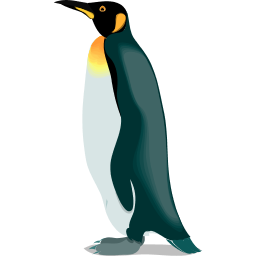
- King Penguins are the second largest penguin specie. They have four layers of feathers to help keep them warm on the cold subantarctic islands where they breed.
- Chinstrap Penguins get their name from the thin black band under their head. At times it looks like they’re wearing a black helmet, which might be useful as they’re considered the most aggressive type of penguin.
- Crested penguins have yellow crests, as well as red bills and eyes.
- Yellow eyed penguins (or Hoiho) are endangered penguins native to New Zealand. Their population is believed to be around 4000.
- Little Blue Penguins are the smallest type of penguin, averaging around 33 cm (13 in) in height.
- Penguin’s black and white plumage serves as camouflage while swimming. The black plumage on their back is hard to see from above, while the white plumage on their front looks like the sun reflecting off the surface of the water when seen from below.


HOKKAIDO /
What to see Getting there and around Hotels
Asahiyama Zoo 1 of 3 spots
in Asahikawa 86% 131
votesAsahiyama Zoo and the plain of AsahikawaIntroductionHow to Get ThereHours and FeesLinksHotels Asahiyama Zoo (旭山動物園, Asahiyama Dōbutsuen) is a very popular zoological garden just outside of central Asahikawa City in the middle of Hokkaido. Its popularity lies in the enclosures which allow visitors to observe the animals from various angles, many of which are unique to Asahiyama Zoo.Highlights include a glass tunnel through the penguin pool that allows visitors to observe the birds' underwater flights, and small glass domes in the middle of the polar bear and wolf enclosures that can get visitors right among the animals. The zoo was also one of the first to organize penguin walks in winter. Work on new enclosures and improvements to existing ones is constantly ongoing.Animals on display include native wildlife from Hokkaido, including deer, eagles, cranes and (now extinct) wolves, as well as various animals from across the world, such as polar bears, apes, big cats and giraffes. If possible, try to visit the zoo outside of weekends and holidays to reduce the crowds.Some unique enclosure at Asahiyama Zoo:

Antarctica (US English i/æntˈɑːrktɪkə/, UK English /ænˈtɑːktɪkə/ or/ænˈtɑːtɪkə/[Note 1] is Earth's southernmost continent, containing the geographicSouth Pole. It is situated in the Antarctic region of the Southern Hemisphere, almost entirely south of the Antarctic Circle, and is surrounded by the Southern Ocean. At 14,000,000 square kilometres (5,400,000 square miles), it is the fifth-largest continent in area after Asia, Africa, North America, and South America. For comparison, Antarctica is nearly twice the size of Australia. About 98% of Antarctica is covered by ice that averages 1.9 km (1.2 mi; 6,200 ft) in thickness,[5] which extends to all but the northernmost reaches of the Antarctic Peninsula.
Antarctica, on average, is the coldest, driest, and windiest continent, and has the highest average elevation of all the continents.[6] Antarctica is a desert, with annual precipitation of only 200 mm (8 in) along the coast and far less inland.[7] The temperature in Antarctica has reached −89.2 °C (−128.6 °F), though the average for the third quarter (the coldest part of the year) is −63 °C (−81 °F). As of 2016, there are about 135 permanent residents, but anywhere from 1,000 to 5,000 people reside throughout the year at the research stations scattered across the continent. Organisms native to Antarctica include many types of algae, bacteria, fungi, plants, protista, and certain animals, such asmites, nematodes, penguins, seals and tardigrades. Vegetation, where it occurs, is tundra.
Although myths and speculation about a Terra Australis ("Southern Land") date back to antiquity, Antarctica was first sighted in 1820 by the Russian expedition of Fabian Gottlieb von Bellingshausen and Mikhail Lazarev on Vostok and Mirny, who sighted the Fimbul ice shelf. The continent, however, remained largely neglected for the rest of the 19th century because of its hostile environment, lack of resources, and isolation.
Antarctica is a de facto condominium, governed by parties to the Antarctic Treaty System that have consulting status. Twelve countries signed the Antarctic Treaty in 1959, and thirty-eight have signed it since then. The treaty prohibits military activities and mineral mining, prohibits nuclear explosions and nuclear waste disposal, supports scientific research, and protects the continent's ecozone. Ongoing experiments are conducted by more than 4,000 scientists from many nations.
- Full access to our public library
- Save favorite books
- Interact with authors
Antartican penguins don't only live in Antartica they also live in other places like : Africa,New Zealand,Galapos islands but there is a enmy called Galapos seal.
- < BEGINNING
- END >
-
DOWNLOAD
-
LIKE
-
COMMENT()
-
SHARE
-
SAVE
-
BUY THIS BOOK
(from $4.99+) -
BUY THIS BOOK
(from $4.99+) - DOWNLOAD
- LIKE
- COMMENT ()
- SHARE
- SAVE
- Report
-
BUY
-
LIKE
-
COMMENT()
-
SHARE
- Excessive Violence
- Harassment
- Offensive Pictures
- Spelling & Grammar Errors
- Unfinished
- Other Problem





COMMENTS
Click 'X' to report any negative comments. Thanks!