
Hello! Welcome to the Nomenclature Cake Shop. We are a chemistry-themed bakery hoping to bring the fun into science! We have many ways in which you can mix and match frostings with our three signature cake bases. The three cake bases that we offer are Covalent Chocolate, Ionic Vanilla, and Acidic Lemon.



Acidic Lemon
Covalent Chocolate
Ionic Vanilla
Let us first tell you about Ionic Vanilla. This cake mainly consists of Metal Melted butter and either Nonmetal Natural sugar or Poly Powder (polyatomic). The metal melted butter must always be added before any other ingredient. After adding the metal melted butter, either nonmetal natural sugar or poly powder is added to your cake. The combination of metal melted butter + nonmetal natural sugar is always identified by adding -ide to the end of the combination.


OR

poly powder
nonmetal natural sugar
metal melted butter
For the cakes that have a combination of metal melted butter + poly powder, the amount of poly powder that is to be used is identified by adding either -ite or -ate to the ending. These distinctions are based on the amount of oxygen contained in the quantity of poly powder we are using for the cake. If the poly powder has a higher oxygen content, its ending is -ate. If it has a lower oxygen content, its ending is -ite.
-ite
-ate
more Oxygen
less Oxygen
The vanilla cake has two different frosting options: you can either choose from our set list of frostings that have a set price or charge, or you can choose the daily special that changes everyday and varies in charge. If you would like to choose from our regularly available frostings, you can choose between Alkali Chocolate, Alkaline Earth Vanilla, Meringue 13, Minty Zinc, Silver Strawberry, or Cadmium Cream Cheese.

For example, zinc oxide (ZnO) is an ionic vanilla cake with Minty Zinc frosting and the combination of metal melted butter + nonmetal natural sugar.
Sodium iodide (NaI) is an ionic vanilla cake with the combination of metal melted butter + nonmetal natural sugar topped with Alkali chocolate frosting.
Potassium sulfate (K2SO4) is an ionic vanilla cake with the combination of metal melted butter + poly powder that has a higher oxygen content topped with Alkali chocolate frosting.
Zinc nitrite (ZnNO2) is an ionic vanilla cake with the combination of metal melted butter + poly powder that has a lower oxygen content topped with Minty Zinc frosting.
Our daily specials (transition metals) vary in price, or charge, daily. The price (electrons) of the daily special frosting indicate how much money is needed to balance out the cost (charge) of the other element. The price (electrons) of our daily special might be hard to find…It is shown by the amount of Roman numerals in between the metal melted butter and either the nonmetal natural sugar or poly powder (depending on the cake).



For example, Nickel (III) Chloride has a charge of $3 and is an ionic vanilla cake with the combination of metal melted butter + nonmetal natural sugar topped with the daily special frosting. Gold (I) bromide has a charge of $1 and is an ionic vanilla cake with the combination of metal melted butter + nonmetal natural sugar topped with the daily special frosting.
You might think that any frosting with zinc, silver, or cadmium will be a daily special (transition metals) and won’t have a fixed price (charge), but REMEMBER, those three elements are the exception! For example, cadmium nitrate (CdNO3)2 is an ionic vanilla cake with metal melted butter + nonmetal natural sugar topped with Cadmium Cream Cheese icing. Silver bromide (AgBr) is an ionic vanilla cake with metal melted butter + nonmetal natural sugar topped with Silver Strawberry frosting.
Zi
Ag
Cd
EXCEPTIONS
Now let’s talk about the Covalent Chocolate cakes. These cakes contain a doubled amount of nonmetal natural sugar (nonmetal + nonmetal). When it comes to covalent chocolate cakes, the electrons of each nonmetal do not need to balance each other out. The amount (charge) of each element in the compound is determined by how many chocolate bars are added to the cake.

nonmetal natural sugar x2
The number of chocolate bars added (charge) is either indicated in the cake’s chemical formula by adding a subscript to the end of the element OR in its name by adding prefixes in order to show how many chocolate bars (charge) the cake (compound) has. You must know either the name or the chemical formula to figure out the other.
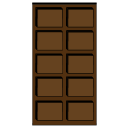
For example, carbon tetrachloride (CCl4)is a covalent chocolate cake with a doubled amount of nonmetal natural sugar and 4 chocolate bars added to it. Chlorine’s charge, -1, is multiplied by 4 so that it becomes -4. Similarly, silicon dioxide (SiO2) is a covalent chocolate cake with a doubled amount of nonmetal natural sugar and 2 chocolate bars added to it. Oxygen’s charge changes from -2 to -4 when multiplied by 2.
We like to refer to our prefix chart when deciding how many chocolate bars to use to make it easier!

- Full access to our public library
- Save favorite books
- Interact with authors
- < BEGINNING
- END >
-
DOWNLOAD
-
LIKE
-
COMMENT()
-
SHARE
-
SAVE
-
BUY THIS BOOK
(from $3.99+) -
BUY THIS BOOK
(from $3.99+) - DOWNLOAD
- LIKE
- COMMENT ()
- SHARE
- SAVE
- Report
-
BUY
-
LIKE
-
COMMENT()
-
SHARE
- Excessive Violence
- Harassment
- Offensive Pictures
- Spelling & Grammar Errors
- Unfinished
- Other Problem





COMMENTS
Click 'X' to report any negative comments. Thanks!