This, my story, could be similar or really different from yours. However, what they have in common is a shared dream; a dream of being a teacher, of being an agent that can build a better society, a society of peace.

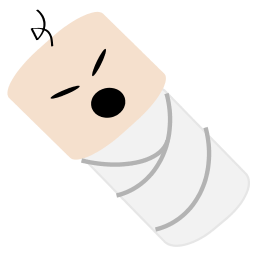

This is the story of Camila Castro, the little girl, now big, who dreamed of being a teacher. As every dream, it was innocent and unreal, or at least, it was at that time.
Teachers' stories may start from their experiences as formal students. Well, I did not start from there, I started from my experience as a learner of life, as an apprentice of my parents, my context and my world.
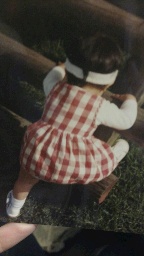
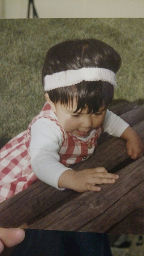
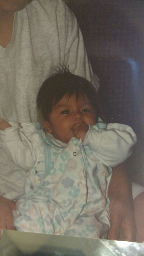
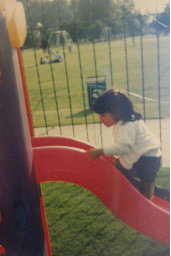
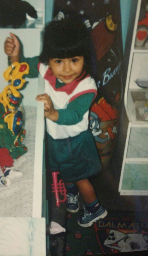
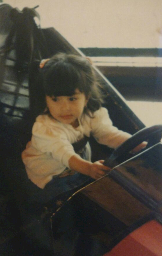
To begin with, most of the things I have learnt in my life have been through games, by walking and asking about everything I see, by looking into the matters which are interesting for me, by allowing me to be amazed about every single part that constitutes our world, by being integral.
These little actions will recover their sense when teaching, due to all the relevant theoretical constructs that address them, from different schools of thought, approaches, methodologies, strategies and tasks. Thus, it will be rewarding and exciting to take you on a tour of some memories and experiences.
After all, they are the ones that have shaped my vision of language learning and teaching.
Let's go!
MY BIRTH
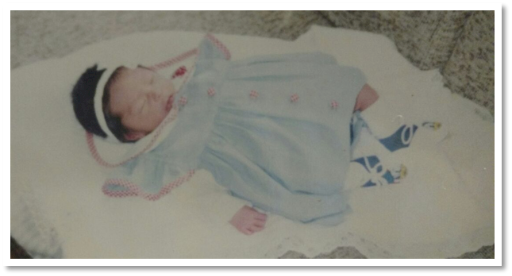



Here we are, at the stop which I called “My birth”. First of all, I selected this stage because from the birth of babies many studies emerged, such as the origin of the language, the production and comprehension of the language, language acquisition, among others. But, this is not all, these studies have contributed to the theories of language learning.
As an example, some behaviorists proposed that human beings are an organism capable of a wide repertoire of behaviors, and their occurrences depend on three elements: stimulus, which serves to elicit behavior; a response triggered by a stimulus; and a reinforcement, which serves to mark the response (Richards and Rodgers, 2001, p.56).
In this regard, within the framework of learning, language should be taught as the previous process until the received turns into an automatic production. Even though I do not remember anything about when I was born, I am sure that it was the process I followed for communicating, and it was the method (audiolingual) that some teachers used at the first classes of English I took.
BABY TALK
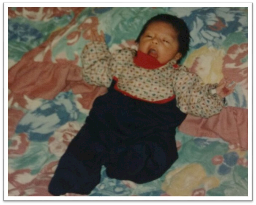




I remember when my mom used that dialect called “baby talk” with me (I must admit that she is still using it). She used her body while speaking, and when I was a baby, I responded with body movements as well. About this matter, speaking definitely is not the first skill that we develop and the body language has an important role through interaction.
According to this, there are two aspects that confirm the previous statements, which I would like to bring up here.

One, as per the proposal of James J. Asher, is that "Children develop listening competence before they develop the ability to speak”...


and the other one is that children’s abilities in listening comprehension are acquired because they are required to respond physically to spoken language in form of parental commands (Richards and Rodgers, 2001, p.74). Furthermore, it is important to point out that the physical movements are directed to the right half of the brain.
Well... this was part of my process of acquiring my mother tongue. However, the method Total Physical Response (TPR) is also used at beginners' levels of learning a second language.


It results beneficial in terms of memory, but also, as it works with the right half hemisphere, it concurrently fortifies other functions located there, related to feelings, prosody, creativity; that can also facilitate people’s learning processes.
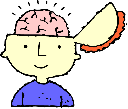
Intelligences everywhere!
Did you know that I wanted to be a musician? Well, this truly was an ingenuous dream for my parents! But I tried not to pay attention to that. For me, playing some instruments is the way in which I can do catharsis. It is about a deep connection between my body and the world.
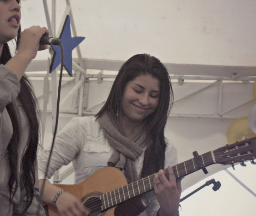
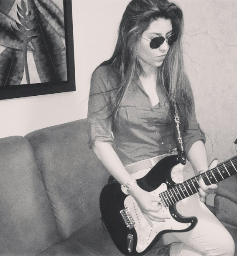
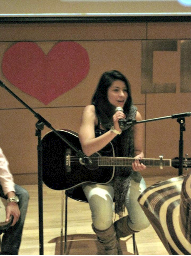
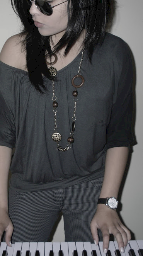
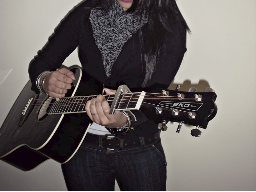
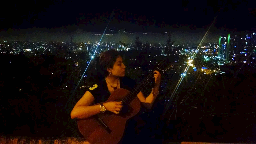
With this in mind, I want to point out that music has been a powerful and transversal tool for my learning processes. From this, I have comprehended some occurrences of the history, learnt vocabulary, practiced my pronunciation, understood other system of signs, transmitted peace and happiness to people, among others.
As soon as I recognized the effects that music has on me, I started to use it as a strategy for studying some contents, and it really works. .


Regarding this, music is considered as a type of intelligence of the model proposed by Gardner (1993). But there are some others which address and develop other skills or dimensions of the human being.
In addition, Richards and Rodgers (2001) said that people differ in the strengths and combinations of intelligences; and, for that reason, “Pedagogy is most successful when these learner differences are acknowledged, analyzed for particular groups of learners, and accommodated in teaching” (p.115).
- Full access to our public library
- Save favorite books
- Interact with authors
- < BEGINNING
- END >
-
DOWNLOAD
-
LIKE(1)
-
COMMENT()
-
SHARE
-
SAVE
-
BUY THIS BOOK
(from $9.19+) -
BUY THIS BOOK
(from $9.19+) - DOWNLOAD
- LIKE (1)
- COMMENT ()
- SHARE
- SAVE
- Report
-
BUY
-
LIKE(1)
-
COMMENT()
-
SHARE
- Excessive Violence
- Harassment
- Offensive Pictures
- Spelling & Grammar Errors
- Unfinished
- Other Problem






COMMENTS
Click 'X' to report any negative comments. Thanks!