Table of Contents:
-- Vietnam Timeline ... (pg. 2)
-- Vocabulary ... (pg. 9)
-- The Early Years of Vietnam (pg. 14)
-- The Year of 1968 ... (pg. 18)
-- The Later Years of Vietnam ... (pg. 21)
-- 1960's Culture (Hippie Movement) ... (pg. 26)

Table of Contents:
-- Richard Nixon's Presidency ... (pg. 30)
-- Gerald Ford's Presidency ... (pg. 33)
-- Jimmy Carter's Presidency ... (pg. 36)
-- Jimmy Carter's Presidency ... (pg. 37)
-- Ronald Reagan's Presidency ... (pg. 41)
-- Later Presidents after Carter ... (pg. 45)
Vietnam Timeline
Dien Bien Phu (March 13, 1954): The Battle of Dien Bien Phu was the climactic confrontation of the First Indochina War between the French Union's French Far East Expeditionary Corps and Viet Minh communist-nationalist revolutionaries.
Eisenhower announces Domino Theory (April 7, 1954): President Dwight D. Eisenhower coins one of the most famous Cold War phrases when he suggests the fall of French Indochina to the communists could create a “domino” effect in Southeast Asia.
Geneva Accords signed (April 26, 1954): The Geneva Accords arranged a settlement which brought about an end to the First Indochina War. A ceasefire was signed and France agreed to withdraw its troops from the region.
SDS founded at University of Michigan (1960): Students for a Democratic Society was a student activist movement in the United States that was one of the main representations of the New Left. The organization developed and expanded rapidly in the mid-1960s before dissolving at its last convention in 1969.
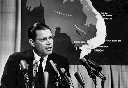
Ngo Diem removed from power and later assassinated (November 2, 1963): Following the overthrow of his government by South Vietnamese military forces the day before, President Ngo Dinh Diem and his brother are captured and killed by a group of soldiers.
Gulf of Tonkin Incident (August 2, 1964): The Gulf of Tonkin incident, also known as the USS Maddox incident, drew the United States more directly into the Vietnam War. It involved two separate confrontations involving North Vietnam and the United States in the waters of the Gulf of Tonkin.
Gulf of Tonkin Resolution passed (August 7, 1964): The Gulf of Tonkin Resolution gave broad congressional approval for expansion of the Vietnam War.
“Free Speech” Protest at Cal Berkley (Fall 1964-1965): In protests unprecedented in scope, students insisted that the university administration lift the ban of on-campus political activities and acknowledge the students' right to free speech and academic freedom.
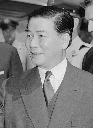
First Combat Troops arrive in Da Nang (March 8, 1965): The first U.S. combat troops arrive in Vietnam as 3500 Marines land at China Beach to defend the American air base at Da Nang. They join 23,000 American military advisors already in Vietnam.
Battle in La Drang Valley- 1st Time U.S. Regulars fought North Vietnamese regulars (November 14, 1965): In the first major engagement of the war between regular U.S. and North Vietnamese forces, elements of the 3rd Brigade, 1st Cavalry Division (Airmobile) fight a pitched battle with Communist main-force units in the Ia Drang Valley of the Central Highlands.
TET Offensive (Jan 30, 1968 – Sep 23, 1968): The Tet Offensive was a series of surprise attacks by the Vietcong (rebel forces sponsored by North Vietnam) and North Vietnamese forces, on scores of cities, towns, and hamlets throughout South Vietnam.
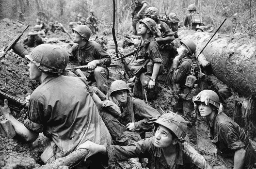
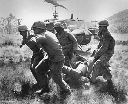
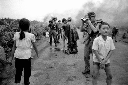
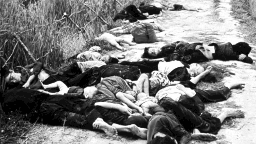
My Lai Massacre (March 16, 1968): The Mỹ Lai Massacre was the Vietnam War mass killing of between 347 and 504 unarmed civilians in South Vietnam
Lyndon B. Johnson decides not to run for Re-election (March 31, 1968): Johnson's decision was in large part a consequence of declining public support for his policies in the Vietnam War.
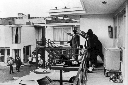
Martin Luther King Jr. killed (April 4, 1968): Martin Luther King Jr. was an American clergyman and civil rights leader who was fatally shot at the Lorraine Motel in Memphis, Tennessee.
Bobby Kennedy killed (June 5, 1968): Presidential candidate Robert F. Kennedy was fatally shot at the Ambassador Hotel in Los Angeles, shortly after winning the California presidential primaries in the 1968 election, and died the next day while hospitalized.
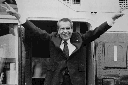
Nixon Wins Election (November 5, 1968): Eight years after being defeated by John F. Kennedy in the 1960 election, Richard Nixon defeats Hubert H. Humphrey and is elected president.
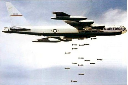
U.S. Begins Bombing Cambodia (March 18, 1969): U.S. B-52 bombers are diverted from their targets in South Vietnam to attack suspected communist base camps and supply areas in Cambodia for the first time in the war. President Nixon approved the mission.
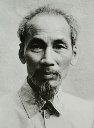
Ho Chi Minh Dies (September 2, 1969): President Ho Chi Minh of the Democratic Republic of Vietnam dies of a heart attack in Hanoi.
Draft Lottery Begins (December 1, 1969): The Selective Service System of the United States conducted two lotteries to determine the order of call to military service in the Vietnam War for men born from 1944 to 1950.
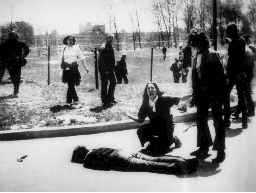
Kent state shooting (May 4, 1970): The Kent State shootings were the shootings of unarmed college students protesting the Vietnam War at Kent State University in Kent, Ohio, by members of the Ohio National Guard.
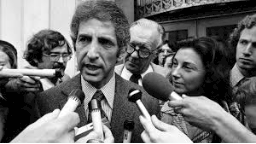
"Pentagon Papers" Released (June 13, 1971): The Pentagon Papers revealed that the Harry S. Truman administration gave military aid to France in its colonial war against the communist-led Viet Minh, thus directly involving the United States in Vietnam.
Saigon Falls- Vietnam unified under one Flag (April 30, 1975): Communist North Vietnamese and Viet Cong forces captured the South Vietnamese capital of Saigon, forcing South Vietnam to surrender and bringing about an end to the Vietnam War.
Vocabulary
Ho Chi Minh: Hồ Chí Minh was a Vietnamese Communist revolutionary leader who was prime minister and president of the Democratic Republic of Vietnam.
Dien Bien Phu: The Battle of Dien Bien Phu was the climactic confrontation of the First Indochina War between the French Union's French Far East Expeditionary Corps and Viet Minh communist-nationalist revolutionaries.
Geneva Accords: a 1954 peace agreement that divided Vietnam into Communist-controlled North Vietnam and non-Communist South Vietnam until unification elections could be held in 1956.
Ngo Dinh Diem: Ngô Đình Diệm was a South Vietnamese politician. A former mandarin of the Nguyễn dynasty, he was named Prime Minister of the State of Vietnam by Head of State Bảo Đại in 1954.
Ho Chi Minh Trail: a network of paths used by North Vietnam to transport supplies to the Vietcong in South Vietnam.
Napalm: a gasoline-based substance used in bombs that U.S. planes dropped in Vietnam in order to burn away jungle and expose Vietcong hideouts.
Agent Orange: a toxic leaf-killing chemical sprayed by U.S. planes in Vietnam to expose Vietcong hideouts.
Credibility Gap: a public distrust of statements made by the government.
Vietnamization: President Nixon’s strategy for ending U.S. involvement in the Vietnam War, involving the gradual withdrawal of U.S. troops and their replacement with South Vietnamese forces.
Silent Majority: a name given by President Richard Nixon to the moderate, mainstream Americans who quietly supported his Vietnam War policies.
My Lai Massacre: a village in northern South Vietnam where more than 200 unarmed civilians, including women and children, were massacred by U.S. troops in May 1968.
Kent State University: an Ohio university where National Guardsmen opened fire on students protesting the Vietnam War on May 4, 1970, wounding nine and killing four.
Pentagon Papers: a 7,000-page document— leaked to the press in 1971 by the former Defense Department worker Daniel Ellsberg—revealing that the U.S. government had not been honest about its intentions in the Vietnam War.
War Powers Act: a law enacted in 1973, limiting a president’s right to send troops into battle without consulting Congress.
Vietcong: the South Vietnamese Communists who, with North Vietnamese support, fought against the government of South Vietnam in the Vietnam War.
Gulf of Tonkin Resolution: a resolution adopted by Congress in 1964, giving the president broad powers to wage war in Vietnam.
The Early Years of Vietnam
o Why did the U.S. get involved?
At first, after the Geneva Accords split Vietnam in two (South and North Vietnam), a group called the Vietcong began a war against the governing authority in South Vietnam. During this time, the US was sending supplies and a small amount of troops to South Vietnam to help shape the new democratic country. When North Vietnamese (communist) patrol boats attacked American destroyers, this led to all out war with North Vietnam. The US also got involved to stop communism from spreading from North to South Vietnam.
o Who was Robert McNamara?
Secretary of defense in the Johnson Administration; helped craft and guide the U.S policy in Vietnam. wanted to fight communism but later resigns because he calls it "senseless war"
o Who was able to get out of the draft? Why was this unfair?
Those who were wealthy enough to enroll into a full time college, and those who had physical problems or had to support a family at home were able to get out of the draft. Those who were chosen at random meant the most skillful workers and ones with medical issues had to go. Minorities were drafted, and many came right out of high school.
o What did the Gulf of Tonkin Resolution give Johnson the power to do?
President Johnson the power to take whatever actions he deems necessary to defend Southeast Asia including “the use of armed force.”
o What was fighting like in Vietnam compared to other wars?
This was largely because it was not mainly a war between armies. The major enemy for the US was more of a guerrilla organization that did not fight traditional battles. This was also different than other US wars because it was not a war to take territory. The US was fighting in a friendly country, trying to destroy an insurgency. This was very different from wars like WWII where the US was invading areas held by hostile forces.
o Why did the Tet Offensive change the public perception of the war?
The Tet Offensive, televised nightly in the U.S., shocked many Americans who previously had the idea the U.S. was easily taking care of the enemy. U.S. forces eventually pushed the North Vietnamese forces back and inflicted huge casualties on them, but the impact the fighting had on U.S. public opinion was equally huge.
The Year of 1968
o MLK Assassination: April 4, 1968
An American clergyman and civil rights leader who was fatally shot at the Lorraine Motel in Memphis, Tennessee. King was rushed to St. Joseph's Hospital, where he was pronounced dead at 7:05 p.m. that evening. He was a prominent leader of the Civil Rights Movement and Nobel Peace Prize laureate who was known for his use of nonviolence and civil disobedience.
o Bobby Kennedy assassination: June 5, 1968
Presidential candidate Robert F. Kennedy was fatally shot at the Ambassador Hotel in Los Angeles, shortly after winning the California presidential primaries in the 1968 election, and died the next day while hospitalized.
o Tet Offensive: (January 31 - September 23, 1968)
On January 31, 1968, some 70,000 North Vietnamese and Viet Cong forces launched the Tet Offensive (named for the lunar new year holiday called Tet), a coordinated series of fierce attacks on more than 100 cities and towns in South Vietnam.
o Walter Cronkite’s spreading word about the Tet Offensive (Why did his opinion matter so much?)
Cronkite was so shocked at the devastation of the communists’ Tet offensive that he went over to see for himself what was really going on. And he concluded the war was a stalemate, probably unwinnable. Cronkite’s February 27 broadcast, "Report from Vietnam," played a major role in turning Americans against the war and inducing President Lyndon Johnson to abandon his reelection campaign.
The Later Years of Vietnam
o What was the trial surrounding the My Lai Massacre so significant?
1st Lt. William Calley was charged with six specifications of premeditated murder. During the trial, Chief Army Prosecutor Capt. Aubrey Daniel charged that Calley ordered Sgt. Daniel Mitchell to “finish off the rest” of the rounded-up villagers. The prosecution stressed that all the killings were committed despite the fact that Calley’s platoon had met no resistance and that no one had fired on the men. Calley was found guilty of personally murdering 22 civilians and sentenced to life imprisonment, but his sentence was reduced to 20 years by the Court of Military Appeals and further reduced to 10 years by the Secretary of the Army. Proclaimed by much of the public as a “scapegoat,” Calley was paroled in 1974.
o What was Nixon’s strategy on Vietnam?
Nixon believed his Vietnamization strategy, which involved building up South Vietnam’s military strength in order to facilitate a gradual withdrawal of U.S. troops, would prepare the South Vietnamese to take responsibility for their own defense against a Communist takeover and allow the U.S. to leave the conflict with its honor intact.
o What happened at Kent State?
On May 4, 1970, college students were protesting the Vietnam War. National Guardsmen opened fire on the students, wounding nine and killing four. Gained national attention.
o When did the U.S. leave Vietnam?
In January 1973, representatives of the United States, North and South Vietnam, and the Vietcong signed a peace agreement in Paris, ending the direct U.S. military involvement in the Vietnam War.
o How were soldiers treated when they arrived home?
Some people who opposed American involvement in the Vietnam War treated U.S. soldiers and veterans poorly. They tended to blame American troops for the tragic situation in Vietnam, instead of blaming the government leaders who had sent them there. In some instances, antiwar protesters reportedly spit on returning veterans and called them baby-killers.
o How many people died and were wounded in Vietnam?
Guenter Lewy in 1978 estimated 1,353,000 total deaths in North and South Vietnam during the period 1965–1974 in which the U.S. was most engaged in the war.
o How much money did the U.S. spend?
The Defense Department reported that the overall cost of the Vietnam war was $173 billion (equivalent to $770 billion in 2003 dollars).
1960's Culture
(Hippie Movement)
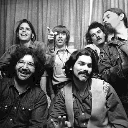
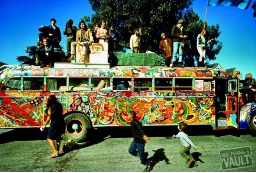
o What is a hippie?
A person of unconventional appearance, typically having long hair and wearing beads, associated with a subculture involving a rejection of conventional values and the taking of hallucinogenic drugs.
Sex:
The common stereotype on the issues of love and sex had it that the hippies were "promiscuous, having wild sex orgies, seducing innocent teenagers and every manner of sexual perversion." One popular hippie slogan that appeared was "If it feels good, do it!" which for many "meant you were free to love whomever you pleased, whenever you pleased, however you pleased. This encouraged spontaneous sexual activity and experimentation. Hippies embraced the old slogan of free love of the radical social reformers of other eras.
Drugs:
Hippies used drugs such as marijuana, LSD, peyote and psilocybin mushrooms to explore altered states of consciousness. Harder drugs, such as cocaine, amphetamines and heroin, were also sometimes used in hippie settings; however, these drugs were often disdained, even among those who used them, because they were recognized as harmful and addictive.
Rock n' Roll:
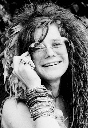
Hippie culture spread worldwide through a fusion of rock music, folk, blues, and psychedelic rock. In August 1969, the Woodstock Music and Art Fair took place in Bethel, New York, which for many, exemplified the best of hippie counterculture. Over 500,000 people arrived to hear some of the most notable musicians and bands of the era, among them Canned Heat, Richie Havens, Joan Baez, Janis Joplin, The Grateful Dead, Creedence Clearwater Revival, Crosby, Stills, Nash & Young, Carlos Santana, Sly & The Family Stone, The Who, Jefferson Airplane, and Jimi Hendrix. Similar rock festivals occurred in other parts of the country, which played a significant role in spreading hippie ideals throughout America.
Richard Nixon's Presidency
- Full access to our public library
- Save favorite books
- Interact with authors
- < BEGINNING
- END >
-
DOWNLOAD
-
LIKE
-
COMMENT()
-
SHARE
-
SAVE
-
BUY THIS BOOK
(from $9.59+) -
BUY THIS BOOK
(from $9.59+) - DOWNLOAD
- LIKE
- COMMENT ()
- SHARE
- SAVE
- Report
-
BUY
-
LIKE
-
COMMENT()
-
SHARE
- Excessive Violence
- Harassment
- Offensive Pictures
- Spelling & Grammar Errors
- Unfinished
- Other Problem





COMMENTS
Click 'X' to report any negative comments. Thanks!