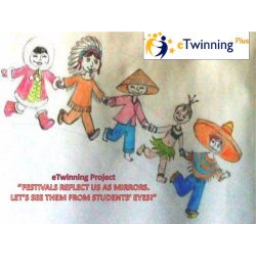
This e-book is dedicated to our partners from Armenia, Azerbaijan, Bulgaria, Georgia, France, Latvia, Romania, Tunisia ,Turkey, and Ukraine, who participated with us in an eTwinning project "Festivals reflect us as mirrors. Let's see them from students' eye".

DWELLING ON THE THEME OF FESTIVALS AND HOLIDAYS
It is well-known that festivals and feasts are widely celebrated in all cultures. They reflect artistic, cultural, historical, agricultural and other traditions and lifestyles of our communities. Sometimes they coincide in different cultures, sometimes differ and have national peculiarities.
So, our project “Festivals reflect us as mirrors. Let’s see them from students’ eye” is a good chance to share our customs and and traditions, to learn better each other, and in such

a way to build bridges between our nations, schools and pupils.
Independence Day of Ukraine
First of all, I want to present one of the main holidays of our country, which reflects our national customs and traditions - Independence Day of Ukraine.
Independence Day is a public holiday. It is marked every year on August, 24. Generally Independence Day is celebrated with a military parade held in Kyiv, the capital of our country.
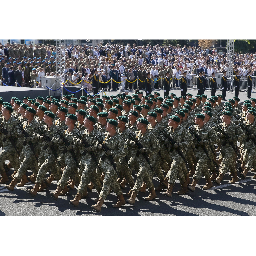
Independence Day in Ukraine is a huge celebration that sees crowds of people in folk costumes, with some waving the Ukrainian flag.
Other Independence Day events may include: fireworks, outdoor exhibitions, concerts, free public markets and fairs, circuses, sporting events. There are many celebrations across the country to mark Independence Day, with some continuing for days after August 24.
Illia Rudas
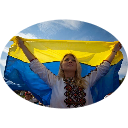
The Day of the National Flag of Ukraine
23, August is celebrated as the Day of the National Flag Of Ukraine.
The first ceremony of rising of the modern Ukrainian flag took place on August 24, 1990 in Kiev, the capital of Ukraine. Two years later this flag was adopted as the national flag of independent state of Ukraine. However, Flag Day is observed on August 23, because August 24 is Independence Day in Ukraine. In order to omit double celebration, Flag Day was moved.
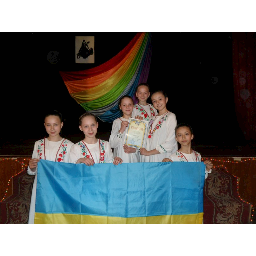
Two colours of the flag are symbolical for us, Ukrainians. Blue stands for the sky and yellow is for field of wheat. Meanings of the colours have nothing to do with original reasons of their adaptation, however, evocation of landscape certainly formed our conception of a state flag.
Mariia Skrypnyk
The Vyshyvanka’s Day
On the third Thursday of May we widely celebrate the Vyshyvanka’s Day. In our country vyshyvanka, an embroidery shirt, is used as a talisman to protect the person wearing it. This holiday is widely popular not only in our country. It is intended to unite all Ukrainians over the world, regardless of religion, language they speak or their place of residence.
It is a flash mob holiday, which is not attached to any public holiday or feast day.
On this day many Ukrainians wear vyshyvankas to demonstrate adherence to the idea of national identity and unity and to show their patriotism.
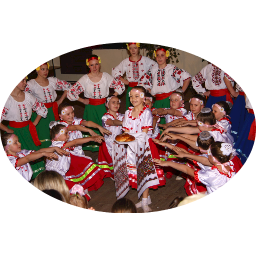
In our Educational Complex we have a special day of vyshyvanka. It has already become a tradition for our teachers and pupils to wear the embroidery shirts on Fridays and holidays. Tania Reznichenko
Victory Day
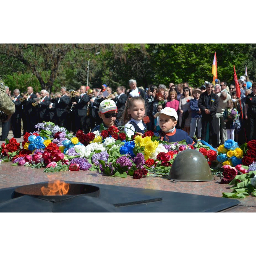
Victory Day is one more very popular holiday in Ukraine. It is celebrated as a public holiday on May 9 to commemorate the defeat of the Nazis in the Second World War.
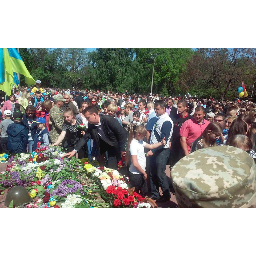
The holiday celebrations include official greetings to war veterans, a public display of Ukraine’s armed forces, presidential speeches, concerts featuring Ukrainian pop stars singing popular wartime songs, evening firework displays. Victory Day also includes a moment of silence to honor war victims, as well as people laying flowers at the Tomb of the Unknown Soldier.
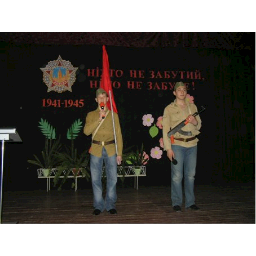
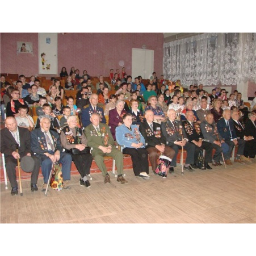
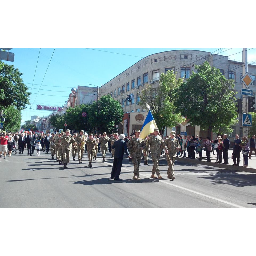
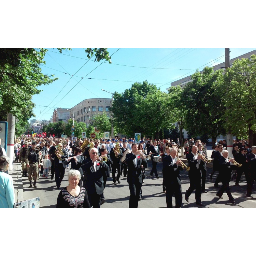
This year we celebrated the 72nd anniversary of the Victory over Nazism in Europe. For residents of Kropyvnytsky it was a Day of memory and reconciliation. It was celebrated as a public procession, in which took part more than four thousand inhabitants of our city.
Vlad Obrezha
Christmas in Ukraine
My most favourite holiday of the year is Christmas. I usually celebrate this holiday twice. At school during our English lessons we speak about Christmas and celebrate it on December, 25. We usually make Christmas cards and sign them in English, learn English songs and poems, devoted to this holiday. My classmates and I like to sing the song “Jingle Bells” and recite a poem “Oh, Christmas Tree!” in English.
But the real Christmas celebrations begin on January, 7 for my family and me. This is the day when Christmas is celebrated in my country. I love to decorate Christmas tree with many decorations and coloured lights. We make or buy Christmas cards and presents for our relatives and friends.

The Christmas Eve is called in Ukraine ‘Sviaty Vechir’ (Holy Evening). People usually cook some tasty foods for this evening. There should be at least 12 different dishes on the table. There should be ‘Kutia’ by all means among them. ‘Kutia’ is the ritual Ukrainian food. It is prepared from cooked wheat and special syrup containing diluted honey, grated poppy seeds, raisins and sometime swalnuts. In my family we also like to decorate the table with ‘Didukh’ -a sheaf of oats or wheat of special shape: with four legs and numerous little bundles. It symbolizes prosperity for the next year.
On this evening Ukrainian children come around their neighbors and friends with torches and sparcler, spreading grains and coloured seeds. They wish people
- Full access to our public library
- Save favorite books
- Interact with authors
- < BEGINNING
- END >
-
DOWNLOAD
-
LIKE(1)
-
COMMENT()
-
SHARE
-
SAVE
-
BUY THIS BOOK
(from $3.99+) -
BUY THIS BOOK
(from $3.99+) - DOWNLOAD
- LIKE (1)
- COMMENT ()
- SHARE
- SAVE
- Report
-
BUY
-
LIKE(1)
-
COMMENT()
-
SHARE
- Excessive Violence
- Harassment
- Offensive Pictures
- Spelling & Grammar Errors
- Unfinished
- Other Problem





COMMENTS
Click 'X' to report any negative comments. Thanks!