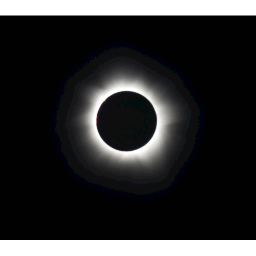


this is dedicated to ppl who keep asking question about the spectacular eclipse the facts u need to know yall

There are 3 main types of solar eclipses:
total solar eclipsespartial solar eclipsesannular eclipsesIn addition, there are hybrid solar eclipses, also called annular-total eclipse, when an annular eclipse changes into a total eclipse, or vice versa.
The darkest stage of a total, annular, or hybrid eclipse can only be seen from a small area. Still, solar eclipses, except hybrid eclipses, get their name from the maximum point of the eclipse, even if this point lasts less than a second. In reality, however, all solar eclipses look like partial solar eclipses in most places and for most of the duration.
types of solar eclipses
When Does a Solar Eclipse Occur?Solar eclipses can only happen around New Moon because of the alignment of Earth, the Moon, and the Sun which happens at that time. But this does not mean that eclipses of the Sun happen every New Moon night.
The New Moon and the Sun also have to be near a lunar node, which happens a little less than 6 months apart, and lasts, on average, around 34.5 days. This period is called the eclipse season, and it is the only time that eclipses take place.
The lunar nodes are 2 points where the plane of the Moon's orbital path around Earth meets Earth's orbital plane around the Sun, the ecliptic. The orbital paths meet because the plane of the Moon's path around Earth is inclined at an angle of approximately 5° to the ecliptic.
How Often Do Solar and Lunar Eclipses OccurMost years have 4 eclipses, which is the minimum number of eclipses that take place in a year; 2 of these 4 eclipses are always solar eclipses. While rare, the maximum number of eclipses that can take place in a calendar year is 7.
There are 2 or 3 eclipses during every eclipse season. At least 1 of these is always a solar eclipse, sometimes 2. The same is true for lunar eclipses. Which order they come in, depends on how each eclipse season coincides with the lunar (synodic) month.
The lunar month is the period it takes the Moon to go through all the Moon Phases from a New Moon to the next, and it lasts, on average, 29.5 days. This is 5 days less than an eclipse season, and therefore, there will always be at least 1 New Moon, resulting in a solar eclipse, and at least 1 Full Moon, resulting in a lunar eclipse, during each eclipse season.
This is also why solar and lunar eclipses come in pairs–a solar eclipse always takes place either about 2 weeks before or after a lunar eclipse, and vice versa.
At most, there can be 2 New Moons and 1 Full Moon, or 2 Full Moons and 1 New Moon in the same eclipse season.
- Full access to our public library
- Save favorite books
- Interact with authors
wow that was a great book
u can find more like the book the teacher from the black swamp
- < BEGINNING
- END >
-
DOWNLOAD
-
LIKE(3)
-
COMMENT()
-
SHARE
-
SAVE
-
BUY THIS BOOK
(from $2.99+) -
BUY THIS BOOK
(from $2.99+) - DOWNLOAD
- LIKE (3)
- COMMENT ()
- SHARE
- SAVE
- REMIX
- Report
-
BUY
-
LIKE(3)
-
COMMENT()
-
SHARE
- Excessive Violence
- Harassment
- Offensive Pictures
- Spelling & Grammar Errors
- Unfinished
- Other Problem





COMMENTS
Click 'X' to report any negative comments. Thanks!