
WHAT IS TOK?
Theory of Knowledge is one of the components of the IBDP core and it aims to make students aware of the interpretative nature of knowledge, including personal ideological biases.
It offers students the opportunity to reflect critically on diverse ways of knowing and on areas of knowledge and consider the role and nature of knowledge in their own culture, in the cultures of others and in the wider world.
WHY DO WE STUDY TOK?
We study TOK because it teaches us to be aware of ourselves as thinkers, encouraging us to become more acquainted with the complexity of knowledge.
TOK also provides coherence, by linking academic subject areas as well as transcending them.
It therefore demonstrates the ways in which we can apply our knowledge with greater awareness and credibility.
EXAMPLE 1
Real Life Situation: Scientists developed artificial intelligence that can detect homosexuality from a photograph
Knowledge Questions:
To what extent are the results accurate?
To what extent is research in the name of science justified?
Do scientists have ethical responsibilities?

EXAMPLE 2
Real Life Situation: In biology class, we conducted an experiment measuring the correlation between the concentration of sucrose and the volume of carbon dioxide production. We used the scientific method to conduct this experiment although the results did not match our hypothesis which could have occurred due to minor errors in our method.
Knowledge Questions:
To what extent is the scientific method reliable?
If all scientific experiments have 'uncertainty' how can we know 'truth' in science?
Example 3
Real life situation: Dog owners often train their dogs in order to have them behave properly and for their convenience. However, is this valuable knowledge or is it for the owner's convenience?
Knowledge question: To what extent is some knowledge more valuable than other?

is for Areas of Knowledge
The 8 areas of knowledge are disciplines in which knowledge can be based although these areas may overlap.


- Mathematics
- Natural Sciences
- Human Sciences
- History
- The Arts
- Ethics
- Religious Knowledge Systems
- Indigenous Knowledge Systems
is for Biology
Biology is one of the main fields in the natural sciences. TOK can be applied to biology by looking at the theory of evolution and asking why it is scientific.


is for Confirmation Bias

Confirmation bias is the tendency to search for or recall information in a way that confirms one's preexisting beliefs or hypotheses. This is seen in the natural sciences when non-believers of global warming seek "statistics" that disprove global warming.

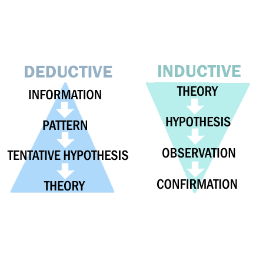
is for Deductive Reasoning

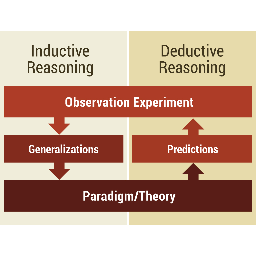
Deductive reasoning is a logical process in which a conclusion is based on the concordance of multiple premises that are generally assumed to be true. An example of deductive reasoning: all dolphins are mammals, mammals have kidneys; therefore all dolphins have kidneys.
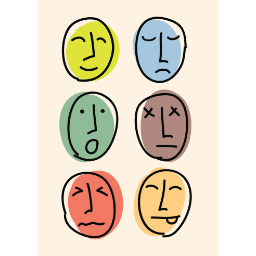
is for Emotion

Emotion is one of the 8 ways of knowing. In an ideal world, emotion shouldn't play a role in the natural sciences since it can lead to biased findings and studies. In reality, the formulation of a hypothesis can be influenced by the emotions of a scientist toward a subject. For example, a scientist opposed to abortion m
is for Falsifiability

Falsifiability is the basic scientific principle that defines the inherent testability of any scientific hypothesis. The principle of falsifiability has been explored by philosopher Karl Popper and is an example of methodology in the natural sciences.

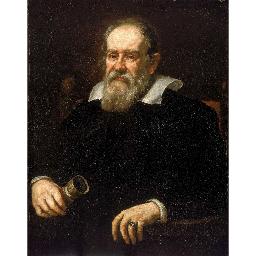
is for Galileo Galilei

Galileo Galilei was an influential thinker in the field of natural sciences. He helped get the scientific revolution underway, in particular with his emphasis on empirical observation of experiments as a way of ascertaining their results. He also developed Copernicus’s heliocentric theory which links to historical development in the TOK knowledge framework.
is for Historical Development

Historical development is one of the strands of the knowledge framework which helps us understand the general structure and features of each area of knowledge. Historical development has occurred in the natural sciences when scientists discovered that the Earth orbits around the Sun.

is for Inductive Reasoning

Inductive reasoning is a logical process in which multiple premises, all believed true or found true most of the time, are combined to obtain a specific conclusion. An example of inductive reasoning: all swans I've seen are white, this swan is white; therefore all swans are white.
is for Justification

Justification is an important part of both TOK and the natural sciences. Any conclusions made in the natural sciences need to be justified using facts and statistics. A knowledge question could be:
Could the results of an investigation justify the means used to reach them?
is for Knowledge Framework

The Knowledge Framework is a way of unpacking the AOKs and provides a vocabulary for comparing AOKs. The five strands of the knowledge framework are scope/applications, language/concepts, methodology, historical development and links to personal knowledge.
is for Language and Concepts

Language and concepts is one of the strands of the knowledge framework. This can be applied to the natural sciences since scientific language is distinctive and there are lots of special vocabulary. For example, there are conventions for naming organisms such as animals and plants by using binomial nomenclature with Latin names.

is for Methodology

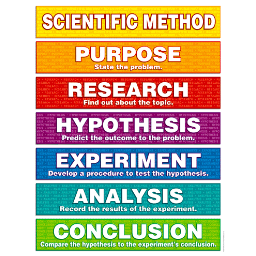
Methodology is one of the strands of the knowledge framework. An example of methodology in the natural sciences is the scientific method which consists of systematic observation, measurement, and experiment, and the formulation, testing, and modification of hypotheses.
is for Natural Sciences

The Natural Sciences is one of the 8 areas of knowledge in TOK. This is a branch of science which deals with the physical world, e.g. physics, chemistry, geology, biology.

- Full access to our public library
- Save favorite books
- Interact with authors
- < BEGINNING
- END >
-
DOWNLOAD
-
LIKE(1)
-
COMMENT()
-
SHARE
-
SAVE
-
BUY THIS BOOK
(from $6.59+) -
BUY THIS BOOK
(from $6.59+) - DOWNLOAD
- LIKE (1)
- COMMENT ()
- SHARE
- SAVE
- Report
-
BUY
-
LIKE(1)
-
COMMENT()
-
SHARE
- Excessive Violence
- Harassment
- Offensive Pictures
- Spelling & Grammar Errors
- Unfinished
- Other Problem





COMMENTS
Click 'X' to report any negative comments. Thanks!