This picture book is dedicated to those little adventurers of the night sky

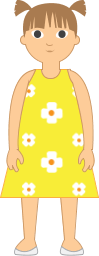


It was a warm summer night in Melbourne and two young best friedns called Emma and Koa were watching t.v. together at Emma's house. Koa looked up at the night sky through the window and said, "Lets go outside and explore the night sky!". "That sounds boring", said Emma. "No it is not, the night sky is filled with amazing objects!" Koa replied. "Like what?" Emma asked. "Well let me show you" said Koa.

What do you know about the night sky?
Night = langitj
Emma and Koa went outside in Emma's backyard and lay down on the grass. "I do not understand why this is so interesting to you Koa", said Emma. "In my Aboriginal culture Emma, the night sky is important in the 'Dreaming' stories", said Koa.

The first object Emma and Koa noticed when they looked up at the night sky was the moon."Woah the moon looks so big!" said Emma. "It is a Full Moon", said Koa.
Moon = gakgalak
What can you see in the sky?
"The moon does not always look the same" said Koa. "It has different phases". "Wow that is so interesting Koa!" said Emma
What do these phases of the moon look like?
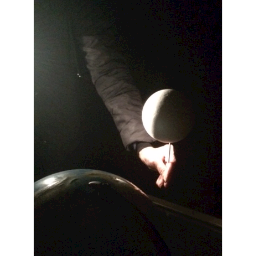
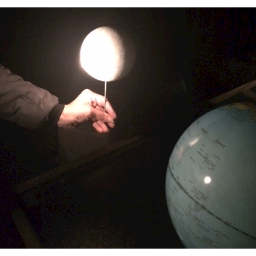
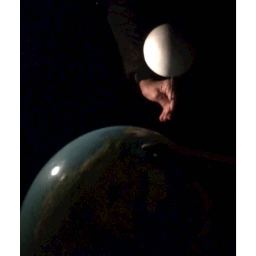
Crescent Moon
Gibbous Moon
Quarter Moon
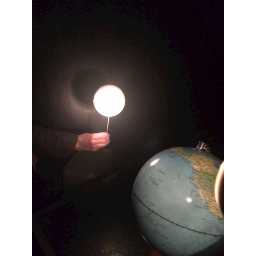
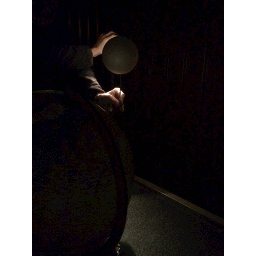
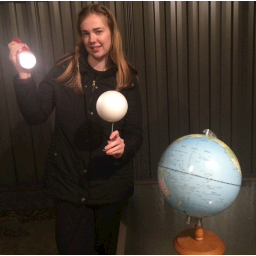
These photos model how the Moon orbits around the Earth and the different phases that the Earth can see from the Sun illuminating that part of the Moon
Full Moon
New Moon
"The stars in the sky can form patterns, which are called constellations", said Koa. "I know of a constellation, the Southern Cross!" said Emma. Emma pointed to the Southern Cross in the night sky and made the shape.
Star : garingal
"In my culture, constellations can represent animals or people" Kao said. "My grandfather tells stories using the constellations in the night sky".
What do these constellations look like?
Constellations of the Boorong clan

Why do you think too much light in the night sky is bad?
Emma and Koa walked up the hill in Emma's street to view the city. "Woah I cannot see any stars in the sky from here", said Emma. "That is because the lights from the city produce an artifical skyglow" explained Koa. "I do not see this when I go up to the country and visit my grandparents".
"Wow, I have learnt so much about the night sky and I do not find it boring at all now!" said Emma. Koa and Emma now spent most of their summer holidays outside looking up at the night sky.
What have you learnt about the night sky?
Glossary of words
Moon - An object that can be seen mostly at night and reflects light from the Sun
Phases of the moon - the different ways the Moon looks from Earth
Constellation - a group of stars forming a pattern in the night sky
Light pollution - A type of pollution where there is too much artificial light in the sky
TEACHER BACKGROUND INFORMATION
Overview of science theme and content
The Moon
The Moon reflects light from the Sun, which makes it illuminated (Devereux, 2007). The moon does appear during the day above the horizon, however it is most clear at night. Earth only sees the same face of the Moon even though it is a full circular disc like the Sun. The Moon has different lunar phases which are a part of a cycle. The appearance of the Moon above the horizon during the day or night determines what phase of the Moon can be seen (Devereux, 2007).
Constellations
Constellations are the shape or pattern of stars in the night sky, which can look like animals, people or mythological beings (National Geographic Society, 2017). Some constellations have been given names by astronomers like the ‘Southern Cross’. We are able to locate these constellations in the night sky given their name by just using our eyes (National Geographic Society, 2017).
Throughout the year, the constellations seen in the night sky change as the Earth orbits around the Sun (Museums Victoria, 2017). The Southern Cross constellation can be seen all year round from Melbourne as it is positioned close to the South Pole (Museums Victoria, 2017). Students become more aware of the movement and nature of stars by observing the different patterns and shapes of constellations (Skamp, & Preston, 2014).
Moon and stars video
- This video can be shown to students before reading this picture book as it describes the different phases of the Moon and the constellations that are seen in the night sky and how different Indigenous groups have different interpretations of the Southern Cross constellation.
- Full access to our public library
- Save favorite books
- Interact with authors
- < BEGINNING
- END >
-
DOWNLOAD
-
LIKE(3)
-
COMMENT()
-
SHARE
-
SAVE
-
BUY THIS BOOK
(from $4.19+) -
BUY THIS BOOK
(from $4.19+) - DOWNLOAD
- LIKE (3)
- COMMENT ()
- SHARE
- SAVE
- Report
-
BUY
-
LIKE(3)
-
COMMENT()
-
SHARE
- Excessive Violence
- Harassment
- Offensive Pictures
- Spelling & Grammar Errors
- Unfinished
- Other Problem






COMMENTS
Click 'X' to report any negative comments. Thanks!