
Table of Contents:
Content Vocabulary 3
The Early Years of Vietnam
Year of 1968
The Later Years of Vietnam
1960s culture
Nixon's Presidency
Ford, and Carter's Presidency
Reagan's Presidency
The Later Presidents
Content Vocabulary
Ho Chi Minh: Leader of the Indochinese Communist Party founded in 1930.
Dien Bien Phu: French outpost in northwestern Vietnam where the French were forced to surrender.
Geneva Accords: A 1954 peace agreement that divided Vietnam into communist controlled North Vietnam and non-communist South Vietnam until unification elections could be held in 1956.
Ngo Dinh Diem: South Vietnam's strong anti-Communist president who refused to take part in the countrywide election of 1956.
Vietcong: A communist opposition group in South Vietnam that had attacked the Diem government and assassinated thousands of South Vietnamese government officials.
Gulf of Tonkin Resolution: A resolution adopted by Congress in 1964, giving the president broad powers to wage war in Vietnam.
Ho Chi Ming Trail: North Vietnam's network of paths used to transport supplies to the Vietcong in South Vietnam.
Napalm: A gasoline-based substance used in bombs that U.S. planes dropped in Vietnam in order to burn away jungle and expose Vietcong hideouts.
Agent Orange: A toxic leaf-killing chemical sprayed by the U.S. planes in Vietnam to expose Vietcong hideouts.
Credibility Gap: A public distrusts of statements made by the government .
Vietnamization: President Nixon's strategy for ending U.S. involvement in the Vietnam War, involving the gradual withdrawal of US troops and their replacement with South Vietnamese forces,
Silent Majority: A name given by President Nixon to the moderate, mainstream Americans who quietly supported his Vietnam War policies.
My Lai Massacre: The slaughtering of 200 unarmed civilians, including women and children, in a village in northern South Vietnam.
Kent State University: An Ohio university where National Guardsmen opened fire on students protesting the Vietnam War.
Pentagon Papers: A 7000 page document - leaked to the press in 1971 by the former Defense Department worker Daniel Ellsberg - revealing that the US government had not been honest about its intentions in the Vietnam War.
War Powers Act: A law enacted in 1973, limiting a president's right to send troops into battle without consulting Congress.
Disclaimer: The definitions and information have been taken out of the book, The Americans Reconstruction to the 21st Century.
The Early Years of Vietnam
Why did the US get involved?
Known as the Domino Theory, there was a fear that if the Vietnamese communists won the war in Vietnam, all of Southeast Asia would fall under communism. The U.S. got involved because they wanted to prevent it from happening and believed it was their moral responsibility to do so.
Who was Robert McNamara?
Robert McNamara was the dedicated and harsh Secretary of Defense during the war.
What did the Golf of Tonkin Resolution give Johnson the power to do?
It gave him the power to use the military strength and send in troops as he deemed necessary to defend American interests.
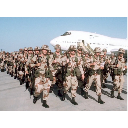
Who was able to get out of the military draft and why was this unfair?
People who were in the National Guard or Coast Guard or those who were enrolled in University were allowed to opt out. These people tended to be white and financially well off men and that meant lower classed whites and minorities that were economically disadvantaged were forced and not given much of an option.
What was fighting in Vietnam like compared to other wars?
Fighting in the Vietnam War was different in that it's purpose was not to take over territory but rather kill off enemies and destroy an uprise of communism. Compared to other wars, this war was a civil war.
Why did the Tet Offensive change the public perception of the war?
The Tet Offensive had caused severe destruction and massive casualties which the Pentagon's reports had caught and shown to the U.S. public. It shocked Americans as they were made to believe that the country was close to winning.
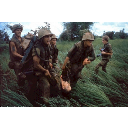
Year of 1968
The year of 1968 was a year with many tragic events. Some even consider it to be the worst year in US history.
MLK Assassination
On April 4, 1946, Martin Luther King Jr. was assassinated and shot in the neck by James Earl Ray. He was in Memphis, Tennessee standing in the second floor of the balcony of the Lorraine Motel. This event caused civil rights activists and supporters, especially the African-Americans to mourn. It created a lot of rage and many thought that opposers even hated peace.
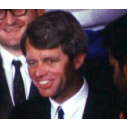
Bobby Kennedy Assassination
On June 4, 1968, Bobby Kennedy was shot by Sirhan Sirhan while giving a speech at Indianapolis to announce the tragic death of Martin Luther King. Bold as he was, he decided to go out in public even after being warned of the possible dangers. He was

a popular candidate for the presidential election and so his death resulted in a massive loss of hope for people.
Tet Offensive
Filled with rage to maintain communism, North Vietnam heavily attacked several places in South Vietnam. It can be considered the turning point of the war as it brought Americans to the shocking truth of the war. It was after this, Americans realized that they were far from winning.
Walter Cronkite's Word About the Tet Offensive
It was journalist Walter Cronkite who brought Americans closer to the disturbing truth. After his visit from Vietnam he said that there was no certainty of who the winner would be and that it would most likely end in stalemate. This caused fear and aversion to the war to drastically rise in the American population.

The Later Years of Vietnam
What was Nixon's strategy on Vietnam?
Nixon's strategy on Vietnam came to be known as Vietnamization in which American troops would gradually be withdrawn from the war leaving the responsibility to South Vietnamese troops to fend for themselves.
What happened at Kent State?
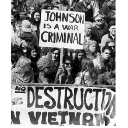
The Ohio National Guardsmen went to Kent State University to protest the war. In an effort to stop the tension and get rid of them, 4 students got killed and 9 were injured.
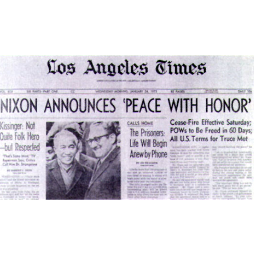
When did the US leave Vietnam?
The US left Vietnam and withdrew from the war in March 29, 1973.
How were soldiers treated when they arrived home?
When soldiers returned home, they were treated with disgust and resentment. Coming back, they had a major problem adjusting and unlike the soldiers of WW2, they weren't given privileges.
How many people died and were wounded in Vietnam?
It is estimated that 2 million died and there were 58,220 US military casualties.
How much money did the US spend?
The US spent a grand total $168 billion on the war.
1960s Culture
What is a hippie?
A hippie was a person that embraced and followed modern and changing trends such as rock 'n' roll, sex, and drugs.
Rock 'N' Roll
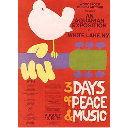
Rock 'n' roll was very popular during the sixties. Concerts were popularly held in Los Angeles and people would gather and befriend new people to embrace the new musical culture. A prominent figure of this industry was Bob Dylan.
Sex
During this time, the new generation started to become open to sex more and more. They saw it as a way to express love to others and hence would do this activity with multiple people. It was normal to see many of them walking around naked and embracing each other. They saw it as their way to connect.
Drugs
Along with sex and music, the experimentation of drugs started to rise. People would try marijuana and psychedelics claiming to expand their mind. Drugs would be taken to concerts and other hangout areas for recreational purposes.
*People who embraced such fads were known as the counterculture.
- Full access to our public library
- Save favorite books
- Interact with authors
- < BEGINNING
- END >
-
DOWNLOAD
-
LIKE
-
COMMENT()
-
SHARE
-
SAVE
-
BUY THIS BOOK
(from $3.99+) -
BUY THIS BOOK
(from $3.99+) - DOWNLOAD
- LIKE
- COMMENT ()
- SHARE
- SAVE
- Report
-
BUY
-
LIKE
-
COMMENT()
-
SHARE
- Excessive Violence
- Harassment
- Offensive Pictures
- Spelling & Grammar Errors
- Unfinished
- Other Problem





COMMENTS
Click 'X' to report any negative comments. Thanks!