
1) This vitamin is used to help form and maintain bones, soft tissues, skin, mucous membranes and healthy teeth.
It is also the reason there is pigment in the retina, which is why it is known as retinol. This also helps promote vision in low light.
There is a possible link between Vitamin A and reproduction and breastfeeding.
Vitamin A
2) Vitamin A is fat soluble.
It supports a persons vision in low light by creating the pigments that are needed to keep the retina healthy. It does this by helping to produce the rhodopsin, a protein that absorbs the light in the retina.
It also aids in immune function by helping with the regeneration of mucosal barriers/membranes. Vitamin A promotes the proliferation of T cells, this is through retinoic acid, which influences the differentiation of T cells in the gut.
Performs as an antioxidant, helping to reduce the buildup of harmful free radicals and prevents oxidative damage to the cells which also blocks inflammation.
In the form of retinoic acid it helps regulate gene transcription by binding to nuclear receptors known as retinoic acid receptors (RARs), which are bound to DNA as heterodimers with retinoid "X" receptors. These receptors will go through a conformational change that will cause co-repressors to dissociate from the receptors, the response most likely causes them to upregulate or down regulate the expression of the target genes.
Helps to maintain skin health by switching on and differentiating keratinocytes into mature epidermal cells.
3) If you are deficient in Vitamin A you are at an increased risk for eye problems such as reversible night blindness, and non-reversible corneal damage (Xerophthalmia). It may cause hyperkeratosis or dry, scaly skin. Other possible side effects of low Vitamin A is bone deformities, increased infections of the respiratory & digestive systems.
Now if you have excess Vitamin A it can/will make you sick, cause dizziness, headaches, liver damage, nausea, dry skin, and bone/joint pain. Any excess Vitamin A is stored in the liver.
4) The Recommended Dietary Allowance for Vitamin A is as follows:
0-6 months: 400mcg/day
7-12 months: 500mcg/day
1-3 years: 300mcg/day
4-8 years: 400mcg/day
9-13 years: 600mcg/day
Males 14 years & older: 900mcg/day
Females 14 years & older: 700mcg/day
-Pregnancy: 770mcg/day
-Breastfeeding: 1,300mcg/day


Egg Yolks
Sweet Potatoes

Spinach
1) Has a powerful antioxidant effect in the body.
Helps to decrease inflammation.
Supports healthy pregnancies.
Protects the skin and eyes.
Treats oral Leukoplakia.
Improves respiratory health.
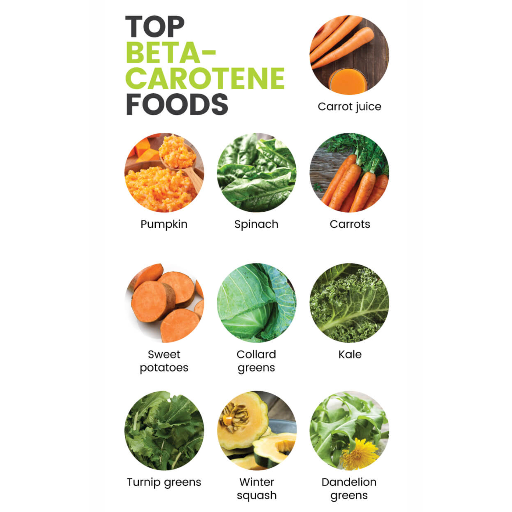
Beta Carotene
Pro-Vitamin A Carotenoid (Pre-formed Vitamin A
2) Beta Carotene performs its functions in the body in the same way as Vitamin A. Beta Carotene is just a precursor to Vitamin A, the body converts beta carotene into vitamin A (retinol) but only about 3% get converted in a healthy adult.
3)Deficiency in beta carotene causes increased risk for eye problems such as reversible night blindness, and non-reversible corneal damage (Xerophthalmia). It may cause hyperkeratosis or dry, scaly skin. Other possible side effects of low Vitamin A is bone deformities, increased infections of the respiratory & digestive systems.
Excessive intake of beta carotene can cause headaches, burping, loose stools, bruising, joint pain, and yellowing of the skin.
4) Due to insufficient evidence, there is no established RDA for beta carotene.
1) Functions of Niacin in the body include:
Boosting levels of HDL (Good) Cholesterol and lowering levels of LDL (Bad) Cholesterol along with triglycerides; reduces atherosclerosis; FDA approved treatment for Pellagra; Helps with the function of the heart, nervous system, and neurological development; contributes to carbohydrate and energy-yielding metabolism; has psychological functions; converts food into glucose; produces macromolecules (including fatty acids & cholesterol); DNA repair & Stress responses; and the maintenance of skin and mucous membranes.
Niacin Water soluble vitamin b3
Niacin: Water soluble Vitamin b3
2) When the intake of niacin exceeds the body's needs, niacin is converted into niacinamide.
It helps with the break down of carbohydrates, fats & proteins into energy. Also, a major component of NAD & NADP, these two are coenzymes that are involved in cellular metabolism.
Plays a role in cell signaling & making/repairing DNA, in addition to acting as an antioxidant.
Stops the breakdown of apolipoprotein Al, which increases HDL cholesterol levels.
Also stops the action of an enzyme that is involved in triglyceride synthesis, therefore lowering the triglyceride level.
3) A deficiency in Niacin can cause indigestion, fatigue, canker sores, vomiting and depression.
Excessive intake of niacin can cause liver problems, stomach ulcers, changes to glucose levels, muscle damage, low blood pressure & heart rhythm changes.
4) 0-6 months: 2mg/day Males 14 & older: 16mg/day
7-12 months: 4mg/day Females 14 & older: 14mg/day
1-3 years: 6mg/day - Pregnant: 18mg/day
4-8 years: 8mg/day - Breastfeeding: 17mg/day
9-13 years: 12mg/day
1) Helps with metabolism. Helps with the cognitive development in children & brain function in adults. Some studies have suggested that it may help to reduce cardiovascular disease.
Contributes to the formation of serotonin & norepinephrine.
Important factor in liver function and growth in children.
Maintains healthy hair, skin and vision.
Helps make melatonin.
Vitamin b6: Pyridoxine
2) Vitamin B6 is able to perform some of its functions in the body by promoting the growth of new Red Blood Cells (RBCs). It is involved in more than 100 enzyme reactions, mostly the ones concerned with protein metabolism. Two of the active coenzyme forms of vitamin b6: Pyridoxal 5' phosphate (PLP) and pyridoxamin 5' phosphate (PMP) are involved in amino acid metabolism. Through biosynthesis of neurotransmitters, it plays a role in cognitive development and in maintaining normal levels of homocysteine in the blood. Is involved in gluconeogenesis and glycogenolysis, which supports immune function & hemoglobin formation. Due to its ability to lower homocysteine levels, it is believed to help reduce the chance of cardiovascular disease.
3) Deficiency in B6 causes weakness, tiredness, fatigue, dizziness, breathlessness, heart palpitations, pale skin color, vision loss, constipation or diarrhea, irritability, nerve problems (tingling/numbness). May also cause microcytic anemia, electroencephalographic abnormalities, dermatitis w/ cheilosis & glossitis, and weakened immune function.
Excessive intake of B6 in the form of food has not been reported to cause any adverse effects. However, chronic administration of 1-6g oral pyridoxine/day for 12-40 months can cause really severe and progressive sensory neuropathy characterized by ataxia. Other symptoms may include: painful, disfiguring dermatological lesions, photosensitivity & gastrointestinal symptoms (nausea/heartburn)
4) 0-6 months: 0.1mg/day
7-12 months: 0.3mg/day
1-3 years: 0.5mg/day
4-8 years: 0.6mg/day
9-13 years: 1.0mg/day
Males 14-50 years: 1.3mg/day
51+ years: 1.7mg/day
Females 14-18 years: 1.2mg/day
19-50 years: 1.3mg/day
51+ years: 1.5mg/day
-Pregnant: 1.9mg/day
-Breastfeeding: 2.0mg/day
1) Functions in Red Blood Cell formation, healthy cell growth & formation, and is a crucial nutrient during early pregnancy.
2) Functions as a coenzyme/cosubstrate in the single-carbon transfers in the synthesis of nucleic acids (DNA & RNA) & metabolism of amino acids. Converts homocysteine to methionine in the synthesis of S-adenosylmethionine, an important methyl donor. During the formation of DNA causes methylation of deoxyuridylate to thymidylate, which is required for proper cell division. An impairment in this reaction can cause megaloblastic anemia (folate deficiency)
Folate: Water soluble B Vitamin: generic name for both folic acid & folate
3) Deficiency causes megaloblastic anemia, weakness, fatigue, difficulty concentrating, irritability, headache, heart palpitations, shortness of breath (SOB), soreness, shallow ulcerations of the tongue, and/or oral mucosa, changes in skin, hair or fingernail pigmentation, and elevated blood concentrations of homocysteine.
Excess folic acid can potentially exacerbate the anemia & congnitive symptoms associated with Vitamin B12 deficiency, and it may even mask the vitamin B12 deficiency. Most excess folate is excreted through the urine.
4) RDA:
0-6 months: 65mcg/day
7-12 months: 80mcg/day
1-3 years: 150mcg/day
4-8 years: 200mcg/day
9-13 years: 300mcg/day
14 & older: 400mcg/day
Pregnant: 600mcg/day
Breastfeeding: 500mcg/day
1) Protein metabolism; Formation of RBCs; Maintenance of the CNS (Central Nervous System); Supports energy & improves mood; Protects the heart and brain function.
2) Plays a part in the synthesis of fatty acids and energy production. It enables the release of energy by helping the body absorb folic acid. Helps to maintain healthy nerve cells and helps form the protective covering of nerves (myelin sheath). Contributes to the conversion of homocysteine into methionine, this reaction also transforms folate into the active form needed to make DNA. Helps in the formation/production of neurotransmitters.
Vitamin B12: Water Soluble.
3) Deficiency of Vitamin B12 causes anemia & pernicious anemia, loss of balance, numbness/tingling of the arms and legs, weakness, nervous system damage (can be irreversible), depression, confusion, memory problems, fatigue, constipation, loss of appetite, and weight loss.
Excessive intake of B12 has not been associated with adverse effects due to its water solubility, excess is excreted in the urine.
- Full access to our public library
- Save favorite books
- Interact with authors
- < BEGINNING
- END >
-
DOWNLOAD
-
LIKE(1)
-
COMMENT()
-
SHARE
-
SAVE
-
BUY THIS BOOK
(from $7.79+) -
BUY THIS BOOK
(from $7.79+) - DOWNLOAD
- LIKE (1)
- COMMENT ()
- SHARE
- SAVE
- Report
-
BUY
-
LIKE(1)
-
COMMENT()
-
SHARE
- Excessive Violence
- Harassment
- Offensive Pictures
- Spelling & Grammar Errors
- Unfinished
- Other Problem





COMMENTS
Click 'X' to report any negative comments. Thanks!