 Adam Joyce
6th Hour
This book was created and published on StoryJumper™
©2010 StoryJumper, Inc. All rights reserved.
Publish your own children's book:
www.storyjumper.com


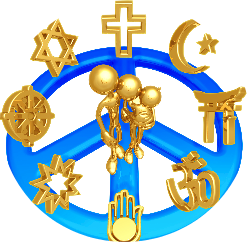
Table Of Contents
I.Judaism n Page 4
-Leader & Beginnings (timeline) Page 5
-Holy writings and guidelines Page 6
-Beliefs/Influence of beliefs Page 7-
8
II.Christianity n Page 9
-Leader & Beginnings (timeline) Page
10
-Holy writings and guidelines Page
11
-Beliefs/Influence of beliefs Page
12
III.Hinduism n Page 13
-Leader & Beginnings (timeline) Page
14
-Holy writings and guidelines Page
15
-Beliefs/Influence of beliefs Page
16
IV.Buddhism n Page 17
-Leader & Beginnings (timeline) Page 18
-Holy writings and guidelines Page 19
-Beliefs/Influence of beliefs Page
20 V.Islamic/Muslim n Page
21
-Leader & Beginnings (timeline) Page 22
-Holy writings and guidelines Page 23
-Beliefs/Influence of beliefs
Page24 VI.Confucianism
Page 25
-Leader & Beginnings (timeline) Page 26
-Holy writings and guidelines Page 27
-Beliefs/Influence of beliefs Page 28
VII.Connections to the World today Page
29 -Where, Who, Why
Page 30
Judaism
Leader and beginnings of Judaism.
The founders of the Jewish religion are believed to be
Abrham, Isiaac, and Jacob. The origins of Judaism lay with
the Phoenician in ancient Palestine. Palestine was also home
to Romans. The home of the Hebrews later known as the
Jews was Canaan. The Hebrews started traditions in
Christianity and Islam. Their culture has also spread all over
the world. Their is no specified leader of the Jewish religion.
This tradition has been carried out sense 70 C.E.
0-100 CE Chasidei ashkenaz develops
c. 2000-1500 BCE Abraham and the Patriarchs
c. 1500-1200 BCE Egypt, the Exodus and wandering in the desert
1200-1050 BCE Occupation of Canaan, the Promised Land
Holy writing and guide lines
The holy writing for the Jewish Religion is the torah. "Torah"
refers to the Five Books of Moses: Genesis, Exodus, Leviticus,
Numbers and Deuteronomy. But the word "torah" can also be used
to refer to the entire Jewish bible. The scriptures used for services
are put onto a scroll. The scrolls are not to be touched. Some
believe it is that way because the scrolls are too holy, others
believe that is is because they are written on animal skins and
touching it may lead to ritual defilement as well as people believe
that the oil from hands will ruin the scrolls over time. Jewish men
and women were separated in the things they could or could not do.
Women could'nt officiate at religious ceremonies. They were
expected to stay home to raise the kids and provide moral
leadership. Jews were to follow the ten commandments, which are
laws that were delivered to moses regulating social and religious
behavior.
Beliefs/influence of beliefs on next page
The closest that anyone has ever come to creating a widely-
accepted list of Jewish beliefs is Rambam's thirteen principles of
faith.
-God exists
-God is one and unique
-God is incorporeal
-God is eternal
-Prayer is to be directed to God alone and to no other
-The words of the prophets are true
-Moses' prophecies are true, and Moses was the greatest of the
prophets
-The Written Torah (first 5 books of the Bible) and Oral Torah
(teachings now contained in the Talmud and other writings) were
given to Moses
-There will be no other Torah
God knows the thoughts and deeds of men
-God will reward the good and punish the wicked
-The Messiah will come
-The dead will be resurrected
The influence of these beliefs have contributed to other
religions such as Catholicism. The Jewish ideas have spread all
throught out the world. At many points through history the Jews
were punished for who they were, the holocaust being the best
example. Approximately six million jews were murdered in the
holocaust during would war two. They had done nothing wrong,
they were simply killed for what they believed. Judaism is one of
the worlds oldest religion, and it still continues today.
Christianity
Leader and beginnings
The founder and leader of Christianity is Jesus
Christ, the son of god. As well as Jesus, God the father
himself is also a leader, not a leader here on earth but
a believed leader. There is no one leader of Christianity
living on earth as a human, Christianity is split up into
many other religions like he Catholic church and the
Baptist church.
Early Timeline
c. 4 BC Birth of Jesus
c. 26 AD John the Baptist begins ministry
c. 27 AD Jesus begins ministry
c. 30 AD Crucifixion of Jesus
c. 35 Conversion of Paul
c. 46-48 Paul's first missionary journey
c. 68 Martyrdom of Paul
Holy Writings and Guidelines
The holy writing for the Christians is the bible. It is called
the Bible and is usually made up of 66 books combining the
sacred Scriptures of both Judaism ("the Old Testament ")
and Christianity (" the New Testament"). There are different
versions of the bible, a few examples are the King James
Bible, the New American Bible or the New Revised Standard
Version. All are a little bit different from one and other.
Some guidelines for Christianity include, following Jesus'
teachings, and obey God, to follow Jesus Christ, God, and
the holy spirit loving them with you whole heart mind and
soul and to To believe that God really does exist, and that
he sent his son, Jesus Christ, to die for US so that we could
join him in heaven. By following those guidelines one
can be a good and holy Christian.
Beliefs/Influence of Beliefs
The beliefs of the christians include such things as believing
that there is eternal life after death lived in heaven, as well as
believing that god sent his only son Jesus Christ in the form of a
human to earth to save all of us from our sins, and that he was
crucified, buried and after three days rose again and now lives in
heaven. Along with that belief is that during those three days Jesus
journeyed into hell to save all of the souls that could not go into
heaven after god closed the gates when Adam and Eve were
tempted by Satin to eat from the forbidden tree. Christianity’s
influence, set into motion the belief that man is accountable to God
and that the law is the same regardless of status. More than one
thousand years before the birth of Christ the biblical requirement
given by Moses comprised an essential component of the principle
that “no man is above the law.” Christianity now lives all
throughout the world in many different forms of churches, however
the beliefs are almost all the same. Tho christianity might be one
of the most controversial religions in the world it is one of the most
widely practiced.
Hinduism
Leader and Beginnings
Hinduism is a collection of beliefs that developed slowly over a
long period of time Some aspects of the religion can be traced back
to ancient times. Buddhism started in India and evolved as it
spread through Central Asia, East Asia, and Southeast Asia. So the
beginnings of Buddhism are thought to have been circa 520 BCE.
The leader or originator of Buddhism is Buddha, After 49 days
meditating, at the age of 35, he attained Enlightenment; according
to some traditions, this occurred approximately in the fifth lunar
month, and according to others in the twelfth. Gautama, from then
on, was known as the Buddha or "Awakened One." Buddha is also
sometimes translated as "The Enlightened One." Often, he is
referred to in Buddhism as Shakyamuni Buddha or "The Awakened
One of the Shakya Clan."
Early Timeline
c. 480 BCE Birth of the Buddha in Kapilavastu.
c. 450 BCE The Buddha's enlightenment and first sermon.
c. 405 BCE Death of the Buddha.
327-325 BCE Alexander the Great in India
Holy Writings and Guidelines
The main Hindu scriptures are:
-the Vedas, a collection of hymns praising the Vedic gods. Veda
means knowledge.
-the Ramayana, long epic poems about Rama and Sita
-the Mahabharata, which includes the Bhagavad Gita
-the Puranas, a collection of stories about the different incarnations
and the lives of saints. Since there are so many new works,
different divisions of Mahayana develop in different directions
depending on which Sutras they use and emphasize. Just a few,
however, are key to much of Mahayana development and thought.
There are many guidelines for being a Buddhist. A few include the
five precepts, (1) not killing, (2) not stealing, (3) not committing
sexual misconduct, (4) not lying, and (5) not using intoxicants.
Others may believe in beit which is described as the 'eight fold path'
or the middle path lying between excessive luxuries and extreme
austerity. 1. right belief, 2. right thought, 3. right speech, 4. right
action, 5.right means of livelihood, 6. right meditation, 7. right
effort, 8. right memory.
Beliefs/Influence of Beliefs
The three-in-one god known as “Brahman,” which is composed
of: Brahma (the creator), Vishnu (the Preserver), and Shiva (the
Destroyer).
The Caste System.
Karma. The law that good begets good, and bad begets bad.
Every action, thought, or decision one makes has consequences –
good or bad – that will return to each person in the present life, or
in one yet to come.
Reincarnation. Also known as “transmigration of souls,” or
“samsara.” This is a journey on the “circle of life,” where each
person experiences as series of physical births, deaths, and
rebirths. With good karma, a person can be reborn into a higher
caste, or even to godhood. Bad karma can relegate one to a lower
caste, or even to life as an animal in their next life.
Nirvana. This is the goal of the Hindu. Nirvana is the release of
the soul from the seemingly endless cycle of rebirths.
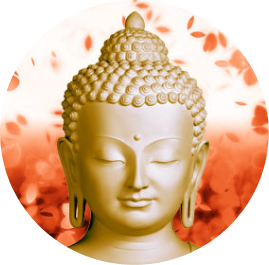
Buddhism
Leader and beginnings
Buddhism began as an offspring of Hinduism in the country of
India. The founder was Siddhartha Gautama. It is not easy to
give an accurate historical account of the life of Gautama, since
no biography was recorded until hundreds of years after his
death. Today, much of his life story is clouded in myths and
legends which arose after his death. Even the best historians of
our day have several different and even contradictory accounts of
Gautama's life. Today Buddhism remains the predominant religion
in China, Japan, Korea, and much of southeast Asia
Timeline
c. 480 BCE Birth of the Buddha in Kapilavastu.
c. 450 BCE The Buddha's enlightenment and first sermon.
c. 405 BCE Death of the Buddha.
c.327-325 BCE Alexander the Great in India.
c. 300 BCE Buddhism arrives in SE Asia.
You've previewed 19 of 30 pages.
To read more:
Click Sign Up (Free)- Full access to our public library
- Save favorite books
- Interact with authors


- < BEGINNING
- END >
-
DOWNLOAD
-
LIKE(2)
-
COMMENT()
-
SHARE
-
SAVE
-
BUY THIS BOOK
(from $5.99+) -
BUY THIS BOOK
(from $5.99+) - DOWNLOAD
- LIKE (2)
- COMMENT ()
- SHARE
- SAVE
- Report
-
BUY
-
LIKE(2)
-
COMMENT()
-
SHARE
- Excessive Violence
- Harassment
- Offensive Pictures
- Spelling & Grammar Errors
- Unfinished
- Other Problem





COMMENTS
Click 'X' to report any negative comments. Thanks!