An e-book created by the students involved in the E-Twinning project "United colours of Europe"
-March 2019-

The flag of AUSTRIA
School "...", (Country) presents
Write your description here
The flag of BELGIUM
School "European School Lux I", Luxemburg presents
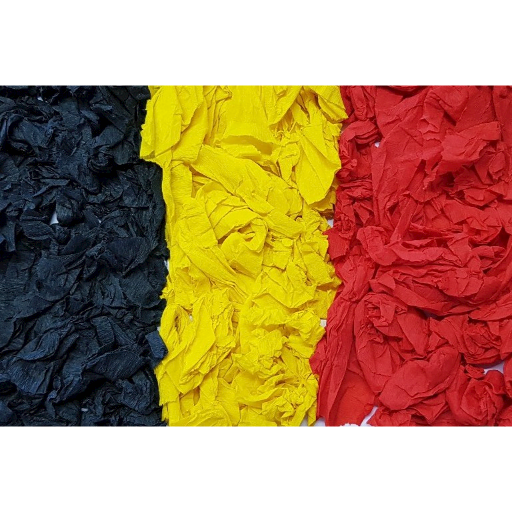
The flag was created in 1831.
Three colours (black, yellow and red) were taken from the coat of arms of the Duchy of Brabant - these are colours of three different parts of Belgium. Vertical stripes come from the flag of France.
At the beginning the stripes
were horizontal, but they
were too similar to
Dutch flag. So they
were changed.
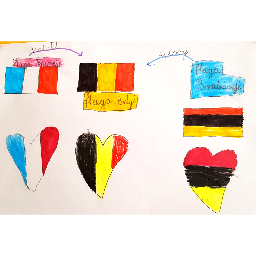
The flag of BULGARIA
School "...", (Country) presents
Write your description here
The flag of CROATIA
School "Santa Fe", (Spain) presents
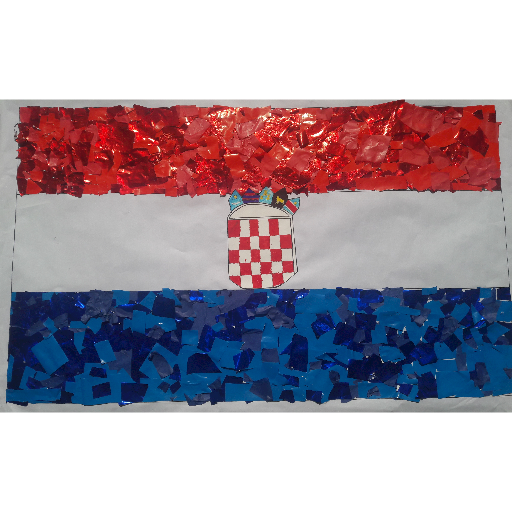
The flag of Croatia has three equal size horizontal stripes in colors red, white and blue. These colors are related to the colors of the coats of arms from different provinces of Croatia.
In the middle we can see the coat of arms of Croatia. The squares in white and red represent the Croatian nation and the five small crests represent different regions of Croatia: the old Croatia on the left, Dubrovnik, Dalmatia, Istria and Slavonia.
The flag of CYPRUS
School "Primary School Antona Ingoliča Spodnja Polskava", (Slovenia) presents
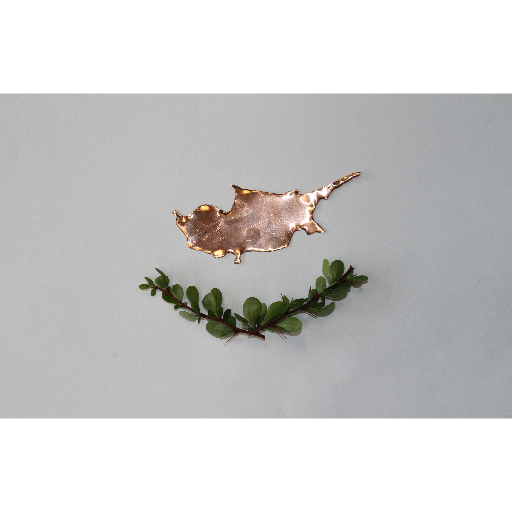
The flag represents the whole island of Cyprus. The orange colour symbolizes the large deposits of copper ore and the two olive branches on the flag are a symbol of peace between Greeks and Turks. The flag is notable for not being liked by either Greek and Turkish Cypriots.
The flag of CZECHIA
School "Arcades Fleuries", (France) presents
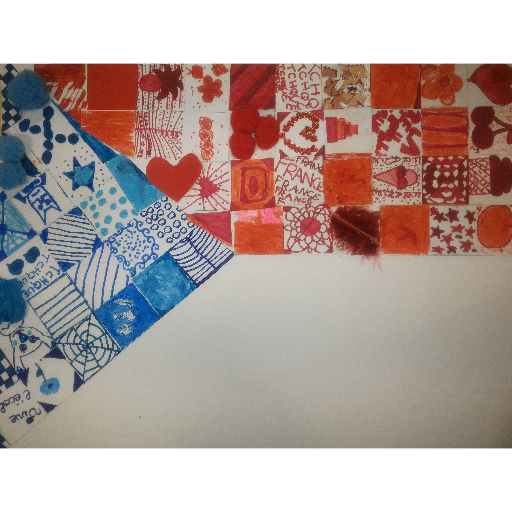
The national flag of the Czech Republic is the same as the flag of former Czechoslovakia.
The first Czech flag was based on the flag of Bohemia and was white over red (derived from the coat of arms of Bohemia). This was almost identical to the flag of Poland, so a blue triangle was added on the left in 1920. It is said that the color blue is representing the State of Moravia.
The flag of DENMARK
School "...", (Country) presents
Write your description here
The flag of ESTONIA
Kr.Valdemars Ainazi Primary School (Latvia) presents

The national flag of Estonia (is a tricolour featuring three equal horizontal bands of blue (top), black, and white. The normal size is 105 by 165 centimetres (41 in × 65 in). In Estonian it is colloquially called the "sinimustvalge" (lit."blue-black-white"), after the colors of the bands. First adopted on 21 November 1918 after its independence,
The flag of FINLAND
School "E.B. 2,3 Dr. Garcia Domingues", (Portugal) presents

The flag of Finland, also called siniristilippu ("Blue Cross Flag"), was officially adopted on 29th May, 1918.
The off-centred blue cross was adopted after gaining the independence at the end of World War 1.
The blue colour is symbolic of blue skies and the thousands of lakes in Finland.
The white stands for snowy landscape.
The flag of FRANCE
Kindergarten "Nikola Vaptsarov" - Bulgaria
The national flag of France is the national emblem of the country and consists of three equally wide vertical colored fields - blue, white and red.
The National Flag of France appeared at the time of the French Revolution, combining the color of the King (white) with the colors of Paris (blue and red) and was adopted by law on February 15, 1794.
After restoring the monarchy in 1815, the tri-color flag was replaced by the old lily-colored royal flag used before the revolution. In 1830, French King Louis Philippe again accepted the tri-color flag, which remains a symbol of the republic even today.
The flag of GERMANY
School "Liceul Tehnologic Carol I, Valea Doftanei", (Romania) presents
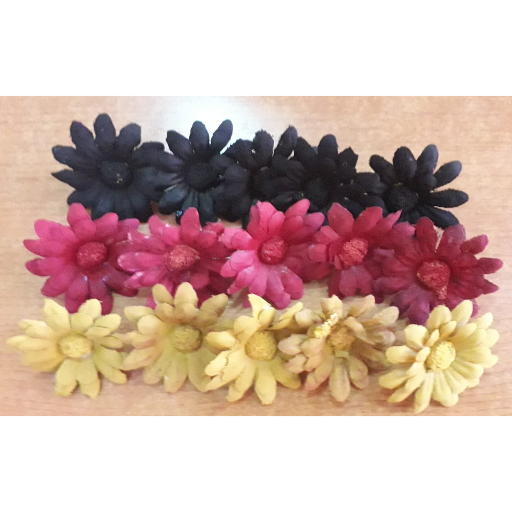
The German flag is a horizontal tricolor of black, red and gold and dates from 1778. The current German flag, which was adopted on 23 May 1949, the day on which the Federal Republic of Germany was created, recalls the 1848 German Flag and the Weimar Republic Flag (1919-1933).
The colors of the German flag are somewhat resembling the colors used in the Roman Empire: the black is the eagle, the red the beak and the claws, and the golden shield lined with gold.
Black, red and gold are the historic colors of Germany found on uniforms carried by Freikorp combatants of Baron von Lützow during the Napoleonic wars and the Prussian flags.
The Germans associate the colors of the modern flag with freedom and unity
The flag of GREECE
Our Lady of Fatima Special School, Ireland Presents:
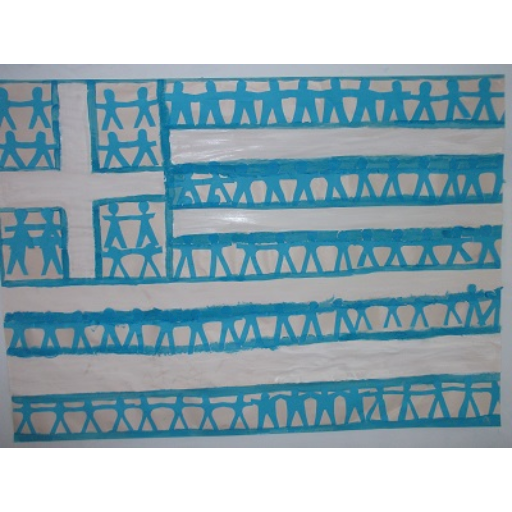
The Greek Flag:
- It has 9 stripes
- The blue and white colours represent the contrast between the sky and sea of Greece.
- The cross represents Eastern Orthodox.
- Unlike most national flags, there is no official shade of colour required.
- It was adopted on December 22nd, 1978.
The flag of HUNGARY
School "SP 225 w Warszawie", (Poland) presents
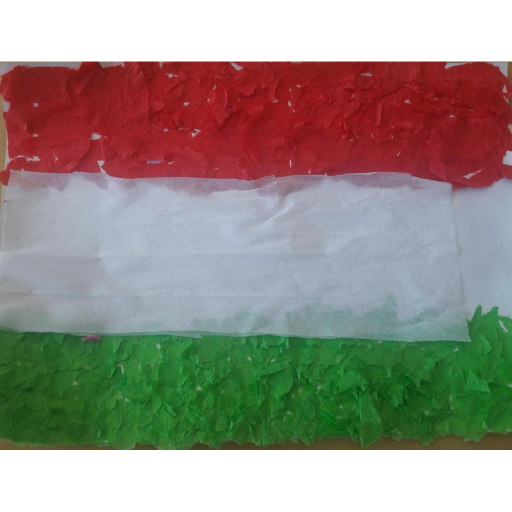
The flag of Hungary is a horizontal tricolor of red, white and green. The white symbolizes Hungary's rivers, the green its mountains and the red the blood shed in its many battles.
The flag of IRELAND
School "Primary School of St. John Nepomuk in Klcov", (Slovakia) presents
The national flag of the Republic of Ireland has three equal stripes. They illustrate the Irish political landscape as accurately today as in 1848, the year the flag was first unfurled.
orange — standing for Irish Protestants.
green — signifying Irish Catholics and the republican cause.
white — representing the hope for peace between them.
The flag of ITALY
School "Anne-Frank-Schule Eschwege", (Germany) presents

There are three colours on the Italian flag. The colours are: green, white and red.
The flag is also called a "tricolore". These colours are disposed vertically.
The colour green is said to represent hope. White stands for faith and red for charity. The colours can also stand for ingredients of a Pizza Margherita: green - basil, white - mozzarella cheese, red - tomatoes.
In 1797 there was a first "tricolore".
The flag of LATVIA
Tabasalu High School (Estonia) presents
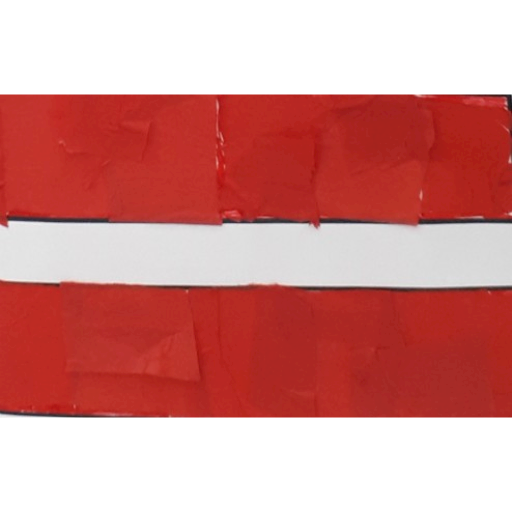
Write your description here
The flag of LITHUANIA
Kr.Valdemars Ainazi Primary school (Latvia) presents

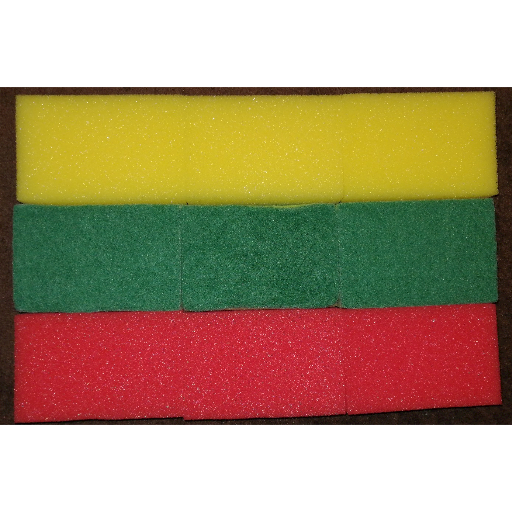
The flag of Lithuania consists of a horizontal tricolor of yellow, green, and red. It was adopted on 25 April 1918.
The flag of LUXEMBOURG
School "Primary School Antona Ingoliča Spodnja Polskava", (Slovenia) presents

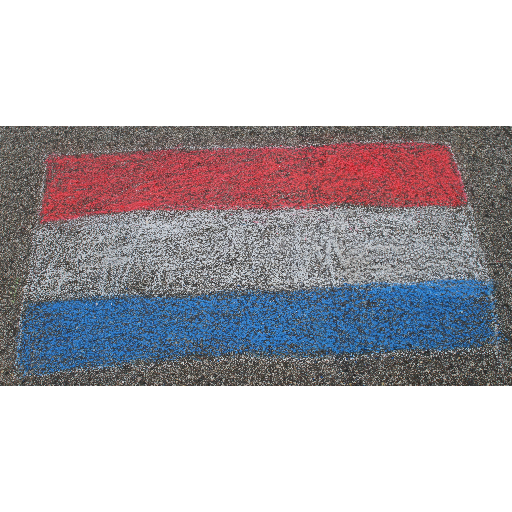
LUXEMBOURG FLAG
There are 3 horizontal stripes: red, white and blue. Those 3 colours were fixed in 1845.
The flag was 1st used between 1845 and 1848.
It was officially adopted in 1993.
In fact it is very similar to the flag of the Netherlands.
The flag of MALTA
School "...", (Country) presents
Write your description here
The flag of NETHERLANDS
School "Obs Stedeke", (Netherlands) presents
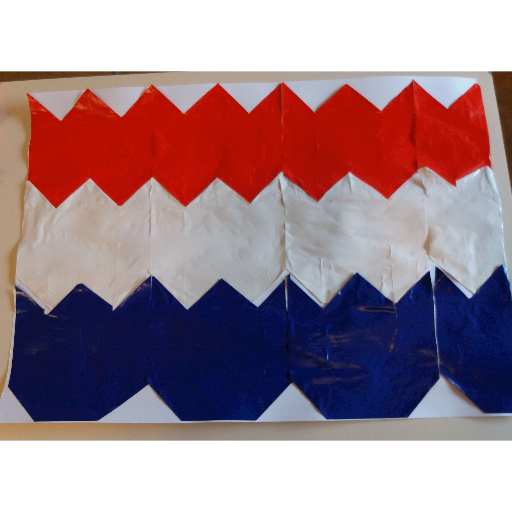
The flag of the Netherlands has a red, white and blue stripe.
The roots of this iconic standard can be traced back to the orange-white-blue Prince’s Flag (Prinsenvlag), which was used by the navy during the Dutch Revolt against the Spanish Habsburgs.
No one knows exactly why the orange band was changed to red around the end of the Eighty Years’ War, but there are numerous theories and anecdotes.
The flag of POLAND
" Pátrohai Zsigmond Móricz Primary School - .Hungary.." presents
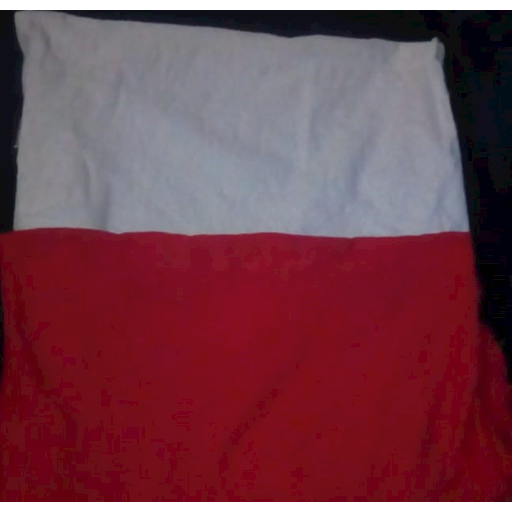
The flag of Poland consists of two horizontal stripes of equal width, the upper one white and the lower one red. These colours are connected with the colour of the White eagle used on the red crest. The upper belt is the colour of the Eagle and the lower – the color of crest. The two colours are defined in the Polish constitution as the national colours.
The flag of PORTUGAL
The 27th primary school of Thessaloniki, (Greece) presents
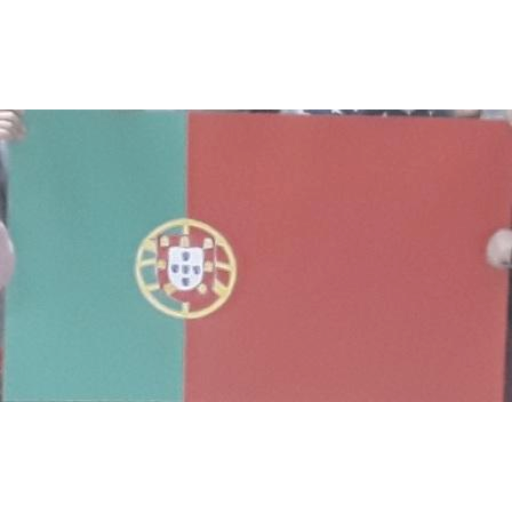
Today’s Portuguese flag was established in 1911 but most of its symbols date back hundreds of years. Like other flags from around the world, Portugal’s has a story behind it and is the result of many proposals and revisions. Green and red are the two colors that stand out on the flag, officially representing hope for the future and blood during battle, respectively.The central red shield, filled with yellow castles and smaller blue shields, symbolizes victories against the Moors. This is the oldest symbol on the Portuguese flag. The smaller blue shields represent the five Moorish kings who were killed by the first King of Portugal, Afonso I. The seven yellow castles symbolize Moorish fortresses that were overthrown in battle.The yellow ribbon-like structure around the shields represents a navigational instrument known as an armillary sphere. Portuguese navigators used this tool in conjunction with knowledge of astrology to help navigate across the oceans. This symbol is used to represent the Age of Discoveries, a crucial period in Portugal’s history.
The flag of ROMANIA
Tabasalu High School (Estonia) presents

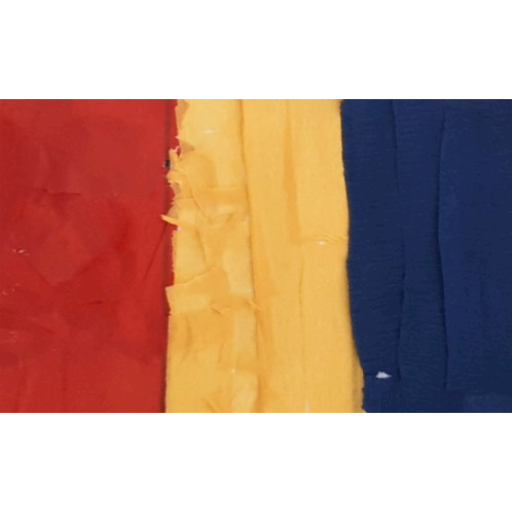
Write your description here
The flag of Slovakia
School "Liceul Tehnologic Carol i, Valea Doftanei" present
Slovakia's tricolor white-blue-red tricolor flag appeared for the first time in 1848, but without a coat of arms.
The coat of arms, which represents three blue mountains and a white patriarchal cross on a red background, was added to the flag only in 1992, when Slovakia proclaimed its independence.
The current form of the Slovakian flag was adopted by the Constitution of Slovakia, which entered into force on September 3, 1992.
The flag of SLOVENIA
Zrinskih Primary School Cerić, Croatia presents
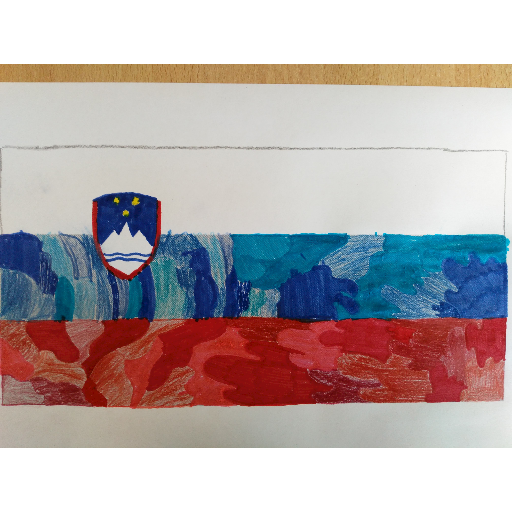
Slovenia have white, blue and red in his flag.
The coat of arms is a shield with the image of Mount Triglav, Slovenia's highest peak.
On his coat of arms are two wavy blue lines representing the Adriatic Sea and local rivers, and above it are three six-pointed golden stars arranged in an inverted triangle which is taken from the coat of arms of the Counts of Celje.
The flag of SPAIN
School "A. Zanzotto", Pieve di Soligo (TV) -Italy- presents
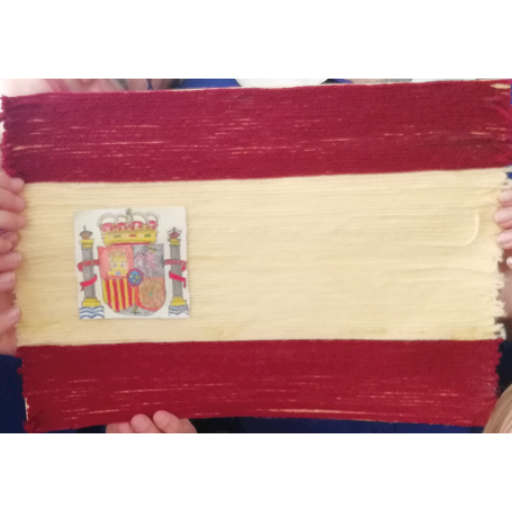
The flag of Spain is red (top) ,yellow (middle) and red (bottom). The coat of arms is a combination of six different coats of arms, representing the six kingdoms of Spain.The red castle represents the kingdom of Castile,the red lion the kingdom of Leon,the red and yellow stripes the kingdom of Aragon and the golden chain link the kingdom of Navarre. The pomegranate flower represents the kingdom of Granada, and the flower of the lily the House of Bourbon. The crowns are the symbol of the monarchy and the king. The cross is the symbol of Christ. The two Pillars of Hercules symbolize the straits of Gibraltar. The latin inscription "Plvs Ultra " means"more beyond" alluding to Columbus'discovery of the New World.
The flag of SWEDEN
School "...", (Country) presents
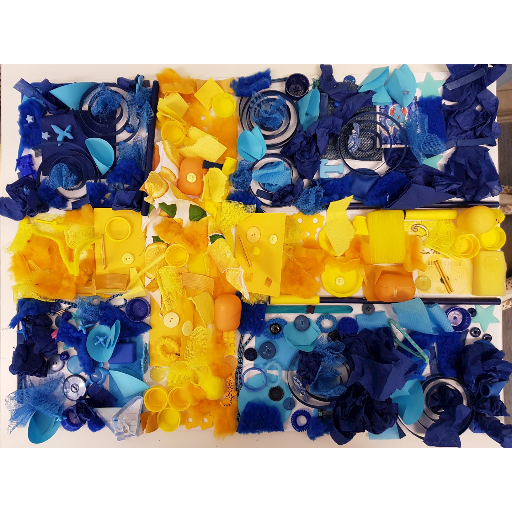
The flag of Sweden has a yellow Nordic Cross on a field of blue. The Nordic Cross represents Christianity.
The blue is symbolic of truth, loyalty and justice; while the yellow is symbolic of generosity.
The flag of the UNITED KINGDOM
Sia Primary School, Cyprus presents
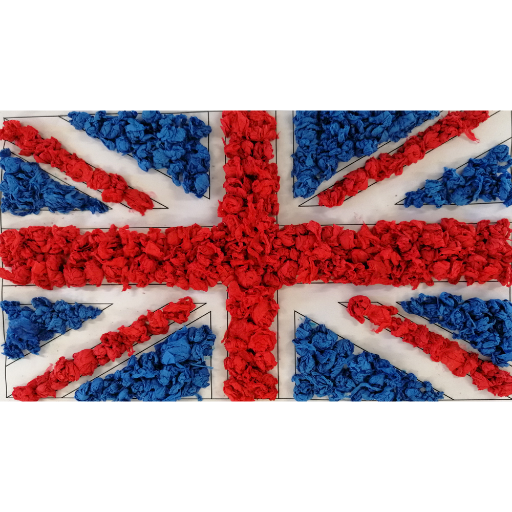
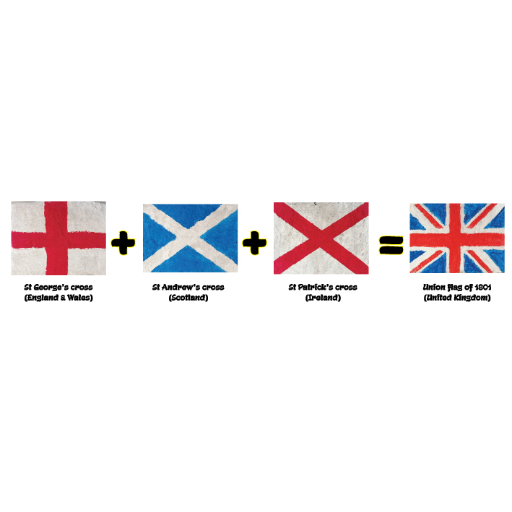
The national flag of the United Kingdom is the Union Jack, also known as the Union Flag. The current design of the Union Jack dates from the union of Ireland and Great Britain in 1801. It consists of the red crossof Saint George, edged in white, superimposed on the Cross of St Patrick, which are superimposed on the Saltire of Saint Andrew. Wales is not represented in the Union Flag by Wales's patron saint, Saint David, as at the time the flag was designed Wales was part of the Kingdom of England.

The flag of the EUROPEAN UNION
School "...", (Country) presents
Write your description here
- < BEGINNING
- END >
-
DOWNLOAD
-
LIKE
-
COMMENT()
-
SHARE
-
BUY THIS BOOK
(from $12.19+) -
BUY THIS BOOK
(from $12.19+) - DOWNLOAD
- LIKE
- COMMENT ()
- SHARE
- Report
-
BUY
-
LIKE
-
COMMENT()
-
SHARE
- Excessive Violence
- Harassment
- Offensive Pictures
- Spelling & Grammar Errors
- Unfinished
- Other Problem





COMMENTS
Click 'X' to report any negative comments. Thanks!