
Index
- Re Artù e l'Etna- King Artur and the Etna(Italy)
- Kazan Doğurdu- The Cauldron Gave a Birth (Turkey)
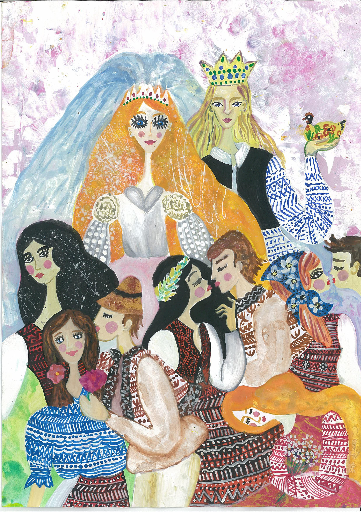
- Praslea the brave and the golden apples ( Romania)
- Maese Pérez, the organist. (Spain)
- Eels in Kamien's lake (Poland)


Re Artù e l'Etna
Tutti sanno che in Sicilia vi è il monte Etna, un vulcano, alto, maestoso e fiammeggiante prossimo alla città di Catania, una montagna chiamata anche Mongibello. Gli abitanti narrano ancor oggi che, fra le sue balze deserte, vi si trovano tracce della presenza del grande re Artù. Proprio di lui, ora, vi vogliamo parlare. Ma per meglio render onore al sovrano della Tavola Rotonda, al signore di Excalibur, cederò la parola al mio maestro, famoso e leggiadro narratore di storie.
Everybody knows that in Sicily Mount Etna lies. It is a huge flaming volcano topping the town of Catania , a mount called whatsoever Mongibello . The citizens still tell that , among its desert inners, you can find traces of the ancient residence of the legendary King Arthur.
And now we are going to tell about his staying in Etna valleys. But to give greater honour to the Noble King I will give the word to my Master , famous and gracious storyteller of all the times.
Mio nobile, amato pubblico voglio raccontarvi un breve racconto dal quale ben si comprenderà la grandezza d’animo e la generosità di un così magnanimo monarca. Dovete sapere, il fatto avvenne un giorno, nel lontano ed oscuro Medioevo, che un cavallo di proprietà del vescovo di Catania, colto, per essere troppo ben nutrito, da un improvviso desiderio di libertà, fuggisse al controllo del servitore che lo stava strigliando, finendo rapidamente per sparire alla vista dei presenti.
My noble, dear audience , I would like to tell you a short tale showing the greatness and magnaminity of a so Noble Monarch. You have to know that, once upon a time, far away in the darken Middle Ages, a horse belonging to the bishop of Catania, too well fed , following a sudden desire for freedom, escaped the servant while he was groomimg it, rapidly disappearing to his view.
Il Servo: dopo che ebbi cercato invano l’animale per dirupi e burroni, stimolato da una crescente preoccupazione, mi inerpicai sulle pendici del tenebroso monte. Dopo aver impiegato molto tempo ed energie, giunsi, seguendo un sentiero strettissimo ma pianeggiante, in una pianura spaziosa e verdeggiante, piena d'ogni delizia; e qui, in un palazzo di raffinata fattura, trovai il sovrano adagiato sopra di un regale letto. Mi feci coraggio e inchinandomi innanzi alla maestà bretone, gli raccontai quanto la sorte mi aveva riservato.
The Servant: After searching for him amidst cliffs and ravines , urged by an increasing concern, I climbed the slopes of the darken mountain. Spending much time and much energy , following a plain but narrow path, I arrived in a spacious green plain, full of delices. Here in a a rich refined palace I found the King laying on his Royal couch. I recovered my bravery and bowed to the British King and told him about the events leading me to his Royal presence.
Re Artù: Or che conosco la ragione della tua venuta in questo lontano e ameno luogo, immediatamente darò ordine ai miei cavalieri e servitori di cercare il destriero. Una volta che sarà trovato te lo consegneremo affinchè lo riporti al tuo signore e padrone, il venerabile vescovo.
King Arthur.:Now that I know the reason of your coming in this far pleasant place , I am immediately giving command to my knights and servants to search for the steed. As found we will give it back to you so that you can bring it back to your master , the Venerable bishop.
Cantastorie: E dopo aver detto ciò, congedandosi amabilmente dal suo ospite, Artù mandò al vescovo ricchi doni, che saranno veduti da molti e ammirati per la novità favolosa del fatto.
Storyteller. As far as he uttered these words, taking leave with grace from his guest, King Arthur gave command to send the Bishop rich presents.Many ones would have admired with amazement these presents in the following days.Before taking his way back , the Court chamberlain approached the servant and told him so.
Gran Ciambellano: Ti chiederai, non mentirmi, come, perché e da quanto tempo ci troviamo in questo posto che, sebbene meraviglioso e dal clima paradisiaco, tanto diverso e dalla nostra amata Bretagna. Ebbene, devi sapere che il mio signore e padrone, ferito anticamente in una battaglia combattuta contro il nipote Modred e il suo alleato Childerico, capo dei Sassoni, avesse deciso di lasciar il trono e ritirarsi tra queste foreste, lontano dalle invidie degli uomini e dai veleni del potere. Perciò risiediamo qui da tempo immemorabile e re Artù, che Dio ne abbia pietà, sopporta la sventura della sua esistenza silenziosa e solitaria, resa dolorosa dall’impossibilità di guarire del tutto dalle ferite del corpo e dell’anima che, invece, peggioravano di anno in anno.
Great Chamberlain: you are guessing, of course, how, why and how long we are here , in this place so amazing but so different from our beloved Britain. Therefore you have to know that my master , wounded in an ancient battle against his nephew Moderd and the allied Childercih , leader of the Saxons, decided to leave his throne and search for retirement among these woods. Far from human envy and from the poisons of power. So we have been residing here for long long time and King Arthur, God may have pity for him, suffers the misfortune of his lonely life , so painflul as there is no chance to heal from the suffered wounds , both of soul and body.
Cantastorie: Giunto all’imboccatura del sentiero che lo avrebbe riportato in città, il servitore si girò un’ultima volta per salutare e rendere omaggio a quei fieri, leali e coraggiosi cavalieri ma, con suo gran stupore, li vide svanire avvolti da una fitta nebbia, improvvisamente e stranamente alzatasi in una serena e calda giornata estiva. Del resto, come stupirsi, Artù era o non era amico
Story teller : as he got to the entrance of the path leading to the town, the servant turned fot the last time to offer his greetings and tribute to the fierce loyal brave knights but with his astonishment he saw them vanishing in a deep fog , suddenly arisen in a summe hot day. Why so amazing ? King Arthur was or wasn’t a friend
Herkes tarafından sevilen Nasreddin Hoca adında biri varmış. Küçük bir köyde yaşarmış. Çok akıllı aynı zamanda hazırcevap biri olarak bilinirmiş.
There is a man called Nasreddin Hodja. Everybody loves him. He lives in a small village. he is a clever and talented man.
Nasrettin hoca yemek pişirmek için komşusundan bir gün kazan ister.
One day, Nasreddin Hodja borrows a cauldron from his neighbour to cook .
Aradan 3-5 gün geçtikten sonra kazanı komşusuna geri götürür.
A few days later he returns the cauldron back to his neighbour.
Komşusu bakar ki kazanın içerisinde küçük bir
kazan daha var.
-Hocam bu küçük kazan da nedir? diye sorar.
Nasrettin hoca: Komşu senin kazan doğurdu der.
Adam bu işe akıl erdiremese bile işine geldiği için
ses çıkarmaz.
His neighbour sees a small cauldron in it.
He asks “What is this small cauldron?”
Nasreddin Hoca says: “Your cauldron gave a birth!”
He doesn’t understand this but he likes it. He feels happy and takes it.
Aradan bir müddet geçer.
Hoca komşusundan kazanı tekrar ister.
A few weeks later.
Hodja borrows the cauldron again.
Bu sefer aradan uzun zaman geçmesine rağmen kazan geri gelmeyince komşusu bir bahaneyle hocaya gider.
But this time Hodja doesn’t return it and his neighbour goes to hodja.
-Hocam geçenlerde sana bir kazan vermiştim onu almaya geldim der.
Hoca üzgün bir şekilde anlatmaya başlar.
-Sorma komşu bende bir türlü gelip sana anlatamadım ama senin kazan maalesef öldü der.
Sinirlenen adam hemen atılır:
-Aman hocam kazan ölür mü hiç?
He says – “I want to take my cauldron back”
Hodja is sad and starts talking.
Hodja says – I am very sorry but your cauldron died. The man is surprised. He says cauldrons don’t die.
-Eee kazanın doğurduğuna inanıyorsun da öldüğüne neden inanmıyorsun?
Hodja answers: You believe it gives a birth then why don’t you believe it dies.
PRÂSLEA CEL VOINIC ȘI
MERELE DE AUR
PRASLEA THE BRAVE
AND THE GOLDEN APPLES
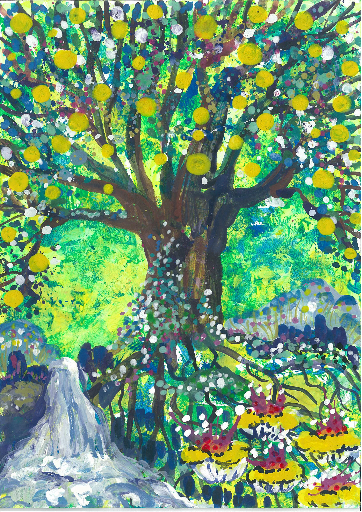
A fost odată ca niciodată un mare împărat care avea în jurul palatelor o frumoasă grădină magică pe care nimeni nu o mai văzuse înainte sau de atunci. În spatele grădinii, împăratul avea un măr care făcea mere de aur, dar nimeni nu le putea gusta vreodată, pentru că, atunci când trebuiau să fie coapte, cineva urma să vină în mijlocul nopții și să le fure. Împăratul i-a trimis pe cei mai curajoși gardieni să păzească merele în timpul nopții, dar niciunul dintre ei nu putea să-i prindă pe hoți.
Once upon a time, there was a great emperor who had around his palaces a beautiful magical garden that nobody had seen before or ever since. In the back of the emperor's garden there was an apple tree that had golden apples, but nobody could ever taste them because, when they were about to be ripe, someone would come in the middle of the night and steal them. The emperor sent his bravest guards to watch the apples during the night but none of them could catch the thieves.
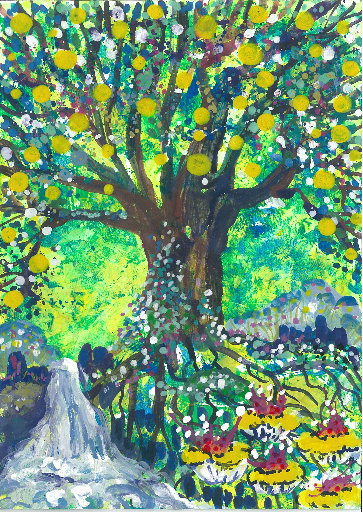
Atunci fiul cel mare și cel mijlociu încercară să prindă hoțul, dar amândoi adormeau în ceața misterioasă și hoțul dispărea cu merele. Cel mai tânăr fiu, Prâslea, decise să păzească și el mărul.
Then the eldest and the middle son tried to catch the thief, but they both fell asleep in the mysterious fog and the thief got away with the apples. The youngest son, Praslea, decided to guard the apple tree as well.
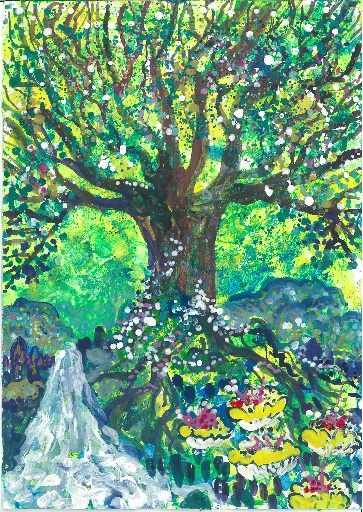
Își luă arcul și săgeata și începu să aștepte. La pragul zorilor, Prâslea auzi un zgomot în grădină, așa că apuca arcul și așteptă până când dintr-o dată, cineva începu să tragă de ramurile copacului, încercând să fure merele. Trase o săgeată și auzi un urlet groaznic. Apoi Prâslea lua merele si le duse la impărat.
He took his bow and arrow and began waiting. At the crack of dawn Praslea heard some noise in the garden so he took his bow and waited when suddenly someone started to pull the branches of the tree, trying to steal the apples. He shot an arrow and a terrible roar was heard. Then Praslea grabbed the apples and went to the emperor.
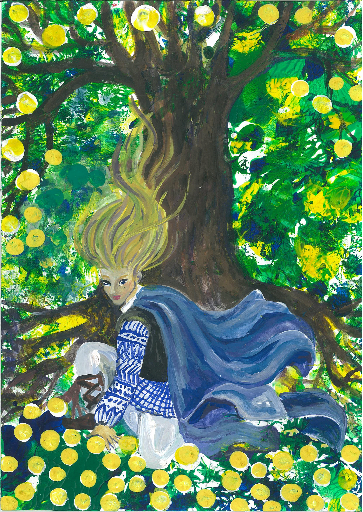
Tatăl său fu foarte fericit să vadă merele, dar Prâslea vru de asemenea să prindă hoții. Vorbi cu frații săi și toți hotărâra să urmeze dâra de sânge pe care o lăsase rana și să-i prindă pe hoți. Dar frații săi erau atat de geloși pe Prâslea acum că luase merele de aur și stabiliră să scape de el pentru totdeauna.
His father was very happy to see the apples, but Praslea also wanted to catch the thieves. He had a word with his brothers and they all decided to follow the blood trace the wound had left and catch the thieves. But his brothers were so bitter and jealous of Praslea now he had got the golden apples that they wanted to get rid of him for good.
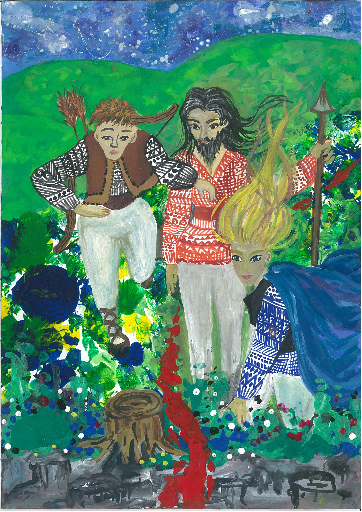
Și au mers și au mers, urmând dâra de sânge, până când au găsit o prăpastie. Prâslea le-a spus fraților săi că va coborî. Ei trebuiau să aștepte acolo și să-l tragă înapoi când va scutura frânghia pe care urma să o coboare.
They walked and walked, following the trace, until they found a gulch. Praslea told his brothers he would go down. They had to wait there and pull him back up when he shook the rope he would go down on.
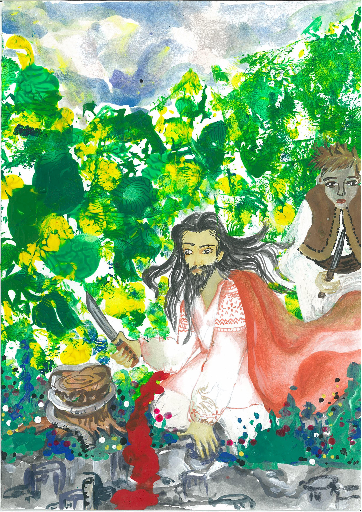
Prâslea ajunse pe Tărâmul Celălalt, unde totul era diferit. Găsi un palat frumos din alamă. Acolo întâlni o fată care fu foarte fericită să vadă un alt om. Îi spuse că este o prințesă, iar cei trei dragoni care locuiau aici o capturaseră pe ea și pe surorile ei pentru că doreau să se căsătorească cu ele.
Prâslea arrived on The Other Side, where everything was different. He found a beautiful palace made of brass. There he found a girl who was very happy to see another human. She told him that she was a princess and the three Dragons which lived here had captured her and her sisters because they wanted to marry them.
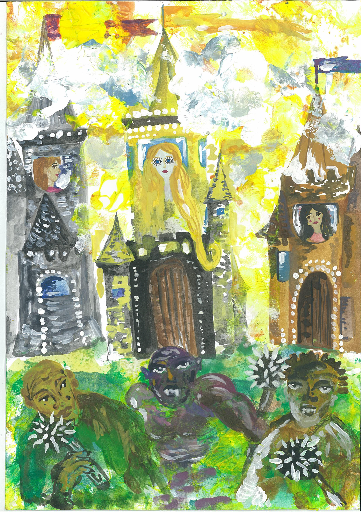
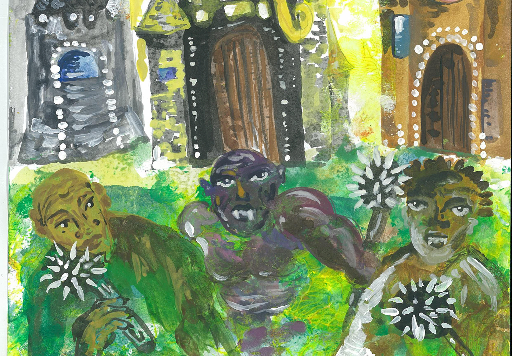
Fata îl avertiză pe Prâslea că Dragonul era în drum spre casă, pentru că își aruncase buzduganul de departe și că va ajunge acolo înaintea lui. Dar Prâslea aruncă buzduganul și mai departe. Dragonul se întorse acasă și îl văzu. "Cum îndrăznești să vii aici? " întrebă Dragonul. - "Caut hoții merelor de aur", spuse Prâslea. "Noi suntem aceia", spuse Dragonul. "Cum vrei să ne luptăm:în buzdugane, în săbii sau în luptă dreaptă? "Să ne luptăm mai bine, pentru că este o luptă mai dreaptă", spuse Prâslea.
The girl warned Praslea that the Dragon was on his way home, because he had thrown his mace from far away and it got there before him. But Praslea threw the mace even further back. The Dragon got home and saw him. ”How dare you come here?” asked the Dragon. ”I’m just looking for the thieves of the golden apples.” said Praslea. “We are the ones”, said the Dragon.” How do you want us to fight: with our swords or do you want to wrestle better?” “Let's wrestle better because it's a fairer fight”, said Praslea.
Așa că s-au luptat până când Dragonul l-a aruncat pe Prâslea la pământ. Dar Prâslea fu mai puternic și îl invinse. Apoi el și fata merseră la palatul de argint. Aici Prâslea se luptă cu al doilea Dragon și salvă a doua prințesă.
So they wrestled until the Dragon stuck Praslea to the ground up to his knees. But Praslea was more powerful and he stuck the Dragon even deeper and cut his head off. Then he and the girl went to the silver palace. Praslea fought the second Dragon and saved the second princess.
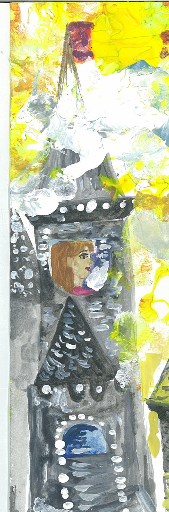
Apoi se îndreptară spre palatul de aur unde cea mai tânără soră era ținută captivă de cel mai tânăr și mai puternic Dragon. Când ajunse acolo, Prâslea aruncă buzduganul și lovi Dragonul în piept. Plin de furie, balaurul mearsă acasă, răcnind.
Now they headed to the golden palace where the youngest sister was kept by the youngest and most powerful Dragon. When the mace got home, Praslea threw it and hit the Dragon in the chest. Mad with fury, the dragon stormed back home, roaring.
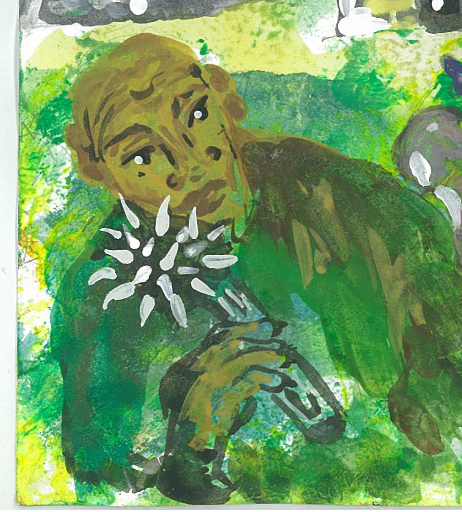
Începură lupta, zi și noapte, noapte și zi. Brusc, apăru un corb. Prâslea ii promise leșurile celor trei dragoni dacă corbul ii dă apă. Seara, Dragonul ceru apă fetei și ii promise că se va căsători cu ea dacă îi va aduce apa cerută.
They started fighting, day and night, night and day. Around midday both of them turned into fires and they continued fighting. Suddenly, a raven appeared. Praslea promised the bodies of the three Dragons if the raven brought him suet, so it did just that. In the evening, the Dragon asked for water and promised the young girl he will marry her if she brings him some.
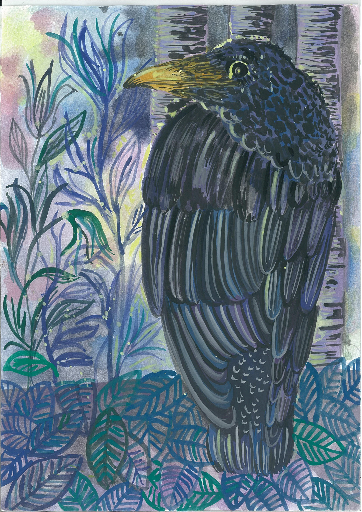
Dar Prâslea îi promise fetei că se va căsători cu ea dacă îi va aduce apă. Si astfel fata îi aduse apă și-și recăpătă puterea. Apoi, Prâslea scutură dragonul, îl strânse până când îl învinse. Cele trei fete fură foarte fericite că în sfârșit sosise momentul să se întoarcă acasă.
But Praslea promised the girl he will marry her if she brings him water. And the girl brought Praslea some water and he gained his strength, stuck the Dragon into the ground up to his knees. Then Praslea shook the Dragon up, squeezed him until his bones cracked and cut his head off. The three girls were very happy and now it was time to go back home.
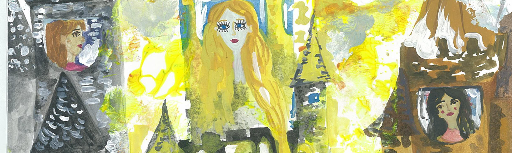
Se întoarseră la prăpastie și cele trei fete fură trase cu ajutorul funiei la suprafață. Frații mai mari urmau să se căsătorească cu cele două fete mai mari, iar cea mai tânăra avea să se căsătorească cu Prâslea. Când veni rândul lui Prâslea să prindă frânghia, legă o piatră de frânghie, pentru a vedea intențiile fraților. Acestia făcură exact ceea ce suspectase Prâslea: traseră piatra până la jumătatea drumului, apoi îi dădura drumul, cu intenția de a-l omorî pe Prâslea.
They went back to the rope and the three girls climbed it. The two elder brothers were going to marry the two elder girls and the youngest one was going to marry Praslea. When it was Praslea's turn to grab the rope, he tied a stone to the rope, to test his brothers' loyalty. The brothers did exactly what Praslea suspected: they pulled the stone half way up, then let go of it, wanting to kill Praslea.
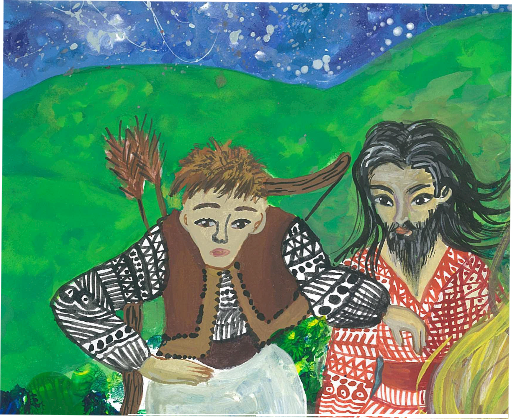
Prâslea încercă acum să găsească o altă cale să ajungă înapoi acasă. Întâlni un cuib gigant cu trei pui înăuntru. Văzu un monstru încercând să-i mănânce, așa că îl ucise. Când mama puiilor, pasărea magică, Zgripțuroaica, văzu puii în viață și monstrul mort, fu foarte fericită și căzu de acord cu Prâslea să îl ducă în lumea lui.
Praslea was now trying to find another way up, when he came across a giant nest with three chicks inside. He saw a monster trying to eat them so he went and killed it. When the mother of the chicks, the magical bird, Zgripturoaica, saw her chicks alive and the monster dead, she was very happy and agreed to take Praslea up to our world
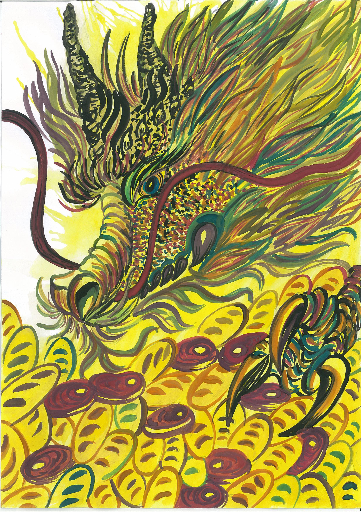
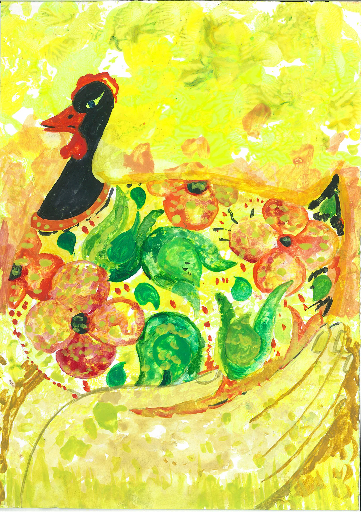
În drum spre palat, Prâslea auzi că cea mai tânăra fată nu se va căsători cu nimeni altcineva, decât cu cel care îi va aduce o cloșcă de aur. Prâslea se duse la argintar și îi ceru să-i permită să lucreze la el. Îndeplinindu-și sarcina, Prâslea merse la împărat și îi povesti cele întâmplate și atunci fata îl recunoscu.
On his way to the palace, Praslea heard that the youngest girl wouldn’t marry anyone but the one that brought her a golden hen. Praslea went to the silversmith and he asked him to give him the job of making the gifts. As Praslea fulfilled the job, the girl knew that it was him. When he got back to the palace, he told the emperor the whole story.
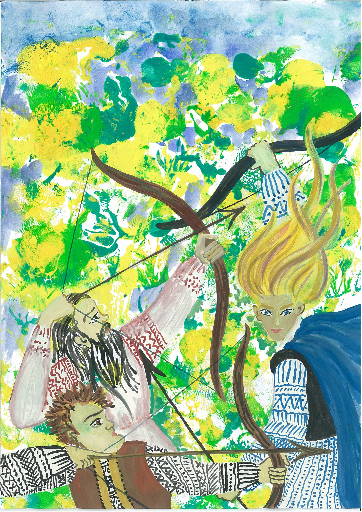
Împăratul îi ceru lui Prâslea să decidă asupra pedepsei fraților săi și atunci Prâslea spuse: "Vom merge în afara palatului și vom trage câteva săgeți în sus spre cer. Dacă sunt vinovați, ei vor primi pedeapsa de la Dumnezeu ". Când săgețile celor doi frați căzură din cer, imediat îi și loviră. Săgeata lui Praslea căzu în fața lui. Totul era acum corect. În cele din urmă, Prâslea se căsători cu cea mai tânără prințesă și trăiră fericiți până la adânci bătrâneți.
The emperor asked Praslea to decide on the punishment of his brothers and Praslea said: “We will go outside the palace and we will shoot some arrows up in the sky. If they are guilty, they will get their punishment from God”. When the arrows of the two brothers fell back from the sky, they hit them and killed them. Praslea's arrow fell in front of him. Everything was now correct. In the end, there was a big wedding at the palace, Praslea married the youngest princess and they lived happily ever after.
Maese Pérez, el organista.
Maese Pérez, the organist.
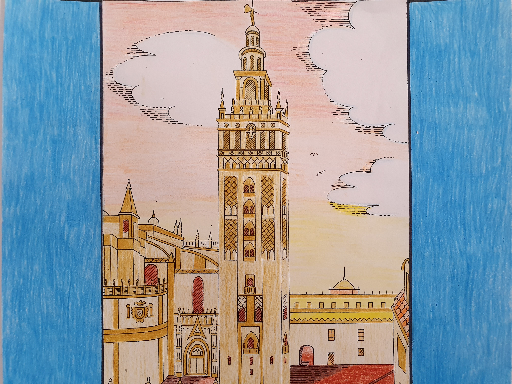
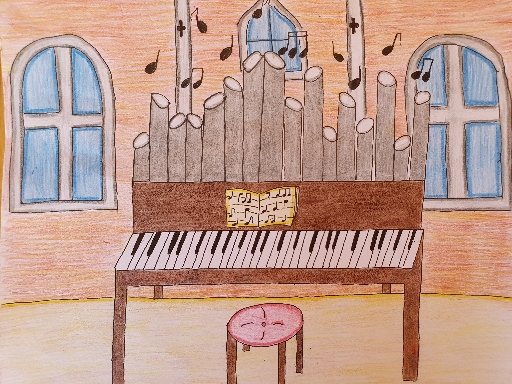
En el convento de Santa Inés, allá por el siglo XVIII, hubo un organista llamado Maese Pérez, hombre enamorado de la música. Tras la misa de la mañana, permanecía en el órgano hasta mediodía. Por las tardes, volvía a la iglesia y no paraba de tocar páginas de los viejos maestros sevillanos que habían sido famosos organistas de la catedral.
A long time ago, in the old Sevillian convent of Santa Inés, lived an organist whose great passion was to imitate the best musicians, those who had become famous playing the organ of the cathedral of Seville. His name was Maese Pérez.
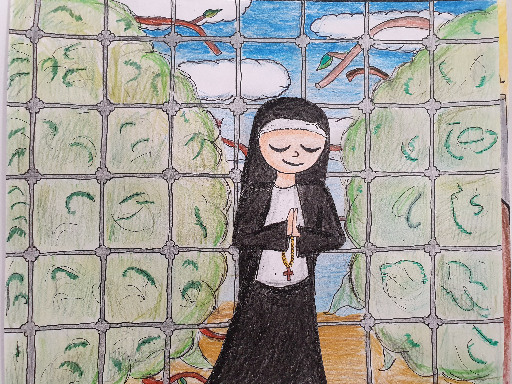
Tenía el maestro Pérez una hija que, de tanto acompañarle de sus datos de trabajo en el coro de la iglesia , se fue planteando la vocación religiosa. Un día le dijo a su padre: -Padre, desearía meterme a monja en este convento y os pido vuestra bendición.-Si ese es vuestro sueño hija mía, no seré yo quien se oponga a tan hermoso deseo. Así os podré oír cada día a través de la reja de la clausura y reconocer vuestra voz entre las monjas que cantan el coro. Pasado un tiempo la nombraron abadesa del convento. Al saber la noticia de su elección, le dijo:
-Yo os prometo hija mía que la primera fiesta que haya en el convento en la que hayáis de presidir el coro, será un acontecimiento en Sevilla, porque tocaré para vos tales músicas como nunca se hayan tocado en nuestra ciudad
Maese Pérez had a daughter who, after years accompanying him during long days playing the organ, decided to become a nun and enter the convent. The father celebrated his decision with emotion and was very happy, as he could hear her voice among the nuns who sang in the choir while he interpreted his music. After a long time, the daughter of Maese Pérez was named abbess of the convent and he promised her that he would turn her first celebration as abbess into an event that everyone would talk about in Seville.
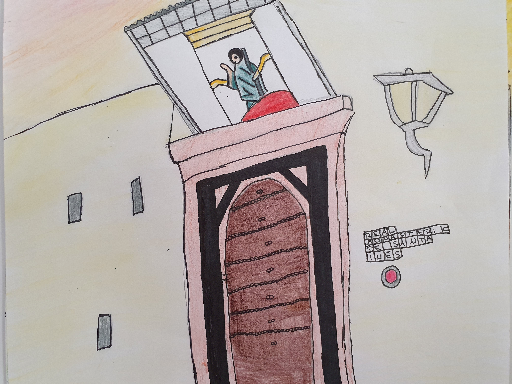
La primera fiesta solemne que habría en el convento de Santa Inés sería la Misa del Gallo. Iban pasando los días y Maese Pérez ensayaba hora tras hora. Fue tan arduo el esfuerzo que a mediados de diciembre cayó enfermo. Al llegar la Nochebuena estaba tan débil que fue necesario buscar otro organista que le suplisese.
The first relevant date for the convent, which would be the Midnight Mass, was approaching and the organist dedicated day and night to rehearse the function he had prepared for his daughter and the rest of the choir. Such was the effort that a few days before Christmas Eve the musician fell seriously ill and it was necessary to look for an organist to replace him.
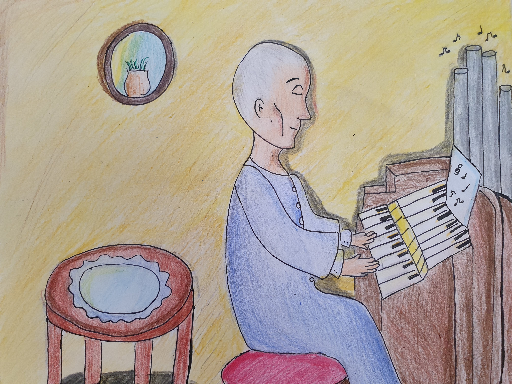
Por fin llegó el día de la fiesta y la iglesia estaba repleta de fieles. Al tocar las campanadas de la torre que anunciaban el comienzo de la misa los murmullos se interrumpieron, haciendo un silencio inesperado. Por la puerta de la iglesia acababa de entrar, tambaleándose por la fiebre, maese Pérez el organista. Acababa de levantarse de la cama para acudir a dar la más importante audición de órgano de su vida.
Finally the day of the celebration arrived and the church of the convent was full of faithful. When the bells of the tower ringing indicating the beginning of the mass, there was a shuddering silence. The door of the church was opened and Maese Pérez, the organist, who was about to perform the most important audition of his life, appeared, staggering with fever, because of the promise he had made to his daughter.
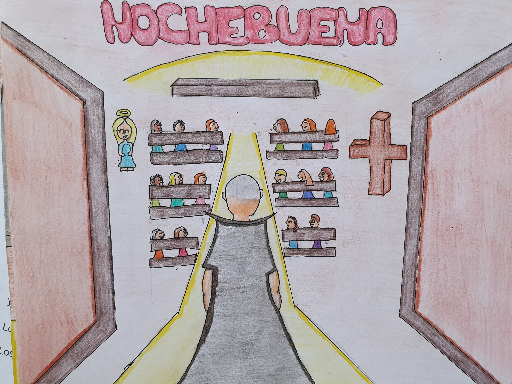
Quienes le oyeron cuentan que jamás se había pulsado un órgano con tanta delicadeza. Maese Pérez iba describiendo, con armonías nunca soñadas, el milagro del nacimiento de Niño de Dios. Todo iba desarrollándose con un puntual sentido evangélico hasta que el órgano dio un acorde grandioso, inmenso que duró unos momentos bajo la bóveda de la Iglesia. Y después, inesperadamente, se apagó. El público miró hacia el coro y vio a Maese Pérez sobre el teclado con los ojos cerrados. Maese Pérez había fallecido.
It is said that Maese Pérez began to perform one piece of music after another and the audience remained astonished at such delicacy and musical harmony. The celebration went on successfully until, suddenly, the organ emitted a grandiose chord, whose sound lasted a few moments under the vault of the church and then, unexpectedly, stopped. The audience looked in unison towards the choir and saw Maese Pérez on the keyboard, who had died at that very moment.
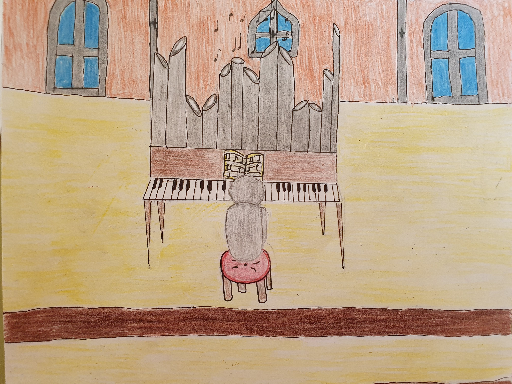
Doce meses habían transcurrido de este suceso y aún no se había dejado de hablar él. En la noche buena siguiente, el nuevo organista en santa Inés, quiso demostrar que también él era capaz de atraer la admiración del público. Y se dispuso a tocar aquella partitura que maese Pérez había dejado a medio tocar. Comenzó la misa, pero contra lo que esperaban todos, el órgano guardó silencio. El público, sorprendido, miró hacia el coro y presenció algo increíble. El nuevo organista tiraba de unos y otros registros, manoteaba aporreando el teclado, pero ninguna nota salía de los tubos. El órgano se había quedado mudo.
A year had passed since the event and in Seville there had been no other talk of anything since then when the following Christmas Eve arrived. The new organist of the convent of Santa Inés wanted to show that he was capable of attracting the admiration of the public too and set out to perform the score that Maese Pérez was unable to finish a year earlier. Then something incredible happened. The new organist insisted with his hands on the keys again and again but the organ did not produce any sound. For some reason, the organ was silent.
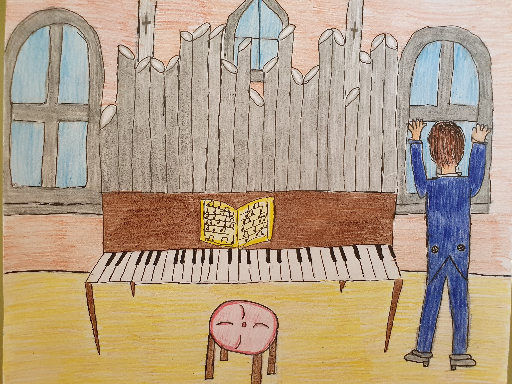
Cuando llegó el momento de la Consagración el órgano empezó a sonar solo. Un acorde grandioso, el mismo que el año anterior había marcado el fin de la vida de Maese Pérez el organista. Y tras ese acorde, otros con acentos de cánticos celestiales. Los fieles dirigieron las miradas al coro. Y todos vieron con estupor que el órgano estaba sonando solo. Cuando terminó la misa el órgano lanzó un último acorde que sonó como un suspiro y quedó callado.
It is said that the new organist left the church in astonishment and the ceremony continued without any song or musical note until the moment of the Consecration arrived. Then, the organ began to sound alone. A great chord was heard, the same chord that silenced those present in that place a year earlier, and after that chord the organ continued to sound beautifully as the audience looked over and over again at the choir to make sure that the organ was sounding alone. When the mass was over, one last chord was heard with great intensity, which immediately attracted everyone's attention.
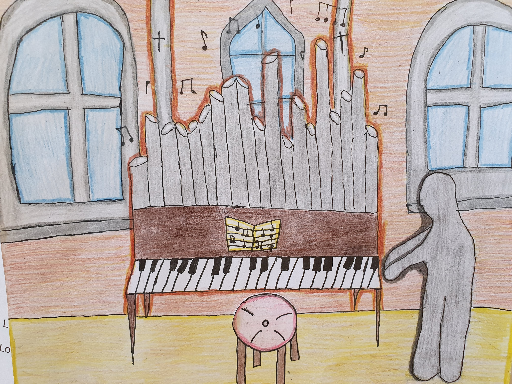
Aseguran que en ese instante se vió ante el órgano una sombra, envuelta en una capa. Una sombra que se desvaneció en el aire misteriosamente. La sombra de maese Pérez el organista en órgano del convento de Santa Inés.
It is said that at that moment a shadow appeared, wrapped in a cape, in front of the organ and quickly vanished into thin air. The shadow of Maese Pérez, the organist from Santa Inés, who had returned from the other world to finish his greatest musical work written for the unconditional love of his daughter.

Eels in Kamien's lake
This time we decided to translate our legend also in our second language - Kashubian
(It is close to standard Polish with influence from Low German and the extinct Polabian and Old Prussian.)
W nëch czasach, czej w Kamieniu przë jeziorze mieszkalë blós smòlarze i robòcy pszczelarze, a téż kòwôl chtëren żelazło dostowôł z Czeleńszczi Hëte, przëcygnął tu na zlecenié maszoperii i webudowôł so chëcz rëbok z tuchomszczich strón.
W czasach kiedy w Kamieniu przy jeziorze mieszkali tylko smolarze i pracowici pszczelarze, a także kowal który żelazo dostawał z Kieleńskiej huty osiadł tutaj na polecenie maszoperii i wybudował sobię chate rybak ze stron tuchomskich.
A long time ago, when only tar makers, blacksmiths and hard-working beekepers live in Kamien near a lake, a fisherman from Tuchom came there and built himself a cottage.
Swòjã arãdã za rëbôczeniè w kaminsczim jezorze miôł pò roku czasu òdstawic panowi z Załãża, do chtërnégò jezioro nôleżało, w rëbach: w pòłowie w wãgorzach, w pòłowie w jinëch ôrtach rib.
Dzierżawę za rybaczenie miał po roku przekazać właścicielowi jeziora, w połowie w węgorzach, a w połowie w innych gatunkach ryb.
He must pay for the lease of a lake not in money but in fish, half of payment should be in eels and half in other species of fish.
Pòn z Załãża dobrze wiedzôł, że kaminszczè jezioro ni mô bëlnégò rzécznégò pòłączeniô z mòrzã i stądka wãgòrzów w nim nie mòże bëc, a płacenié czimś taczim, czego ni ma, je wiôldżim utrapienim. Rëbôk, jak zmërkôł, że takô je sprawa, jiscëł sã corôz barżi.
Pan z Załęża dobrze wiedział, że jego jezioro nie ma żadnego połączenia z morzem i nie ma możliwości, żeby były w nim węgorze, a płacenie czymś czego nie ma jest dużą trudnością. Kiedy rybak uświadomił sobie jak sprawa wygląda, skarżył się coraz bardziej
The lake owner knew that his lake hasn’t got any connection with the sea so there is no possibility that there are eels in the lake and paying by something that isn’t exist is a big problem. When fisherman realized the situation, he started to complain.
Jednégò razu, jak bëło to wieczòrkã przë pôłni miesąca, za jegò czołnä, jak béł prawie w wiôldżim jiscenim, cos pląsnãło. Jak sã òbchlastnął, ùzdrzôł piãkne dzéwczã z dłudżima, czôrnyma jak pék klatama, ù chtërny rëbôk pòstrzégł zamiast nóg rëbią tëpã.
Pewnego wieczoru przy pełni księżyca, kiedy właśnie narzekał coś plusnęło za jego łodzią.
Kiedy odwrócił się ujrzał piękną dziewczynę z długimi czarnymi włosami. Rybak spostrzegł u niej rybi ogon.
One night when there was a full moon he heard a splash behind him, he turned and saw a beautiful girl with long black hair, then he noticed that she has got a tail of fish. She was a mermaid.
No dzéwczã rzekło:
- Przësła Mie tu na kaminszczé jezioro mòja pani Jurata, chtërna mieszkô w bùrsztinowim zòmkù w Wiôldżim Mòrzu. Jurata daje Cebie miech nôlepszëch wãgòrzów, żeby mógł sã wërëchtowac ze swoim panã, a pòłowã z nich òstawisz do chòwë na nastaãpné lata.
Dziewczyna powiedziała:
-Przysłała mnie tu na kamieńskie jezioro moja pani Jurata, która mieszka w bursztynowym zamku w morzu Bałtyckim. Jurata daje Ci worek najlepszych węgorzy, żebyś mógł się rozliczy ze swoim panem, a w połowę z nich zatrzymał do hodowli na kolejne lata.
The girl said:
- My lady, Jurata sent me here to the lake of Kamien. She lives in amber castle in Baltic Sea. She gives you a sack of the best eels so you can pay for renting the lake with half of them and another half you should keep to rear in the next years.
Pòłowã wãgòrzów z miecha zaniósł panowi z Załãża, a z ny resztë pôrã dorodnych wãgòrzów pëszno uwadzëł i sprosził kamińszczé sąsiedztwo na wiôlgą ùcztã. Reszta wãgòrzów wrzucył do jezora. Òd negò czasu pò dzys dzéń w jezorze są piãkné wãgòrze.
Połowę węgorzy z miecha zaniósł panu z Załęża, a trochę dorodnych ryb uwędził i zaprosił sąsiadów z Kamienia na wielką ucztę. Resztę węgorzy wrzucił do jeziora. Od tego czasu po dzień dzisiejszy w jeziorze są piękne węgorze.
Half of the eels he gave to a lake owner and some of the rest he smoked and invited neighbours from Kamien for a big banquet. The rest he put into the lake. From that time up to nowadays in this lake there are beautiful eels.
- < BEGINNING
- END >
-
DOWNLOAD
-
LIKE
-
COMMENT()
-
SHARE
-
BUY THIS BOOK
(from $19.59+) -
BUY THIS BOOK
(from $19.59+) - DOWNLOAD
- LIKE
- COMMENT ()
- SHARE
- Report
-
BUY
-
LIKE
-
COMMENT()
-
SHARE
- Excessive Violence
- Harassment
- Offensive Pictures
- Spelling & Grammar Errors
- Unfinished
- Other Problem





COMMENTS
Click 'X' to report any negative comments. Thanks!